



Inflexions
Lesson time: (6min 32sec)
Mike Lovatt aporta fuego y pasión a esta samba latina de trompeta, usando dinámicas y caídas de media válvula para captar el ambiente de carnaval.
Course preview
This lesson is part of the course Toca trompeta latina auténtica
Watch a preview of the full course below.
Lesson transcript:
Adding Fire and Passion to Your Samba Performance
Okay, so we've talked about all the detail that goes into making a performance of a samba piece like this. But what we really need now is the fire and passion to go with it, which will give it that real carnival atmosphere.
Copying Phrases with Intensity
I'm now going to play two phrases at a time and get you to copy back afterwards with my fire and passion to try and make this piece come alive.
- I was using a lot of intensity.
- I was playing louder than it's actually marked on the part, which is what we do in this kind of music to get that passion, to get that fire across.
Demonstrating Falls
I was also using falls. Now I'll just demonstrate the falls on their own.
- These are half valve falls.
- As before, we press the valve halfway down.
- So after you've played the note, if it's an F sharp, like that with the second valve, we release it halfway and then lift it up quickly or let it go quickly.
Now you have a go. How did that go for you? If you're still not quite getting the effect, you can try using your embouchure as well. It's almost like letting go of your embouchure will enable the fall to sound a bit more dirty. I'm almost taking the trumpet off my face to help with that sound.
You try taking it off your face as well as you play that note.
Focusing on Intensity and Rhythm
Let's move on to the next phrase. There again, I'm using lots more intensity.
- I'm using hard tongue on those short crotchets.
- Make sure that you place those crotchets on the beat that they're supposed to be on, bang in the middle.
- Not slightly before, not slightly after.
It's the same with the quavers that come at the end of each bar, the answering phrase.
- And at the end of the second part of that phrase, use the tongue to accent.
- Keep that dancy Latin feel going.
You now have a go at blowing through those quavers and then through the short notes and keep the intensity there.
Playing the Third Section
We're now going to play the third section of the piece, starting on the low B there. I was using the intensity and the falls again on those off quavers.
- After all, it's called on the offbeat.
- Bow, bow, bow.
- Imagine that you're making a sound like that: Bow, bow, bow.
Now you try doing that. How did that go? Did you manage to do those falls? I was using a slightly different technique that time, which is kind of bending the note first before I let go of it.
- Again with the embouchure like this, slightly pulling the trumpet off the face when we add those quavers together like this.
And again, now you have a go at doing that.
The Last Phrase
This is now the last phrase, going right through to the end there.
- I was doing falls and using a bit more technique in order to make that sound you tried earlier by relaxing the mouthpiece on the embouchure.
- Well, combined with that, we can also use the tongue position which we've talked about in other lessons.
The tongue position, moving to help with the airspeed, will help bend the note. So a combination of that with removing the trumpet slightly from the lips, and the pressure on the lips, will help to give that slightly more aggressive fall, like this.
Explore Tijuana Brass
There was a whole trumpet style built around that way of falling off notes. It was called Tijuana Brass, headed up by a trumpet player called Herb Alpert.
Go and have a listen to some of the music that they played.
About the instructor
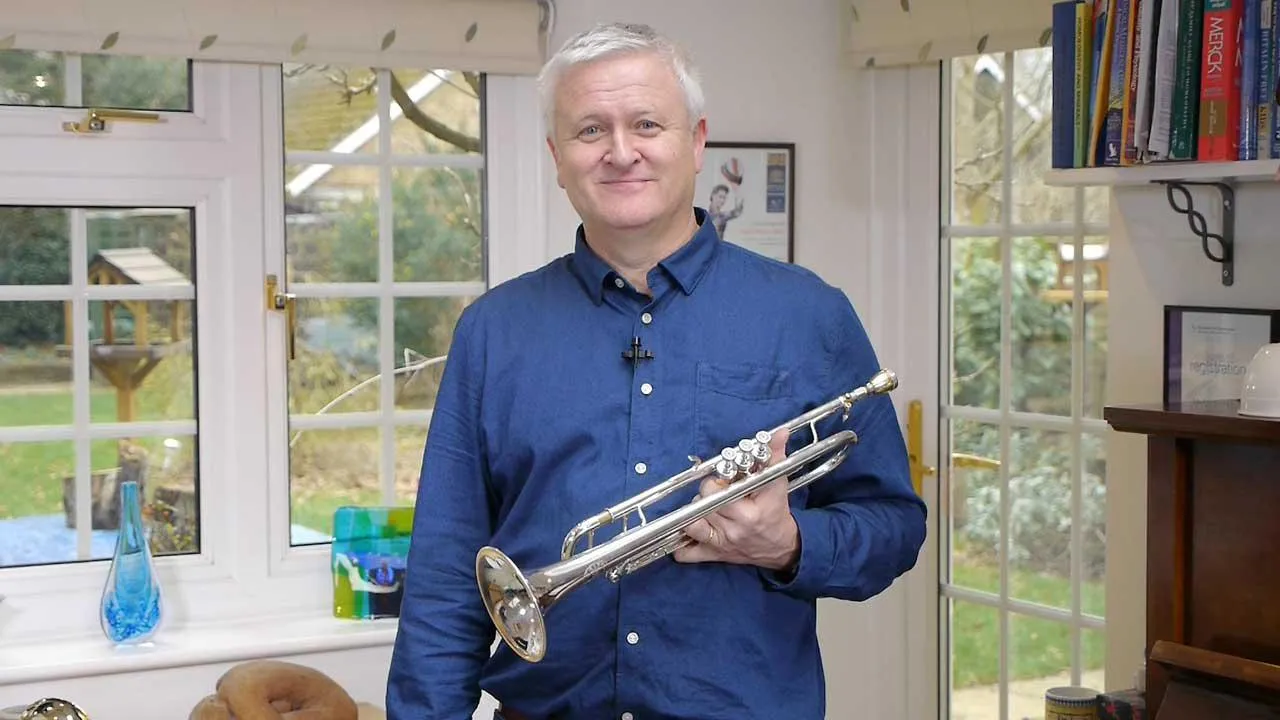
Mike Lovatt estudió en el Trinity College of Music, donde recibió la Jon Kelly Jazz Scholarship. Ha actuado y grabado en una enorme variedad de estilos con artistas como Quincy Jones, Robbie Williams, Eric Clapton, la Orchestra of the Royal Opera House Covent Garden, la Royal Philharmonic Orchestra, Michael Buble, Oasis, Michel Legrand, Tony Bennett, Shirley Bassey y Danny Elfman, entre muchos otros. Como trompeta principal en el West End de Londres, Mike ha actuado en Jesus Christ Superstar, Evita, The Producers, Billy Elliot, Guys and Dolls, Saturday Night Fever, My Fair Lady y Spamalot, entre otros. Ha tocado en bandas sonoras de películas como las de James Bond, Harry Potter con la London Symphony Orchestra, la premiada Chicago, Beyond the Sea de Kevin Spacey, Charlie and the Chocolate Factory, Madagascar y The Corpse Bride. Aparece a la trompeta y la corneta en Mrs Henderson Presents de George Fenton, y a la trompeta en Looking for Eric. Mike es trompeta principal de la John Wilson Orchestra, nominada a un Grammy, y ha destacado en sus célebres conciertos y grabaciones de los BBC Promenade. Mike es muy solicitado como profesor y clínico, y es catedrático de trompeta en la Royal Academy of Music y en el Royal College of Music. En abril de 2013 tuvo el orgullo de recibir la prestigiosa Derek Watkins' Chair of Trumpet en la Royal Academy of Music de Londres. En sus cursos de MusicGurus, Mike comparte los secretos de su versatilidad, mostrándote cómo clavar los estilos de trompeta auténticos de swing, rock y latino para que puedas tocar cualquiera de ellos con confianza y el feel adecuado. read more