



Análisis, explicación y demostración por Emmanuel Pahud
Lesson time: (33min 0sec)
Course preview
This lesson is part of the course Obras para flauta de Schubert, Hüe y Sancan
Watch a preview of the full course below.
Lesson transcript:
Flute Lesson
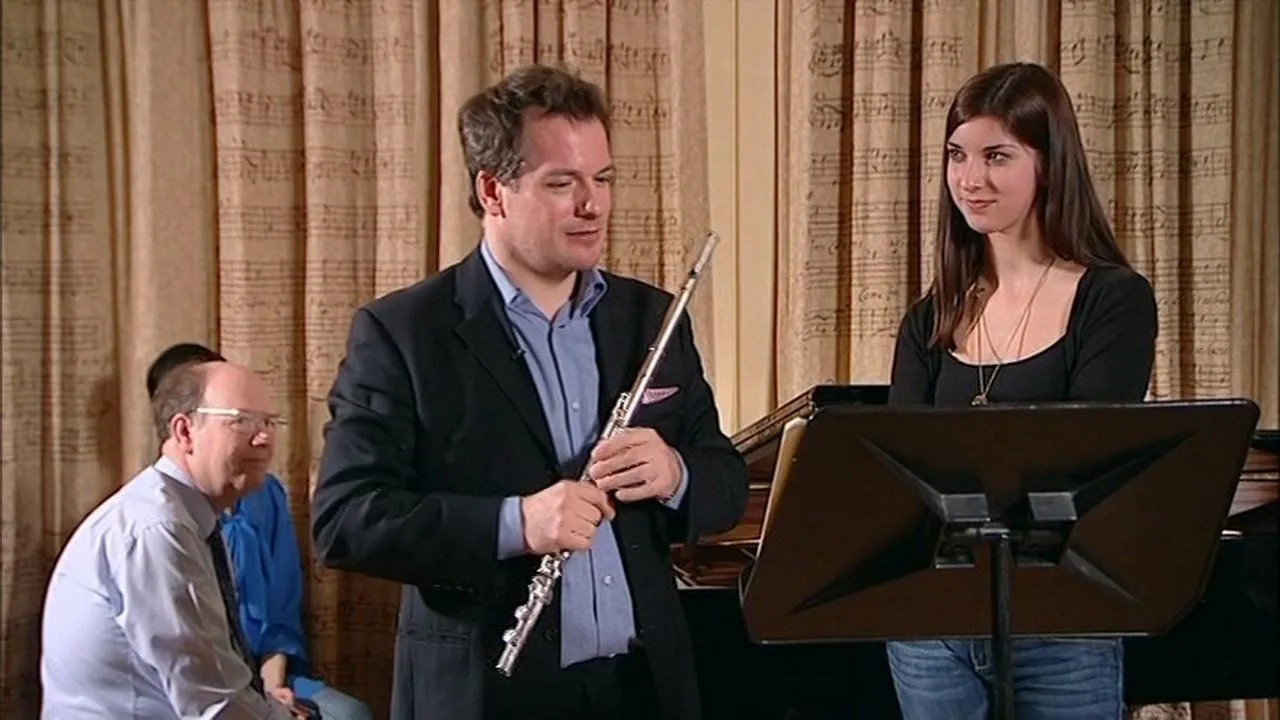
This one is a tricky piece because it doesn't sound as difficult as it is. It's not the most graceful piece, but there are many challenging aspects, particularly with all these G sharps.
Challenges of the Piece
-
Technical Difficulties:
- All the slurs in the first movement are really difficult.
- You have to navigate throughout the range of the instrument while maintaining a stable sound and a nice tone.
-
Middle Section:
- This is where many students struggle.
- Your nerves and excitement are natural; however, you must pull yourself together in the middle section because the difficult part is yet to come.
Breathing Techniques
Now, let's focus on breathing properly. If you really breathe correctly, you're going to play properly. Here are some key points to remember:
- Support Your Air: You need to sustain the airflow until you decide that the note is stopping.
- You are in Control: Remember, you are the one playing; you're not just listening.
Playing Position
Your position here seems relaxed and stable, which is great. However, be aware of the following:
-
Head Joint Position:
- Be careful not to turn the head joint inside too much, as this limits your ability to play effectively.
- To play piano, you need to adjust your position to maintain a good airstream.
-
Centering:
- Start with the mouth hole and the keys aligned.
- Adjust as needed from this centered position.
Pianissimo Playing
- The Importance of Pianissimo:
- The only real pianissimo in the piece is crucial. Hold the pianissimo as long as you can.
- Only play the crescendo as it's indicated, which is four beats or three and a half beats before the fortissimo.
Color and Expression
- Tone Color:
- I recommend exploring a "saxophone kind" of color at this spot, even though it is not written.
Using Wasabi
-
Tuning and Intonation:
- You need to use more "wasabi" in your flute playing. This helps in playing in tune.
- Playing forte results in a big and beautiful sound without forcing it.
-
Resonance:
- We have many cavities in our heads that resonate while we play. The more we drive the resonance, the louder we can play with the same amount of air.
Managing Dynamics and Vibrato
-
Vibrato:
- Use vibrato to keep the sound alive on long notes.
- It's essential for adding expression and maintaining intensity.
-
Dynamics:
- When reaching the peak of a crescendo, don't play any louder. Think of it as moving forward on stage and then staying there.
Practicing Techniques
- Air Support:
- Use "wasabi" as a focus point, which helps in centering your tone.
- Practice with gentle dynamics and avoid tightening your lips too much.
Conclusion
Ultimately, this piece is about finding your sound. Focus on breathing and the placement of your air.
- Last Thoughts:
- Get fresh wasabi, as it will help you find your best sound.
- Remember, the focus should be between your nose and the eyes, rather than just on the lips.
Thanks for your dedication in today's lesson. Let's continue to work on these techniques, and you will see improvement in your playing!
About the instructor
Afincado en Berlín, Emmanuel Pahud es uno de los flautistas más destacados del mundo, más conocido por su repertorio de flauta barroca y clásica. Pahud nació en el seno de una familia no musical en Ginebra, Suiza. De niño quedó cautivado por el sonido de la flauta y, desde los cuatro hasta los 22 años, fue instruido y guiado por flautistas como François Binet, Carlos Bruneel y Aurèle Nicolet, antes de formarse en el Conservatoire de Paris. Saltó a la escena musical orquestal y solista internacional cuando se incorporó a la Berlin Philharmonic Orchestra en 1992 como uno de sus solistas principales más jóvenes de la historia. Su musicalidad innata y su técnica extraordinaria lo han convertido en un habitual de las apariciones como solista en Japón, el Sudeste Asiático, Europa y Estados Unidos. Entre sus compañeros habituales de recital figuran Eric Le Sage, Hélène Grimaud, Yefim Bronfman y el pianista de jazz Jacky Terrasson, y está muy solicitado como músico de cámara, habiendo colaborado con la mayoría de los principales solistas del mundo. Su versatilidad a través de los estilos musicales ha "señalado la llegada de un nuevo maestro flautista" (The Guardian). Toca a través de géneros diversos, ya sea barroco, jazz, contemporáneo, clásico, orquestal o música de cámara. En Works for Flute by Schubert, Hue and Sancan, Emmanuel dirige ese arte hacia tres piedras angulares del repertorio de flauta, compartiendo la perspicacia interpretativa y técnica para dar vida vívida a cada pieza. read more