



Análisis, explicación y demostración por Emmanuel Pahud
Qué incluye el curso
6 lecciones (2h 19m) · 1 gratis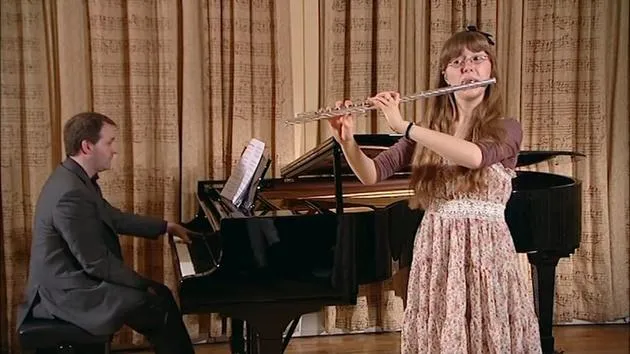
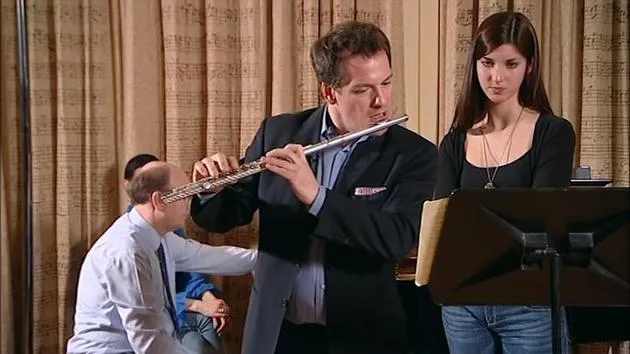
Transcripción de la lección
have to do with your playing. I don't think I'm going to sound very good either over there, but it's not gratifying.
Tone Quality
Focusing on Sound
In particular, when you go up in the third octave, you really have to take care so that your sound gets more pleasing. You have to care more about the sound, about the tone quality, so that you really make something that you like and that people are going to like also.
"If they hear a sound they dislike, then people are just a little more... okay, yes, we enjoy it, but it's not the 'wow, great, tremendous' success that it should be."
At the end of that piece, it's very brilliant. Your fingers are doing fine; your articulation, the tonguing, everything seems to be working well and in the right place.
Control Over the Instrument
You have a lot of control over the instrument, but this one issue about the sound in the third octave specifically is what I'd like to deal with today.
Score Analysis
When you look at the score here or the parts, the flute parts, when you play the second tone or theme of this piece in the middle section, it's slow, gentle, and poetic, something that's in your imagination.
Dynamic Contrast
Don't play the piano just as you played the forte before, because there's absolutely no difference in the level of sound you produce right now between the forte you had just before and then the piano you have there.
- When it says crescendo, you're forte already.
- When it says crescendo, you have to play less so that you're able to grow and let the sound grow.
"Don't press the sound too much now because you haven't grown completely yet."
Personal Experience
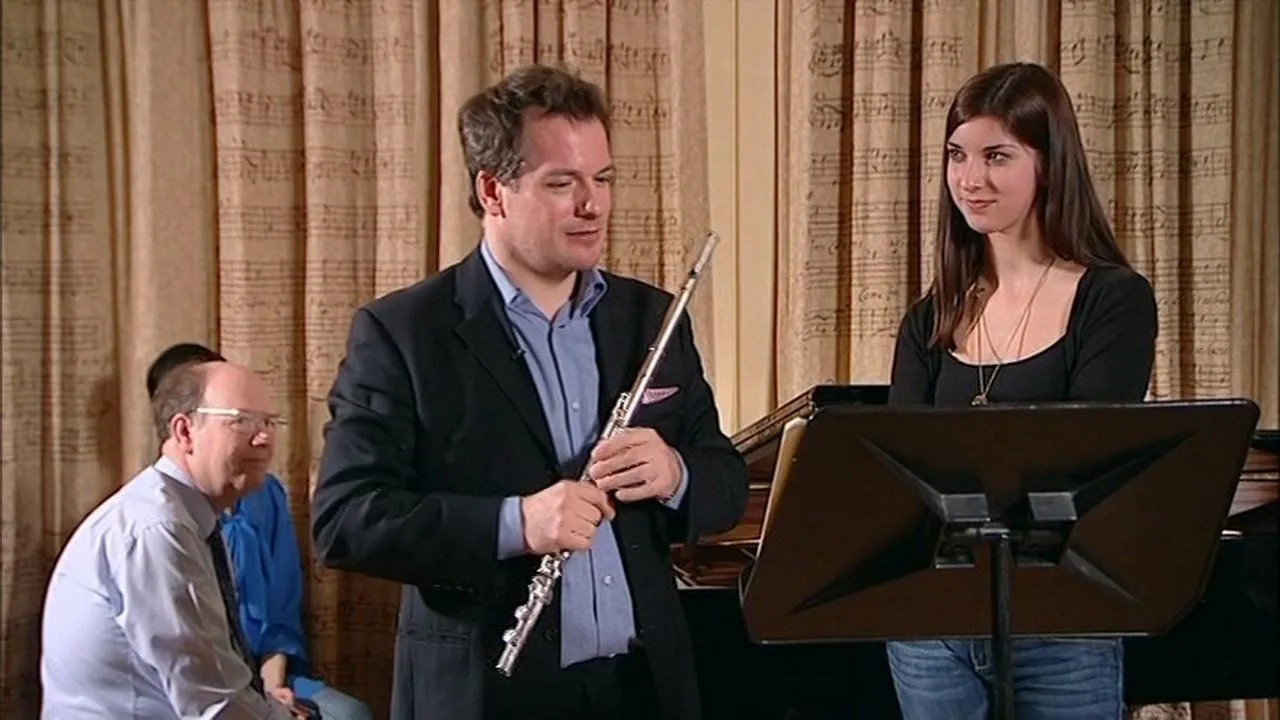
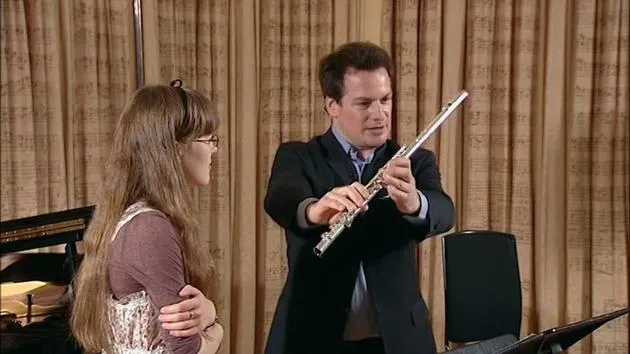
I started playing at a very tender age of 6 years old with this kind of flute. There weren't any curved heads at the time, so I had to play the flute in a certain position and gradually brought it to a more centered position in front of me. Right now, you are still very much on the side.
Adjusting Position
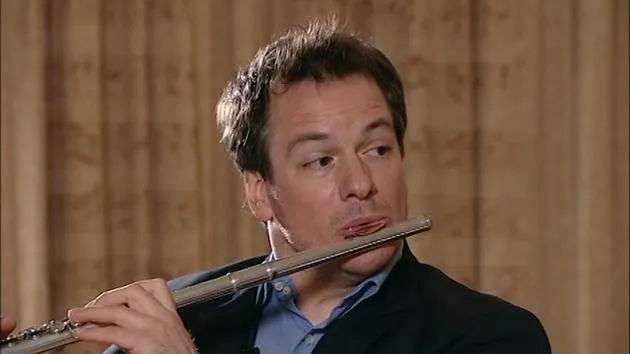
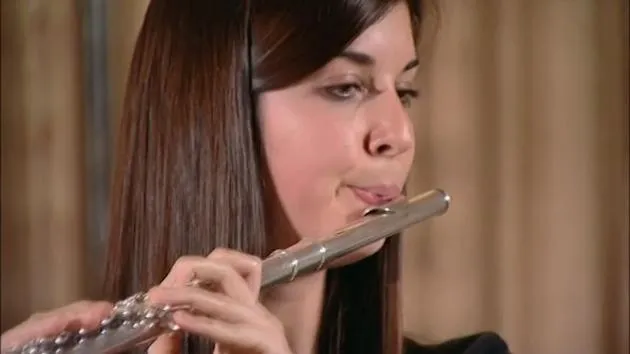
Because the flute is pushing on the side of the lips, try to bring your hands a little closer to your body. Maybe move your head a little more so that you can have a more centered position. This will allow you to have better tone control.
The difference in the depth of sound or in the overall volume that you can produce on the instrument has a lot to do with whether you're blowing straight in front or on the side.
- The wall of the head joint where the sound is made cuts the airstream in the middle.
- If you play on the sides to get there, you're going to hit the sides, which don't produce any sound, they produce noise.
Sound Quality
You need to be very careful. You might think there's nothing special about your sound, but when you blow on the side of your mouth instead of in the center, it becomes a little tiny because your shape pushes the sound in the wrong direction.
- Each of us is different in shapes and sizes.
- You now need to bring the head a little further to the left so that the head joint aligns in the middle of your mouth.
Gradual Improvement
It's not going to happen today, in 20, 30, or 40 minutes, it's something to work on for the next weeks and months. You will gradually get results.
"By recording yourself today and in a month's time, you will hear a massive difference in sound and volume."
When you play in the same theme but with a crescendo afterward, ensure that you reach the forte only here without overcooking the sound too early.
Practicing Recommendations
Let's start from Figure 5, please, so we can address these dynamic nuances and experience the extremes between forte and piano.
Maintaining Clarity
- If you press too hard on the G, you might crack that first G and it'll sound like a D. Good.
- For progression at 6, we're still piano, there's no crescendo that time.
Just let the music do the work for you.
Dynamic Control and Interpretation
It's important to hear the notes the composer intended. If you change the dynamics and play loud only on the long notes, we won't hear the changes that the composer wrote for us.
From Figure 6, we have a crescendo in both tempo and dynamics leading to the next big fortissimo. You must start here with a low point.
Expressions in Music
It's about being generous, not aggressive.
"It's not because you can play loud that you have to."
Can you really play the long notes expressively, not just as if there were an accent? There isn't an accent, so you have to make your playing good.
Breathe Properly
Use these long notes to support their interest. You have a tendency to crescendo on them.
- Why not play with the speed of the vibrato instead?
We need to keep that sound effortless, especially when it says piano.
Energy Conservation
Our job is to save air and be as fuel-efficient as possible. Remember to breathe deeply and control the air release without squeezing it out of your lungs.
"It's all about controlling how much air you release."
Maintaining Technique
As we play the flute, we force how much air we inhale, but if you have enough air in your lungs, you can just let it go.
- Work on filling your lungs effectively without holding back, then release that air while moving your fingers.
Posture and Positioning
Regarding your position with the flute:
- It's not a natural position to hold it too high.
- You should try to find a centered position where your arms can relax.
Finding Your Balance
Hold the flute on the keys as if you were about to play. Look at the head joint, then bring the flute to you. This will help avoid strain and pain.
"Find your centered position; it works for everyone."
Final Thoughts
Make your efforts all about breathing; it's much easier if you're filled with air before starting. Focus on letting air out naturally without forcing anything.
- You'll avoid tension in the neck and jaw, which can affect your tone quality.
Conclusion
So remember:
- Maintain an effortless posture.
- Focus on breathing and air support.
- Keep your sound alive, and enjoy the music!
Thanks very much!
6 lecciones
2h 19m de lecciones en vídeo estructuradas
Funciones de vídeo avanzadas
Ralentiza, repite un pasaje, sigue la partitura
Móvil, tablet y ordenador
Practica donde quieras
Garantía de satisfacción 100%
30 días de garantía de devolución
Conoce a tu gurú
Conoce a tu gurú
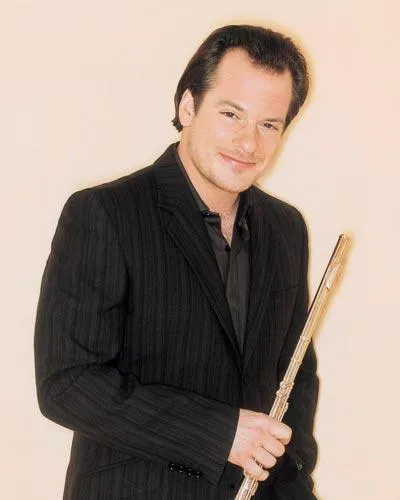
Afincado en Berlín, Emmanuel Pahud es uno de los flautistas más destacados del mundo, más conocido por su repertorio de flauta barroca y clásica.
Pahud nació en el seno de una familia no musical en Ginebra, Suiza. De niño quedó cautivado por el sonido de la flauta y, desde los cuatro hasta los 22 años, fue instruido y guiado por flautistas como François Binet, Carlos Bruneel y Aurèle Nicolet, antes de formarse en el Conservatoire de Paris.
Saltó a la escena musical orquestal y solista internacional cuando se incorporó a la Berlin Philharmonic Orchestra en 1992 como uno de sus solistas principales más jóvenes de la historia. Su musicalidad innata y su técnica extraordinaria lo han convertido en un habitual de las apariciones como solista en Japón, el Sudeste Asiático, Europa y Estados Unidos. Entre sus compañeros habituales de recital figuran Eric Le Sage, Hélène Grimaud, Yefim Bronfman y el pianista de jazz Jacky Terrasson, y está muy solicitado como músico de cámara, habiendo colaborado con la mayoría de los principales solistas del mundo.
Su versatilidad a través de los estilos musicales ha "señalado la llegada de un nuevo maestro flautista" (The Guardian). Toca a través de géneros diversos, ya sea barroco, jazz, contemporáneo, clásico, orquestal o música de cámara.
En Works for Flute by Schubert, Hue and Sancan, Emmanuel dirige ese arte hacia tres piedras angulares del repertorio de flauta, compartiendo la perspicacia interpretativa y técnica para dar vida vívida a cada pieza.







