



Análisis, explicación y demostración con Dame Evelyn Glennie
Qué incluye el curso
4 lecciones (1h 33m) · 1 gratis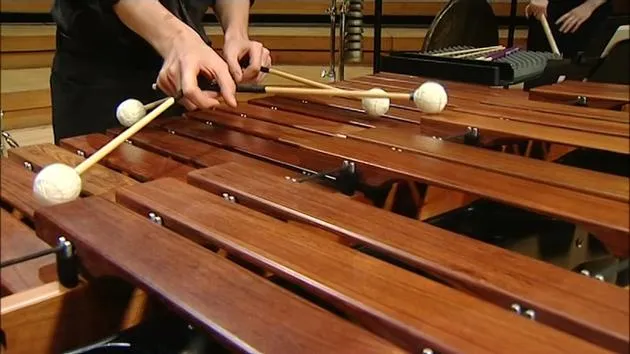
Transcripción de la lección
Music Lesson
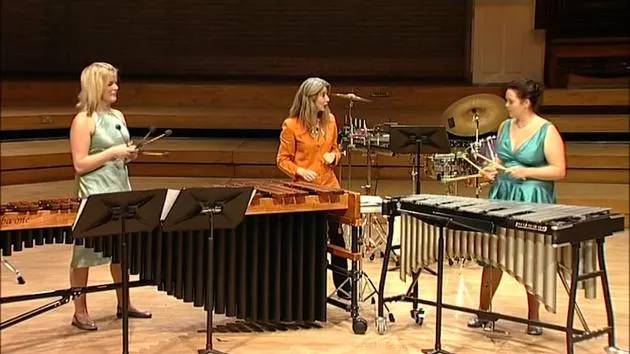
I hope you don't mind if we stay over just another five minutes or so. I don't think there's very much for me to say, to be honest, but there we have it. I do feel very inspired at seeing the next generation come through with all the vigour and all the interesting ideas that you bring to pieces of music that are very quickly becoming standard within the percussion world.
The Evolution of Percussion Music
We have to remember that, of course, the solo percussion repertoire is not yet 100 years old. You know, I think Darius Milhaud wrote the first percussion concerto back in 1927 or something. Yes, we have broken timpani concerti, but essentially, for the multipercussionist, we still have a long, long way to go.
Marimba Spiritual
So, something like Marimba Spiritual is actually quite an old piece, really. It's terrific to see new ideas and new blood getting into these pieces now. Lots of good things there.
- You know how to entertain.
- You know how to communicate.
I'm not going to tamper with this. You have your own personalities, and that just bubbles through completely in your playing, which will obviously develop as you become more and more experienced. You have your own stamp mark, you really do, and I'm not going to tamper with that at all.
Playing Tips
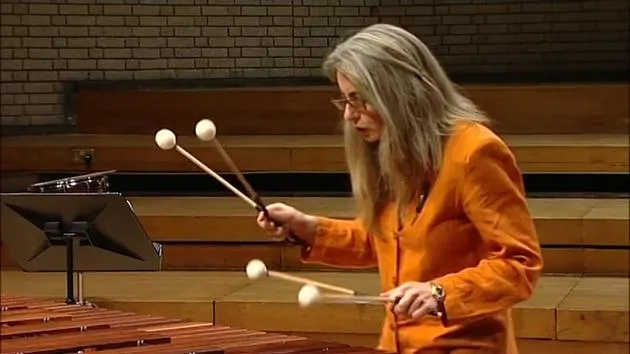
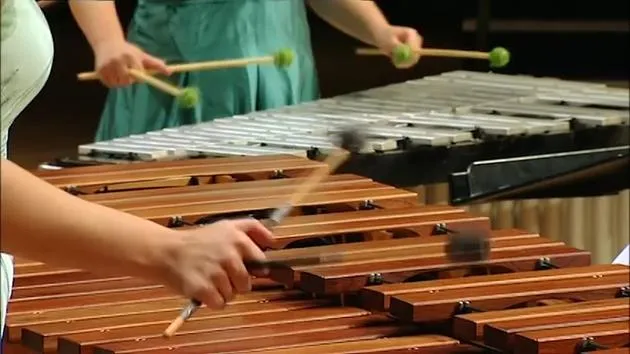
The first thing I would say is because you're wearing shoes and this piece has you up and down the marimba like a yo-yo, it might be worth actually getting a rubber mat.
- In the end, joking apart, sections where you have "ba ba ba ba ba bam, ba ba," that really does need to be accurate.
- It resembles a bullet, and it's a pity if we just miss that.
I think a lot of that is because you're sliding around the stage. So think about that when you're asking for your requirements, just a rubber mat, like a drum mat or something. That might save you from sliding around.
Maintaining Energy
I'm just going to poke around with a few little bits. The tempo you held pretty well. The only bit that sagged slightly in energy was where you have the "dig a doo doo doo", whichever bit just there.
- It's very difficult to keep the energy up there.
- However, if you can get that as quiet as possible, maintaining inner energy would be fantastic.
That was the only part where it just seemed to slow down noticeably. Otherwise, you chose a terrific tempo. It was a sensible tempo, not outrageous, just really on the ball.
Suggestions for Improvement
If we could possibly go back to the very beginning, just for one moment now. I know instruments are not exactly falling from trees anywhere, but if you have the opportunity as you progress through your career, my immediate thought is for your tam-tam to be off stage, allowing us to hear it out here.
You're sort of painting the hall with sound, and you hold it so well at the beginning before you play, you're prepared in your position, and then off we go.
Experimenting with Sticks
Now, are those sticks all the same or not?
- No, they're not.
- Some are the same, but those are slightly harder or softer.
I was just thinking, it's only an idea, but to literally play rather than have this awkward movement; with such a still thing, we almost don't want to see any movement, you know what I mean? It's a bit awkward.
I don't know your mallets, but we're aiming for very little movement, as opposed to a more animated style. Just something to think about.
Dynamics and Tone
Notice that the piece is all about the African theme. We don't want to fill it up already with sound; we can afford to keep it a bit weedy or thin, fragile, that type of thing.
With all these chords, listen to the resonance of the marimba. Come in with the rolled part from the sustain, rather than starting the roll afresh, that makes sense?
This is all good.
Can we start from here, please? This was actually very good.
- I would just recommend, as it's written, where this is all one phrase.
- The hands are getting further apart.
If we just halt it a little by reverting dynamically again, we've lost this momentum of getting more and more stressed. You might want to consider that, and we'll leave it for the moment, but just keep it going.
Challenges with Specific Sections
This cushion is very good here. Can we try that on the marimba? It's a very difficult part.
- Just the A in the bottom, yes, it is.
As you go up, it's not so much the speed that we're after, it's the intensity of the run coming down. It looks fast on the page because we've got three lines through it, but actually, it's more about conveying pain.
So let's try it once more. Take note of the little comma here, please.
Experimenting with Latex Sticks
Can you play your opening on the percussion for me?
- Yes, please.
This is really good. However, I would have you experiment with latex sticks, not the traditional type. A latex or encore-type mallet might give us a little more bite on the tom-toms.
A lot of the sound is being covered by the marimba and vice versa.
- Experiment with your sticks, get more clarity with the low tom on this.
Also, consider something almost like a bongo or a very high rototom to match your marimba. This will help keep the sound sharp.
Focus on Clarity
Now, with the marimba, we need absolute clarity and focus, especially when you're playing. Imagine yourself playing that cowbell.
- It's easy to swipe things under the carpet with this piece because the impact is powerful, but take care; otherwise, that can easily become a habit.
Your goal is to keep things clean, like weeding a garden. You need to clean up to avoid growing unwanted sounds.
Building Energy and Excitement
Now, at 90, you can really be quite a bit heavier so that we get a dialogue happening. I like how you control yourself with the marimba. It would be easy to get over the top, but you really do judge that well.
Conclusion and Final Thoughts
This is a piece that will be with you for the rest of your days, and you really do give it justice. It has been a big pleasure. Thank you!
4 lecciones
1h 33m de lecciones en vídeo estructuradas
Funciones de vídeo avanzadas
Ralentiza, repite un pasaje, sigue la partitura
Móvil, tablet y ordenador
Practica donde quieras
Garantía de satisfacción 100%
30 días de garantía de devolución
Conoce a tu gurú
Conoce a tu gurú
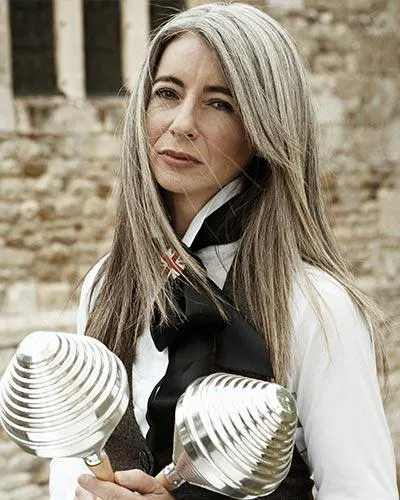
Evelyn Glennie es la primera persona en la historia de la música que ha logrado crear y sostener una carrera a tiempo completo como percusionista solista. Ofrece más de 100 actuaciones al año por todo el mundo, actuando con los mejores directores, orquestas y artistas. Sus diversas colaboraciones han incluido actuaciones con artistas como Nana Vasconcelos, Kodo, Bela Fleck, Bjork, Bobby McFerrin, Sting, Emmanuel Ax, the King's Singers, the Mormon Tabernacle Choir y Fred Frith.
Evelyn Glennie ha encargado ciento cuarenta y tres nuevas obras para percusión solista a muchos de los compositores más eminentes del mundo, y también compone y graba música para cine y televisión. Su primer drama de alta calidad produjo una banda sonora tan original que fue nominada a un premio de la British Academy of Film and Television Arts (BAFTA), el equivalente británico de los Oscar. De las 25 grabaciones realizadas hasta la fecha, el primer CD de Evelyn, Bartok's Sonata for Two Pianos and Percussion, le valió un Grammy en 1988.
Tras 20 años en el negocio de la música, empezó a enseñar de forma privada, lo que le permite explorar el arte de la enseñanza y el mundo de la terapia de sonido como medio de comunicación.
En 1993 Evelyn Glennie recibió la OBE (Officer of the British Empire). Esta se amplió en 2006 a 'Dame Commander' por sus servicios a la música. Hasta la fecha ha recibido aproximadamente 80 premios internacionales.







