



Cómo usar Flex Time
Con
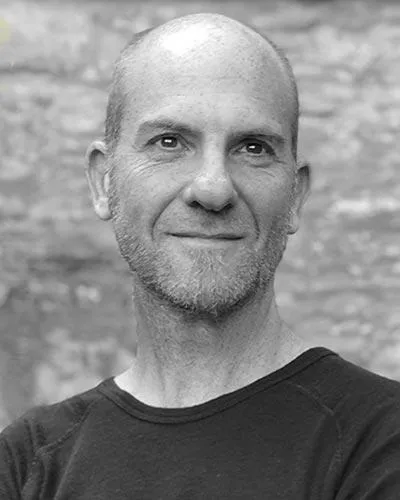
Dov WatermanDov Waterman usa Flex Time de Logic para reajustar una parte grabada al groove, apretando su timing con respecto al tema.
Qué incluye el curso
9 lecciones (0h 56m) · 1 gratis
01. Introducción al proceso de edición
Lección gratis0:23
02. Comping en Logic Pro
4:21
03. Cómo usar Flex Time
Estás aquí4:36
04. Uso creativo de compresión, delay estéreo, EQ y reverb
9:28
05. Técnicas para construir un tema
7:03
06. Trabajar con material en bruto
10:18
07. Cómo generar ideas creativas
12:54
08. Arreglar un tema
6:36
09. TAREA: Edición creativa
0:35
Transcripción de la lección
Music Lesson Formatting
Okay.
And it kind of ramps up. So it ramps up here and then kind of goes down again, with a little ramp towards the end.
I like it the way it is. So I'm not going to do much comping on it. I'm not going to do any comping on it, but what I am going to do is just get it a little bit more in time with the track.
Synchronization Issues
Although it was synchronized, the Arturia was synchronized to Logic, it had a bit of a hard time picking up the sync clock again because:
- The oscillators and the LFOs on the Arturia, although they're analogous, were playing just one long note.
And I guess for some reason it was just... It's the magic of these instruments, actually.
Flex Time Adjustment
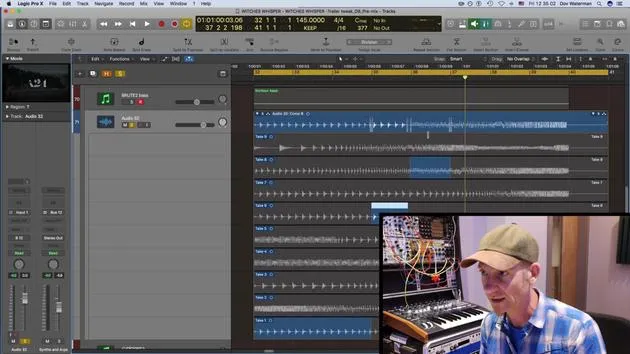
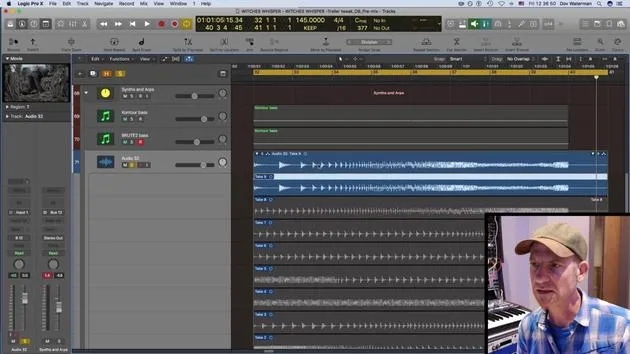
So what I'm going to do is flex time it and just get it a little bit more in time.
- This is the flex time.
- I've turned it on over here and for the track.
As you can see... So wait a minute, what I'm going to do is just flatten this track.
I've not done any comping on it, so if I had, I would flatten and merge. This process takes all the different comps from the different takes and merges them into one. But I didn't do any comping, so I'm just going to flatten that.
Monophonic Sound Analysis
So now what I've got is this. Let's turn some things off over here for a bit of a larger screen to work with.
This is what I would call monophonic sound.
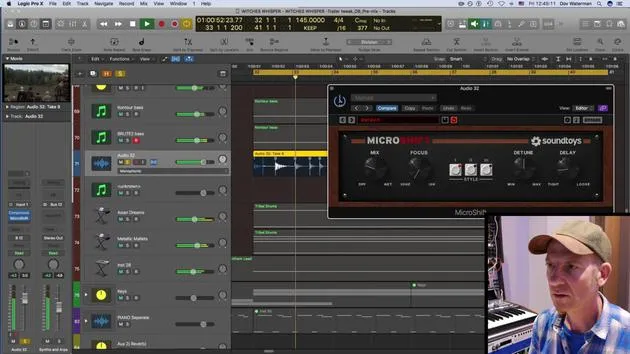
Okay. It was just scanning, analyzing this. I'm going to stick my metronome on and just try to get a few things in time.
Marking the End Section
What I'm going to do is set a marker at the end over here, at my end section. Then, when I pull things in and move things around, I have less dragging to do.
- Let's just pull this one in a little bit.
- Pull this one in.
Let's have a listen quickly:
- That one's okay.
- That one comes in okay.
- This could be dragged to there a little bit.
- That to there, that to there.
Let's have a quick listen.
You know what? I'm going to drag this a little bit in here just to give it that extra oomph.
- It's coming a little bit sooner, so it sounds more like a bouncing ball.
If we listen to it beforehand, before that move, it's very much on the grid and there's quite a jump. So I'm just going to move that back to give the spacing between these two. So it sounds a little bit more like a ball bouncing.
Final Adjustments
Okay. This is so fast that I actually don't really need to do too much to it. I think it's really just for the beginning over here.
So I'm just doing some subtle flex time. Moving this in just a little bit more, spacing them out a little bit so it gives it more of an organic feel.
Let's see how that works.
Okay, I'm happy with that.
And the rest of it is just...
9 lecciones
0h 56m de lecciones en vídeo estructuradas
Funciones de vídeo avanzadas
Ralentiza, repite un pasaje, sigue la partitura
Móvil, tablet y ordenador
Practica donde quieras
Garantía de satisfacción 100%
30 días de garantía de devolución
Conoce a tu gurú
Conoce a tu gurú
Dov Waterman es compositor, pianista y productor. Ha escrito y diseñado el sonido de películas como After Earth, Terminator Genisys, Transformers: The Last Knight y The Snowman, y trabaja como editor de audio de bibliotecas de samples y diseñador de sonido con empresas como Native Instruments y SonoKinetic.
Su serie Composition in Logic recorre la construcción de un tema de principio a fin en Logic Pro —desde las plantillas y el flujo de trabajo hasta la síntesis y la programación de ritmos, los efectos MIDI, la edición y la mezcla final— para productores que quieran convertir sus ideas en discos terminados.







