Cómo funciona tu voz

Con
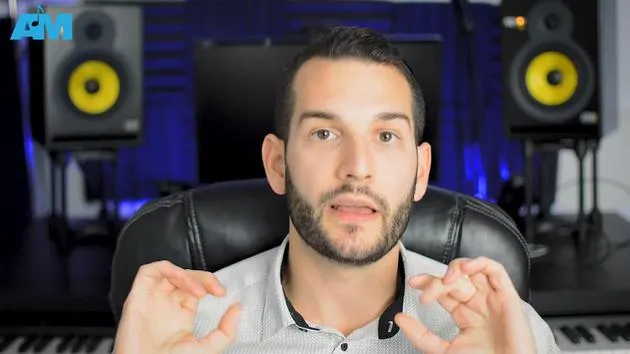
Adam MishanEn este vídeo, Adam explora de dónde viene tu voz y la mecánica que te permite producir sonidos.
Qué incluye el curso
24 lecciones (1h 9m) · 4 gratis



Transcripción de la lección
Understanding the Anatomy of the Voice
Alright, so this is going to give you a little bit of insight on how the voice works.
The Basic Mechanism
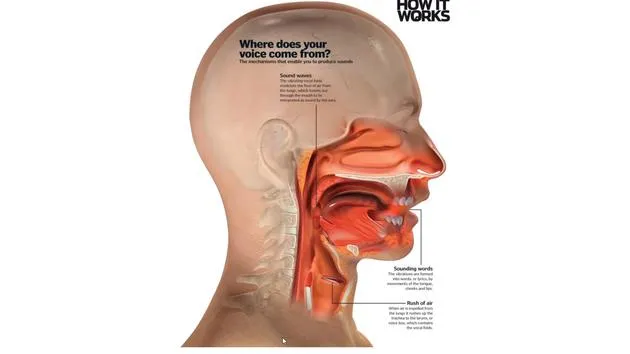
- Down below, we have our lungs. They fill up with air when we breathe in.
- When we breathe in, the air comes through this tube right here: the trachea.
- As you breathe out and you actually try to create sound, the airflow comes up through your larynx.
Key Structures
- Right here is your Adam's apple for men.
- For women, they don't have an Adam's apple, but it's still the same sort of mechanism.
- Believe it or not, this area right here is about the size of your thumbnail for men and a pinky nail for women, very, very small.
Sound Production
This is the place where the vibration happens. This is where the sound starts to occur, and then it travels up through this passageway.
- This right here is called your epiglottis.
- The sound can then travel out of the mouth or into the head cavity where it comes through the nose.
The Path of Sound
Sound splits right around this back area, where your uvula is (the dangly thing in the back of your throat).
- This is your soft palate right here,
- and your hard palate here (the roof of your mouth).
Singing Techniques
When we're singing, it's important to know how the air is traveling and what the different parts of your body are doing.
- When we sing the "ah" sound, the tongue sits a little bit further back and opens up wide in the mouth.
- For the "E" sound, the tongue sits high and out of the throat.
So, it's kind of important to know how that works.
Now you've got an idea of what the mechanisms are involved as you're singing.
- The vibration happens here, and the sounds are projected through your head.
- This is where you would have head voice and where here, the chest voice.
"Ah, that's your chest voice."
I hope this clarifies the anatomy of the voice for you.
24 lecciones
1h 9m de lecciones en vídeo estructuradas
Funciones de vídeo avanzadas
Ralentiza, repite un pasaje, sigue la partitura
Móvil, tablet y ordenador
Practica donde quieras
Garantía de satisfacción 100%
30 días de garantía de devolución
Conoce a tu gurú
Conoce a tu gurú
Adam Mishan es un profesor de canto que aprendió a cantar por sí mismo. Sus vídeos documentan el recorrido desde no ser capaz de mantener una nota hasta cantar con verdadero control, y ese camino es ahora el que da forma a su manera de enseñar: más de 200.000 personas lo siguen en YouTube. En sus cursos trabajarás la afinación, el apoyo respiratorio, el tono y el registro en pasos pequeños y repetibles, del mismo modo en que él construyó su propia voz.