



Análisis de la Sonata para piano n.º 31 en La bemol mayor, Op. 110
Qué incluye el curso
4 lecciones (2h 40m) · 1 gratis
01. Introducción de András Schiff a las Sonatas de Beethoven
Lección gratis12:39
02. Análisis de la Sonata para piano n.º 30 en mi mayor, op. 109
45:17
03. Análisis de la Sonata para piano n.º 31 en La bemol mayor, Op. 110
Estás aquí53:41
04. Análisis de la Sonata para piano n.º 32 en do menor, Op. 111
49:07
Transcripción de la lección
Sonata in A Flat Major, Op. 110: An Overview
The next Sonata in A Flat Major, Op. 110, does not have a dedication. We could speculate why some scholars feel that this was meant as a sonata for the Immortal Beloved, Antonia Brentano. However, we cannot be sure, and there is really no dedication.
Opus 109 has its dedication to Maximiliano Brentano, and Opus 111 is dedicated to Archduke Rudolph, who was Beethoven's favorite pupil. He received numerous wonderful compositions from Beethoven. So, mysteriously, here we find no dedication. But the Antonia Brentano theory is convincing because the opening movement is like a love poem, a declaration of love.
The Opening Movement
The opening movement is "Moderato, molto cantabile," which is very lyrical and expressive.
- Structure: The first four bars are in four-part, four-voiced harmony.
- Performance Suggestion: It could be very well played by a string quartet, although A flat major is not an easy key for them.
Beethoven previously used this tonality in Opus 26, again as the theme with variations as the opening movement, which is quite unusual. A flat major is a wonderful key to express tenderness and loving kindness. Indeed, after the Fermata at the end of the fourth bar, there is a trill, and unexpectedly, Beethoven starts a beautiful song, a melody with a relatively simple, almost primitively simple accompaniment.
Polyphony and Simplicity
He wanted it this way because, by this time in his late phase, he was thinking more and more polyphonically. So, why suddenly something so simple? There is really nothing even remotely similar in earlier Beethoven; here he introduces arabesque-like figurations of demisemiquavers.
- Playing Technique: These should be played motivically because Beethoven carefully marks a dot on every fourth note.
- Meaning of the Dots: These dots indicate melodic emphasis, not shortness; they are not staccato dots, and they should not be played superficially.
The opening movement of Opus 110 is again in sonata form and is very brief, just like that of Opus 109. However, it contains three distinct themes, not only two.
Themes and Development
- Theme Appearance: The next theme features very naked harmonies and the greatest expression. However, there are no great dramatic outbursts; it's fundamentally a lyrical movement.
- Dark Clouds: In the development section, darkness lurks, and one can sense danger approaching as the picture darkens, leading into the minor mode.
We have a main theme, and also let's observe its rhythm: "tam pam pam papam," which constantly textures the whole movement. Beethoven uses this theme and repeats it seven times while adding an interesting counterpoint in the lower voices (tenor and bass) in semiquaver movement.
Imagine this as two people: the tenor provides a bar with no crescendo, while the bass gives another line with a tiny swell. This process goes through numerous modulations.
Climax and Conclusion
At the end of this recapitulation, the main theme combines with demisemiquaver figurations now in the bass region. This moment leads us to D flat major, the subdominant, a significant event in Beethoven sonatas.
Sometimes he reaches it in the middle of the development section, sometimes later in the recapitulation. This shows Beethoven's mastery; he does not follow set models, allowing each sonata to find new solutions.
- Enharmonic Modulations: A beautifully executed enharmonic modulation occurs from D flat, which is enharmonic with C sharp, leading to the distant key of E major.
Eventually, he descends chromatically, makes a ritardando, and returns to the home key. The end of this movement is poetic again, but the last three bars are peculiar, not just due to the dissonant diminished ninth chord.
Evolving Melodies
Listen to the ascending force in the middle voices. This connects with the movement's beginning again. Following this lyrical moment, we transition into a very different one in F minor, "molto allegro", a scherzo with trio.
Despite sounding angry and furious, the music is somewhat misleading. We know this because Martin Cooper, the English musicologist, pointed this out. Beethoven utilized two contemporary German folk songs that are quite humorous.
- First Folk Song: "Uns Recatz had Ketz Gen Kapt," about their cat.
- Second Folk Song: "Ich bin luderlich, Dubis luderlich," translates loosely to a state of being down and out.
These lively songs were recognizable to contemporary listeners, a stark contrast today where many cannot even sing a folk song.
Trio Section
The trio section presents descending fourths, resembling a comic scene of someone rolling down the stairs while another attempts to climb. After this, the Scherzo returns, repeating the folk songs. In the Da Capo, Beethoven introduces a little ritardando, the only change.
When finished, there are more furious refusals with fortissimo chords, an emphatic declaration of no. The movement concludes on an F major chord, without a break, and immediately transitions to the next movement.
Final Movement: A Struggle for Expression
This leads us to the last movement, which is the main event of the sonata. It is extraordinary, and it is evident that Beethoven faced considerable challenges, as seen in the manuscript: pages crossed out and a sense of struggle. This period was personally difficult for him, as he fought for custody of his nephew, Karl, amidst significant strife with the Austrian courts.
This last movement has a very unusual form. It begins with a free section, almost no meter, no bar lines, a free recitative.
Unconventional Flow
We would expect an A flat minor tonic chord upon returning to the home key, but it never materializes. It is a recitativo, unbound by meter or typical structure.
Beethoven creates a wash of sound, holding the pedal and producing magical textures that demonstrate his ability to utilize deafness creatively. This is contrary to the aesthetics of his time; usual teaching restricts mixing harmonies and requires distinct pedal use.
In a different approach, Beethoven directly contradicts this rule. At the recitativo's outset, he instructs una corda, leading us back to the home key through intricate modulations.
Arioso Dolente
Next, we encounter the most tragic lament in keyboard music, designated as Arioso Dolente (a song of lament). This passage resembles a moment of profound sorrow. Beethoven might be expressing the gravity of illness and the proximity of death, much like the climax in Bach's St. John Passion when he conveys Christ's finality.
At the end of this lament, unison octaves resound with a fermata, transitioning into a fugue.
- Fugue Themes: If the previous arioso was the Agnus Dei, this one is Dona nobis pacem, a plea for peace. Unlike the highly structured fugues of Bach, Beethoven uses this form to portray life's triumph over death.
This fugue builds towards its climax, but before it ascends, a shattering emotion emerges, stopping on a dominant seventh chord.
Returning to Lament
Beethoven revisits the Arioso Dolente, marking it as exhausted. The melody echoes that of Bach's Passion but in a more fragmented and sob-like form. The constant accompaniment juxtaposed with this pained freedom exemplifies the struggle intertwined in this work.
As the piece progresses, the music conveys a heartbeat, a distant echo of life reawakening.
Conclusion: The Triumph of Life
Ultimately, the only sonata of Beethoven's last three that ends triumphantly resonates with the triumph of life. As he discards the rules of the fugue, it transforms into a heavenly chorale, encapsulating the essence of recovery and renewal.
Here we see Beethoven's genius, his ability to weave personal struggle and universal themes through intricate musical forms. Thus concludes Opus 110, a reflection of resilience and the transcendent nature of the human spirit.
4 lecciones
2h 40m de lecciones en vídeo estructuradas
Funciones de vídeo avanzadas
Ralentiza, repite un pasaje, sigue la partitura
Móvil, tablet y ordenador
Practica donde quieras
Garantía de satisfacción 100%
30 días de garantía de devolución
Conoce a tu gurú
Conoce a tu gurú
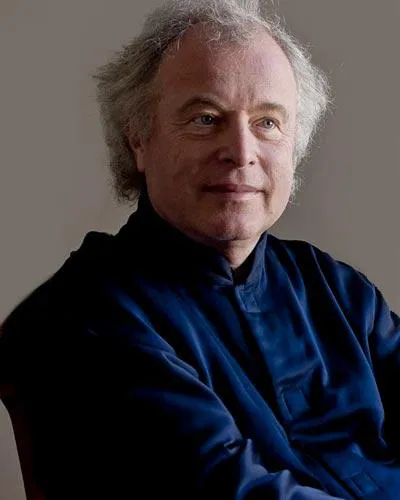
András Schiff es uno de los miembros más destacados de una generación de pianistas húngaros nacidos en los años posteriores a la Segunda Guerra Mundial, junto a artistas como Zoltán Kocsis, Dezso Ránki y Jenő Jandó. De este notable grupo, Schiff ha alcanzado la mayor reputación internacional, no solo por su decisión de desarrollar su carrera fuera de Hungría, sino también gracias a su sentido del toque finamente matizado y a una memoria impresionante que le permite presentar, en conciertos y grabaciones, amplias porciones de la obra de un compositor.
Schiff nació en Budapest el 21 de diciembre de 1953 y estudió con el compositor húngaro Pal Kadosa y Ferenc Rados (que también enseñaron a Kocsis y Ránki), y con el clavecinista inglés George Malcolm. Debutó en Budapest a los 19 años, seguido de apariciones en concierto por toda Europa y Estados Unidos. Su reputación creció con actuaciones galardonadas en el concurso de Moscú de 1974 y en el Leeds Festival de 1975.
András Schiff trabaja con la mayoría de las grandes orquestas y directores internacionales, pero él mismo dirige la mayor parte de sus interpretaciones de conciertos para piano de Bach, Beethoven y Mozart. En 1999 creó su propia orquesta de cámara, la Cappella Andrea Barca, con la que trabaja cada año como director y solista, como hace también con la Philharmonia Orchestra y la Chamber Orchestra of Europe.
El estilo de Schiff, en el que un toque inusualmente sensible se combina con una atención a la claridad contrapuntística, lo ha convertido en uno de los principales intérpretes de Bach de la actualidad. Ha grabado la música completa para teclado de Bach, así como las sonatas completas y los fragmentos de sonata de Franz Schubert, cuya introspectiva música para teclado se adapta bien al temperamento de Schiff. Completó un ciclo de sonatas de Beethoven en ECM en 2009, y en 2011 recibió el Premio Schumann de la ciudad de Zwickau por su interpretación y difusión de la música de Schumann. En 2001, Schiff comenzó a revisar y regrabar las obras de Bach. Además de las esperables obras románticas centroeuropeas, la música de Béla Bartók y Leos Janácek ocupa un lugar destacado en el repertorio de Schiff.
En sus cursos de MusicGurus sobre los Moments Musicaux n.º 1, 3 y 4 de Schubert, la Partita n.º 2 de Bach y las últimas sonatas para piano de Beethoven, Schiff te introduce en ese mundo interpretativo, compartiendo cómo piensa el fraseo de voces, el toque, la claridad contrapuntística y la estructura para que puedas aportar verdadera profundidad y comprensión a estas obras en el teclado.







