



Análisis, explicación y demostración con Ana Chumachenco
Qué incluye el curso
6 lecciones (1h 59m) · 1 gratis
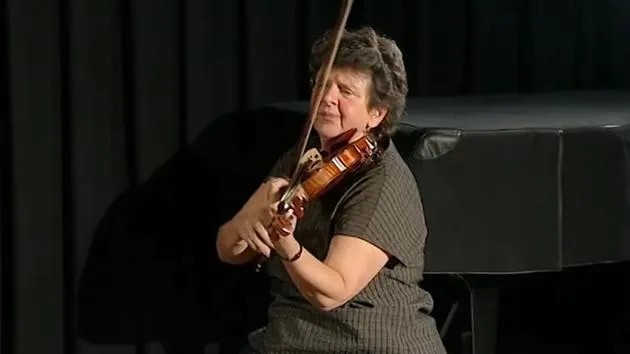
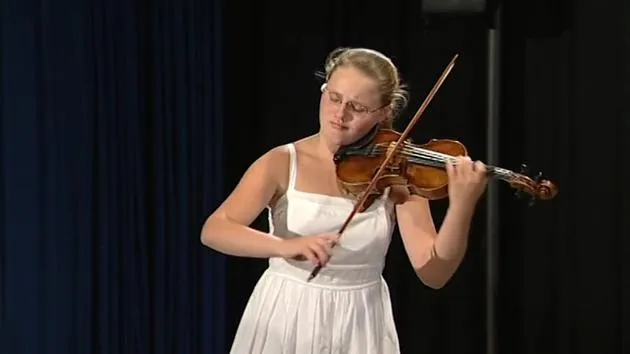
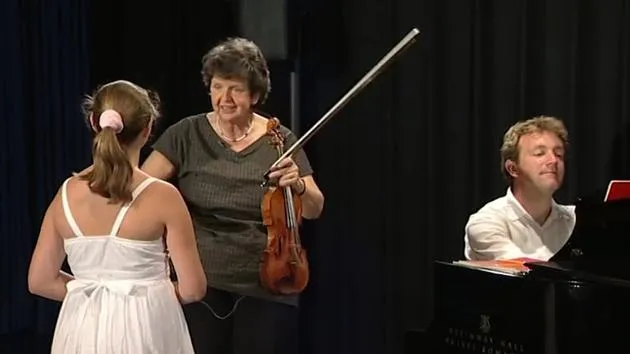
Transcripción de la lección
Music Lesson
Introduction to Details in Performance
"Only sometimes the details you do are very little. Nice details, but one doesn't hear them."
Key Concepts: Balance and Differentiation
-
Finding the Balance:
- "It's nice. It's beautiful. But it's too little."
- It's always about finding the right measure.
- The balance must be maintained so that the student feels this balance.
-
Revisiting the Beginning:
- "The beginning was very beautiful. But maybe we can start again."
- "Don't do those too long. Not too much of that. Those accents. Let's start again."
Working with Timing and Dynamics
-
Interaction with the Orchestra:
- "You wait for Tobias or for the orchestra when you play also. No, not too soon."
-
Listening Skills:
- "I'm sorry, maybe I have some trouble here. I don't hear the first two."
Articulation and Control
- Final Notes and Phrasing:
- "You have to learn to play the last note. To end. To finish a phrase."
- "It's a question of bow control. Too much bow is never enough bow."
Technical Execution
-
Clarifying Techniques:
- "Think about it. Somewhere around there. Yes. Yes, it's much better."
- "The endings are disappearing. This cuts everything into little pieces."
-
Building Connections:
- "That's a way also of making a connection between all these different parts."
Practicing with Intent
- Differentiating Sounds:
- "The less you play, the more piano, the more you have to articulate very clearly."
- "We can play very, very piano. But I think we don't know how to play pianos."
Encouragement for Improvement
- Technical Challenges:
- "There is a little bit of a technical problem. You play either a lot with the fingers, and the other things you play with the arm."
- "Make sure you give the movement from here, but the changes you do from here."
Refinement and Practice
- Refining Phrasing and Dynamics:
- "More bow, more sound, more everything."
- "Always the trills up bow. With a little accent for the articulation."
Conclusion
- Final Thoughts on Performance:
- "When you have control of everything, then you can let go."
- "It's either ways, but when you know everything functions, let it come by itself."
Closing Remarks:
"Thank you very much."
6 lecciones
1h 59m de lecciones en vídeo estructuradas
Funciones de vídeo avanzadas
Ralentiza, repite un pasaje, sigue la partitura
Móvil, tablet y ordenador
Practica donde quieras
Garantía de satisfacción 100%
30 días de garantía de devolución
Conoce a tu gurú
Conoce a tu gurú
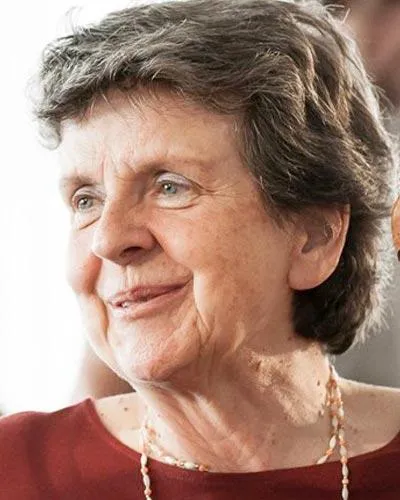
De origen ruso, pero nacida en Italia y de nacionalidad argentina y alemana, Ana Chumachenco empezó a tocar el violín a los cuatro años bajo la supervisión de su padre, discípulo de Leopold Auer, y más tarde con Ljerko Spiller en Buenos Aires. Tras alcanzar una carrera notable en sus primeros años, regresó a Europa a los 17 años para continuar sus estudios. Un año después obtuvo la medalla de oro en el concurso Carl Flesch de Londres y, unos años más tarde, la medalla de plata en el Concurso Reina Isabel de Bruselas. Sus mentores musicales de aquellos años fueron Joseph Szigeti, Sandor Vegh y Yehudi Menuhin.
Además de sus recitales y sus apariciones como solista con grandes orquestas, Ana Chumachenco ha dedicado gran parte de su tiempo a la música de cámara, especialmente en un trío de cuerdas con su marido y violista, Oscar Lysy, y el violonchelista Walter Notas, con quienes, bajo el nombre de Munich String Trio, ha actuado durante más de 20 años.
Ana Chumachenco ocupa una cátedra en la Musikhochschule de Múnich y es una de las profesoras de violín más solicitadas del mundo: sus alumnos son jóvenes violinistas excepcionales que se han convertido a su vez en solistas internacionales. También es invitada periódicamente a formar parte del jurado de importantes concursos de violín, como el Concurso Internacional de Música Reina Isabel de Bélgica, el Concurso Internacional de Violín Jean Sibelius de Helsinki y otros.
En su clase magistral de MusicGurus sobre los Conciertos para violín n.º 3, 4 y 5 de Mozart, podrás estudiar directamente con ella. Ana comparte las claves que han formado a toda una generación de solistas: cómo dar forma a una frase, colorear el tono, gestionar la arcada y la articulación, y hacer aflorar el carácter, el ingenio y el canto que hacen de Mozart algo tan revelador de tocar.







