



Funk-Bass-Inspirationen
Lesson time: (6min 20sec)
Course preview
This lesson is part of the course Entfessle dein Funk-Bass-Potenzial mit The Brand New Heavies
Watch a preview of the full course below.
Lesson transcript:
Funk Bass Playing Techniques
I think with funk, because it's so syncopated, and that's the beauty of it. As a bass player, you've really got to find:
- The right spaces to play in
- The right spaces to not play, especially with drums.
Playing with Other Musicians
Again, playing with other musicians when you're jamming, even while writing, is crucial. You tend to play less if there's other people playing with you.
Consider this example:
- Imagine your drummer is doing a beat.
- Focus on the kick drum as your main downbeat.
If it's a four-to-the-floor beat, you don't have to hit certain beats that the drummer is hitting. To the ear, it sounds like you're still playing.
A Simple Trick
I do this trick where, if it's just a basic groove, I'll do a simple octave disco thing. Sometimes if you cut out one of the downbeats like this, you can:
- Let the kick hit, but you don't.
- This gives a bit of a push-and-pull feeling to the groove, which is very subtle.
But when the track's in a club and you're playing it loud, you can really feel it working.
Love for Disco Music
I'm a big fan of disco music. There's a lot of pedaling and octaves used in disco. If I find a sweet note, like something in F (which is one of my favorite keys), I tend to pedal a lot. You can pedal by:
- Fingering and pulling hard.
- Stopping with very short notes, which can sound quite funky as well.
Drumming with Notes
When you're doing very short stops, your fingers need to stop the note very quickly. It takes a lot of energy, something I do naturally.
To break it down:
- Hold down the fret.
- Pull and stop immediately.
These short, staccato notes can sound quite funky if you get it right.
Listening to Influences
To get into funk bass and play in a band that plays funk, it's important to listen to greats like:
- Bernard Edwards from Chic
- Verdine White from Earth, Wind & Fire
Verdine is an incredible and underrated bass player. Pay attention to:
- His short stops
- Very tight run-ups to key changes.
I've been in the industry for about 20 years, and I've really started to understand what he does. I had the pleasure of supporting Earth, Wind & Fire and spoke with Verdine about the bass he plays.
Influences: Bootsy Collins
My first real influence was Bootsy Collins, but at the time, I didn't realize it was him because his name wasn't on the records. He played bass for James Brown and had some very simple, groove-based lines that are perfect for beginners.
One of the first bass lines I ever learned was:
- Very, very simple.
- Easy to learn, especially if you're self-taught.
It's not just about the notes; it's the groove and the pauses in between, something again you have to feel.
Importance of Listening
I believe that listening is one of the most important aspects of learning bass.
- Spend about an hour listening to a certain bass player.
- Avoid playing over the track so you can really hear what the bassist is doing.
Digest it, get it inside your body, your soul, and then try to recreate it over a drum track. Maybe get your drummer in!
Practicing Together
I don't practice a lot, probably not enough. Whenever I play, it's usually with someone else, which is beneficial. It helps you get into your own world. Just remember:
- Everyone has a space to play in the groove:
- Space for drums
- Space for bass
- Space for guitar.
With funk, it's all about syncopation. Everyone has their little spot to play in, and once you find your spot, you've found your groove.
Final Thoughts
Listening is very important.
About the instructor
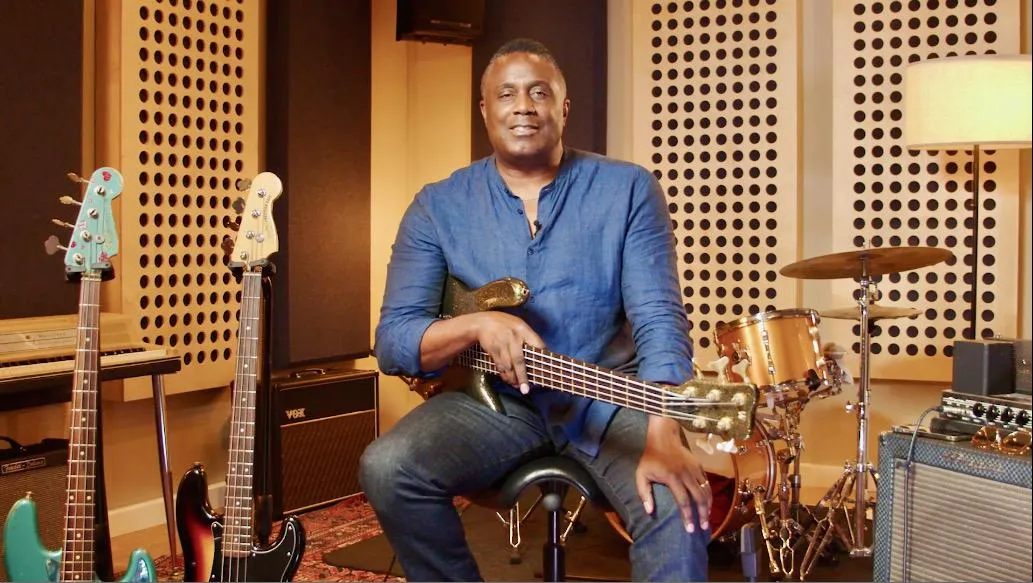
Andrew Levy ist Gründungsmitglied und Bassist der Acid-Jazz-Gruppe The Brand New Heavies. Außerdem schreibt er gemeinsam mit Simon Bartholomew die eigene Musik der Band. Als autodidaktischer Musiker wuchs Andrew mit Reggae, britischem Pop-Radio, klassischer Musik, Jazzfunk, 'Lovers' Rock', Jazzfusion, House, amerikanischem Folk, Hip-Hop und Acid House auf – eine eklektische Mischung, die daraus entstand, in London mit Eltern aus Jamaika aufzuwachsen! Seine größten musikalischen Einflüsse sind James Brown, Vicki Anderson, Earth Wind and Fire, Level 42, Shalamar, Chic, Herbie Hancock, George Duke, George Benson, Marvin Gaye, Thin Lizzy, Miles Davis und Phyllis Hyman. In seinem Kurs verrät Andrew, was Funkbass wirklich in Bewegung bringt: wie du dich mit dem Schlagzeug verzahnst, tief im Pocket sitzt und den Groove als Teil einer eng verzahnten Rhythmusgruppe hältst – das Feel, die Disziplin und die Entscheidungen hinter dem Sound, der The Brand New Heavies berühmt machte. Andrew lebt im Südwesten Londons mit seiner Frau Melissa und ihren beiden Söhnen. Über The Brand New Heavies The Brand New Heavies, gegründet von Andrew Levy und Simon Bartholomew, waren Wegbereiter der Acid-Jazz-Szene der 1990er Jahre. Die beiden lernten sich 1985 in der Schule in Ealing kennen, bevor sie Top-10-Alben in Großbritannien, den USA und Japan veröffentlichten und 2020 einen siebenstelligen Vertrag mit dem internationalen Label Edel Records unterschrieben, um fünf neue Alben zu produzieren – das erste erschien im Frühjahr 2022. Die Band ist stolz darauf, echte Instrumente zu spielen – keine computer-synthetisierte oder programmierte Musik. Deshalb hat sie viele namhafte Fans in der Musikindustrie, darunter Superproduzent Mark Ronson, der ihr gleichnamiges Album zu seinen 10 besten Platten aller Zeiten zählt und der Band zuschreibt, ihn Anfang der 1990er vom Rock zum Funk gebracht zu haben. Ronson produzierte die 2019 erschienene Coverversion der Band von Kendrick Lamars "These Walls", die auf Radio 2 eine treue Kult-Anhängerschaft gewann. read more