



Ideen für die linke Hand
Paddy bringt dir Techniken und Riffs für die linke Hand bei einem langsamen Blues bei
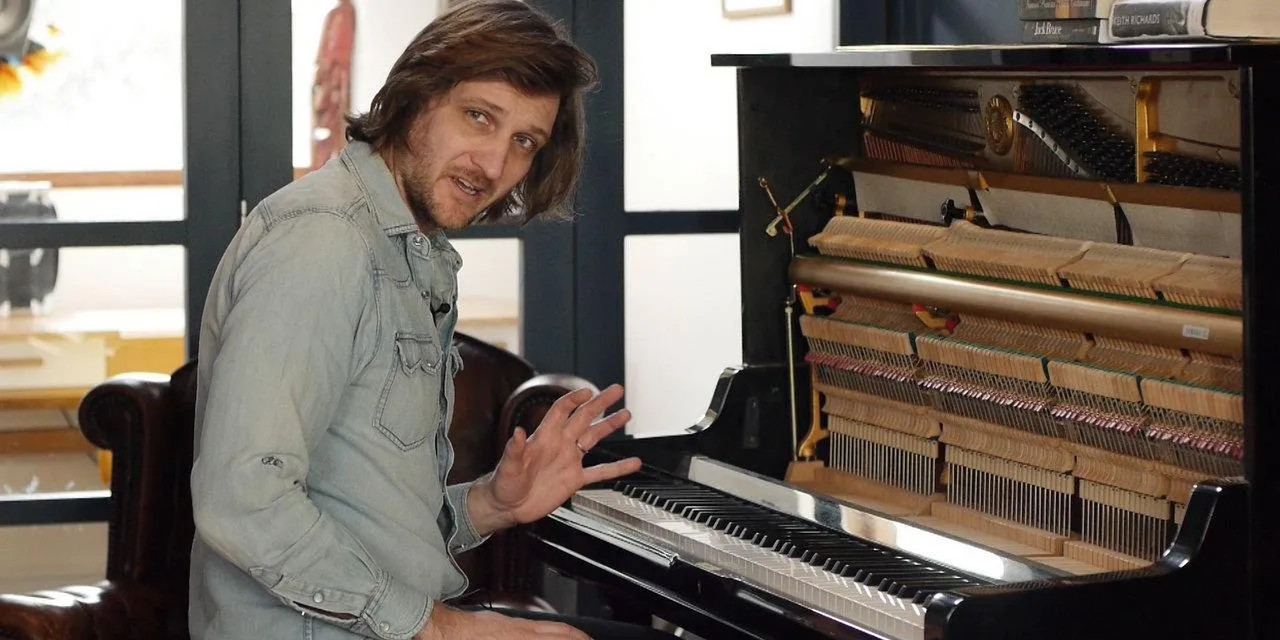
Das steckt im Kurs
14 Lektionen (1h 47m) · 1 gratis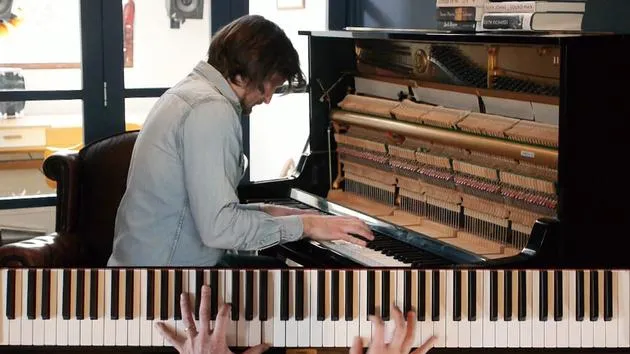
01. Demonstration – Spielen wir einen Slow Blues
Gratis-Lektion4:30

02. Ideen für die linke Hand
Du bist hier11:26
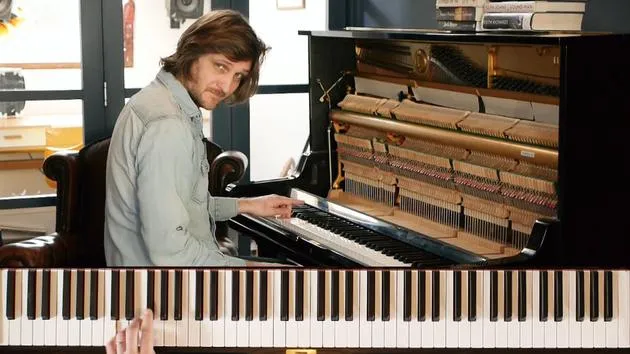
03. Ideen für die Einleitung
9:40

04. Ideen mit Sexten
9:34
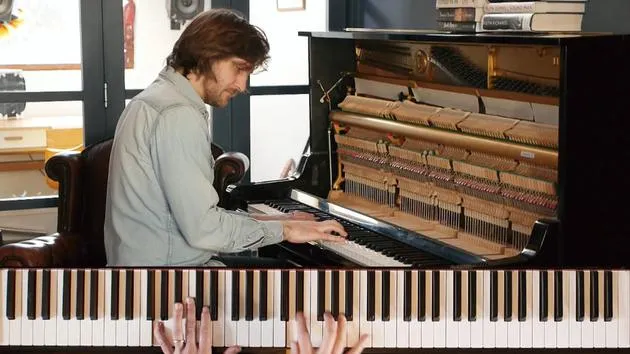
05. Riff im Memphis-Slim-Stil
3:28
06. Verminderte Akkorde
7:11
07. Wiederholte Noten & Phrasen
8:34
08. Turnarounds
9:55
09. Ideen für einen Breakdown-Abschnitt
11:10
10. Linke Hand im Stil von James Booker
6:58

11. Weitere Ideen für die rechte Hand
8:08
12. Tremolos
6:03
13. Ideen für Schlüsse
9:29
14. Slow Burn - Die Slow-Blues-Challenge
1:41
Transkript der Lektion
Course on Playing Slow Blues
Introduction
Cool. How you doing? Paddy Milner here. And welcome to this course on playing a slow blues.
Quick Recap on 12 Bar Blues in the Key of G
Let's kick off with a quick recap of what a 12 bar blues is in the key of G. We'll be staying around this key, which is the key that I played the tune in that I hope you've checked out on the free video.
Chord Structure
In a 12 bar blues in the key of G, we have:
- 1 bar of G
- 1 bar of C
- 2 bars of G
- 2 bars of C
- 2 bars of G
- 1 bar of D
- 1 bar of C
- 1 bar of G
- 1 bar of D
Those last two bars will serve as a turnaround, and we'll explore different things we can play over that turnaround.
Feel of the Tune
Before we dive into the more complicated right hand riffs, let's discuss the feel of the tune:
- Feel: Four to the bar, very slow - almost like a funeral dirge.
- Left Hand: Just pumping away underneath it all, sometimes moving to the five and up to the C.
Anticipations
You'll notice I'm doing those little anticipations:
- Timing: 1, 2, 3, 4 (just to give it movement).
- They always come before the beat to the five and the four.
Initially, it's a very basic left hand, purely meant to add weight and keep the time flowing beneath the right hand.
Importance of Solid Left Hand Technique
As with boogie woogie and other styles, it's crucial to have that left hand totally solid.
Practice Tips:
- Practice while doing other tasks - have a conversation, read a book, etc.
- Use a metronome to maintain a solid tempo.
Variations
There are a couple of variations I use with that left hand:
- Little passing notes that might sound odd on their own but work well in context.
- For example, after moving to the five and back to G, you can incorporate a little bass line.
Exploring More Complex Left Hand Techniques
On the chord four, coming down from the five, I might do something like this:
- Moving to the tenth, which creates a cool sound.
Often, I'll add those little runs, giving it that basic yet flavorful sound.
Additional Left Hand Ideas
Besides the basic bass, let's consider a more complex left hand approach:
- Starting on chord one, moving to the five.
- Getting more interesting on the four while approaching the G7 by a semitone.
You can also incorporate the Stormy Monday chord sequence or use a five chord in second inversion.
Creative Expression
This is where I really encourage you to start getting creative and do your own thing with it.
- Here's an idea for the left hand, try something like this:
- Introduction of jazz harmony, feel free to experiment!
Alternative Bass Lines
There are many bass lines you can play over a slow blues. For example:
- A simple rhythmic change could lead your entire song.
Triplet Ideas
You might explore triplet fills, inspired by artists like Fats Domino. For instance, something that sounds like this in octaves.
Breakdown Sections
Remember that breakdown section in the tune? The bass line dropped out, marking the bars.
- You could just use a few notes to outline the harmony.
Conclusion
That covers the bass lines generally from that tune. Maybe I'll explore some specific James Booker left hand techniques in a later video.
So, let's move on and look at something else!
14 Lektionen
1 Std. 47 Min. strukturierte Videolektionen
Erweiterte Videofunktionen
Verlangsamen, Passagen loopen, mitlesen
Handy, Tablet & Desktop
Üben, wo du willst
100 % Zufriedenheitsgarantie
30 Tage Geld-zurück-Garantie
Lern deinen Guru kennen

Lern deinen Guru kennen
Paddy Milner gilt als einer der besten Blues-Pianisten der Welt – derzeit ist er der Stammkeyboarder von Sir Tom Jones, nach mehreren Jahren an der Seite des großartigen, verstorbenen Jack Bruce –, aber er ist auch ein hervorragender eigenständiger Songwriter und ein unverwechselbarer Sänger. Lies einfach das Lob von Größen wie Dave Brubeck weiter unten! Sein Spiel war auf dem Soundtrack des Kinohits 'Rocketman' von 2019 zu hören.
Zweimal wurde er bei den British Blues Awards als bester Keyboarder ausgezeichnet, und als Gründungsmitglied der Ronnie Scott's Blues Explosion hat er eine langjährige Residency im weltberühmten Club Ronnie Scott's.
Seine aktuelle Band LONDONOLA spielt selbst geschriebene britische Musik mit einer kräftigen Portion New-Orleans-Geist, und sein gemeinsames Projekt JAWBONE geht seit der Veröffentlichung des gleichnamigen Debütalbums von Stärke zu Stärke.
- „Ich liebe es... da ist einer, der wirklich Klavier spielen kann" - Dave Brubeck
- „Ich kann es nur wärmstens empfehlen. Irgendwie fängt alles an, sich viel besser anzufühlen!" - Jack Bruce
- „Der beste Blues-Pianist Europas..." - Blues Access, USA
- „Beeindruckend und originell" - The Times
- „Blendend" - The Independent
In seinen Kursen zerlegt Paddy den authentischen Blues-Shuffle, Slow Blues, Boogie-Woogie, Rock 'n' Roll und das New-Orleans-Piano – bis hin zu drei klassischen Boogie-Woogie-Songs –, damit du diese Stile bei einem der Allerbesten des Fachs lernst.







