



Riffs auf Basis eines Akkords in zweiter Umkehrung

Mit
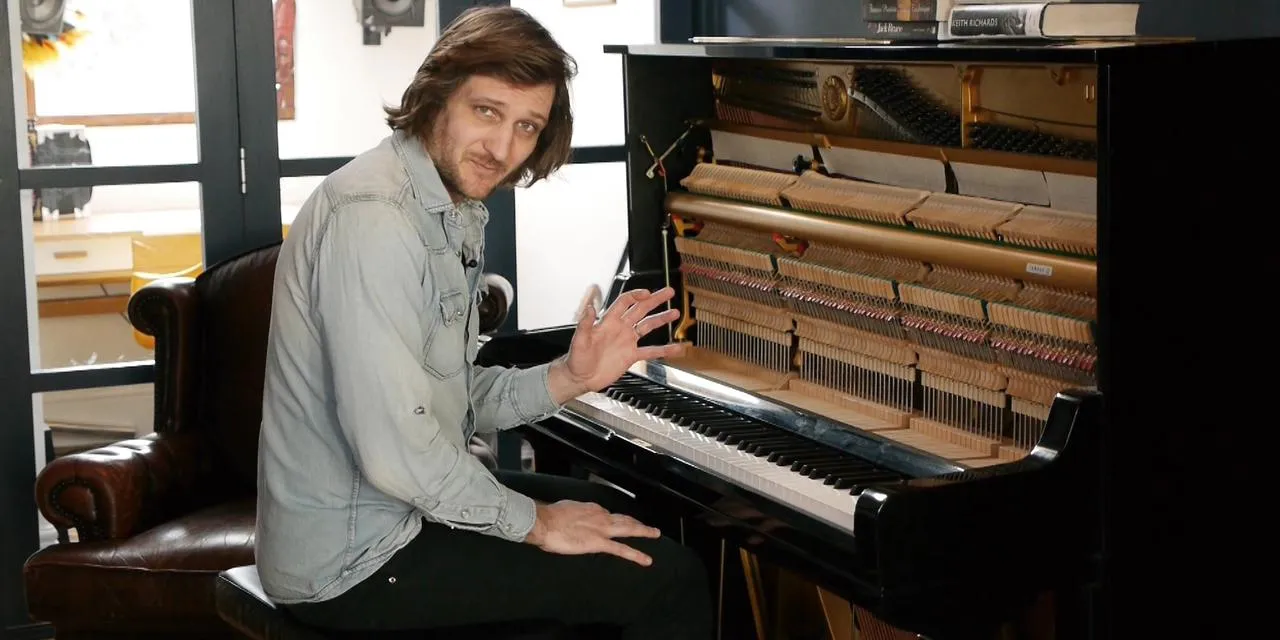
Paddy MilnerPaddy Milner stellt ein Riff vor, das auf einem Akkord in zweiter Umkehrung aufbaut und sich gut eignet, um den V-Akkord in einem Blues auszuschmücken.
Das steckt im Kurs
14 Lektionen (2h 17m) · 2 gratis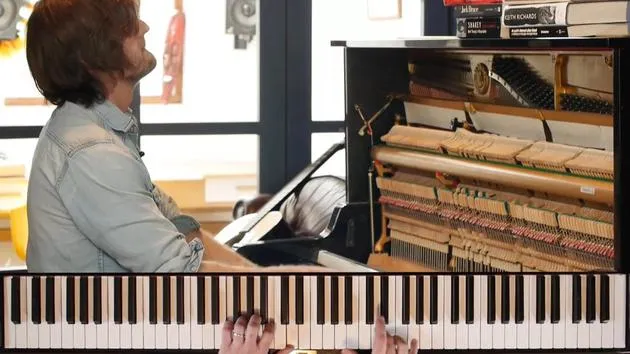
01. Demonstration: Spielen wir etwas Blues
Gratis-Lektion3:48

02. Das 'Pinetop Smith'-Riff erkunden
Gratis-Lektion15:29

03. Ideen mischen mit dem 'Pinetop Smith'-Riff
7:59

04. Riffs auf Basis eines Akkords in zweiter Umkehrung
Du bist hier20:24
05. Absteigende Terzen erkunden
15:28

06. Ideen für eine Einleitung
9:34
07. Der Maschinenraum - der Bass in der linken Hand
10:59
08. Ideen für die Akkorde V-IV (Takte 9-10)
12:00
09. „Rolling“-Akkorde erkunden
7:24

10. Piano-Break Nr. 1
8:58
11. Piano-Break Nr. 2
6:15
12. Schlüsse erkunden
10:25
13. Ein paar zusätzliche Ideen
6:53
14. Everyday I'm Shufflin' - Die Blues-Shuffle-Challenge
1:35
Transkript der Lektion
Music Lesson: Riff Exploration and Variations
Introduction to the Riff
Cool. So let's look at another riff that I played. This riff, although I might have been playing it like this, is fundamentally the same.
- The main core of it is basically embellishing a G chord while flattening the third.
- I'm sliding off the B flat to the A, starting on the D at the top.
Timing
The timing is: 1, 2, 3, 4.
So it's kind of, basically, that's the broad timing with the extra notes added in. It's a fun one because it features that flattened third.
Applying the Riff
You can use it over the C7 as well and kind of crowbar it onto the D. The B flat sounds like that D augmented kind of sound.
If I were to play that over a whole 12-bar structure, it would sound a bit like this: 1, 2, 3, 4.
Varying the Riff
Obviously, you might not do that in an actual situation, so let's explore ways to vary it.
- One thing I was doing is adding another kind of harmonic element to break it up a bit.
- It's quite a big stretch - a ninth - and essentially provides a kind of C tonality.
You could add that whole C chord if you want, the whole triad, but more often than not, I probably wouldn't do that.
This kind of has a bit of a New Orleans flavor to it, even though we're playing a straightforward Chicago shuffle. That second inversion thing is definitely a New Orleans touch.
Variations to Consider
You can use that over the C and the D, but maybe only in the context of repeating the riff.
- Ignore all that stuff unless you can pick it up, and we'll look at that later on.
There are a couple of little variations you could add.
- On the tune I played, I was actually playing the D and the E with the thumb, while also riffing.
- This might sound a bit dissonant by itself, but when blended with the left hand, it adds a lot of weight and a hip sound.
Introducing Passing Notes
Let's have a listen to that: 1, 2, 3, 4.
It rings out like a bell.
What else was I doing? I was adding those little passing notes. You could introduce those, which involves two hand positions, meaning you'd have to jump from one to the other.
- You could either do that with that or just the D.
- You could change how often you do it, perhaps every four times, or even mix it up with different patterns.
Let me just play around a 12-bar sequence, changing the frequency of that little pickup.
Exploring Variability
It's good to mix it up. Rather than doing it every four or twice or eight times, why not do it every three or five times?
Let's have a listen to that: 1, 2, 3, 4.
Suddenly, there's a bit of interest, changing how often it comes makes it less predictable and keeps the ear engaged.
You're always listening for when that little pickup is going to come. You could get the ear used to that little pickup happening and then withhold it for a while. This would create a bit of delayed gratification.
Musical Signposts
Let me show you: 1, 2, 3.
When it came there, it felt like a relief, almost like a musical signpost reappearing to guide you back to familiar territory.
Outlining Harmony
Now, you'll have noticed I was adding some other stuff. Although you can use that riff over the whole 12 bars, consider outlining the harmony of the 12-bar structure: the G, the C, and the D by interspersing some chords with the riff.
For example: 1, 2, 3, 4.
- G up to the C, back down to the G, up to the D, C, and back down again.
Have fun playing around with phrase lengths. For instance, you could play that G chord every two bars and then reduce it down to every bar or even every two beats to create momentum and urgency toward the four chord.
Building Urgency
So something like this: 1, 2, 3, 4.
By reducing the time between those chords, it creates urgency toward the four chord.
Rather than playing the full riff, you can break it up and just play a single phrase, still incorporating that little pickup. You might want to do it with the D at the top, which can help ease or release the tension when driving toward that four chord.
Combining Concepts
Some other elements to consider include combining it with another little musical idea, basically embellishing a G7 or G chord.
You could go from the riff to something like:
- A traditional melodic embellishment or,
- Using the E for a slightly different flavor.
When you reach the C chord, consider doing it without sliding to the B; keep that B flat in there.
Practice Tips
Let's try that: 1, 2, 3, 4.
- Up to the C, back down to the G, up to the D.
There might be other variations, such as on the D chord, going for a very bluesy sound or maybe something a bit more stylistic.
- There's space for big jumps or a specific rhythm that feels natural.
So, you know, there are plenty of ideas here to help you play the riff in different contexts.
Rolling the Riff
You could also roll the whole thing, using the same notes without that rhythm to create a smoother sound.
Try incorporating that over the C and D chords too.
- Start with the rolling and then introduce the riff later.
Experiment with adding a flat 5 or reaching for an F; the world's your oyster!
Conclusion
That's quite a lot of ideas we've covered. Let me play around a 12-bar sequence once or twice, trying out various things.
1, 2, 3.
There you go! That covers the primary concepts we discussed in this video.
Final Practice Tips
- Practice it at the fastest tempo that's comfortable for you.
- Get it under your fingers before raising the tempo.
- Try it in different keys, as this riff will be challenging in various contexts due to finger positioning.
Good luck, and see you in the next video!
14 Lektionen
2 Std. 17 Min. strukturierte Videolektionen
Erweiterte Videofunktionen
Verlangsamen, Passagen loopen, mitlesen
Handy, Tablet & Desktop
Üben, wo du willst
100 % Zufriedenheitsgarantie
30 Tage Geld-zurück-Garantie
Lern deinen Guru kennen
Lern deinen Guru kennen
Paddy Milner gilt als einer der besten Blues-Pianisten der Welt – derzeit ist er der Stammkeyboarder von Sir Tom Jones, nach mehreren Jahren an der Seite des großartigen, verstorbenen Jack Bruce –, aber er ist auch ein hervorragender eigenständiger Songwriter und ein unverwechselbarer Sänger. Lies einfach das Lob von Größen wie Dave Brubeck weiter unten! Sein Spiel war auf dem Soundtrack des Kinohits 'Rocketman' von 2019 zu hören.
Zweimal wurde er bei den British Blues Awards als bester Keyboarder ausgezeichnet, und als Gründungsmitglied der Ronnie Scott's Blues Explosion hat er eine langjährige Residency im weltberühmten Club Ronnie Scott's.
Seine aktuelle Band LONDONOLA spielt selbst geschriebene britische Musik mit einer kräftigen Portion New-Orleans-Geist, und sein gemeinsames Projekt JAWBONE geht seit der Veröffentlichung des gleichnamigen Debütalbums von Stärke zu Stärke.
- „Ich liebe es... da ist einer, der wirklich Klavier spielen kann" - Dave Brubeck
- „Ich kann es nur wärmstens empfehlen. Irgendwie fängt alles an, sich viel besser anzufühlen!" - Jack Bruce
- „Der beste Blues-Pianist Europas..." - Blues Access, USA
- „Beeindruckend und originell" - The Times
- „Blendend" - The Independent
In seinen Kursen zerlegt Paddy den authentischen Blues-Shuffle, Slow Blues, Boogie-Woogie, Rock 'n' Roll und das New-Orleans-Piano – bis hin zu drei klassischen Boogie-Woogie-Songs –, damit du diese Stile bei einem der Allerbesten des Fachs lernst.







