



Vibrato
Der Gitarrenlehrer James Barratt erklärt das Vibrato – wie man gehaltenen Tönen Ausdruck verleiht und warum man es nicht auf jeder Note einer dichten Linie braucht.
Das steckt im Kurs
41 Lektionen (2h 51m) · 1 gratis
01. Einführung in die Ansätze zur Improvisation
1:00
02. Erste Schritte mit der Improvisation
9:22
03. Aufgabe: Akkordtöne finden
4:05
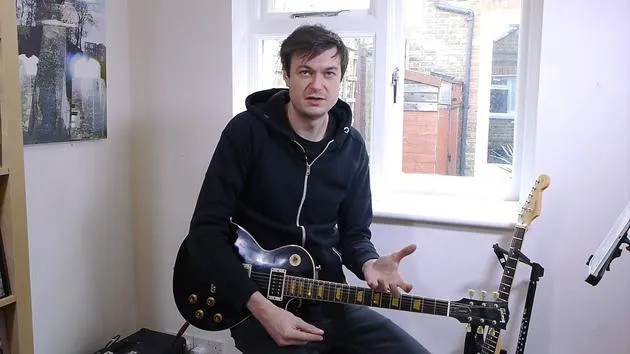
04. Mit Akkordtönen improvisieren
10:18
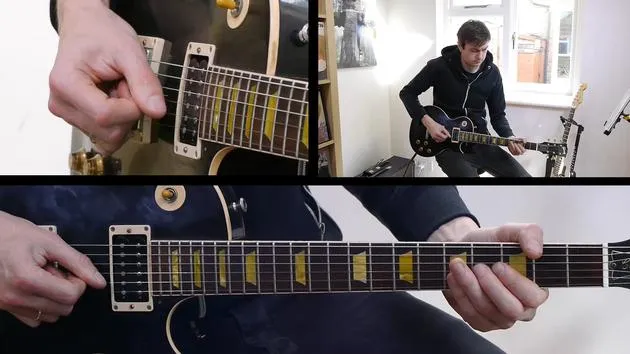
05. Rhythmisches Interesse in deine Soli bringen
4:11
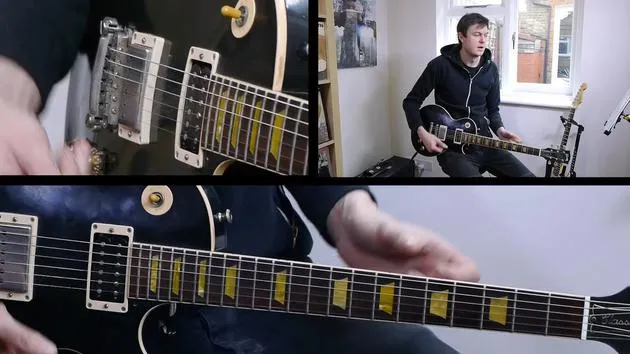
06. Aufgabe: Improvisieren über einen Akkordwechsel
2:52
07. Challenge: Reiche deine Improvisation ein
0:24
08. Rhythmische Improvisation & Comping
9:55
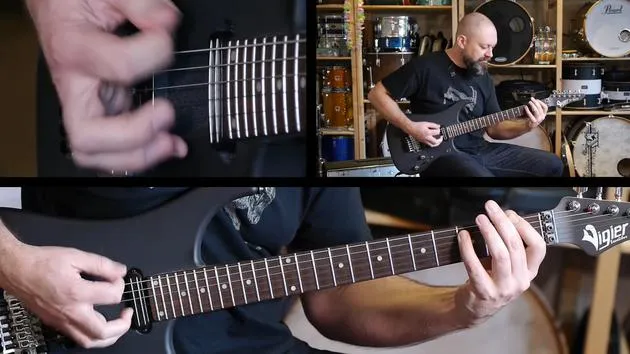
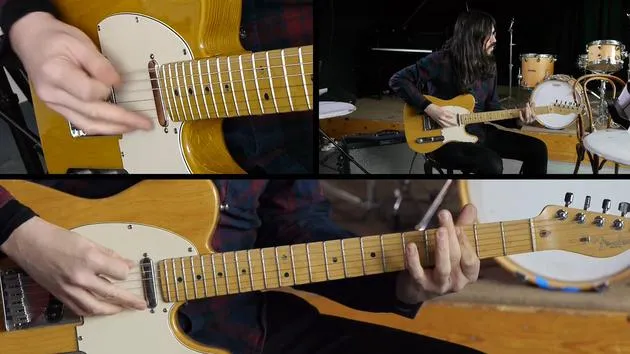
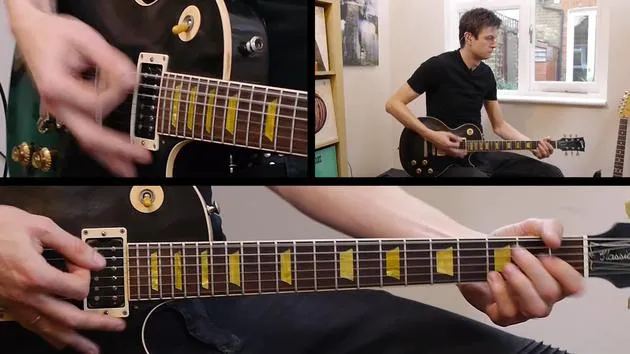
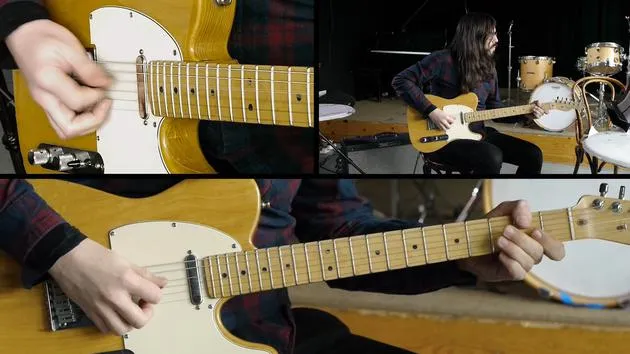
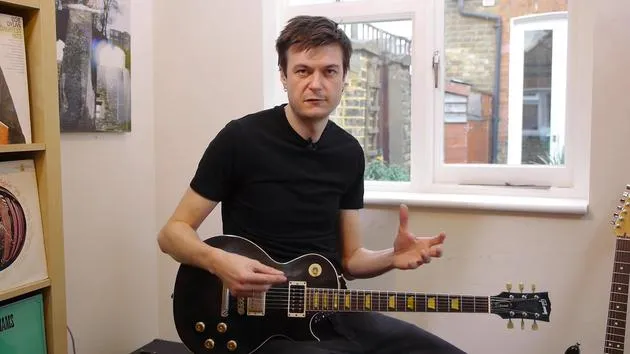
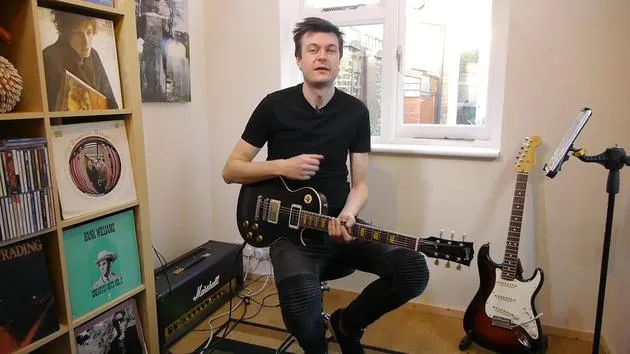
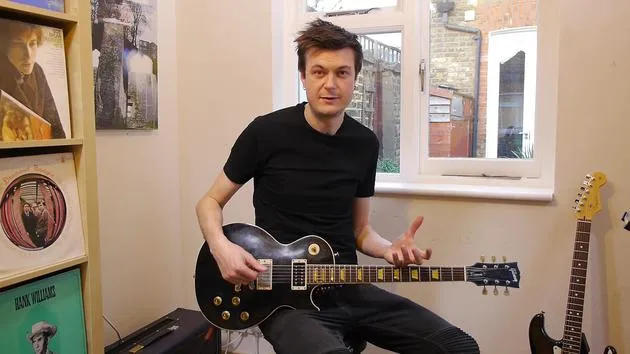
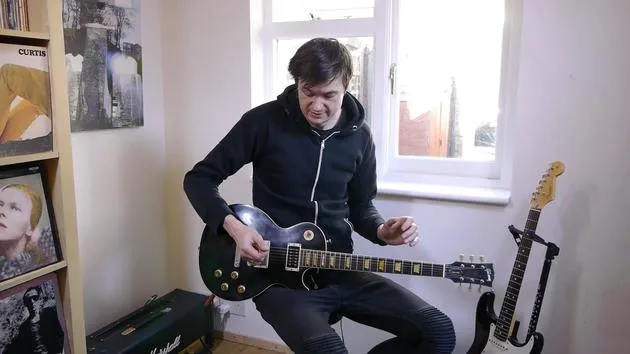
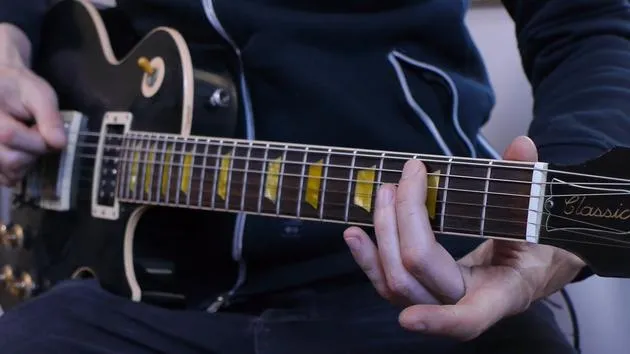
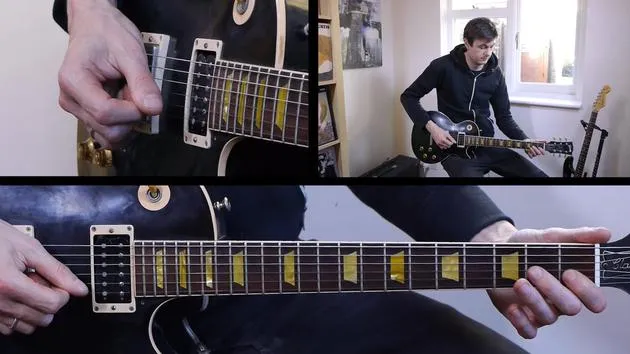
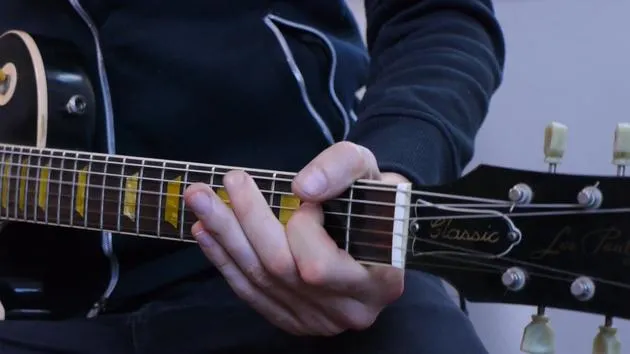
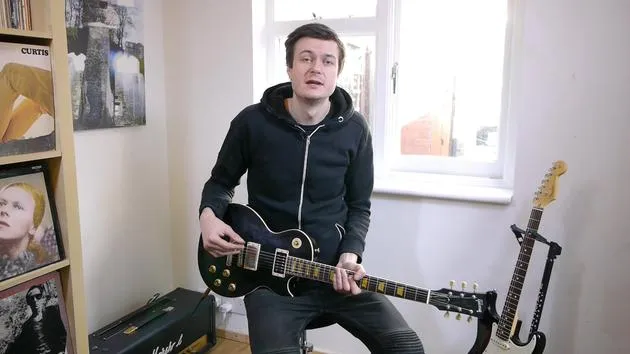
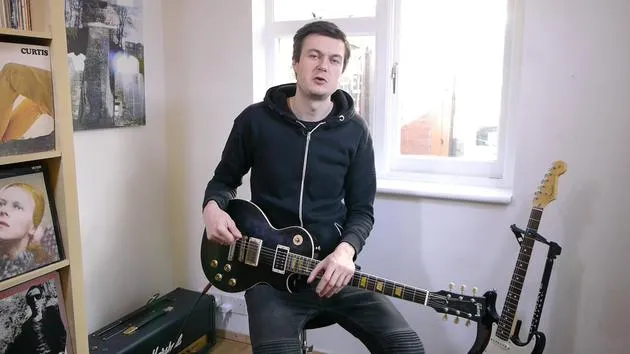
Transkript der Lektion
Understanding Vibrato: A Key Technique for Guitar Expression
Okay, so I'd like to talk to you now about one of perhaps the most expressive techniques that guitar has to offer, and that's vibrato.
Where to Apply Vibrato
Firstly, I'd just like to discuss where you might apply vibrato within a melody:
- Sustained Notes: Typically, you would apply vibrato over a sustained note in a melody.
- Avoiding Overuse: If you've got a really busy melody with lots of notes passing by quickly, you don't need to apply vibrato to every single note.
- Shining Moments: Vibrato really shines when you allow a note to ring out and breathe for a little bit, adding finesse at the end.
Example: A really simple phrase might be something like this:
"Okay, so I'm not applying vibrato to every one of those notes. That would sound terrible, and I don't think I can even do it quick enough."
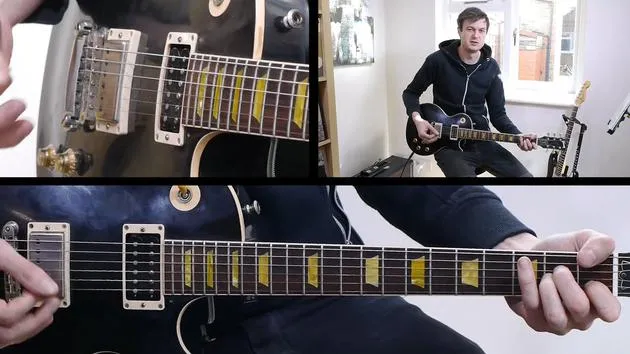
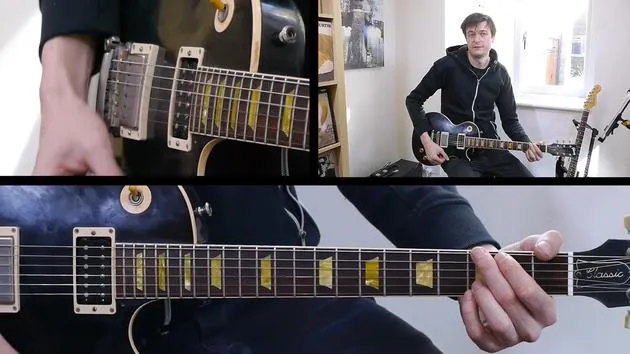
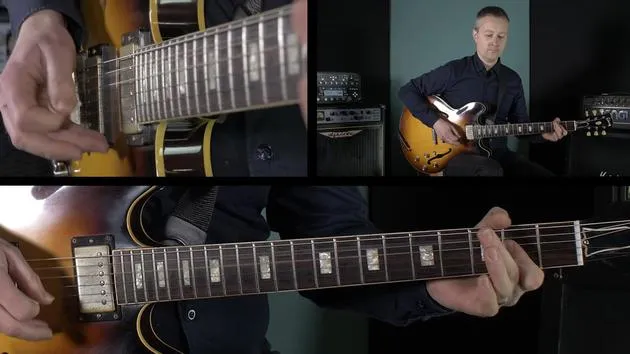
Key Moment: Often, the vibrato will come at the end of a phrase, applied with just my first finger.
Considerations for Adding Vibrato
When you're working on adding vibrato, consider the following:
- Style of the Piece: The style can dictate how you use vibrato. For example, on a chilled-out slow ballad, a huge aggressive vibrato may not make sense.
- Tempo and Feel: Choose a more subtle and refined vibrato for slower pieces.
Varying Vibrato
Two key variations you can make with vibrato include:
- Speed: This is how fast or slow you are vibrating the string.
- Width: This refers to how far you're displacing the string.
Examples of Vibrato Styles
- Aggressive Vibrato: A great example is someone like Zakk Wylde, known for his huge vibrato.
- Subtle Vibrato: For a more laid-back feel, use something more subtle in blues or soft rock.
Personalizing Your Vibrato
- Vibrato is very personal and unique to each guitarist. Everyone's vibrato is slightly different.
- Experiment with different techniques:
- Circular Vibrato: Some players utilize a circular motion for subtler effects.
- Classical Approach: Move with the grain of the string for a more refined sound.
Common Misconception: A common misconception with vibrato is that you need to go both ways.
Demonstration:
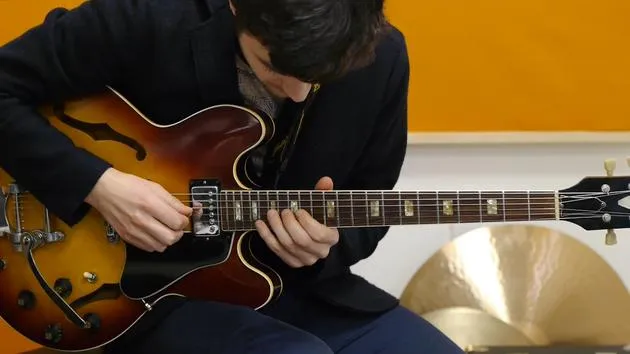
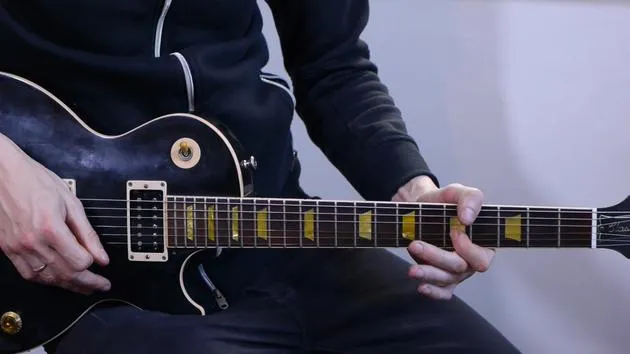
- "When I play this note now, my vibrato is going towards the floor and then returning to center."
Choosing Your Direction
- If you're in the middle of the neck, it doesn't matter much which way you go.
- Personally, if I'm doing vibrato with my first finger, I usually go towards the floor for more control.
Practicing Your Vibrato
- Start with a slow, controlled vibrato, gradually increasing speed and width.
- Introduce Vibrato Early:
- Back to our earlier phrase, listen to the difference:
- "As soon as I play that last note, I'm going to start doing my vibrato straight away."
- "The second time, I'm going to let the note breathe for not even half a second before applying vibrato."
- Back to our earlier phrase, listen to the difference:
Experiment with Finger Usage
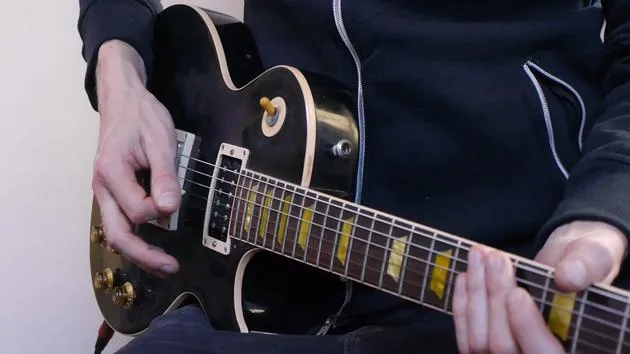
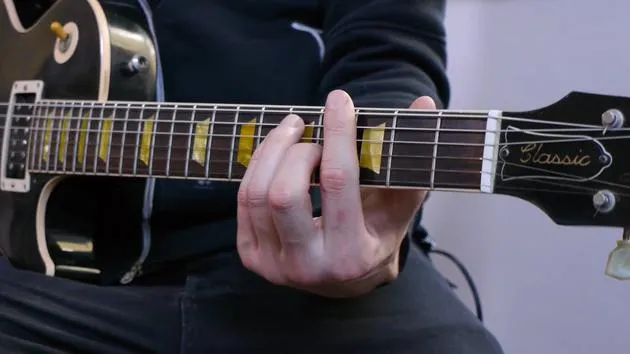
Vibrato can be executed using any finger, not just your first finger:
- Using the Third Finger:
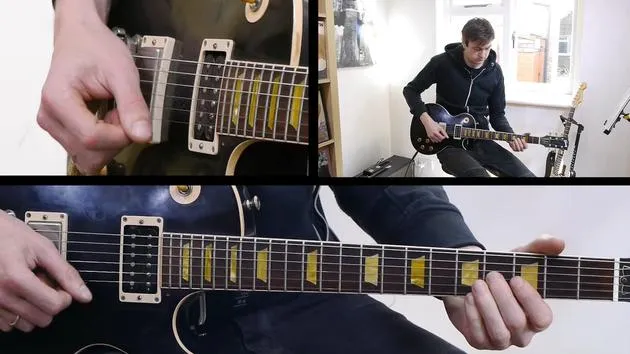
- To achieve more width and control, support the leading finger (e.g., your third finger) with another finger behind it on the string.
- This gives you more control over the speed and width of the vibrato.
Visualization: "I've got two fingers on that string there, helping with the vibrato."
Summary
Incorporating vibrato into your playing is essential. It doesn't matter how basic you feel your abilities are; it's a really expressive tool that can take your playing up a notch. So, do check it out!
41 Lektionen
2 Std. 51 Min. strukturierte Videolektionen
Erweiterte Videofunktionen
Verlangsamen, Passagen loopen, mitlesen
Handy, Tablet & Desktop
Üben, wo du willst
100 % Zufriedenheitsgarantie
30 Tage Geld-zurück-Garantie







