



Position der Anschlagshand
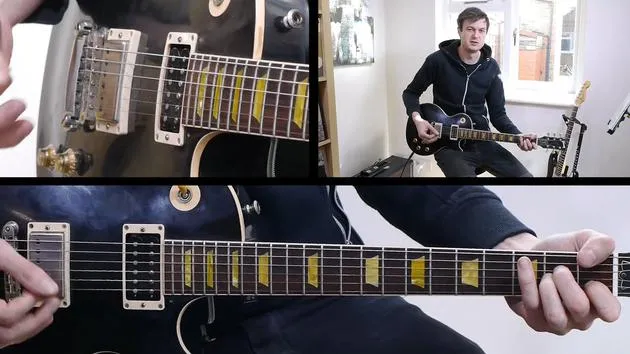
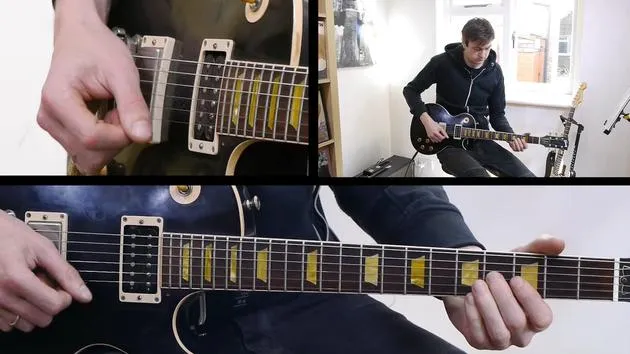
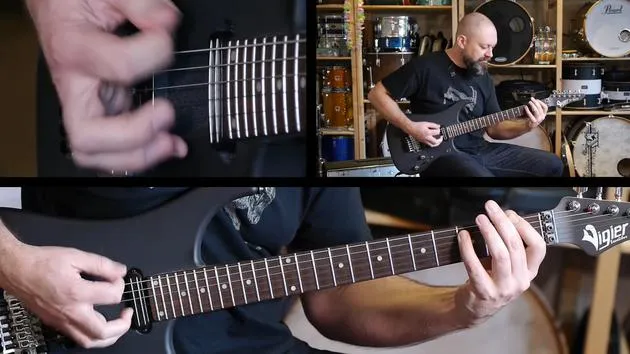
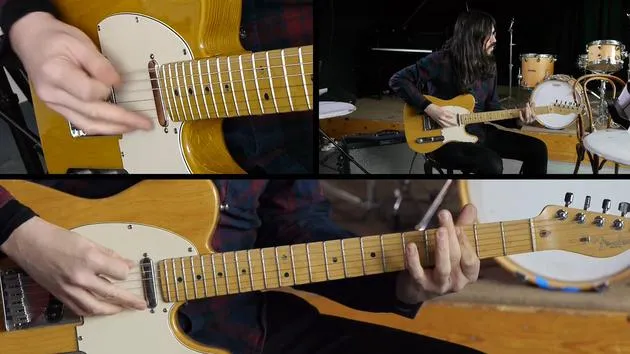
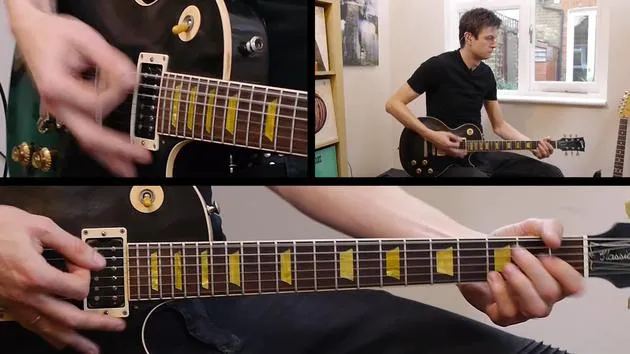
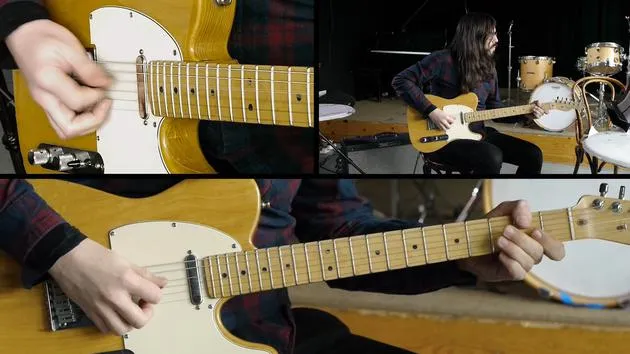
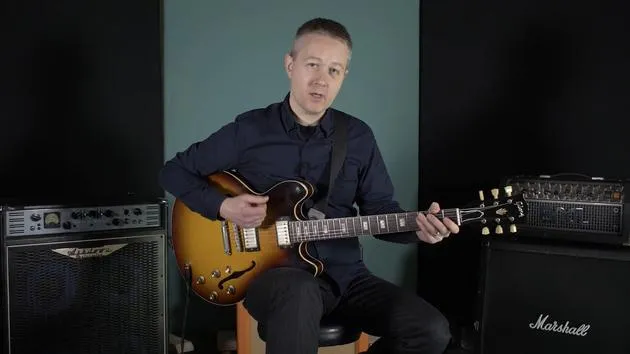
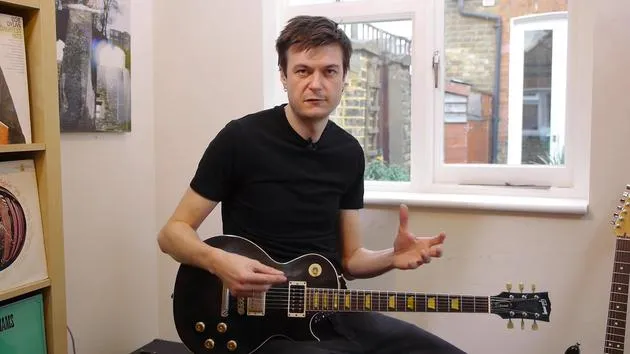
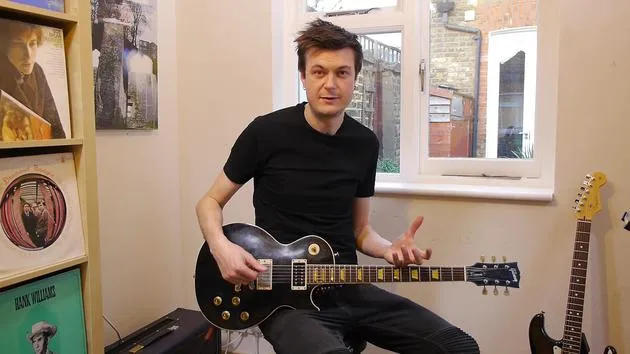
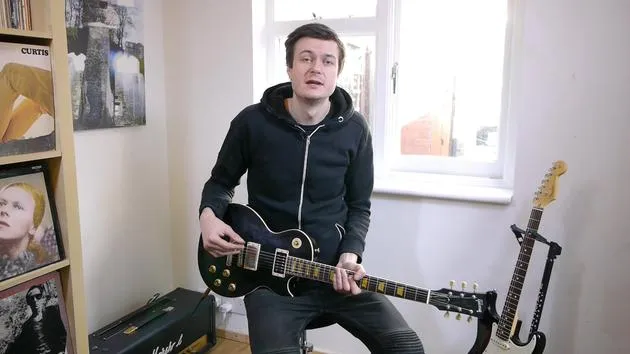
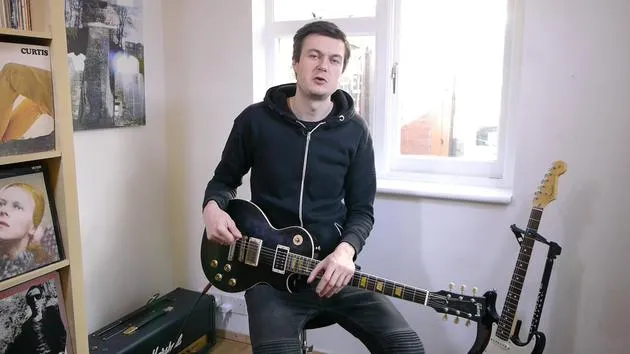
James Barratt zeigt, wo deine Anschlagshand liegen sollte – am Steg verankert – und warum dieser Ankerpunkt deinen Anschlag präziser macht.
Das steckt im Kurs
41 Lektionen (2h 51m) · 1 gratis
01. Einführung in die Ansätze zur Improvisation
1:00
02. Erste Schritte mit der Improvisation
9:22
03. Aufgabe: Akkordtöne finden
4:05
04. Mit Akkordtönen improvisieren
10:18
05. Rhythmisches Interesse in deine Soli bringen
4:11
06. Aufgabe: Improvisieren über einen Akkordwechsel
2:52
07. Challenge: Reiche deine Improvisation ein
0:24
08. Rhythmische Improvisation & Comping
9:55
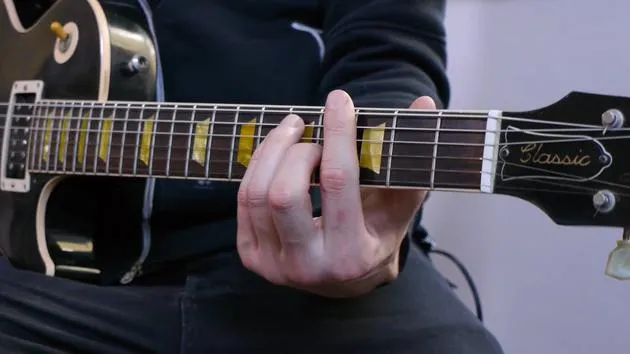
Transkript der Lektion
Basic Hand Position on the Guitar
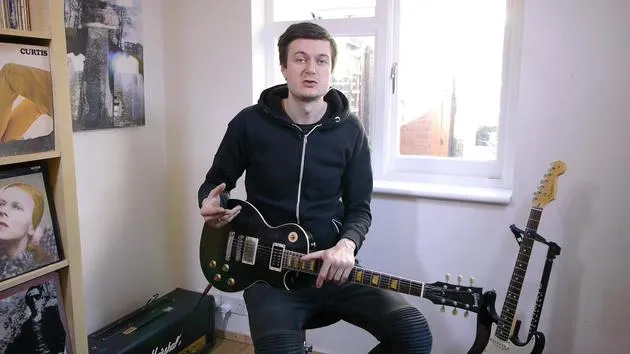
So in terms of basic hand position, let's discuss this briefly.
Right Hand Position
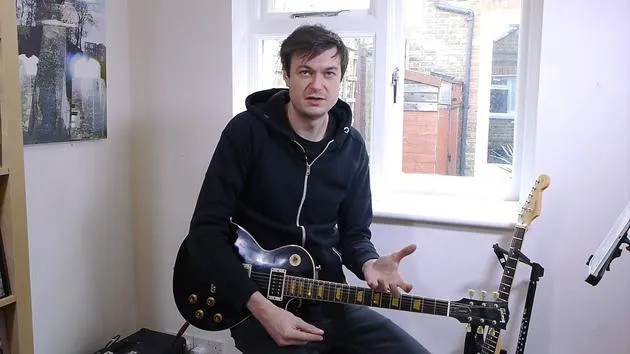
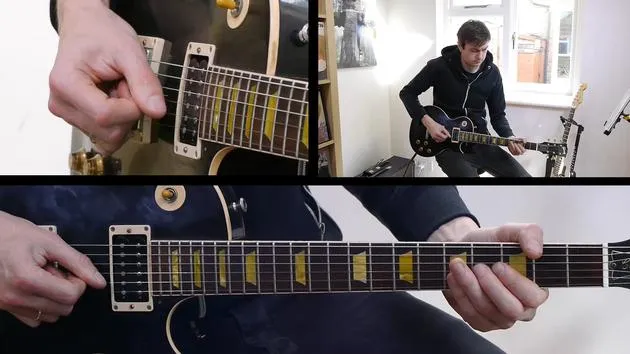
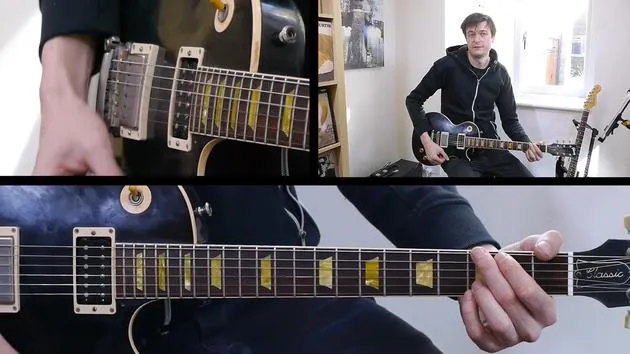
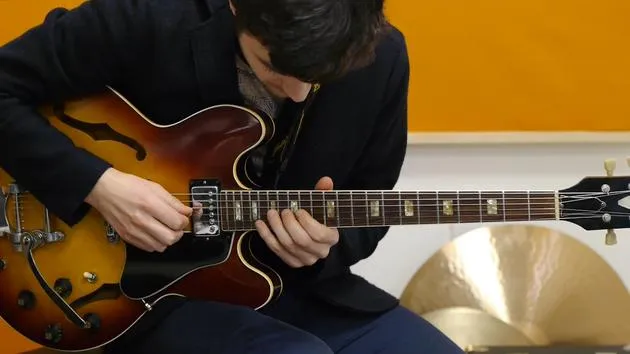
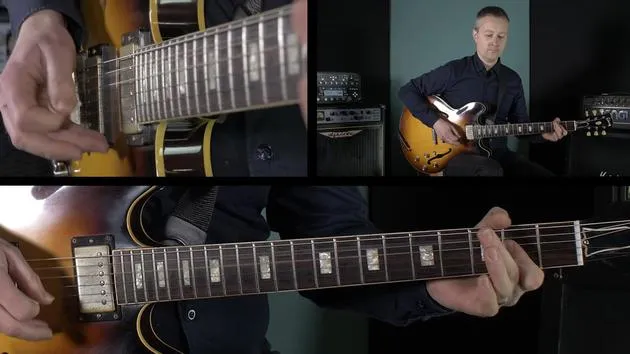
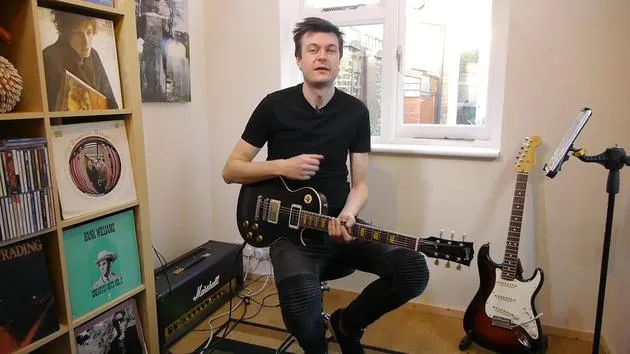
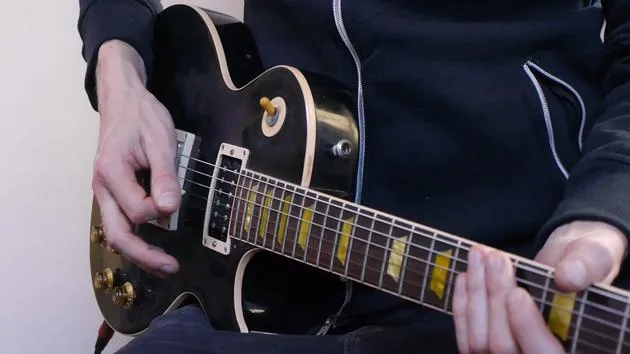
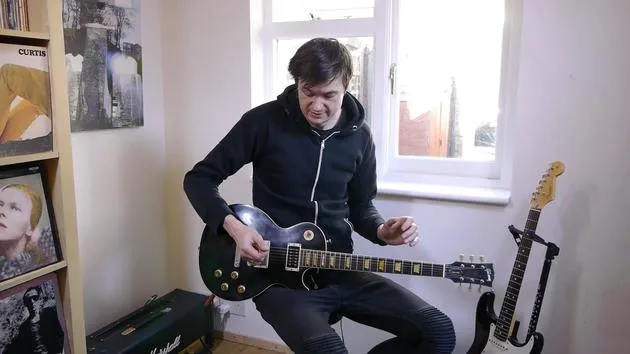
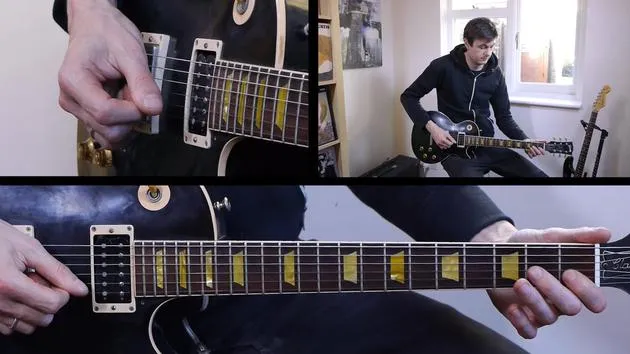
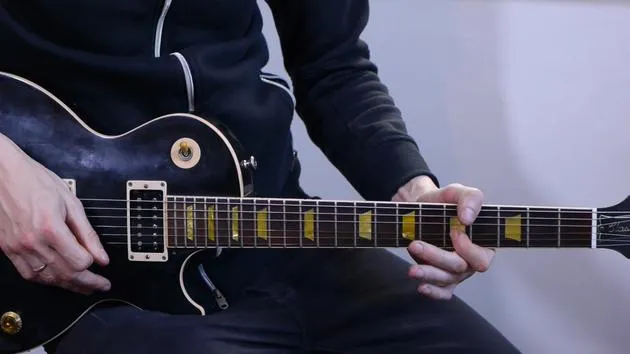
- A lot of the time, your right hand is going to live on this part of the guitar here, which is called the bridge.
- When I'm talking about my right hand, I'm referring to the palm of your right hand sitting right on the bridge.
- It's a great place for your right hand to be.
Importance of Anchoring
- The sooner you can get comfortable with your right hand being anchored to the guitar, the better.
- This is a really important aspect to get comfortable with.
- There are loads of techniques that come off this hand position, and your right hand accuracy is greatly improved when your hand is anchored to the bridge.
When Not to Be Anchored
- The only time when you don't necessarily want to be tied down to the bridge is when you're strumming open chords really freely.
- We don't want to be tied down at that point.
- So if we're kind of doing a strummy vibe, then we don't need to be anchored to the bridge; it would feel quite restricted.
Picking Techniques
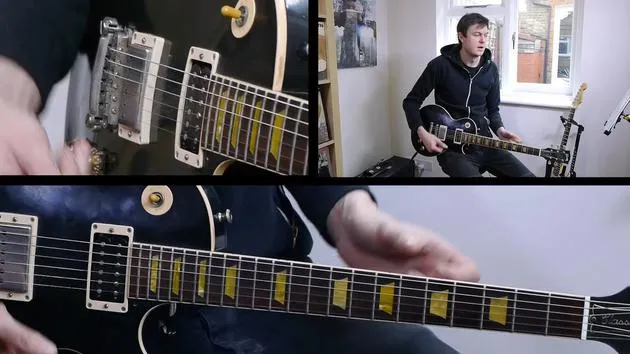
- Whenever we're going to delve into picking out a single string at a time, instantly, right hand on the bridge allows for accuracy with where we place the pick.
Exercise for Accuracy
A really great exercise that would be good to try out is:
- Rest your hand on the bridge.
- Don't look at your right hand.
This is important because many players early on get glued to what their right hand is doing and forget about the left hand, which can end up doing all sorts of crazy things.
- Get your right hand on the bridge.
- Either shut your eyes or don't look at your right hand and just try to pick out a specific string.
- You can say to yourself:
- "I want to pick the G string."
- "I want to pick the A string."
- "I want to pick the E string."
- "I want to pick the D string."
You'll be amazed at how accurate you can be without looking.
Developing Independence
I know it feels like you have to look at your right hand at all times, but having it in the right position goes an enormous way toward weaning yourself off the visual habit of watching your right hand constantly.
- This is just a good way of developing some independence.
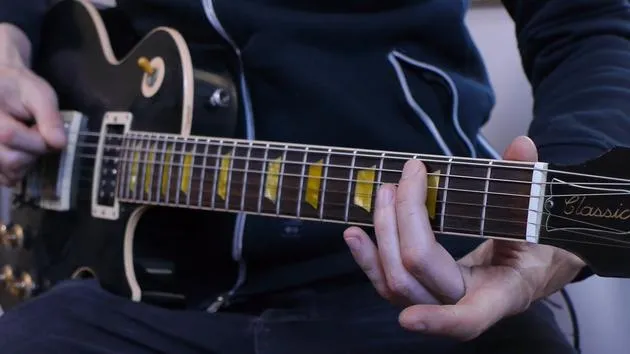
- Logically, the right hand is in control of a tiny area, about two inches, across these six strings.
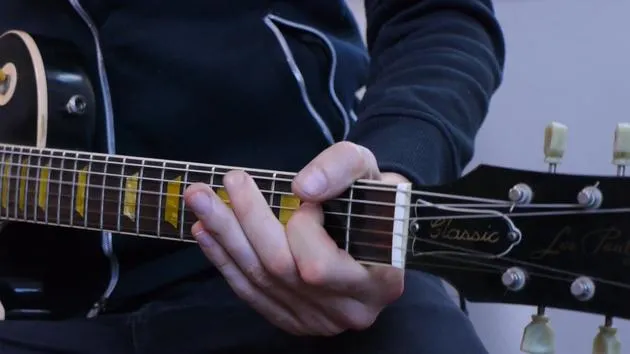
- In contrast, your left hand has the whole neck to deal with.
Conclusion
So when we think about it like that, the sooner we can leave the right hand to its own devices, the better. This allows us to concentrate on what our left hand is doing, look at some music, or whatever else is going on.
It's a really important thing to bear in mind!
41 Lektionen
2 Std. 51 Min. strukturierte Videolektionen
Erweiterte Videofunktionen
Verlangsamen, Passagen loopen, mitlesen
Handy, Tablet & Desktop
Üben, wo du willst
100 % Zufriedenheitsgarantie
30 Tage Geld-zurück-Garantie







