



Improvisation und Interpretation meistern
Das steckt im Kurs
29 Lektionen (2h 24m) · 1 gratis
01. Ready or Not – Fugees
2:34
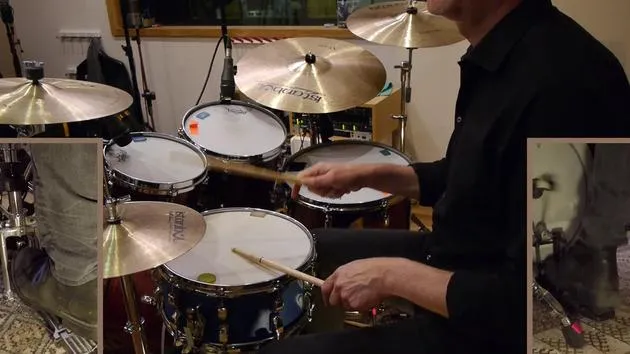
02. Sweet Home Alabama – Lynard Skynard
2:10
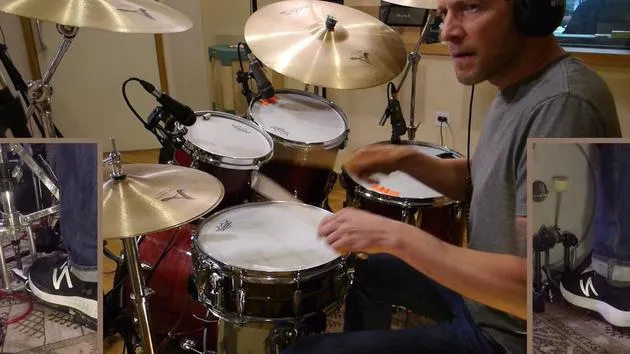
03. Let’s Dance – David Bowie
1:58
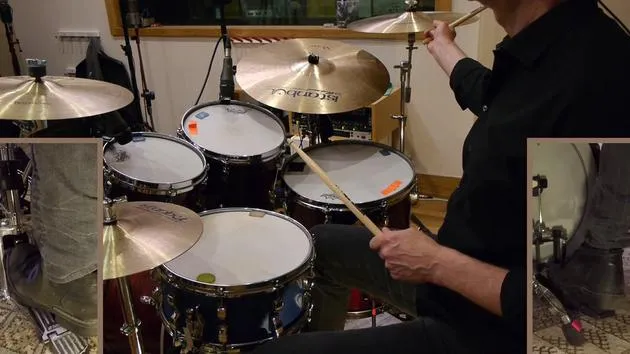
04. Respect – Aretha Franklin
2:14
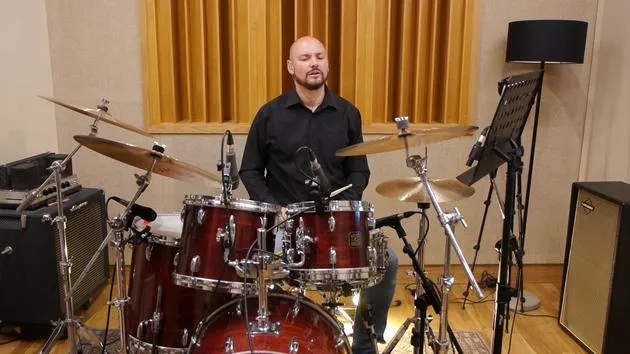
05. In My Place – Coldplay
2:21
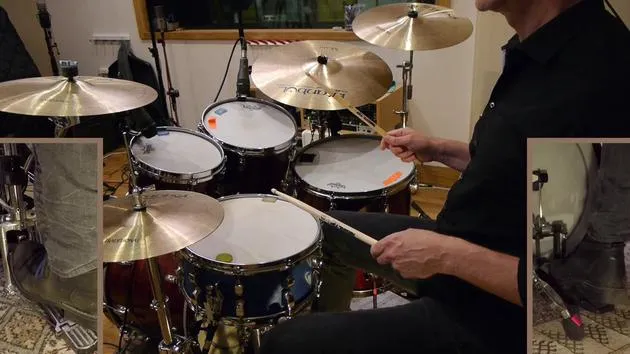
06. Scary – Stormzy
1:54
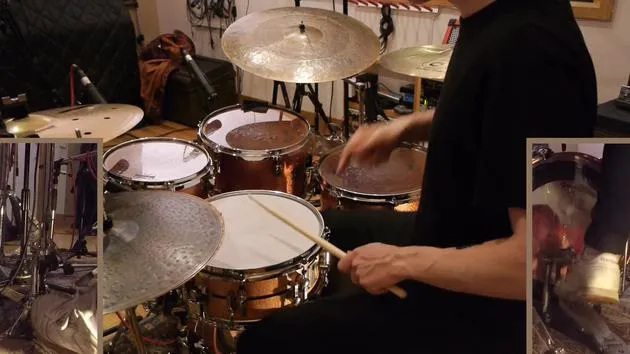
07. Cold Pants
2:00
08. Attitude
1:59
09. The Nod
2:00
10. Hammerblow
Gratis-Lektion2:04
11. Jahmake Ska
1:58
12. Crop Duster
1:57
01. Let’s Dance – David Bowie (Analyse)
8:26
02. In My Place – Coldplay (Analyse)
10:16
03. Scary – Stormzy (Analyse)
10:27
04. Respect – Aretha Franklin (Analyse)
9:50
05. Ready or Not – Fugees (Analyse)
7:51
06. Sweet Home Alabama – Lynard Skynard (Analyse)
8:33
07. Noisy Neighbour (Analyse)
17:14
08. Cold Pants (Analyse)
4:24
09. Attitude (Analyse)
6:22
10. The Nod (Analyse)
4:18
11. Hammerblow (Analyse)
11:04
12. Jahmake Ska (Analyse)
4:00
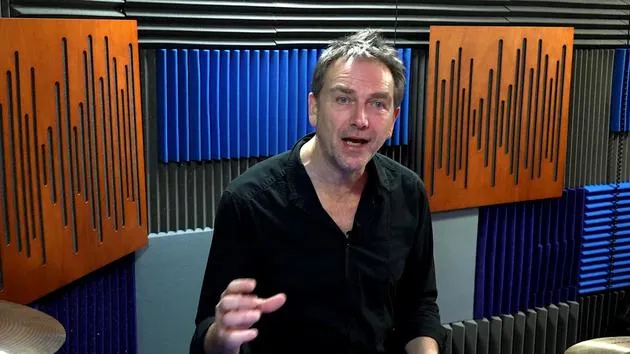
Transkript der Lektion
Composite Reading Situation in Drumming
In what I would like to call a composite reading situation, we're looking at different parts of the drum kit. You might encounter:
- An eighth note rock groove
- A sixteenth note funk groove
- A triplet shuffle groove
- A jazz rhythm
- An odd time groove
These would be written out on various parts of the drum kit, represented on the staff.
Getting Familiar with Styles
The best way to practice this is to:
- Look through your pieces and get familiar with the styles in the various pieces.
- Work with your teacher if you have one, to ensure you're interpreting the information correctly.
What you'll likely see for the most part is a sense of notation as a representation of the grooves or styles you're playing.
Notation in Different Genres
For example:
-
In very typical pop and rock grooves (whether commercial rock, heavy rock, or heavy metal), it is very often written as eighth notes.
-
In jazz, shuffle, and blues (swing blues fields), you're going to be exposed more to triplets:
- Eighth note triplets
- Swung eighth notes (another concept, which I won't elaborate on here)
-
In funk, you will inevitably encounter more sixteenth notes, possibly with more bass drum notes and short fills (sixteenth note phrases around the drums or just on the snare drum).
-
In hip hop grooves or funk shuffle grooves, you might come across sixteenth note triplets or variations of those.
-
In fusion tunes or at higher grades, expect to play thirty-second note fills around the kit.
-
In Latin tunes, prepare for a lot of cut time rhythms or 2/4 rhythms. You might also be reading flam notes.
Melodic Lines and Interpretation
Grab some melodic lines from various instruments such as:
- Trumpet parts
- Piano parts
- Sax parts
Look at those single-line rhythms and see how they differ from how it might be written in drum notation.
In melodic parts, you will see lots of ties, as notes are being held, causing phrases to look different.
This is important if you can source material on non-drum charts, such as:
- Melodic charts
- Lead sheets
These will really help you with your interpretation and improvisation of chart reading.
Exploring Beyond Your Examination Pieces
Consider looking at some pieces that you are not performing in your examination. Check out:
- The stylistic requirements
- The tempo ranges
- Some phrases
- The individual lines (such as ride lines and bass drum parts)
This exploration may help you improve your overall reading perspective.
Quick Study Pieces
Finally, at grades 6, 7, and 8, you'll encounter quick study pieces. These are:
- Unprepared pieces
- Sight reading pieces
These pieces are longer and very specifically stylistically based.
If you have practiced adequately and prepared on the other grades and pieces, you will find the quick study pieces manageable.
This combination of single-line phrases, fills, improvisation, and development in very specific styles will be beneficial.
Conclusion
I hope that helps with your sight reading. I wish you the best of luck!
29 Lektionen
2 Std. 24 Min. strukturierte Videolektionen
Erweiterte Videofunktionen
Verlangsamen, Passagen loopen, mitlesen
Handy, Tablet & Desktop
Üben, wo du willst
100 % Zufriedenheitsgarantie
30 Tage Geld-zurück-Garantie







