



Liberation – Wretch 32 (Analyse)
Paul Elliott analysiert den Schlagzeugpart von Wretch 32s „Liberation“ und konzentriert sich auf den Wechsel zwischen Viertel- und Achtel-Feel bei gleichzeitig tightem, maschinenartigem Flow.

Das steckt im Kurs
28 Lektionen (1h 51m) · 2 gratis
01. Soul Man – Sam And Dave
1:27
02. I Want To Break Free – Queen
1:04
03. Liberation – Wretch 32
1:11
04. In The Midnight Hour – Wilson Pickett
1:11
05. Yeah – Usher
1:07
06. Billie Jean – Michael Jackson
1:25
07. Kaiser Roll
1:10
08. Bend & Snap
1:09
09. Jangle Road
1:21
10. West Coast Rollin'
1:24
11. Deep Trouble
1:12
12. Munky Fusic
Gratis-Lektion1:14
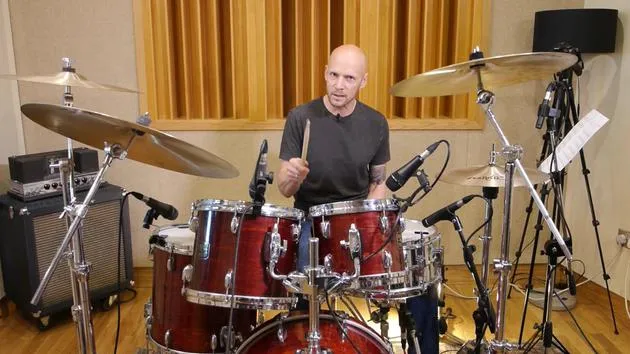
01. Soul Man – Sam And Dave (Analyse)
4:55
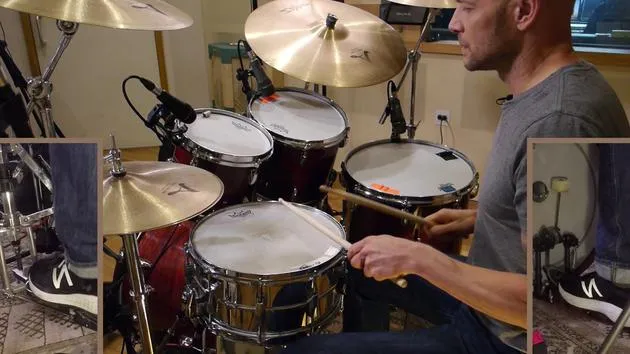
02. Billie Jean – Michael Jackson (Analyse)
13:28
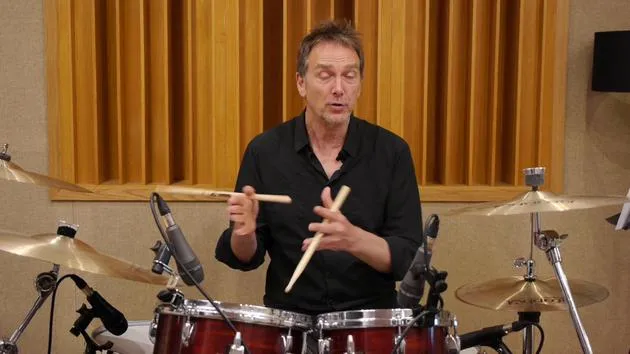
03. In The Midnight Hour – Wilson Pickett (Analyse)
8:40
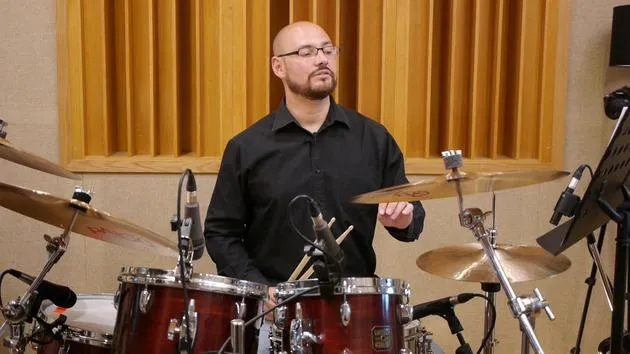
04. Yeah – Usher (Analyse)
10:26
05. I Want To Break Free – Queen (Analyse)
3:18
06. Liberation – Wretch 32 (Analyse)
Du bist hier7:45
07. Kaiser Roll (Analyse)
8:56
08. Bend & Snap (Analyse)
7:25
09. Jangle Road (Analyse)
5:12
10. West Coast Rollin' (Analyse)
Gratis-Lektion3:53
11. Deep Trouble (Analyse)
7:38
12. Munky Fusic (Analyse)
2:45
Transkript der Lektion
Music Lesson: Mastering "Liberation" by Wretch 32
Introduction
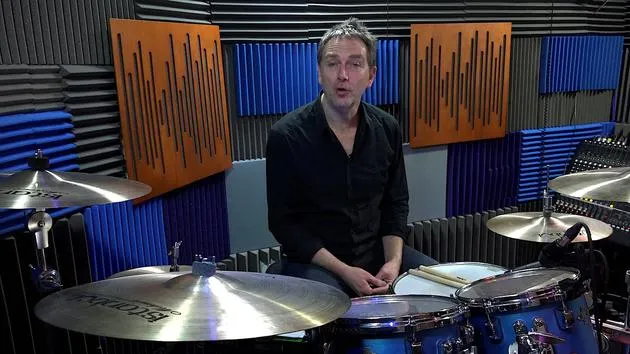
Let's check out Liberation, this Wretch 32 tune. It's a programmed drum machine or programmed track in the original, but Josh McKenzie is the live drummer. You can see Josh McKenzie with Wretch 32.
Feel and Subdivisions
In this track, we're moving between a quarter note feel and an eighth note feel. Given it's a slow tempo, there's a serious consideration for feeling those changes in subdivisions.
- Quarter Notes: Feel the definite quarter note hi-hat during the A section in the introduction.
- Eighth Notes: Give yourself a good count-in, "1, 2, 3, 4", and feel those eighth notes. It makes life much easier.
When you do that, it's primarily about:
- Keeping time
- Maintaining a good balance of sounds
- Consistent, repetitive parts
Be careful with playing eighth notes in between quarter notes; it's not easy to maintain that nice, machine-like flow.
Playing Live
We need to sound like a live drummer while keeping it tight. Here's a good way to work on that:
- Play eighth notes on the hi-hat.
- Add offbeat eighth notes on the bass drum.
- Alternate with quarter notes on the hi-hat and various placements on the bass drum.
Let's try playing the first two bars to get a feel. Remember, think eighth notes while playing quarter notes on the hi-hat, feel those eighth notes in your mind and system.
Practicing Offbeats
Another way to practice the offbeat eighth note on the bass drum is to play generic quarter notes, moving that bass drum in between them. It might sound like this:
- Focus on unison between the hi-hat and bass drum.
- Maintain that eighth note feel between quarter notes.
This is crucial for achieving a constant flow and feel in the track.
Open Hi-Hats
Towards the end of the B section, you'll encounter a unison between the snare, hi-hat, bass drum, and an open hi-hat.
Playing the Open Hi-Hat
- Aim for a smooth, controlled sound rather than a shout or bark.
- A good connection with the hi-hat will help achieve this.
If I demonstrate by playing some eighth notes followed by opening the hi-hat, it might go something like this:
Important Note: Avoid leaving the hi-hat too "washy" or open; it shouldn't sound overly dynamic for the track.
Listen and Adjust
This is not how I'd like to play it:
- Pay attention to the sound you're trying to achieve with your hi-hat openings.
- Compare to get a sense of the dynamic sound needed.
Unisons and Final Beat
We have unisons at the very end of the track, transitioning from quarter notes to eighth notes. This track's main characteristic is keeping time with machine-like precision.
Final Crashes
At the end, there's a unison between crash cymbals with both the snare and bass drum:
- Use a positive count: "1, 2, 3, 4, 1, 2."
- You can either play the same crash twice or separate cymbals. I prefer:
- Separate cymbals: "1, 2, 3, 4, 1, 2."
- Right, Left, Right or Left, Right.
- Separate cymbals: "1, 2, 3, 4, 1, 2."
Bear in mind, avoid crashing the cymbal while it's still ringing from the previous hit.
General Tips
- There aren't any specific tom fills, so focus on getting a consistent sound.
- Play with conviction and energy, using a strong rim shot for the backbeat.
Demonstration
Let me show you two bars of how I would play this track live.
There's not much technicality involved; it's all about playing with energy and conviction at a slow tempo. Remember: mean what you say, say what you mean.
Conclusion
That's all for Liberation by Wretch 32. Have fun, and see you soon!
28 Lektionen
1 Std. 51 Min. strukturierte Videolektionen
Erweiterte Videofunktionen
Verlangsamen, Passagen loopen, mitlesen
Handy, Tablet & Desktop
Üben, wo du willst
100 % Zufriedenheitsgarantie
30 Tage Geld-zurück-Garantie







