



Kaiser Roll (Analyse)
Paul Elliott analysiert das Rockschool-Grade-1-Schlagzeugstück 'Kaiser Roll', einen Indie-Rock-Groove in Achtelnoten im Stil von Kaiser Chiefs und Blur.

Das steckt im Kurs
28 Lektionen (1h 51m) · 2 gratis
01. Soul Man – Sam And Dave
1:27
02. I Want To Break Free – Queen
1:04
03. Liberation – Wretch 32
1:11
04. In The Midnight Hour – Wilson Pickett
1:11
05. Yeah – Usher
1:07
06. Billie Jean – Michael Jackson
1:25
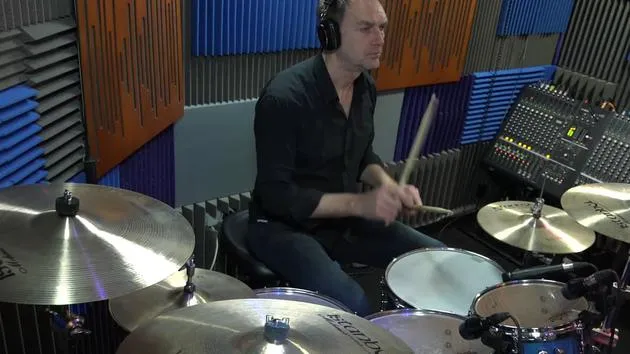
07. Kaiser Roll
1:10
08. Bend & Snap
1:09
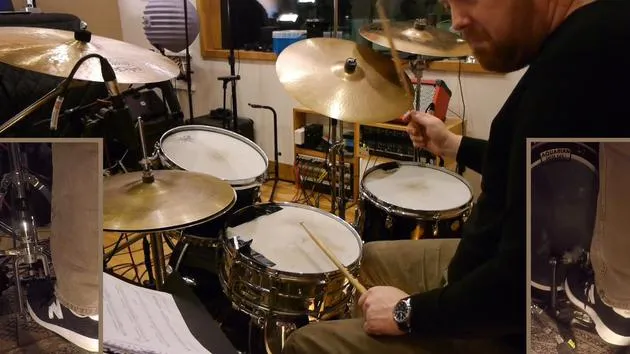
09. Jangle Road
1:21
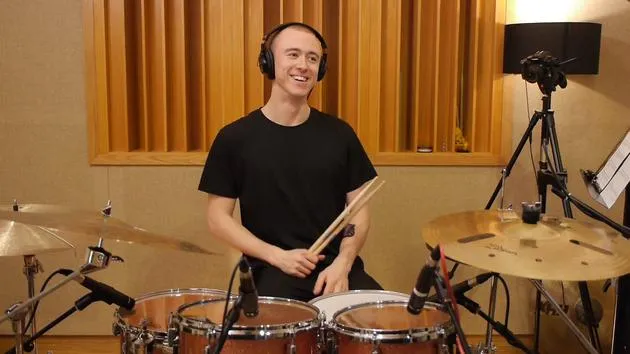
10. West Coast Rollin'
1:24
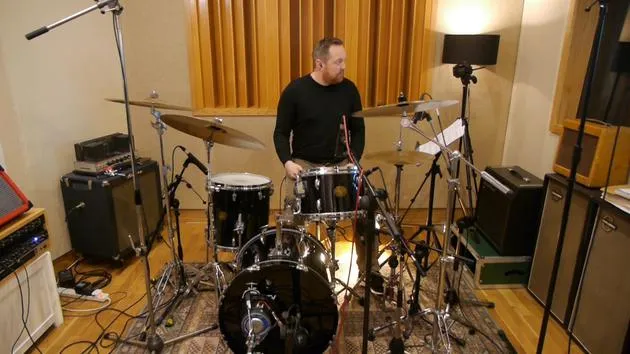
11. Deep Trouble
1:12
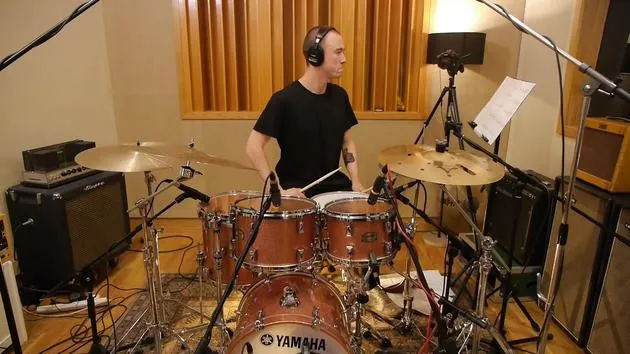
12. Munky Fusic
Gratis-Lektion1:14
01. Soul Man – Sam And Dave (Analyse)
4:55
02. Billie Jean – Michael Jackson (Analyse)
13:28
03. In The Midnight Hour – Wilson Pickett (Analyse)
8:40
04. Yeah – Usher (Analyse)
10:26
05. I Want To Break Free – Queen (Analyse)
3:18
06. Liberation – Wretch 32 (Analyse)
7:45
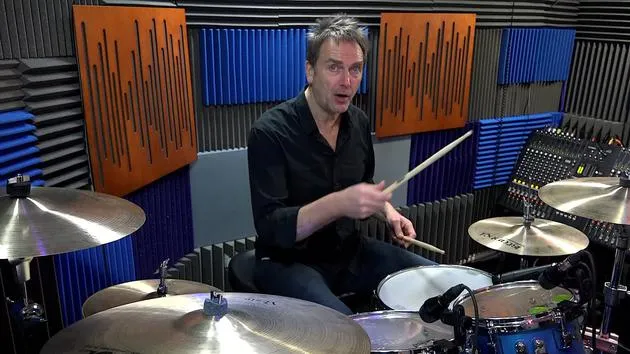
07. Kaiser Roll (Analyse)
Du bist hier8:56
08. Bend & Snap (Analyse)
7:25
09. Jangle Road (Analyse)
5:12
10. West Coast Rollin' (Analyse)
Gratis-Lektion3:53
11. Deep Trouble (Analyse)
7:38
12. Munky Fusic (Analyse)
2:45
Transkript der Lektion
Kaiser Roll Drum Lesson
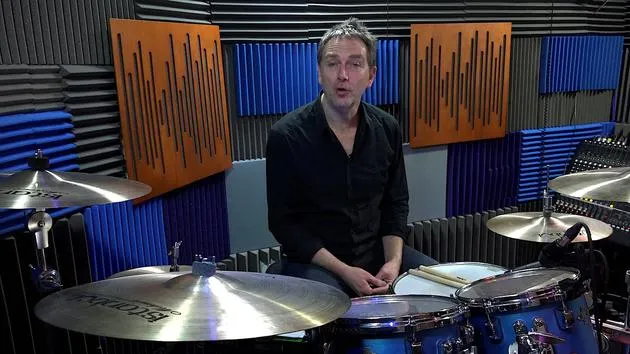
Okay, here we go with Kaiser Roll. Now, there's a clue in the title, of course. It's an indie rock kind of feel influenced by bands such as Kaiser Chief's, Blur, and Ocean Color Scene.
Getting Started
- Check out those guys,
- Check out the bands,
- Check out the drummers.
- Get a feel for that kind of music.
Let's dip into the chart and see what's going on here. It's basically an eighth note feel. We're going to look at the different sounds we can get:
- Hi-hat sections
- Ride cymbal sections
- Crash cymbals
- Short fills
- Open and closed hi-hats
In this session, we're going to concentrate on the sound of those particular components of the chart. Let's get very specific on that and see how we're going to approach the sound of those parts.
Key Elements
Before we begin, make sure that you get a nice eighth note feel into your system. You might have heard me say that before, and you're going to hear me say that lots more times. Always get some kind of pre-count before you come in.
Example of a Pulse:
"1, 2, 3, 4. 1 and 2 and 3 and 4 and back."
Get that count into your system before you start playing. We're straight into the groove, do do gag go. There's no room for error; you need to get that pulse:
"1 and 2 and 3 and 4 and 1 and 2" into the hi-hat.
Sonic Exploration
With that said, let's check out these sections mainly from a sonic basis. I played this with quite a bit of energy and conviction, which I always recommend. I didn't go for a very trashy feel but went for an accented downbeat feel, which you might have seen me play before.
- At this tempo, I thought it suited the tune well.
- It's on top of the hi-hat on the shoulder of the stick.
I have that very definite embellishment, but there's not a massive difference between the dynamics. So, really, you can hear the dynamic, but it's part of a slightly higher sound. I'll demonstrate a few of those ideas:
- Heavy downbeat and a much quieter upbeat.
- Gradually bringing the dynamics a little bit closer together.
That's quite a tight sort of pop feel, and I like that for a tight pop song. On this tune, I just brought the offbeat notes up a little bit dynamically, creating more of this kind of feel.
Exploring Hi-Hat Sounds
If you want to go for a trashier sound on the hi-hat, for want of a better word, but a more open sound, then you've got these kind of options. I think that's probably a little bit too loose; I wouldn't really recommend that in this particular context.
You can see I'm just experimenting from playing on the top of the hi-hat to the side, whichever feels comfortable. What I don't really like to do with these tempos is play just monotone notes. I don't think that sounds or feels as good.
B Section Dynamics
Let's check out the B section. We go to the ride cymbal.
- One thing to notice is the crash cymbal coming into the ride cymbal.
- It's very important to anticipate crash cymbals and where you're going after that.
Anticipation is a wonderful word in drum techniques and repertoire. It's really important to know where you're going from certain parts of the kit. Always think about:
- Which cymbal you're going to hit.
- Where you're going after that.
When hitting a cymbal, remember:
- You can come from here to hit this cymbal and go to the ride cymbal, or vice versa.
In terms of ride cymbal sound, it's common to play with a heavy monotone feel, which I quite like in certain situations. I played it again with a slight accent, not really killing the accent, but keeping it reasonably bouncy, so it sounded like this:
"If I put that together with the groove, I went for that kind of feel."
Final Thoughts on Hi-Hats
The last thing I want to talk about is the open and closed hi-hat.
- Be really careful not to play too open; don't open the hat too wide, as it'll be too splashy.
- I prefer to play more on top of the hi-hat when doing an open hi-hat feel.
This is the kind of feel that I would go for. I would just practice that as an individual bar, practice a couple of bars of open and closed hi-hats over and over again until you get a feel for it.
Practice Tips
As always in your practice:
- Think about time and consistency of groove.
- Play along with the track; you're the drummer!
- Listen to what's going on with the other instruments.
- Work with your metronome, click track, or sequencer.
Sometimes, just play the music without the metronome. Get a feel for it.
Check out your overview section and your walkthrough section in your gradebook for more additional information on how to approach playing the piece. You should have plenty of information there, and I'm sure you're going to do great.
Conclusion
I hope that's been good for you. Have lots of fun with Kaiser Roll, and I'll see you soon!
28 Lektionen
1 Std. 51 Min. strukturierte Videolektionen
Erweiterte Videofunktionen
Verlangsamen, Passagen loopen, mitlesen
Handy, Tablet & Desktop
Üben, wo du willst
100 % Zufriedenheitsgarantie
30 Tage Geld-zurück-Garantie







