



Linear
Mit
Paul ElliottPaul Elliott führt in das lineare Schlagzeugspiel ein – bei dem nie zwei Gliedmaßen gleichzeitig anschlagen – und wie man es für Grooves, Phrasen und Soli über die Grade hinweg einsetzt.
Das steckt im Kurs
10 Lektionen (0h 46m) · 1 gratis
Transkript der Lektion
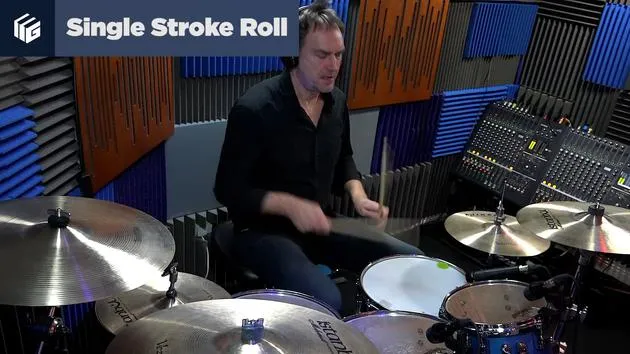
Understanding Linear Drumming
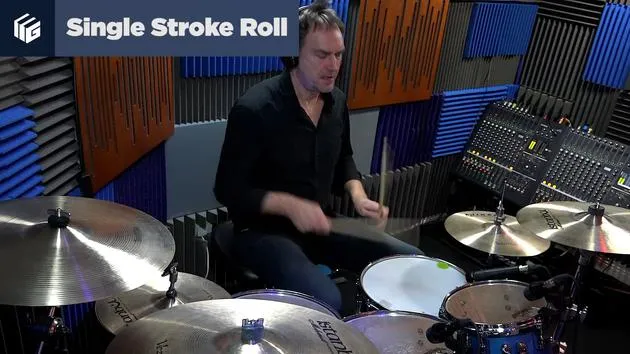
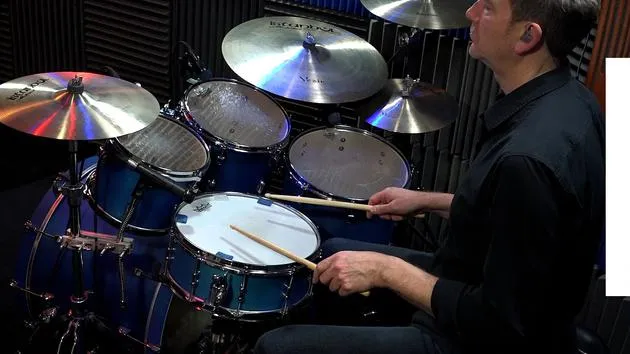
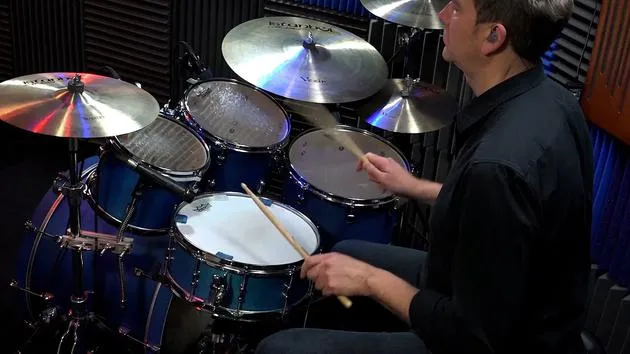
Linear drumming is a great concept. I'm a huge linear fan for groove playing, building phrases, and soloing in all different genres. It really is a fantastic style of drumming and also a vast area of study. Unfortunately, I don't have much time here to cover all the possibilities, but I want to refresh our memory on the basics.
Linear Applications in Grades 4 and 5
At grades four and five, we have some linear applications, which include:
- Groups of 3
- Groups of 4
- Groups of 8
Changing Patterns
You can modify the hand pattern from the right-left combinations that are in the book to any combination you choose. In my demonstrations, I played exactly as written, but it's worth reminding you that you can opt for different combinations.
This is a general way to practice linear drumming. For instance, if I was playing a group of three as Right, Left, Foot, I can change the right-left pairing to:
- Right, Right
- Left, Left
- Left, Right
This creates a nice linear workout in groups of three, and you can take any of these sticking patterns into the examination room.
Practical Demonstration
Let's check this out:
- Right, Left, Left, Right, Right, Right, Left, Left
Just changing the hand pattern while keeping the foot constant.
Exploring Groups of 4 and 5
In a group of four, start with the bass drum and follow with three additional notes based on combinations such as right, left, double, and single.
Group of Five Example
Let's do a group of five:
- Right, Left, Right, Right, Right, Left, Left
Let's check that out. It's fairly self-explanatory.
Working with Groups of 8
In groups of eight, you have six hands, which offers many variations. Here's what that could look like:
- Right hand lead
- Play three sets of double strokes
- Count: One, two, three, four, five, six (repeat)
You could also lead with the left hand and play left-hand double strokes.
Additional Techniques
There are plenty of possibilities! For example, you could incorporate a six-stroke roll or a double paradiddle as long as you keep the foot in the same place. Let's try a double paradiddle to see how it fits within that eight-note grouping.
Accent and Variation
When playing, I often use the open bounce technique we discussed earlier. This method makes it much easier to build up speed while maintaining consistency.
If I play a group of four (four hands and two feet), I might accent the first two hands and perform unaccented notes on the next two. Here's how that might sound with the bounce technique:
- Back-to-back open bounces:
This creates a very different texture between accented and unaccented notes compared to the open bounce technique.
Creative Exploration
I hope this has given you some ideas for linear drumming. Always consider the sound you aim to achieve from the hand notes. Experiment with different stickings and groupings, remember, there are no strict rules!
Linear Drumming in Contemporary Music
Many linear ideas are currently prevalent in gospel music, often referred to as gospel chops. This involves groupings of notes in 6s and 4s that can create exciting rhythms around the kit.
Final Demonstration
Here's a finishing example featuring a group of six and four:
- Six
- Four
I'll play this hand-to-hand with right-hand lead, utilizing big open bounces, and it sounds like this:
That's a common idea, and I truly enjoy experimenting with those different groupings.
Conclusion
I hope this information has helped enhance your understanding of linear applications. I'll see you soon!
10 Lektionen
0 Std. 46 Min. strukturierte Videolektionen
Erweiterte Videofunktionen
Verlangsamen, Passagen loopen, mitlesen
Handy, Tablet & Desktop
Üben, wo du willst
100 % Zufriedenheitsgarantie
30 Tage Geld-zurück-Garantie
Lern deinen Guru kennen
Lern deinen Guru kennen
Paul Elliott ist ein angesehener Schlagzeugpädagoge und Clinician, dessen Schüler in der ganzen Branche Spitzenjobs innehaben, darunter die Schlagzeuger von Kylie Minogue (Tom Meadows), Ricky Martin (Laura Fares) und The Cure (Jason Cooper). Er hat sich Clinic-Bühnen mit Steve Smith, Manu Katché, Simon Phillips und Gary Husband geteilt, und seine eigene Spielerkarriere umfasste Arbeiten mit Frank Gambale, Guthrie Govan und Shaun Baxter. Schlagzeuger wie Phil Selway (Radiohead) und Ash Soan (Adele) kommen für technischen Rat zu ihm. In seinen Kursen arbeitet er die technischen Anforderungen Grade für Grade durch, demonstriert jedes Rudiment und erklärt nicht nur, wie man es spielt, sondern was es dir am Schlagzeug ermöglicht, wenn du es beherrschst.







