



Analyse, Erklärung und Demonstration des Adagio-Satzes
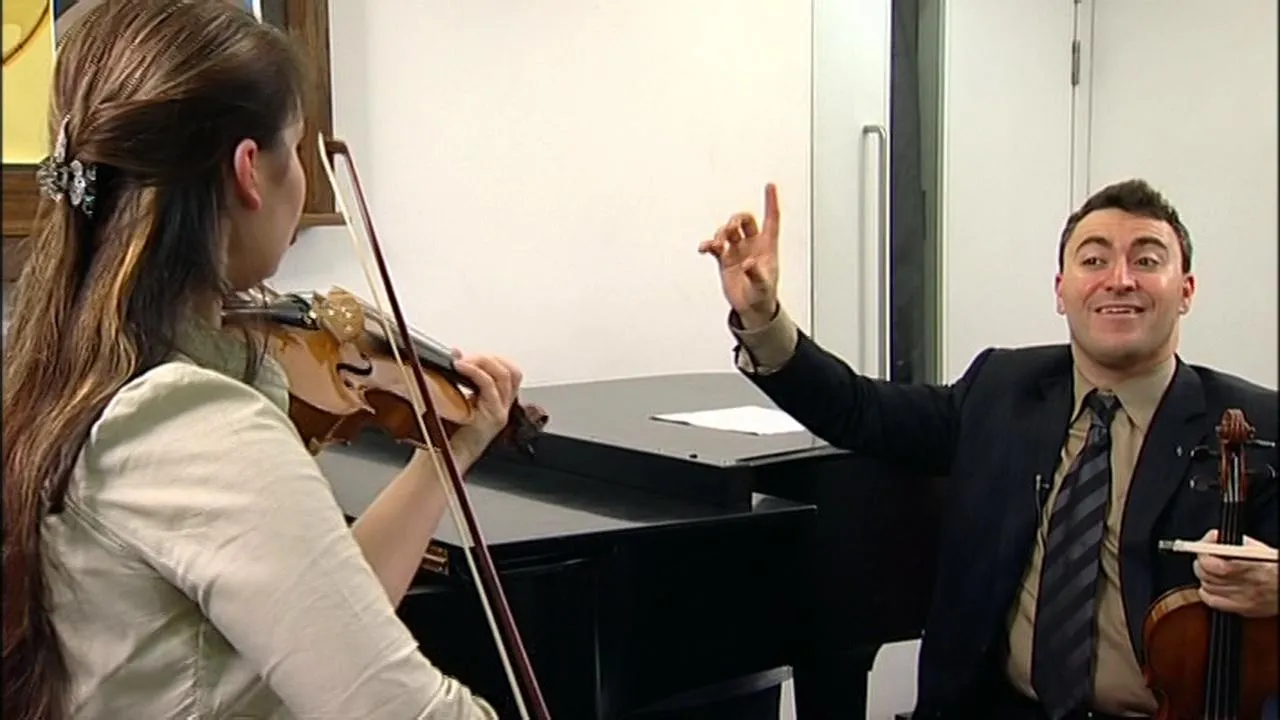
Lesson time: (24min 35sec)
Maxim Vengerov erarbeitet mit Nasrin das Adagio aus Bachs Sonate für Solovioline Nr. 1 und ergründet dessen Harmonik, Timing und Interpretation anhand eigener Einsichten und Anekdoten.
Course preview
This lesson is part of the course Bach - Adagio und Fuge aus der Sonate Nr. 1 für Violine solo
Watch a preview of the full course below.
Lesson transcript:
Music Lesson
Introduction
"Yeah. It is very, very simple. Yeah."
Harmony and Interpretation
- "If you wouldn't change the harmony, it probably would be wonderful to maybe."
- "If you would write something like this. Yeah. But that would be a different composer."
- "That wouldn't be Bach. Exactly. Yeah."
- That's why I think you have to change something. And that is your interpretation: how you play is your freedom.
Rubato and Rhythm
- "Rubato is already written. If you obey exactly to the rhythm, that will be rubato."
- "Welcome home. Yeah."
- "Dominant: different color. You follow the voice."
- Is this simplicity? That's what we need; but, you know, a little change here, little change there. Different talk.
Understanding Harmonies
- "When he puts the harmonies, it's like a column."
- "First of all, when you see the cathedral, you see an incredible gigantic building, architecture."
- "You don't see details; right? You see just the cathedral. You come close, you see the column."
- Then, you come closer, and you see different columns, which make the whole architecture.
Priorities in Music
- "All these columns, you know, little details. But there are priorities, and the priorities are the fundament."
- Harmony is vertical. In other words: play a G major chord or a G minor chord.
Development and Flow
- "You cannot play as equal as you have played the G minor chord. So I don't start."
- "You can make a little bit of rubato inside the frame."
- "This is just a frame for you, but be the creator."
- "I feel this is actually natural; that is written."
Creating Long Lines
- "Abrupt changes would sound a little bit not convincing."
- "That's why that makes one whole long line. Long line is very important."
- "From G minor to G minor, create this bridge for uninterrupted thought."
Playing Techniques
- "You know, you attract attention or distract attention from very important look."
- Vibrato: "There's a lot of dispute about how to vibrate or not to vibrate."
- "You have to choose a vibrato that corresponds with the room."
Considerations for Performance
- "If you would play in the church or cathedral, you wouldn't need much vibrato."
- "In our room, it's very secco. So I think we should use some vibrato here."
Bow Speed and Legato
- "The speed of the bow gives you vibrato."
- "This vibrato must correspond with vibrato in the left hand."
- "Feel the string; you can do anything with it. Basically, it's your sound."
Emphasizing Phrasing
- "The sound either goes up or goes down."
- "The phrase is round; that's why it must lead somewhere."
Freedom versus Rhythm
- "It's either rhythm or freedom."
- "You must always match these two."
- "Timing is very important."
Conclusion and Next Steps
-
"Let's concentrate on something: vibrato and speed of the bow."
-
Legato in your right hand, and staccato in your left hand.
-
"Combine vertical and horizontal phrases."
-
"Now, let's do a little bit of fugue. Yeah?"
About the instructor
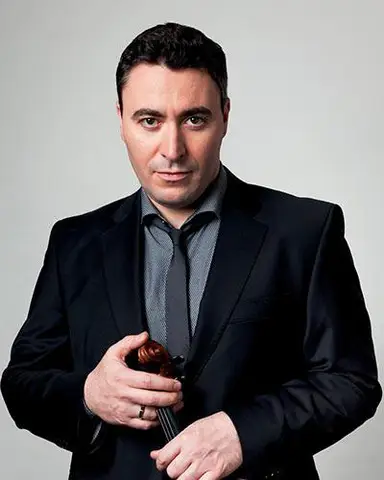
Maxim Vengerov gilt als einer der aufregendsten Geiger der Welt. Sein erstes Konzert gab er im Alter von fünf Jahren und gewann, nach dem Studium bei Galina Tourchaninova und Professor Zakhar Bron, mit zehn Jahren den Ersten Preis beim Junior Wieniawski Competition. 1990, mit fünfzehn Jahren, gewann er den Carl Flesch International Violin Competition und bestätigte damit seinen Ruf als Musiker allerhöchsten Ranges. Im Mai 2000 unterzeichnete Maxim Vengerov nach einem zehnjährigen Plattenvertrag mit Teldec Classics einen Exklusivvertrag mit EMI Classics. Zu seinen Auszeichnungen und Preisen zählen der Gramophone Young Artist of the Year und der Ritmo (Spanien) Artist of the Year 1994; der Gramophone Record of the Year und Nominierungen für den Grammy Award in den Kategorien Classical Album of the Year und Best Instrumental Soloist with Orchestra 1996; der Edison Award für die Best Concerto Recording 1997; der Gramophone Artist of the Year 2002; sowie sowohl ein Edison Award als auch ein Grammy Award 2004 für die Best Instrumental Soloist Performance (with Orchestra) für seine Einspielung von Brittens Violinkonzert und Waltons Violakonzert. 1997 war Vengerov der erste klassische Musiker, der von UNICEF zum Envoy for Music ernannt wurde. In dieser Rolle hat er benachteiligte Kinder in Uganda, Harlem, Thailand und auf beiden Seiten der ethnischen Teilung des Kosovo getroffen und für sie gespielt – eine Arbeit, die es ihm ermöglicht hat, Kinder weltweit zu inspirieren und zugleich andere dazu zu bewegen, Spenden für UNICEF-unterstützte Programme zu sammeln. Eine weitere Leidenschaft in Vengerovs Leben ist sein Engagement für junge Menschen durch Meisterkurse. Eine solche Veranstaltung wurde von Channel Four Television im Rahmen einer Dokumentation über Vengerov mit dem Titel 'Playing by Heart' aufgezeichnet, die 1999 beim Cannes Television Festival gezeigt wurde. Seit Juni 2005 ist er Professor of Violin an der Royal Academy of Music in London. Dieselbe Leidenschaft für das Unterrichten durchzieht seine Meisterkurse bei MusicGurus, in denen Vengerov dich in das große Violinrepertoire einführt – von Ravels Tzigane und Sarasates Carmen Fantasy bis zu den Konzerten von Sibelius, Mendelssohn, Britten und Schostakowitsch – und die Technik und Musikalität hinter jeder Phrase mit dir teilt. read more