Die Regionen des Klaviers & die Performance-Challenge
Lesson time: (5min 41sec)
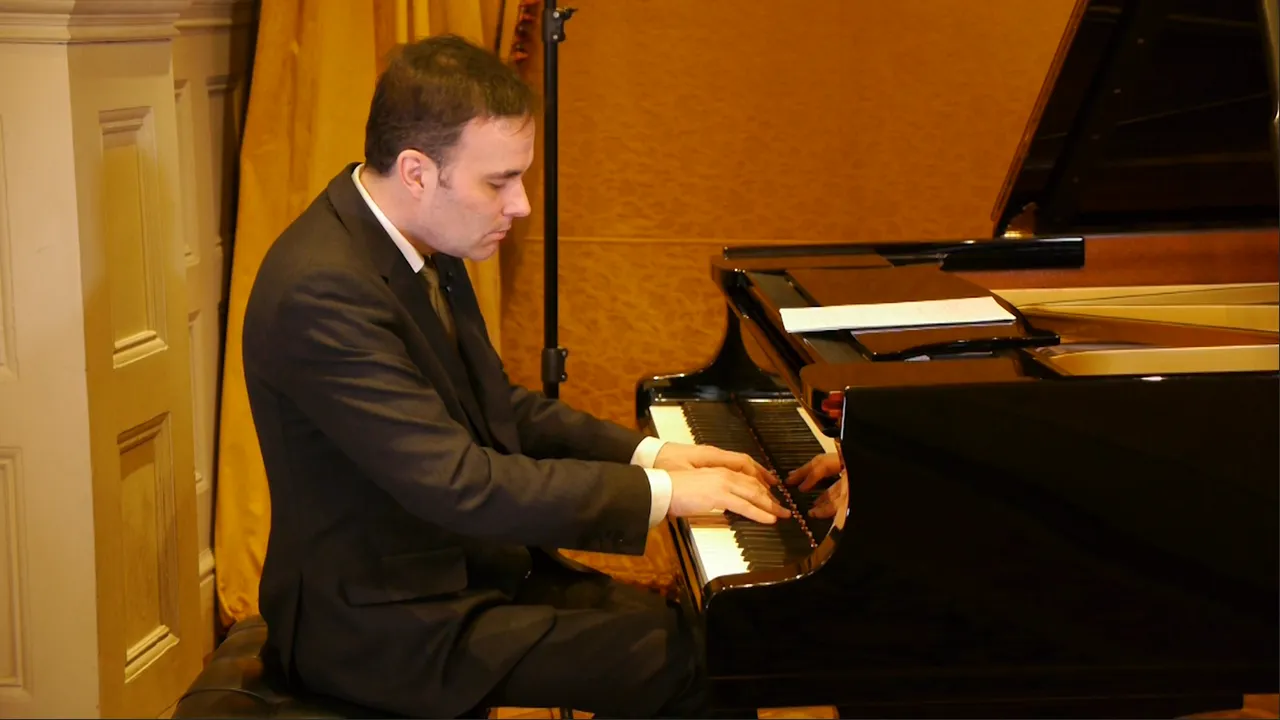
Andrew erkundet die Klänge der verschiedenen Regionen des Klaviers, vom warmen Tenor bis zum kantigen Bass, und stellt dann eine Performance-Challenge, um deine Improvisation in die Praxis umzusetzen.
Course preview
This lesson is part of the course Klavier lernen und genießen: eine Fast-Track-Methode für Anfänger und Wiedereinsteiger
Watch a preview of the full course below.
Lesson transcript:
Exploring Performance on the Piano
Now we're talking about performance. This is where we can really think about the different aspects of the keyboard that we encounter in our vast array of piano music throughout the centuries, including contemporary music and jazz. No matter the genre, pop songs or whatever else, it's important to remember that the principles are the same.
One of the wonderful aspects of improvisation is the opportunity to explore different qualities, regions of the keyboard, and styles. I'm going to suggest a few ideas to try out, but remember: these are things to explore once you've gone through all the other steps. As I've said before, you're already fast-tracking by using this technique, so don't rush it, make sure you can walk before you run.
The great thing about fast-tracking is that you'll be running very soon. Here are some suggestions on how you can take the ideas we've discussed and turn them into actual performance pieces that sound more like a musical composition, something that would be really exciting to play. When you invite your friends around, they'll not only be amazed at your piano playing, but they'll also think, "Wow, you've invented that!"
Exploring the Tenor Region
Let's dive into one idea using what we call the tenor region of the piano. This is located in the middle of the keyboard, roughly around the middle C region, a little bit below it. I'm going to explore nymphasation here using a rich tenor melody part of the piano, with a right-hand note pattern and a left-hand accompaniment to explore these wonderful sounds.
Articulation in the Bass Region
Next, thinking again about articulation, one of the great things the piano can do is provide a pronounced and spiky articulation in the bass region. Here, I'll mix up the techniques we've discussed.
- I plan to use some right-hand cluster chords within a pulse.
- For my left hand, I'll implement pronounced and spiky articulations that synchronize with the right-hand chords.
This will allow us to explore the exciting, rhythmic, and sometimes even percussive quality of the piano's bass region. Many pieces of piano music will call for that kind of quality.
High Sonorities and Interplay
Similarly, we can look at the very high sonorities available on the piano. For this, I'm going to focus on the black keys. Here, I'll apply the technique of developing a phrase with both hands, allowing them to imitate and converse with each other.
- My right hand will be positioned high on the piano, around the two sets of five black notes down from the very top.
- My left hand will hover around the middle C region.
In doing so, I aim to focus on the intricate and beautiful colors found in the high treble. Again, I'm mixing various techniques we've covered, using three or four simultaneously to create something remarkably different, something that's truly exploratory.
In the left hand, I will keep a steady pulse that is in conversation with the right hand's melody. As mentioned in the previous section, I'll use the pedal: one pedal for every two beats in the left hand, which will create a sonorous and exquisite color as I add a right-hand pattern.
Conclusion
In summary, these examples illustrate the contrasting sound worlds and areas of color you can explore using these techniques, taking your performance to the next level.