



Analyse des zweiten Satzes mit Kurt Masur.
Mit
Kurt Masur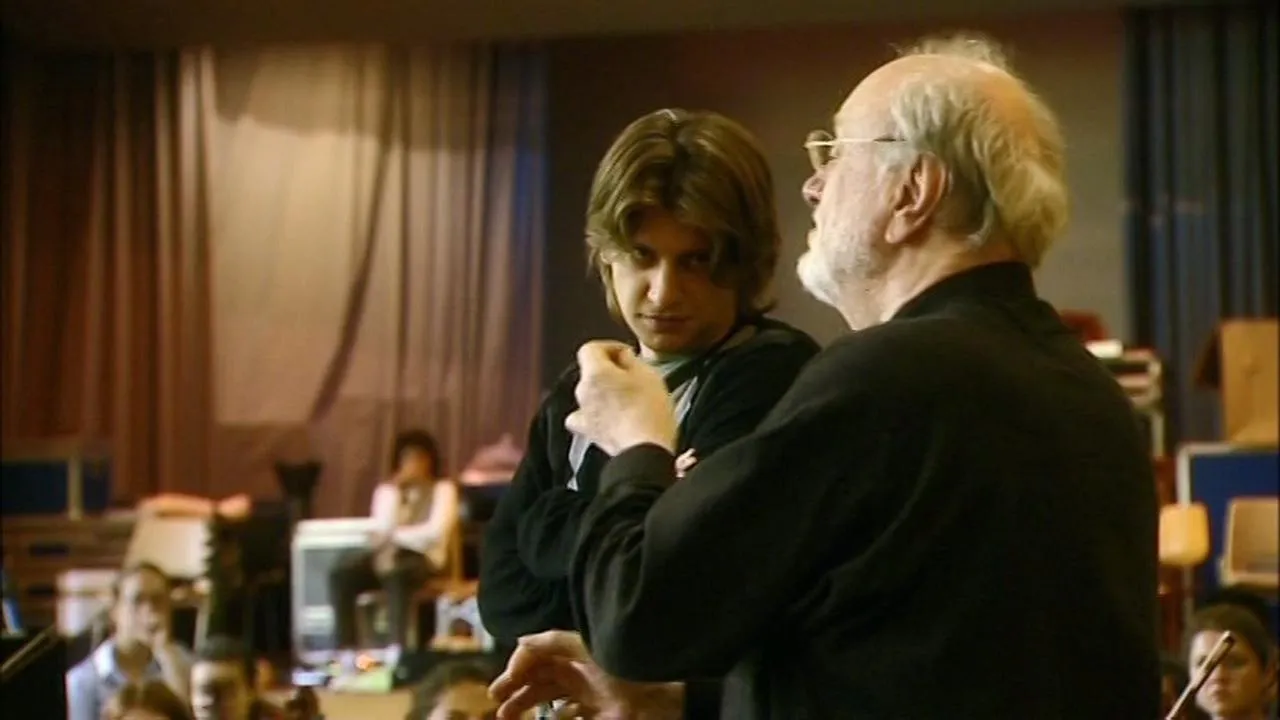
Das steckt im Kurs
6 Lektionen (1h 35m) · 1 gratis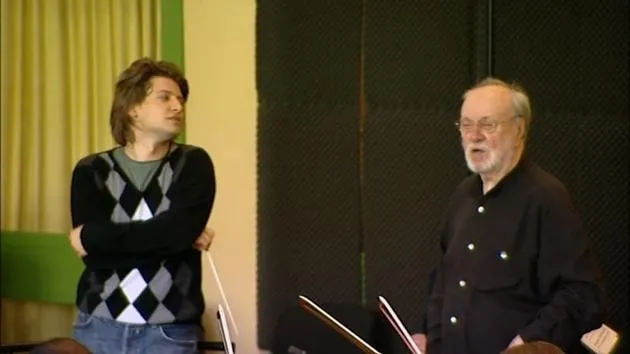
01. Analyse des ersten Satzes mit Kurt Masur.
33:22
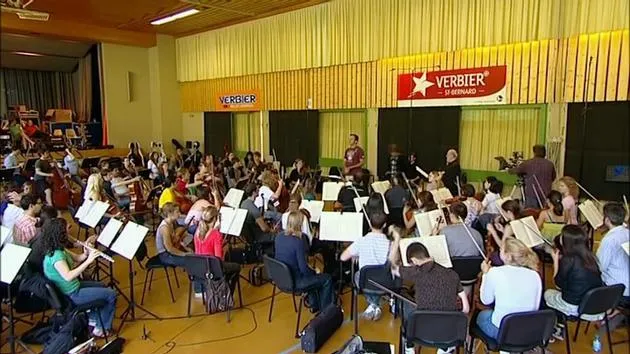
02. Analyse des zweiten Satzes mit Kurt Masur.
Du bist hier28:39
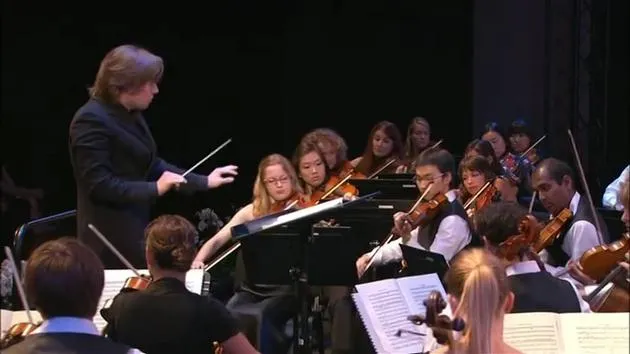
03. Vollständige Aufführung beim Verbier Festival, Teil 1 - dirigiert von Daniele Rustioni
Gratis-Lektion12:32
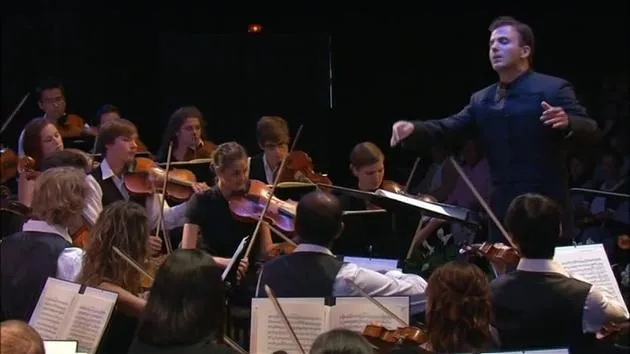
04. Vollständige Aufführung beim Verbier Festival, Teil 2 - dirigiert von Huba Hollokoy
7:04
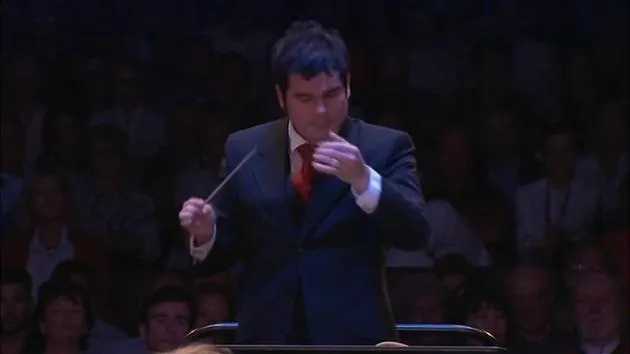
05. Vollständige Aufführung beim Verbier Festival, Teil 3 - dirigiert von Dane Lam
6:32
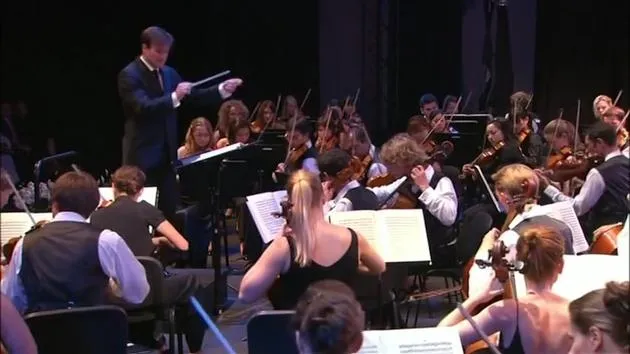
06. Vollständige Aufführung beim Verbier Festival, Teil 4 – dirigiert von Vladimir Kolesnikov
7:48
Transkript der Lektion
Music Lesson
Introduction
"So number one. This crescendo is again too early. It's only on one note. This other thing..."
Discussion Points
-
Crescendo Timing
- "This crescendo is again too early. It's only on one note."
-
Tone and Dynamics
- "The other thing is very light."
- "Your beginning is... Look, I spoke with you about this kind of psalmodine, the Catholic Church."
- If the priest goes in front of 1,000 people, even less:
- "Father, help me. Father, help me. I'm already hopeless. I don't believe anymore. I give up."
-
Praying through Music
- "You are the first. And now comes such a prayer where even Godfather is melting the whole bow and the lot of vibrato."
Instructions and Feedback
-
"Okay, now you have tried. Celli and bassi from the second bar, please."
- "Tiny bit longer notes, please. Not that short."
-
Practicing Tempo and Dynamics
- "One, two. And piano. That's nice. Thank you very much."
- "Beginning, please. It's much better."
- "Yeah, I'm sorry, I'm sorry."
-
Accent and Rhythm
- "Your upbeat is so slappy. I even wouldn't like to play with you."
- "Slappy means... Ah. What do you want? I don't want an accent on the first day."
Corrections
-
"An accent that's 40. Is it 40? It's 40, yes. Yeah, it's 40. I said party."
-
Effort and Improvement
- "Okay, if you want to help me, do it. If you don't do it, what shall I do?"
- "Once more, please. Be not good, not good. Your appetite is not good."
Performance Notes
-
"Here and there and not. I'm in doubt. Not good, not good."
-
"To the blood without hands, breathing. Much better, much better."
-
Using Arms and Expression
- "Once more. Now just do it with your arms."
- "Friends, I'm sorry, I'm sorry. This is for me. For you for a lifetime."
Reflection and Advice
-
"I want to give you something to take it home."
- "If you do that, you will your whole lifetime be a boring conductor."
-
"Because nobody exactly died. Or would you like to have da di? Or you have like ba da da."
-
Different Languages in Music
- "This is such a difference of our language, of our hands, of our meaning, our eyes."
- "Look, if this stamina prays just before she is killed. What a prayer. God, let me live, let me alive."
Encouragement and Correction
- "All the time, the same notes. All the time, the same for them."
- "For God's sake, do it. Pray for your life."
- "It's better, it's better, it's better."
Group Instruction
-
"Your three is nothing worse. And all play in the middle."
- "In the cello in the middle. Passion, passion."
-
Short Break
- "Friends, a mistake. It's a short, Happy short break."
- "35, please. 35 SA. Yes, please. Thank you very much."
Sound and Texture
-
"In contrast, at letter E, it would be nice to have a little richer sound after this long, very seco spicato phrase."
- "So sing a little bit more with the legato."
-
"Let's do one Bar before A, it's one before the key change."
- "One before the A, there is the piano."
Tempo and Crescendo
-
"But your tempo is slower and slower. Yeah, yeah, yeah, yeah, yeah. Go, go, go."
-
"We are doing everything crescendo here."
-
Mindset and Execution
- "You cannot make a crescendo or something which is not in the mind of Mendelssohn."
- "Look, you do it so beautifully, and the pianissimo at the beginning is beautiful."
Call for Responsibility
-
"But in the middle time, you don't know what to do. Just go, Just go."
-
"And then they will play automatically in the right way. You keep it going."
- "Then you have to be more and more responsible."
Reiteration
- "Instead of going, going, singing. Okay, just do the beginning."
- "Same place, same place. Go, go, go."
Final Thoughts
-
"No, no, Rita Tano, please. Possibly not. Keep them going, keep them going."
-
"Four before letter B, please. 53. Friends, may I? May I ask you once more?"
- "It's a little bit louder than what? What's the first time?"
Closing Reflection
-
"It's for the first time. And now is it what it's for? TC1 with an accent."
-
"Yeah, sure. Because it's desperate. I pray and I pray without result."
-
Thoughts on Prayer
- "And now. I thought it got here. Finally hear me."
-
"And this is all one source. This is so what is divine movement?"
-
"You can do it, but you have to make the difference."
-
"If you have for this mod, just do it. Do too much, but do more."
-
Final Instructions
- "Yeah, because you make them sleep. Me too. 55, please do before letter B."
Encouragement
-
"Go. SA violins. Why don't you get them? 1 and 2 and 1. Go dance."
-
"Look, you have by yourself. I can only advise you. Your tendency is a little bit sentimental."
Conclusion
-
"Look, the most hopeful thing is. This is very good."
- "And then if the scherzo comes in, you have done the beginning beautifully."
-
"Everybody played beautifully. But if you don't keep it excitingly beautiful."
-
"It's not sleep, it's not a lullaby."
-
"It's not a prayer. Where I go each Sunday to church and say, God, please help me to survive the next week or tomorrow or something like that."
-
"Look, it's small. It's small and it's a pilgrimage. So it is sometimes who has to pray necessary."
Last Requests
-
"And that's the point. I just would like you to do the very beginning once more."
-
"And then once more the fortissimo. Bam. Ba da ba ba ba da."
-
Final Adjustments
- "So just the very beginning and then the fortissimo second time."
-
"Just one small thing for the very end. Cello and double bass has piano."
-
"And you have pianissimo so don't go under the violas. You have the pianissimo only later."
-
"So it's an interesting different case."
Final Thoughts
-
"Beginning, please. No, no, no, no, no. I'm sorry."
-
"I'm sorry. This is in the church. Have you prayed? Sometimes."
-
"Are you a Christian now? Officially, yes. Officially, yes."
-
"It's a pity. Look, as I was a soldier with 17 and there were a lot of killed people around me, I prayed."
-
"But I know since that time what it means."
-
"I don't want you to have the same faith, but to try to find out."
Personal Connection
-
"Mendelssohn had such a difficult life and he died in the age of 37."
-
"As you know, you are now one year older. I think nine years older. That's okay."
-
"No, but this is not the point. The point for me is your tendency is to be calm, beautiful, nice, and so on."
-
"I would say if I start to pray, I don't go to church to pray, but sometimes I pray."
-
"If I fear for someone, or I fear to lose someone. But then I do it. I pray."
Encouragement to Action
-
"You help me. Okay, do the beginning. Yeah."
-
"Okay, Once more. Do it once more. Do it once. For this."
-
"More. Do more than you ever would expect from yourself. Yeah, More. Once more, once more."
Conclusion
-
"Light and softly passionate. Yeah. No, no. You know why? You know why?"
-
"Come here. Better, better, better. Yeah, yeah."
-
"And you shouldn't imitate me. You are yourself."
-
"You have long, slower arms and that's different."
-
"But come here. That nobody can say. You were not clear."
-
Final Directions
- "Let them go, Let them go, Let them go, Let them go."
-
"You don't inspire them to take the bow. If you don't have the highest speed of the bow, you'll never get this sound."
-
"So Sudastu and pit bow. Yeah, but soft that they feel that they are right to do that."
-
"I would play if I see your movement."
Final Remarks
-
"Bar 11, please. 11. You do the beginning once more, for God's sake. With character. Come on."
-
"That's it. Go, go. Yes. Thank you very much. Wonderful. You play beautifully."
-
"Thank you very much. Let's do the fortissimo."
-
"Now it's letter B. 57. Yeah. Again, again, please, please."
-
"Once more. What do you feel with this?"
-
Emotional Response
- "Subito's fault says it's like getting nervous and nervous."
-
"Why look for me? If the prayer doesn't work, I could be desperate."
-
"Just do it, please. Help, help, please."
Reflection and Clarity
-
"Because at the moment I get an accent, but without meaning. It is not clear what you think."
-
"This is kind of even overshadowed at the moment. Of course, the beginning was wonderful."
-
"Now, now do the same. Once more letter beat, please. Once more."
-
"Good. Up. Go. Contrabass SA. And 1 and 3. And 1 and 2 and 3."
Questions to Consider
-
"Why do you go down there sentimentally? You got such a slower tempo."
-
"You are the conductor, not the flouter. Why? Why? Why? Why?"
-
"I pray all the time. Tarari Baba, you're making tari."
-
"And again. Late. I see. Okay. Just to the very ending. It's. It's fine. 92 please. 92. Fine. Thank you very much."
Conclusion
"Thank you."
6 Lektionen
1 Std. 35 Min. strukturierte Videolektionen
Erweiterte Videofunktionen
Verlangsamen, Passagen loopen, mitlesen
Handy, Tablet & Desktop
Üben, wo du willst
100 % Zufriedenheitsgarantie
30 Tage Geld-zurück-Garantie
Lern deinen Guru kennen
Lern deinen Guru kennen
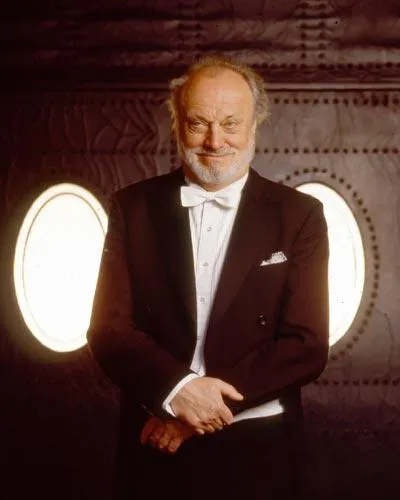
Kurt Masur ist einer der großen europäischen Dirigenten unserer Zeit und feierte 60 Jahre als Maestro. 26 Jahre lang war er Kapellmeister des Leipziger Gewandhausorchesters und trat damit in die Fußstapfen nicht nur von Wilhelm Furtwängler und Bruno Walter, sondern von Felix Mendelssohn selbst, der das Orchester zwölf Jahre lang bis zu seinem Tod 1847 leitete.
Von 1991 bis 2002 war er Music Director des New York Philharmonic; nach seiner elfjährigen Amtszeit wurde er zum Music Director Emeritus ernannt und war damit der erste Musikdirektor des New York Philharmonic, der diesen Titel erhielt. Im September 2002 wurde Herr Masur Music Director des Orchestre National de France in Paris, bei dem er den Titel Honorary Music Director for Life innehat. Von 2000 bis 2007 war er Principal Conductor des London Philharmonic, und seit 1975 ist er Professor an der Hochschule für Musik in Leipzig.
Diese direkte Ahnenlinie, die bis auf Mendelssohn zurückreicht, macht ihn zum idealen Begleiter für diesen Kurs: Während er die ersten beiden Sätze von Mendelssohns Sinfonie Nr. 4 in A-Dur, der „Italienischen“, erarbeitet, teilt Masur die dirigentische Einsicht und das interpretatorische Verständnis hinter einer der beliebtesten Sinfonien des Repertoires.







