



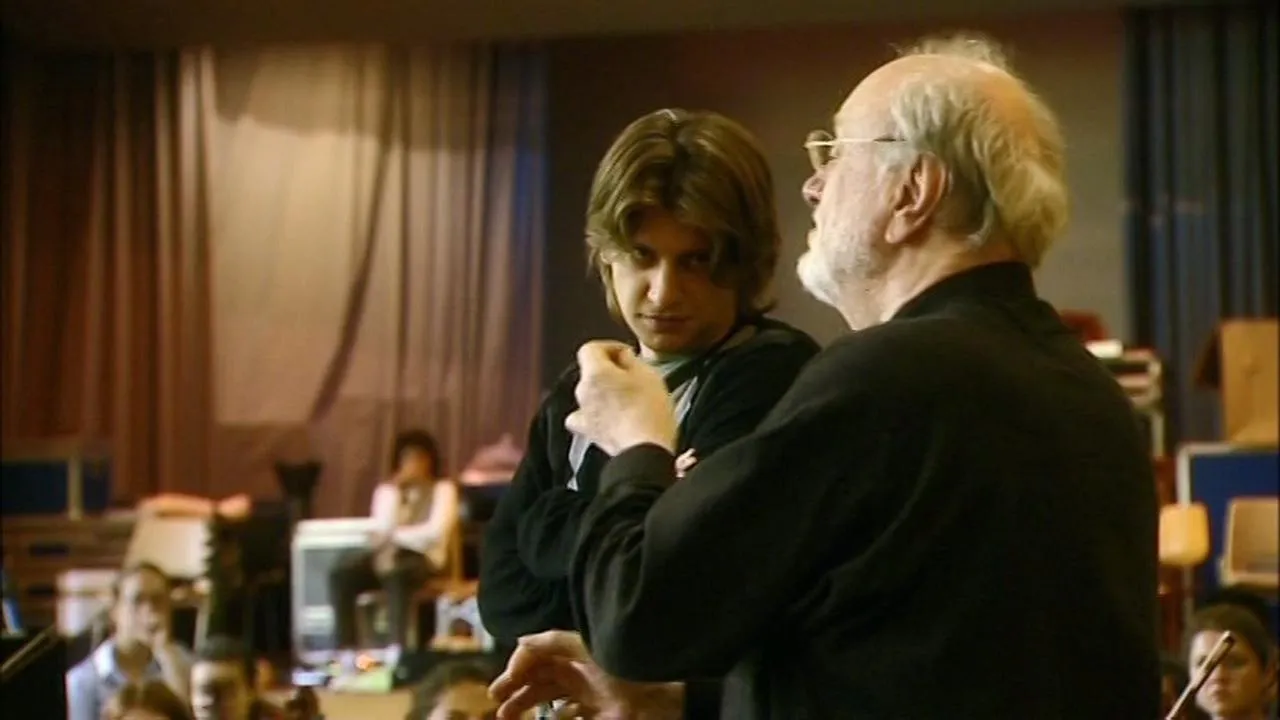
Analyse des ersten Satzes mit Kurt Masur.
Lesson time: (33min 22sec)
Course preview
This lesson is part of the course Mendelssohn - Sinfonie Nr. 4 in A-Dur „Italienische“ - die ersten beiden Sätze
Watch a preview of the full course below.
Lesson transcript:
Music Lesson
Introduction
Oh, oh, oh. Still a little bit tense. Yeah, I know the beginning was fine. You're very good at...
Relaxation Technique
Loosen up, friends. Forget the tension of a concert. Go to Italy, be on the beach, relax, enjoy life. Venice is beautiful also. But you cannot...
Tempo Control
You should control your tempo all the time. It's not a question of how to beat it. You are very young, but you're rushing. Then, you have no time to bring the eighth notes.
- This must be a classical tempo from the beginning to the main.
- Your tempo is very, very good. Keep it going.
- But control, control. And say every note, okay?
Encouragement
Oh, good. Friends, friends, friends, friends, friends. You are not controlling the tempo. You are disturbed by the trumpets, who come in always late now. This is so, so difficult.
I would like today:
- Don't give up anything.
- Don't go over.
- Make it absolutely clear that we have a performance which could be done not better by Berlin Philharmonic.
- And you can do it. You can do it. You are able to do it. You have done it.
Relaxation and Unity
So the point is for me just to start to have the kind of relaxation, but with the kind of spirit. All the time, you are in another tempo than all the others. This is the most important point.
"There are one body and one soul. All of you, okay?"
So keep them going. Loosen up. The sun is shining. You do fine trumpet. That's the ending note in the same tempo. Don't make any rubato there.
Concentration
Please be very, very concentrated. It was great, wonderfully done.
-
- Two bars 50.
- So, 49. Very good.
- And then repeat them.
- And we do the repeat.
Oh, no. I'm sorry, I cannot trip. I cannot say. The trumpets have no endo. And piano papa ra, papi, ra. This note must be in tempo, not later. Okay?
Focus on Timing
Your heart is beating all the time, but your brain is not beating at the moment. Not all of you. Let's do it, please.
-
- 62, please.
-
Sa second. Valin, take it easy. You're late. Tempo, tempo, tempo, tempo.
"No, no, no, no, no. I'm sorry. You're slowing down."
He is wonderful in tempo. You are slowing down. Don't get lyrical. The piece says all the time, yes.
Lively Execution
After the beginning with sparkling and very, very beautiful... Just do a second time bar. Now, shortly before the second time bar.
Clarification on Dynamics
Sorry, I have a quick question. Yeah. In measure 90.
- Is it sub 89?
- You mean the fifth bar of letters?
- The fifth bar is forte, pianissimo, subito.
So it seems the B is forte, and A sharp is subito. But I tell you, do not be frightened, not afraid. It's not cautious. It is just a spiccato pianissimo. Don't play it cautiously. Make it... It's virtuos.
Returning to Previous Bars
Okay. So the same. I think so. Bar 49, please. 49. I don't know what I should do with the trumpet.
- After your correct one, they can play.
- If you are too early, they are not together.
It is very, very important. Please have the discipline to hold the note so that we have six, eight notes in between. This is a bit... Just do it once more, otherwise I start to rehearse.
"Once more, for God's sake."
Dynamic Crescendo
Okay. Give them absolutely that they shouldn't escape there. They are deserving the whole orchestra.
- Two, please.
- Not too much. Go knocking.
- You have it. Crescendo and pianissimo.
Yeah. Why don't you play it? He didn't do it. You didn't do it. Your conductor is suffering. Is that clear?
"Sorry. Where is the pianissimo?"
No, not for the first violins. The crescendo is for seconds and violas. And then when you arrive at bar 105, the long note...
- 105, 106 is like the tension.
- Tension. Still going?
- Yeah, exactly. Now we were talking.
Persistence in Rehearsal
Exactly. Okay, do it once more. I don't give up. Don't think we go home earlier.
-
- 97, please.
- You're always late there. I don't know why you have a demo endo, but you have.
"Why are you late in the demo? Wrong numbers."
So, yeah, that's 98. 98 please.
Disciplinary Notes
One dump. Why is that louder? I'm sorry. Why is the second phrase...
- You have downbo or what?
- Why is it louder?
Yeah, do 140. Yeah, it is. Musically, it's fine. I just would like to imitate you a little bit here.
"Lying behind gate. Lying behind Kate, not out of it."
Encouragement to Try Again
May I try again, please? Yeah, sure. 140, please. You have time. I would like to get you in that direction, 140, please.
- Is it the 40?
- Yes. That's a bit loud.
No, I think... Yeah, yeah. Dude, it's great. It's really great. Wonderful. You have such control. The woodwinds are always late in the same place.
Performance Coordination
That's the beginning of the last phrase. If you are late there, then we are lost here already. We are losing control.
So just shortly before that. You're doing fine. Look... Elegance.
"Italian La dolce vita."
No, I think it's more dolce vita was paid. The prosity.
"No, no, no, no. That's not what he meant."
Final Instructions
Oh, God, no, no, no. 63. So it's the second time. 63. Is it right? Yeah. Lado back. Not too much. Don't laugh. Ra.
Very good. Okay. In the timpani, it's a very important point. Not D. You're always late at the second half.
Maintaining Tempo
Yeah. Please go and keep them going. That's very, very... Not too bad. You get it? The pianissimo, the spiccato...
Could be more light. Not cautious, but a little bit more light. Yes. Okay. So then just wherever you come...
- 285 with the upbeat.
- Thank. I don't understand.
Clear Expression
Timberly, do it with me. Someone do it with me. One, two. It's one line. You never know. One, two, nine.
"No, no. You again to dumb. One line."
The same place, please. Two hundred and eighty-five friends. You must discover what is before. It's the end of a very dramatic point. And suddenly comes a shadow...
Dynamic Control
Tataram. Tataram. This is full of fear, full of doubt. So just make it clear that it's covered.
"And the fingerboard."
Okay. You are just ending. It's very, very good showed.
No, no, no, no, no, no, no, no, no, no, no. You bring... That's the wrong rhythm. Just prepare all that's coming up there and be very, very clear in the tempo.
- The same place. Yup.
- You are not together.
- You are not together. I'm sorry, I cannot accept that.
That's still a tartism. You must be able to continue the justice in the dynamic without losing tempo and without making it too short as an uphill.
Continuous Improvement
You play very, very beautifully. But those places are not... They are not under control.
"Just do it."
Final Thoughts
Oh boy, oh boy, oh boy. Oh, friends. Come on. Do it once more. Do it once more. It's a miraculous voice or one note from heaven.
Same place. Yeah, sure. The wonderful letter melting sound of the cello... Do as much of the D string as you can do. I just hear the Chinese sound of the string.
Reiteration of Themes
Just do the... Do the theme. You know the place. Please.
- No, that's not... Simply not nice.
- Are you brave? Do it on the D string.
The sound is better. Of course. Do it three times more and then we talk about it. Then you can go over to...
Of course to the ac, but later. So let's do once more the old. The old you have.
- Yeah, yeah, yeah.
- Classical version.
This is awful. It's awful.
"This is just your bone."
This Chinese sound... Once more.
Conclusion
Oh. O la la. Yeah, that's it. You get it? Do it together. You get it. Thank you very much.
I had to save you. I'm sorry. It's great. Let's do 485, please.
- Goodbye. 485.
-
-
- 405, please.
405 exactly. Pray you're louder than before. Again. It's similar enough. Friends first. Violence.
"Bravo. That's it."
Yeah. Good bye. Thank you very much. Thank you. Bravo.
About the instructor
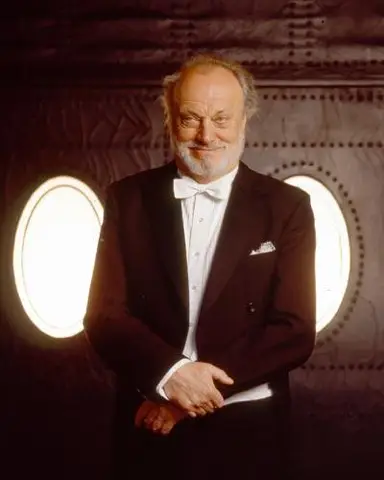
Kurt Masur ist einer der großen europäischen Dirigenten unserer Zeit und feierte 60 Jahre als Maestro. 26 Jahre lang war er Kapellmeister des Leipziger Gewandhausorchesters und trat damit in die Fußstapfen nicht nur von Wilhelm Furtwängler und Bruno Walter, sondern von Felix Mendelssohn selbst, der das Orchester zwölf Jahre lang bis zu seinem Tod 1847 leitete. Von 1991 bis 2002 war er Music Director des New York Philharmonic; nach seiner elfjährigen Amtszeit wurde er zum Music Director Emeritus ernannt und war damit der erste Musikdirektor des New York Philharmonic, der diesen Titel erhielt. Im September 2002 wurde Herr Masur Music Director des Orchestre National de France in Paris, bei dem er den Titel Honorary Music Director for Life innehat. Von 2000 bis 2007 war er Principal Conductor des London Philharmonic, und seit 1975 ist er Professor an der Hochschule für Musik in Leipzig. Diese direkte Ahnenlinie, die bis auf Mendelssohn zurückreicht, macht ihn zum idealen Begleiter für diesen Kurs: Während er die ersten beiden Sätze von Mendelssohns Sinfonie Nr. 4 in A-Dur, der „Italienischen“, erarbeitet, teilt Masur die dirigentische Einsicht und das interpretatorische Verständnis hinter einer der beliebtesten Sinfonien des Repertoires. read more