



Die Note C - Griff und Übungen
Mit
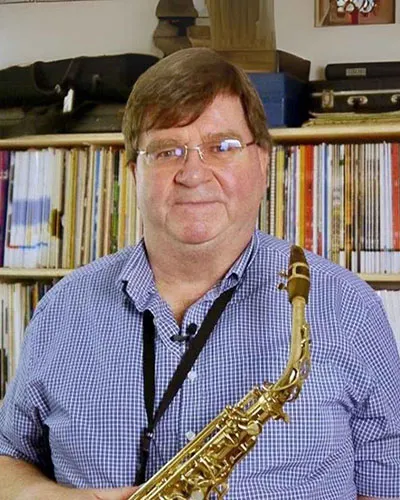
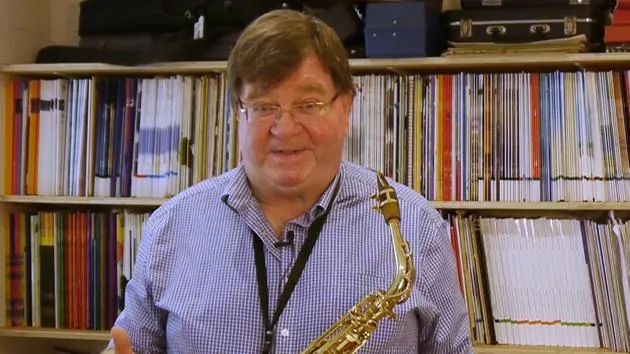
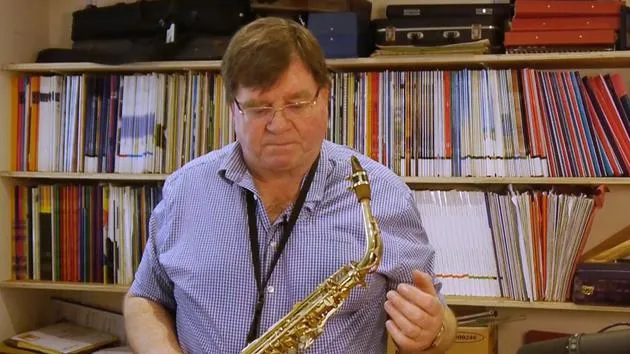
James RaeJames Rae stellt die Note C auf dem Saxophon vor: wo sie im Notensystem liegt, der Griff für die linke Hand und Übungen mit langen Tönen, um deinen Klang aufzubauen.
Copyright © 2023 Universal Edition (London) Ltd., Alle Kompositionen von James Rae, sofern nicht anders angegeben.
Das steckt im Kurs
42 Lektionen (0h 56m) · 1 gratis
01. Die Note C - Griff und Übungen
Du bist hier7:10
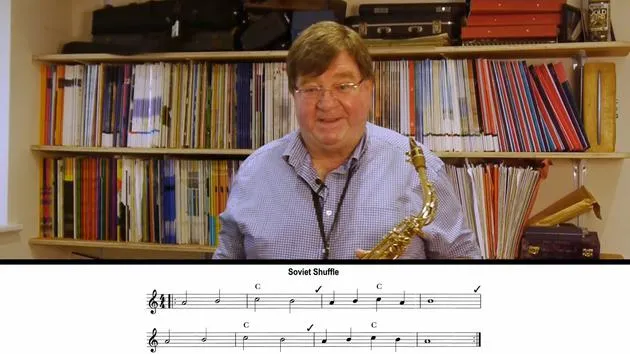
02. Sovient Shuffle - Lektion
0:31
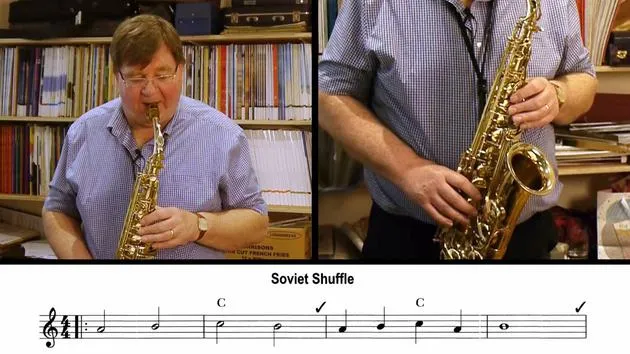
03. Sovient Shuffle - Performance
0:40
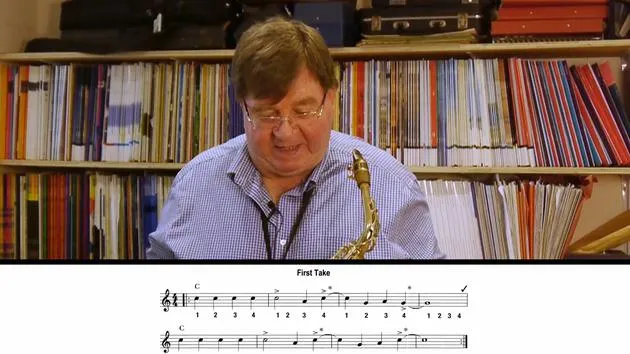
04. First Take - Lektion
0:58
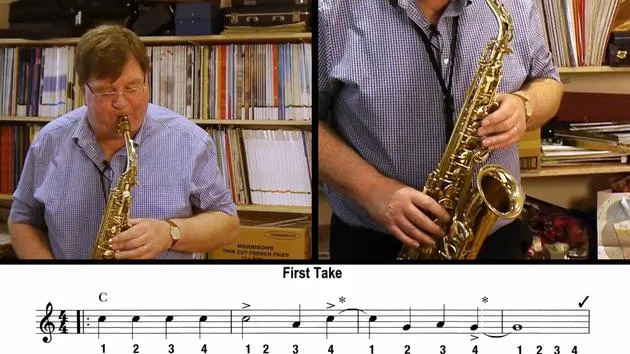
05. First Take - Interpretation
0:36
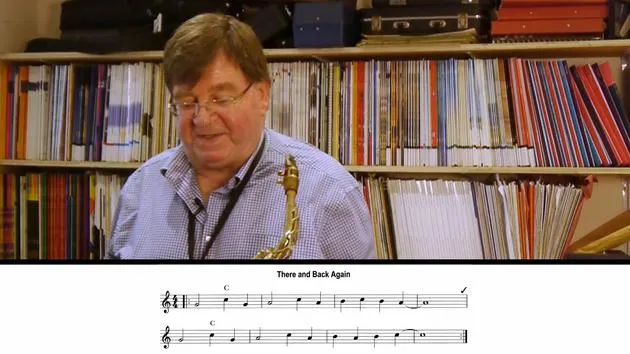
06. There And Back Again - Lektion
0:54
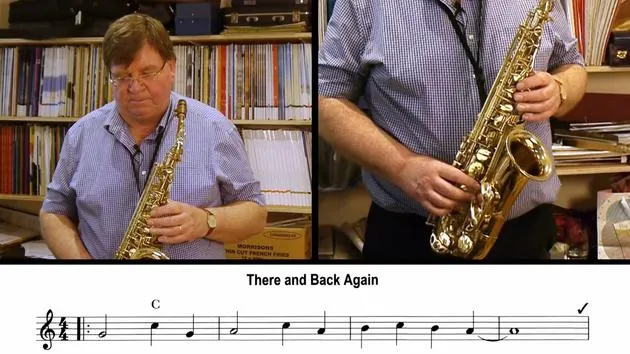
07. There And Back Again - Performance
0:40
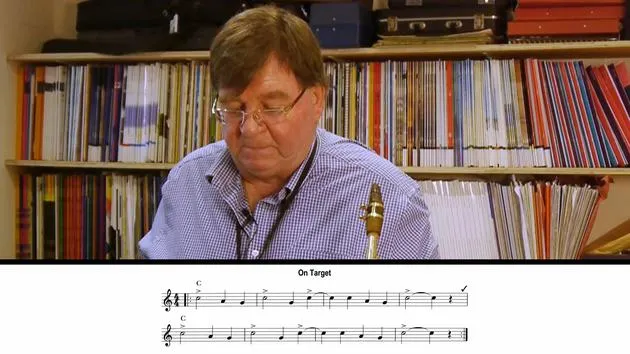
08. On Target - Lektion
0:18
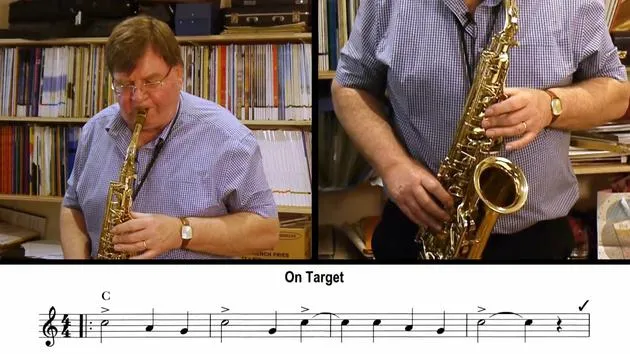
09. On Target - Aufführung
0:30
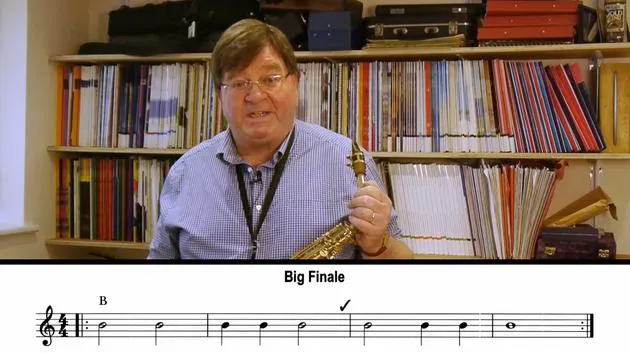
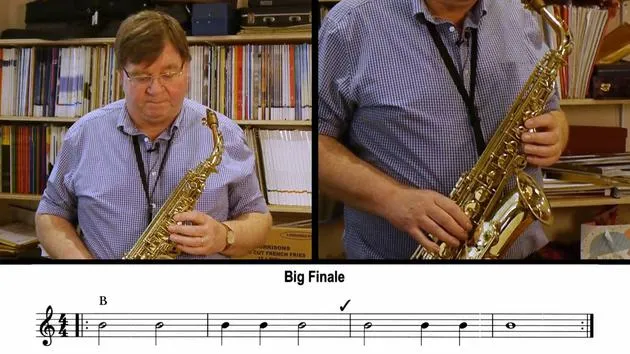
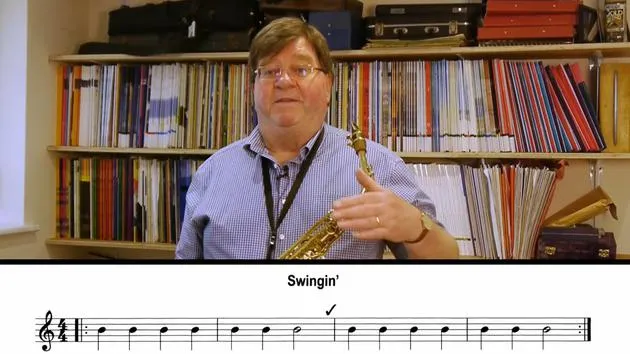
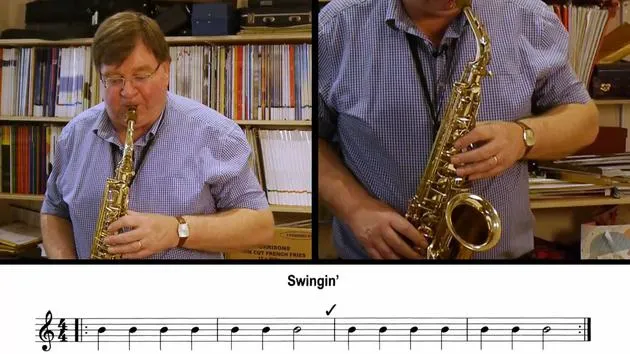
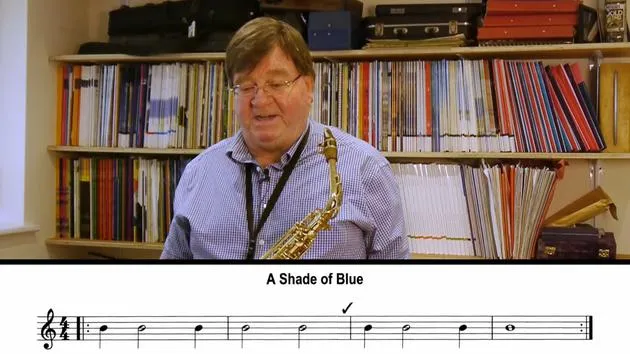
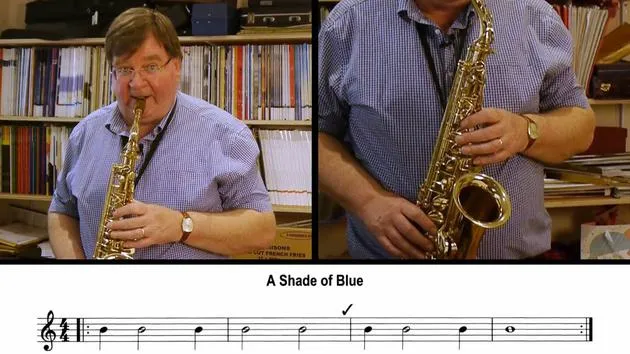
Transkript der Lektion
Introduction to the Note C
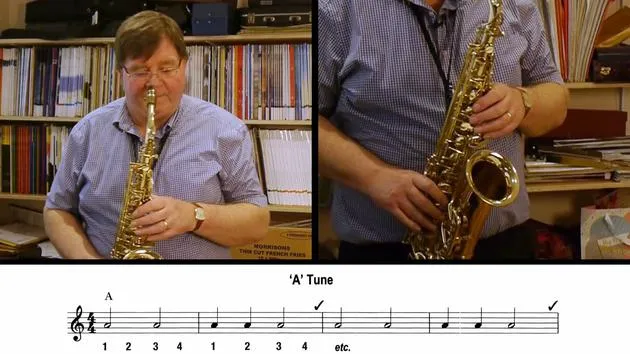
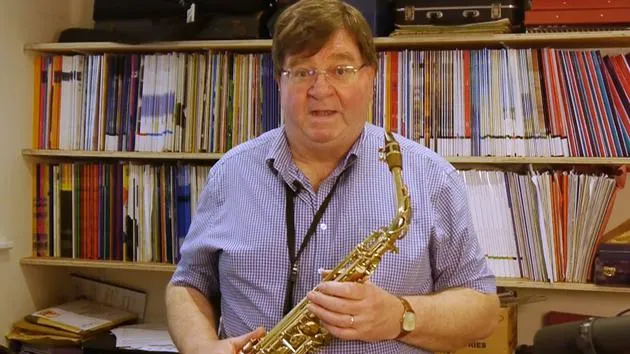
In this section, I'd like to introduce the note C.
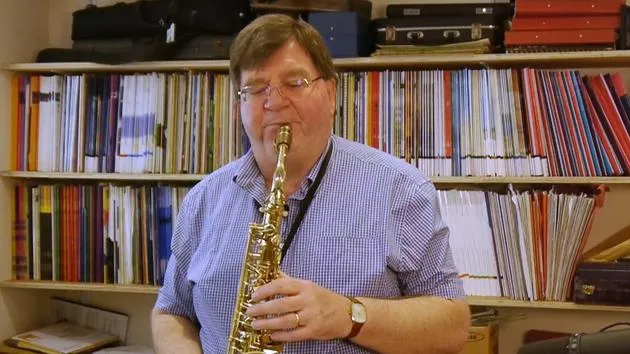
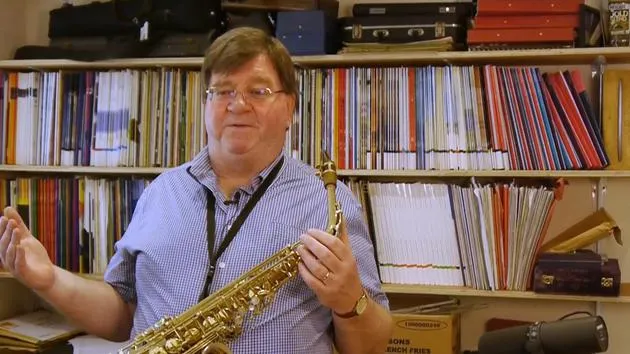
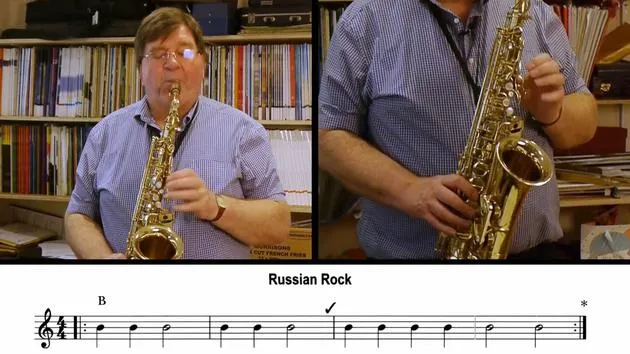
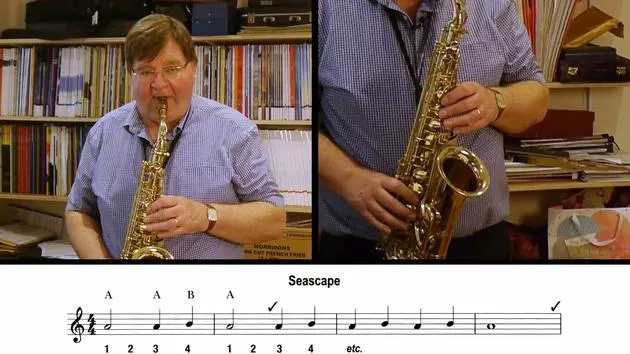
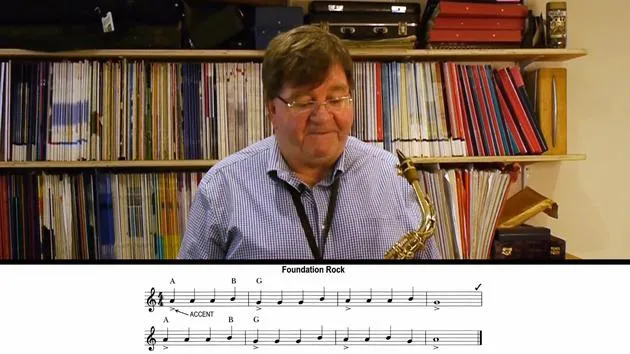
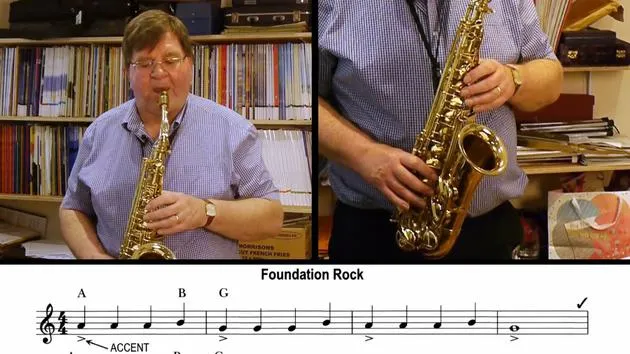
- C sits on the third space of the stave and is played with the middle finger of the left hand, like so.
- Think of your A and remove the top finger.
- It's the highest note we've done.
It'll feel slightly odd at first having the top finger off and the second one down, but you will get used to it.
The Importance of Long Notes
Going back to what I said earlier in the course, it's very important to play long notes to develop your sound.
- When we learn a new note, it's good to practice them as long as you can until your breath runs out.
- This develops good lung capacity and a nice, smooth, straight sound.
Introducing Crotchet Rests and Note Values
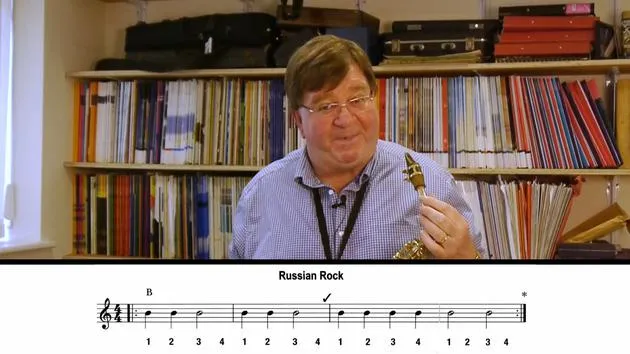
In this lesson, we also introduce crotchet rests as well as notes having value.
- Rests also have a value: a crotchet or a quarter note.
- A rest is like a black squiggle, looks like a black seagull on its side. This means you don't play for one beat.
- Crotchets mean you do play for one beat, while rests mean you don't.
Exercise 1: Play Rest
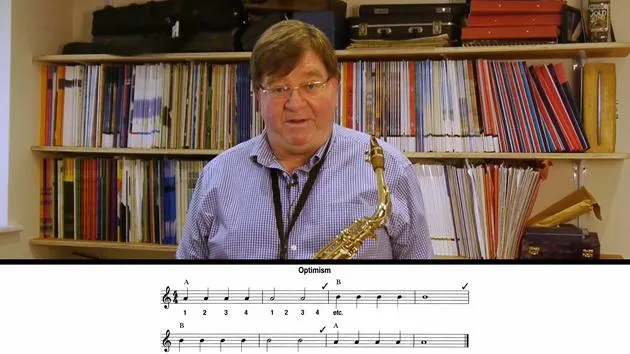
For example, Exercise 1 is:
- Play rest.
- Play rest.
- Play, play, play, play, rest.
- Play rest.
- Play, play, play.
It's good to practice these exercises with the use of a metronome to keep you in time.
- Eventually, you will develop your own internal metronome, but in the early stages, it's good to have a metronome nearby.
- You can use an electronic one or a mechanical one. Both are very useful.
- You can get them for your phones as apps or get a physical one.
This is a typical clockwork metronome.
- We wind it up just like a clock and set the speed by moving the weight up or down the arm, which affects the speed.
- It's very important that you put it on a level surface.
- Here it gives us a regular tick.
- Set it to a comfortable speed so you can play along with it; this helps to keep you in time.
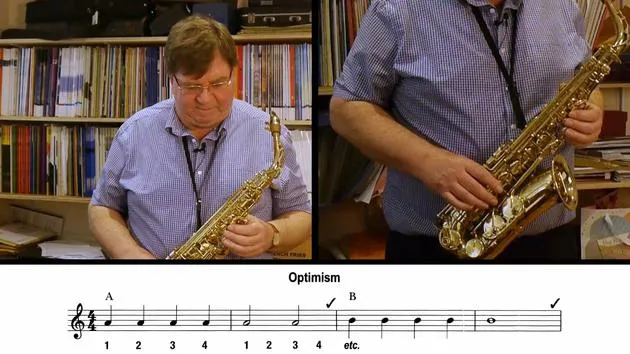
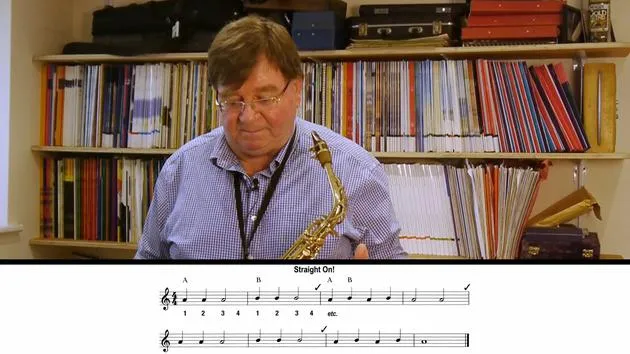
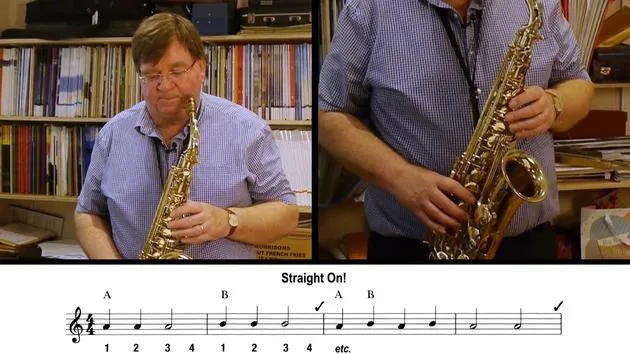
Exercise 2: Moving Up and Down
Exercise 2 involves going up and down a hill.
- We start on G, go up to C, and back down again.
If you notice, these exercises are repeated. I call it looping, where you take a bite-sized chunk of the music and play it over and over again, listening to it all the time. You will hear it improving before your very ears.
- Don't just play around and switch off, but be active, okay?
- Aim to improve. Each time you play it round, aim to make it better than the previous time.
Smooth Transitions: From B to C
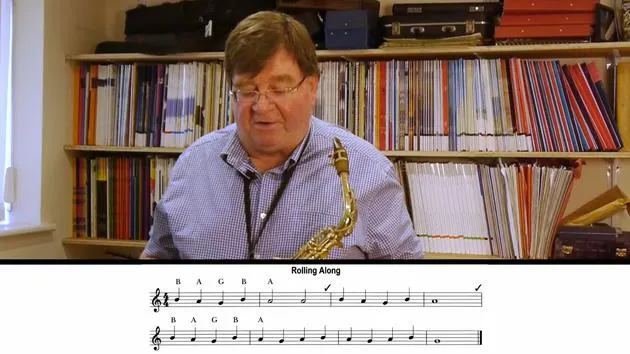
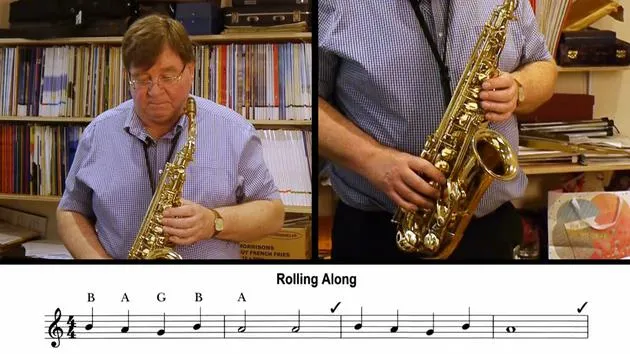
Now, this exercise involves the technique of going from B to C and back smoothly.
- This is a little like playing the piano, where you put one finger down and take the next up.
- There's not much of this in saxophone technique, but in this particular corner, it is essential, like a police car.
After a while, you'll be able to do it without thinking.
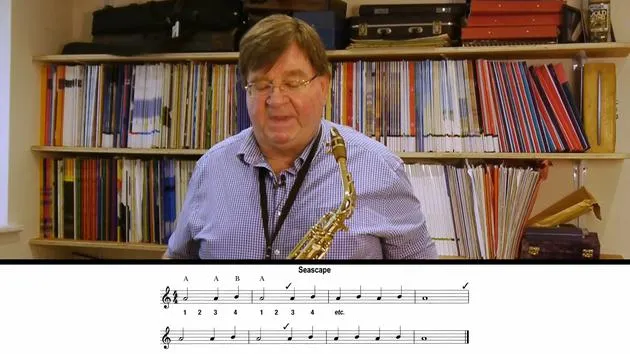
Exercise 3: A Little More Complicated
Exercise 3 is a bit more complicated.
- If you look through, you'll see every second note is a G.
- So it starts on C, down to G, then to a B, to a G, to an A, to a G, and back to B, G.
This exercise is a workout for both leaps and steps.
Exercise 4: The Final Challenge
The final exercise in this section, Exercise 4, is a bit of a jumble.
- It looks like a complete set of random notes, but it isn't.
- There is a pattern.
If you look at the first two notes, it's C, A. Then look at the first two notes in the next bar, it's A, C.
- The second two notes in the first bar, G, B.
- The second two notes in bar two, B, G.
There is a cunning little pattern going on, although when you hear it, it just sounds like a jumble.
With perseverance, you'll get it, but it is the hardest of the four.
42 Lektionen
0 Std. 56 Min. strukturierte Videolektionen
Erweiterte Videofunktionen
Verlangsamen, Passagen loopen, mitlesen
Handy, Tablet & Desktop
Üben, wo du willst
100 % Zufriedenheitsgarantie
30 Tage Geld-zurück-Garantie
Lern deinen Guru kennen
Lern deinen Guru kennen
James Rae wurde 1957 in Tyneside geboren. Von 1975 bis 1979 studierte er Klarinette, Bassklarinette, Klavier und Komposition an der Guildhall School of Music and Drama, bei den Professoren Yona Ettlinger, Stephen Trier, Meriel Jefferson beziehungsweise Patric Standford. Seit er die Guildhall verlassen hat, verfolgt er eine höchst erfolgreiche und abwechslungsreiche Laufbahn in drei Bereichen: als Interpret, Komponist und Lehrer.
James Rae hat in zahlreichen Produktionen des West End und des Royal National Theatre mitgewirkt, darunter Sir Peter Halls preisgekrönte Oresteia mit Musik von Sir Harrison Birtwistle, und er hat zahlreiche freie Engagements bei einigen der führenden Orchester und Ensembles des Landes erhalten. Er ist der Leiter des Phoenix Saxophone Quartet, das im Laufe der Jahre viele Konzerte und BBC-Sendungen bestritten und das Gesamtwerk von Carey Blyton auf zwei Alben aufgenommen hat, 'The Return of Bulgy Gogo' und 'Sherlock Holmes meets Dr Who'.
Als Komponist ist James Rae einer der meistveröffentlichten Autoren pädagogischer Bläsermusik Europas, mit über 250 Publikationen, die hauptsächlich bei Universal Edition erschienen sind. Zu seiner Musik gehören instrumentale Studienbücher, Sonaten, Schulen, barocke, klassische und Jazz-Transkriptionen sowie zahlreiche Bände mit Duetten, von denen viele in allen großen Prüfungslehrplänen für Blasinstrumente weltweit vertreten sind. Er hat außerdem vier Musicals für Schulen mit Mike Cornick geschrieben, und zu seinen größeren Auftragswerken zählen The Turn of a Wheel, ein bedeutendes Werk für Blasorchester, das im November 1999 für die North Tyneside Concert Band uraufgeführt wurde, deren Gründungsmitglied er als Junge war, sowie die Ouvertüre Moving On aus dem Jahr 2012.
James Rae war umfassend als Lehrplanberater und Komponist sowohl für das Associated Board als auch für das Trinity College London tätig und maßgeblich an der Entwicklung der Blattlese-Anforderungen für Holzbläser bei beiden Prüfungsverbänden beteiligt. Als Lehrer hatte er zahlreiche Positionen im staatlichen wie im privaten Sektor inne und arbeitet derzeit an der King's College School Wimbledon, wo er das Wind Orchestra und die Concert Band leitet, sowie an der Shrewsbury House School in Surbiton, wo er drei große Ensembles und eine Kammergruppe betreut. Diese Lehrerfahrung zieht sich durch seine Saxophon-Reihe für MusicGurus, die dich Schritt für Schritt von deinen allerersten Tönen bis zu einem sicheren, stilsicheren Spieler führt: First Notes, New Keys & Low Notes, Expanding Your Range, Scales & High Notes, Extended Range & Rhythm, und Polish & Style.







