



Lightning Strikes (Lektion)
Mit
Kenny Sultan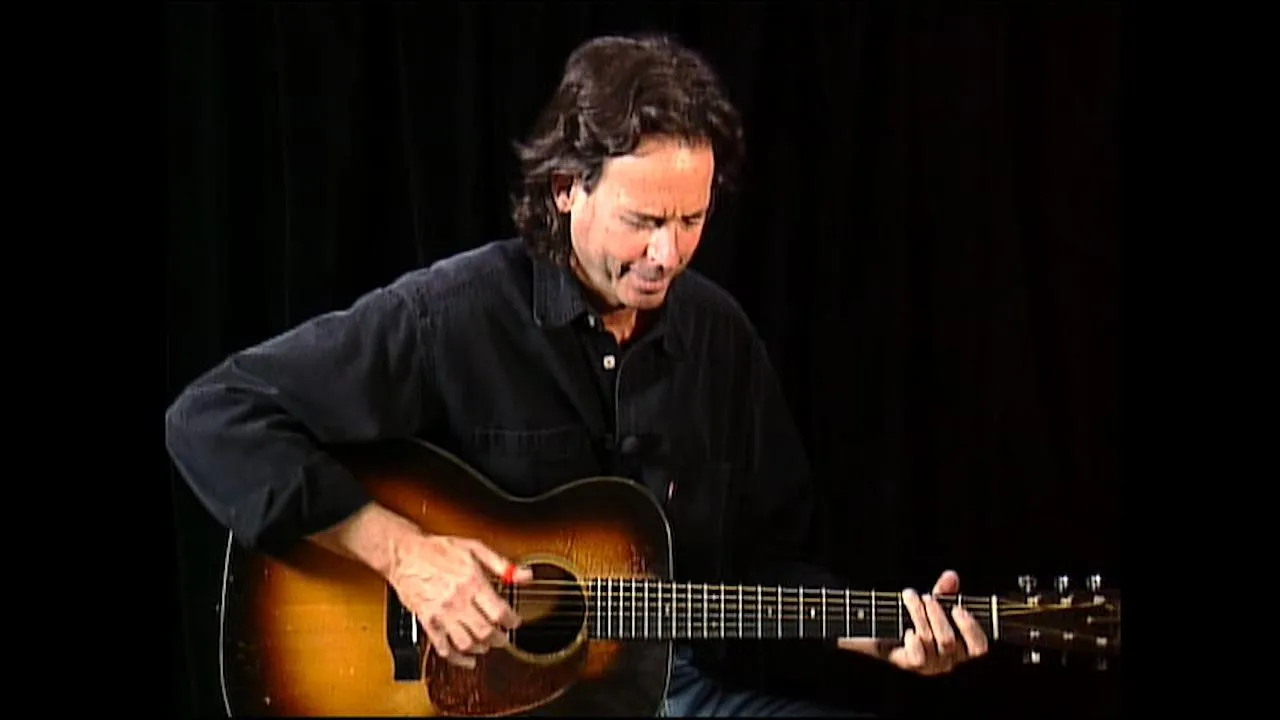
Das steckt im Kurs
12 Lektionen (1h 18m) · 1 gratis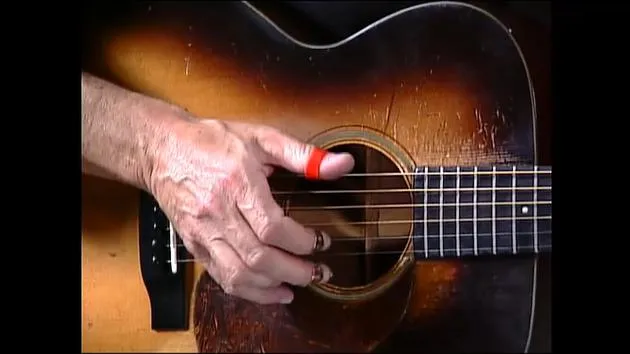
01. Slippin' And Drippin' (Performance)
Gratis-Lektion4:17
02. Slippin' And Drippin' (Lektion)
10:29
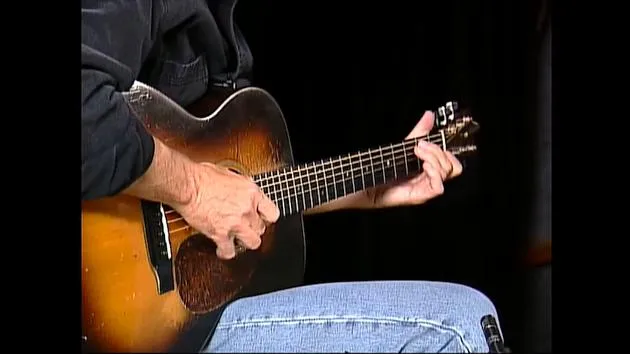
03. Lightning Strikes (Aufführung)
2:50
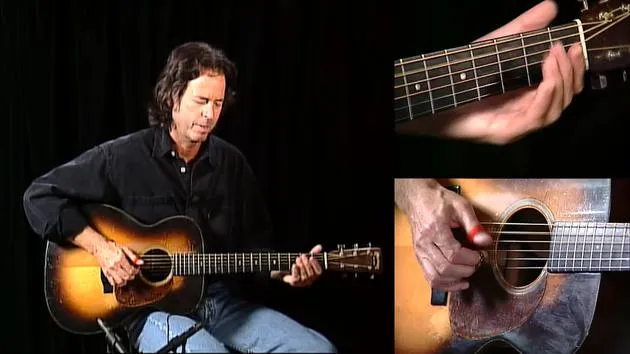
04. Lightning Strikes (Lektion)
Du bist hier9:37
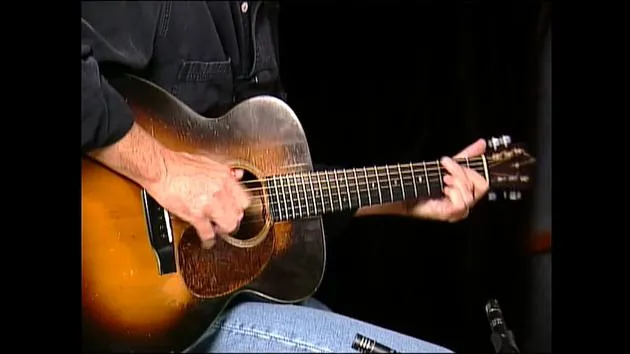
05. Sick Boogie (Interpretation)
2:31
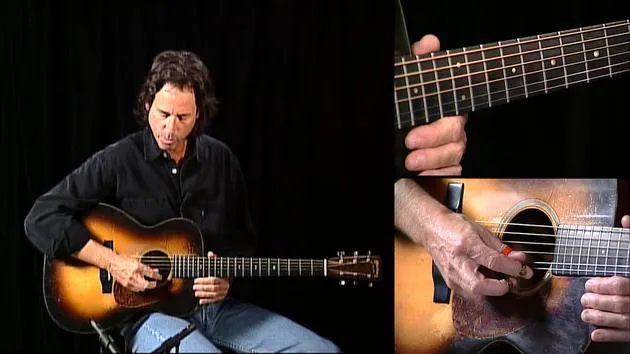
06. Sick Boogie (Lektion)
8:56
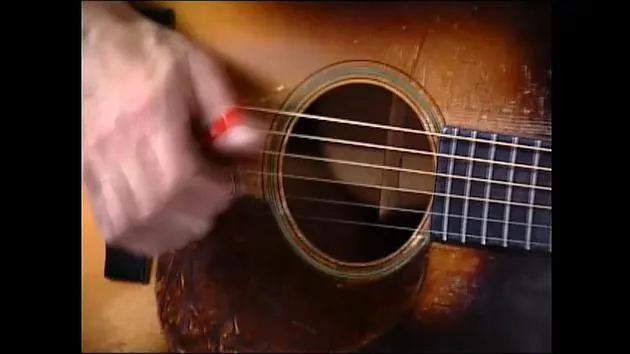
07. If The Shoe Fits (Performance)
4:18
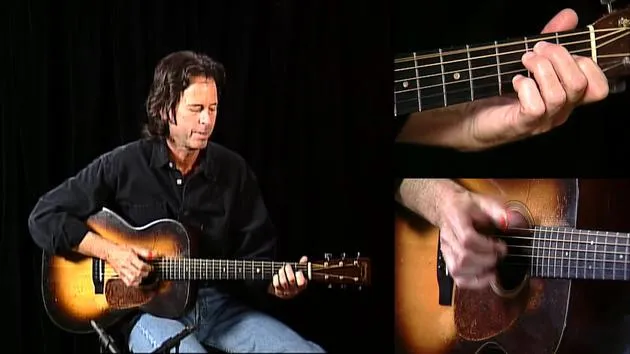
08. If The Shoe Fits (Lektion)
9:19
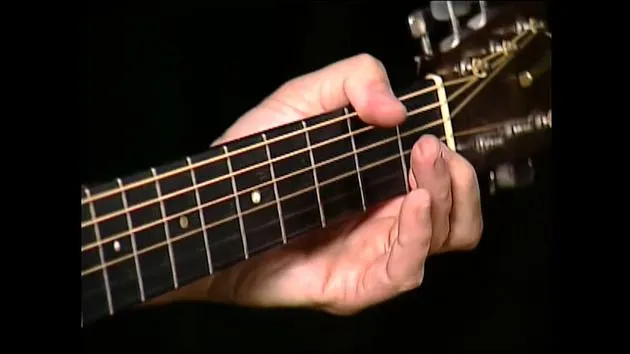
09. Honky Tonk (Performance)
3:49
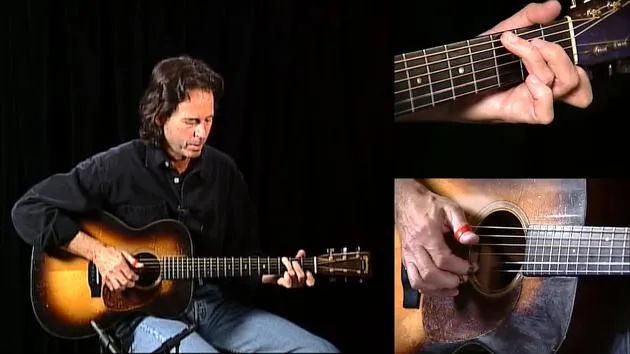
10. Honky Tonk (Lektion)
10:04
11. Cascade Rag (Performance)
3:12
12. Cascade Rag (Lektion)
9:14
Transkript der Lektion
Music Lesson: Lightning Strikes in E
Our next tune is going to be Lightning Strikes, and this is going to be in the key of E again.
Overview of Songs in E
On this DVD, I'm going to play three songs in E:
- One slow: which we just did, called Slipping
- A medium pace: like Lightning Strikes
- A fast one: called The Sick Boogie
This will show you what you can do in the key of E. As I've mentioned before, acoustic guitar and blues guitar are predominantly in the key of E. I'll demonstrate how you can play the same notes but create a different song from them.
Playing Lightning Strikes
For Lightning Strikes, we're going to do a straight shuffle, medium-paced shuffle.
- If you read it in a book, it would look like this.
- But again, we're not doing the book today; we're going behind the scenes.
Right Hand Technique
- Right-hand slap: This will be the rhythm, hitting against the strings.
- Strings hitting against the fretboard create that sound.
I'll give a little kick with my finger on the last eighth note. It's going to sound like this:
- The technique here is driving the right hand into the strings.
Alternative Sound
If you can't do that, you can still get a pretty good sound by just muting right here. However, you don't really want to get this sound:
"Peter, Paul, and Mary Blues."
You want a little funkier thing going. The last kick is just a brush up with the first finger for me, and it goes like this:
To accomplish that:
- My left hand comes off a little bit.
- As I bring it back down to the shuffle, it mutes out that first string. Otherwise, it would keep ringing, which doesn't sound great.
So you want to go: (demonstrate sound). That's full Lightning Hopkins right here. Everything has that in there.
- Same with A: just open E and back gives it that little extra kick.
- B7: And that lick in A is a basic blues that you'll use a lot.
Differences in Chords
When I do it in E, the only difference is that I hit the D note instead of the D flat.
- Here's what I do on the A chord. We'll see that a lot: Basic turnaround.
Now we'll continue and add some fills.
Adding Fills
The fill was just playing the shuffle:
- Same thing on A.
You can do anything there within the key of E:
- I just picked that because it sounded pretty cool.
"But you could go... so it's just a little area to fill in."
Going Up the Neck
Now from there, we're going to go up the neck a little bit:
- I'm going to go up here to the 10th and 12th frets and use double stops.
I use double stops a lot in my playing, two notes at once. A very common one is right up here, this E7. We used it before in Slipping and Dripping.
- We're going to use a lot of the same things but in different ways so they sound different.
"How to play blues in E using the same notes but creating many different songs, it's my specialty."
I've been doing it for a living for a long time and fooling some people at it.
Double Stop Technique
The double stop is going to go:
- If I was playing slow blues, I'd go triplets.
- But for mid-tempo blues, there's not enough time, so I'll go:
(A demonstration of the sound).
A lot of times on these double stops, I'll put that open E in:
- I'll slide into the A.
- Now on the fifth fret, sort of this F major seventh, moved up here, and I'll go:
There's a little slide at the beginning of that, and I do that a lot in my playing:
- The slide happens with my first finger and I'll slide, missing the first string.
- As I slide into the chord, I hit the bass.
That can happen anywhere on the guitar, whether I go down lower or up higher for E.
New Chord
Now, another cool chord coming up here to the seventh and eighth frets.
- We would normally play it this way, but I'm going to make a larger chord, add that E note there, and slide into it like this, then up to this E7.
Now for the A:
- Back to some double stops again.
- Really common triplets, slow blues with the A note but at this tempo like that or maybe like this or no bass.
These can be used anywhere. If you want to use them in B, just a little trick, you know.
Keeping It Simple
I try to make it as simple as possible:
"Trust me, there's enough other stuff going on. If I'm out of tune a little bit, it's the blues, so it's totally cool."
Conclusion
In this lesson, what we want to focus on is getting a lot of rhythm in our shuffle.
- Remember, it's high speed.
- Triplets will not work unless you're really fast.
- So again, use eighth notes instead of sounding rushed.
Keep in mind to use strong monotone in your rhythm when I'm not shuffling Lightning Strikes.
12 Lektionen
1 Std. 18 Min. strukturierte Videolektionen
Erweiterte Videofunktionen
Verlangsamen, Passagen loopen, mitlesen
Handy, Tablet & Desktop
Üben, wo du willst
100 % Zufriedenheitsgarantie
30 Tage Geld-zurück-Garantie
Lern deinen Guru kennen
Lern deinen Guru kennen
Kenny Sultan ist Bestsellerautor von Musikbüchern und Lehrvideos zur Blues-Gitarre und der Gitarrist eines Blues-Duos mit Tom Ball.
Gemeinsam und einzeln haben sie an unzähligen Filmmusiken, TV-Soundtracks, Werbespots und Sessions mitgewirkt. Sie waren international im Fernsehen zu sehen, wirkten in den “Levi's 501 Blues”-Werbespots mit, spielten über Voice of America vor einem Publikum von 300 Millionen und sind häufige Gäste bei National Public Radio. Sie haben die Bühne mit Größen wie Bob Dylan, Stevie Ray Vaughan, The Allman Brothers, Joe Bonamassa, Ray Charles, Joe Cocker, Elvis Costello geteilt, und die Liste ist lang...
Überall zu Hause, fügen sich Tom und Kenny bei Blues-, Folk-, Bluegrass- und Jazzfestivals ein, und ihr umfangreicher Lehrhintergrund macht sie zur natürlichen Wahl für Uni-Campusse oder Veranstaltungsorte mit Workshops. Da ihre Musik eine Mischung aus amerikanischen Roots-Stilen ist, sind sie im Ausland Stammgäste und ernten begeisterte Kritiken.
Genau diesen Lehrhintergrund machst du dir hier zunutze. Kenny führt dich von Grund auf in die traditionelle Blues-Gitarre ein – Fingerpicking-Muster, Wechselbass, Turnarounds und die klassischen Licks, die den Stil ausmachen –, damit du dir ein echtes Repertoire an authentischem Akustik-Blues aufbaust, das du wirklich spielen kannst.
“Grandioses Spiel.” --Blues Revue
“So gut wie irgendjemand im akustischen Blues.” --Sing Out







