



If The Shoe Fits (Lektion)

Mit
Kenny Sultan
Das steckt im Kurs
12 Lektionen (1h 18m) · 1 gratis
01. Slippin' And Drippin' (Performance)
Gratis-Lektion4:17
02. Slippin' And Drippin' (Lektion)
10:29
03. Lightning Strikes (Aufführung)
2:50
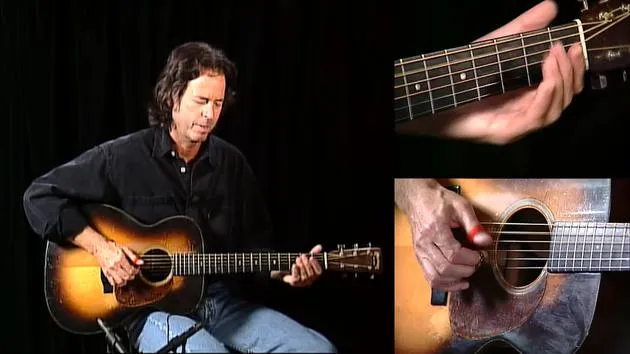
04. Lightning Strikes (Lektion)
9:37
05. Sick Boogie (Interpretation)
2:31
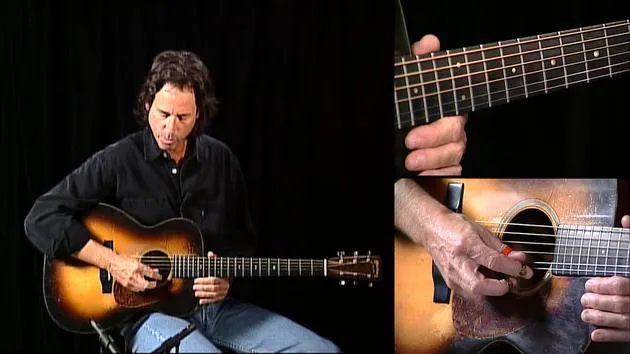
06. Sick Boogie (Lektion)
8:56
07. If The Shoe Fits (Performance)
4:18
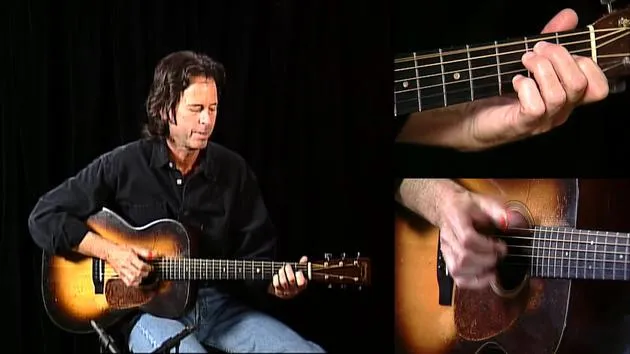
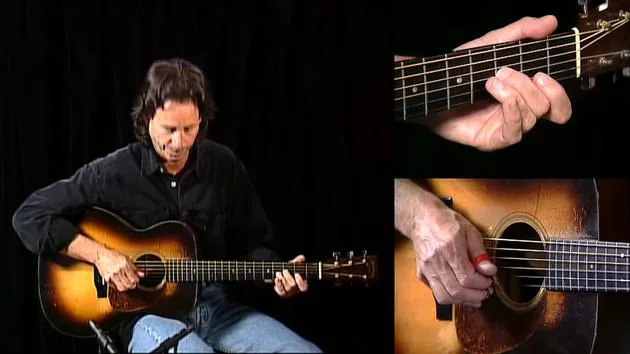
08. If The Shoe Fits (Lektion)
Du bist hier9:19
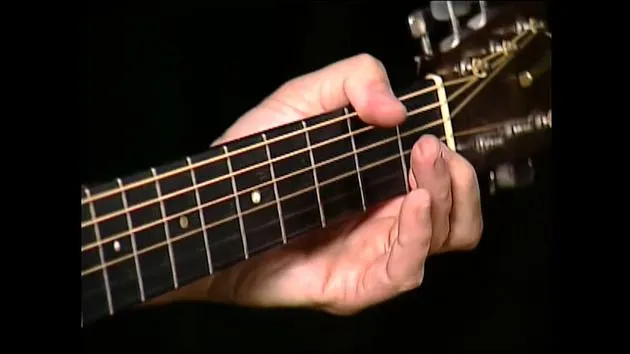
09. Honky Tonk (Performance)
3:49
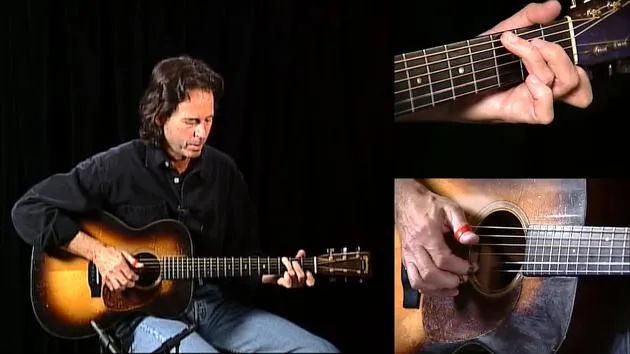
10. Honky Tonk (Lektion)
10:04
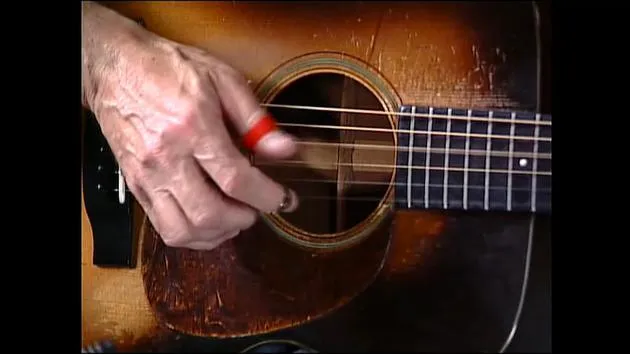
11. Cascade Rag (Performance)
3:12
12. Cascade Rag (Lektion)
9:14
Transkript der Lektion
Music Lesson: "If the Shoe Fits" in A
Our next song is called "If the Shoe Fits," and it's in the key of A. We're getting out of the key of E. Finally! I know some of you are probably thinking, "Thank goodness!" But E is the most common key. The next most common key for acoustic blues playing would be A.
Why A?
- Sound: A has a nice, low sound.
- Open Strings: It also has three open strings that we can use:
- A (I chord)
- D (IV chord)
- E (V chord)
A lot of times, the D is a little wimpy, so I do different things with it. I'll show you what I mean.
Let's Play
So, let's play a bit of "If the Shoe Fits," and I'll explain some of the concepts.
-
The Slide:
- The first thing you notice is the slide, which is part of this A ninth chord.
- I simplify it to look like a D seventh chord moved up three frets and up one string.
- Start here, slide it up two frets, and back down.
Tip:
- When I slide, I aim for the fret to stop my movement, rather than looking for the middle. This helps avoid buzzing, so I glide right against the fret.
-
Chords and Bass:
- In my playing, I do a lot of back and forth between chords and bass. This keeps the music lively and prevents it from becoming monotonous.
-
Transitioning to the D:
- When going to the D, I discovered accidentally that by bringing this chord up five frets, it makes sense for moving to the IV chord:
- I noticed that the open D was getting in the way, so I found the same three notes in a better position.
- When going to the D, I discovered accidentally that by bringing this chord up five frets, it makes sense for moving to the IV chord:
-
Playing the E:
- When I play the E chord in the key of A, I often utilize a hammer and pull technique.
- You can opt for just one hammer, but to get a couple out, it can be quite rewarding.
Technique:
- Think of going right through the string into the wood, as though "swinging through" as in golf. The key is to act like the string isn't there.
-
The D7:
-
On the D7, I sometimes don't fret the first string, just like with the B7 in the key of E. Sometimes I wrap my thumb over the top.
-
The bass is the F#.
-
Remember when I mentioned that the D was a bit wimpy? I prefer this method.
-
Improvisation
- I'll play through it a couple of times and then improvise a bit, going up the neck.
- Hear that little bend? Then back down with the D7.
- This time, we go to A seventh for a Robert Johnson feel, and then a diminished back to the A7.
Important Note:
- This is really just the seventh of the bar focusing on the three middle strings.
- Many of you who fingerpick realize that bar chords don't work well. As a professional, I save that for electric guitar or strumming.
Chord Movements
- Here's a quick recap of chord movements:
- D7 right there.
- C7 up to D, then E.
This C seventh position is very useful. You can move it down to C and up to D, then E.
Final Thoughts
- F is a bit tricky for me, but I do an F seventh, and then G, working up the neck.
- The goal is to use familiar first-position chords and move them up.
In this song, I'm using it for:
- E7
- D7
Remember: Whatever's easiest works best for me! If I learn an A7, I'll take that anywhere I can: B7, C7, D7, and E7.
Hope you enjoy "If the Shoe Fits!"
12 Lektionen
1 Std. 18 Min. strukturierte Videolektionen
Erweiterte Videofunktionen
Verlangsamen, Passagen loopen, mitlesen
Handy, Tablet & Desktop
Üben, wo du willst
100 % Zufriedenheitsgarantie
30 Tage Geld-zurück-Garantie
Lern deinen Guru kennen
Lern deinen Guru kennen
Kenny Sultan ist Bestsellerautor von Musikbüchern und Lehrvideos zur Blues-Gitarre und der Gitarrist eines Blues-Duos mit Tom Ball.
Gemeinsam und einzeln haben sie an unzähligen Filmmusiken, TV-Soundtracks, Werbespots und Sessions mitgewirkt. Sie waren international im Fernsehen zu sehen, wirkten in den “Levi's 501 Blues”-Werbespots mit, spielten über Voice of America vor einem Publikum von 300 Millionen und sind häufige Gäste bei National Public Radio. Sie haben die Bühne mit Größen wie Bob Dylan, Stevie Ray Vaughan, The Allman Brothers, Joe Bonamassa, Ray Charles, Joe Cocker, Elvis Costello geteilt, und die Liste ist lang...
Überall zu Hause, fügen sich Tom und Kenny bei Blues-, Folk-, Bluegrass- und Jazzfestivals ein, und ihr umfangreicher Lehrhintergrund macht sie zur natürlichen Wahl für Uni-Campusse oder Veranstaltungsorte mit Workshops. Da ihre Musik eine Mischung aus amerikanischen Roots-Stilen ist, sind sie im Ausland Stammgäste und ernten begeisterte Kritiken.
Genau diesen Lehrhintergrund machst du dir hier zunutze. Kenny führt dich von Grund auf in die traditionelle Blues-Gitarre ein – Fingerpicking-Muster, Wechselbass, Turnarounds und die klassischen Licks, die den Stil ausmachen –, damit du dir ein echtes Repertoire an authentischem Akustik-Blues aufbaust, das du wirklich spielen kannst.
“Grandioses Spiel.” --Blues Revue
“So gut wie irgendjemand im akustischen Blues.” --Sing Out







