



Minor Thing (Lektion)
Mit
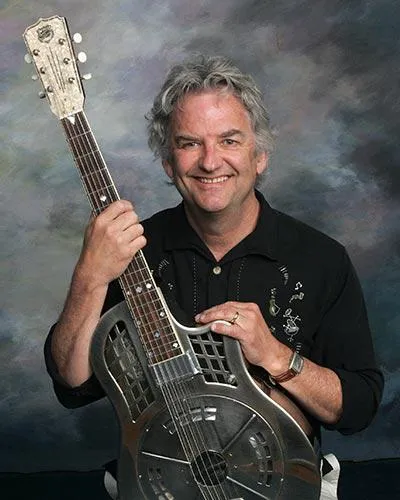
Mike Dowling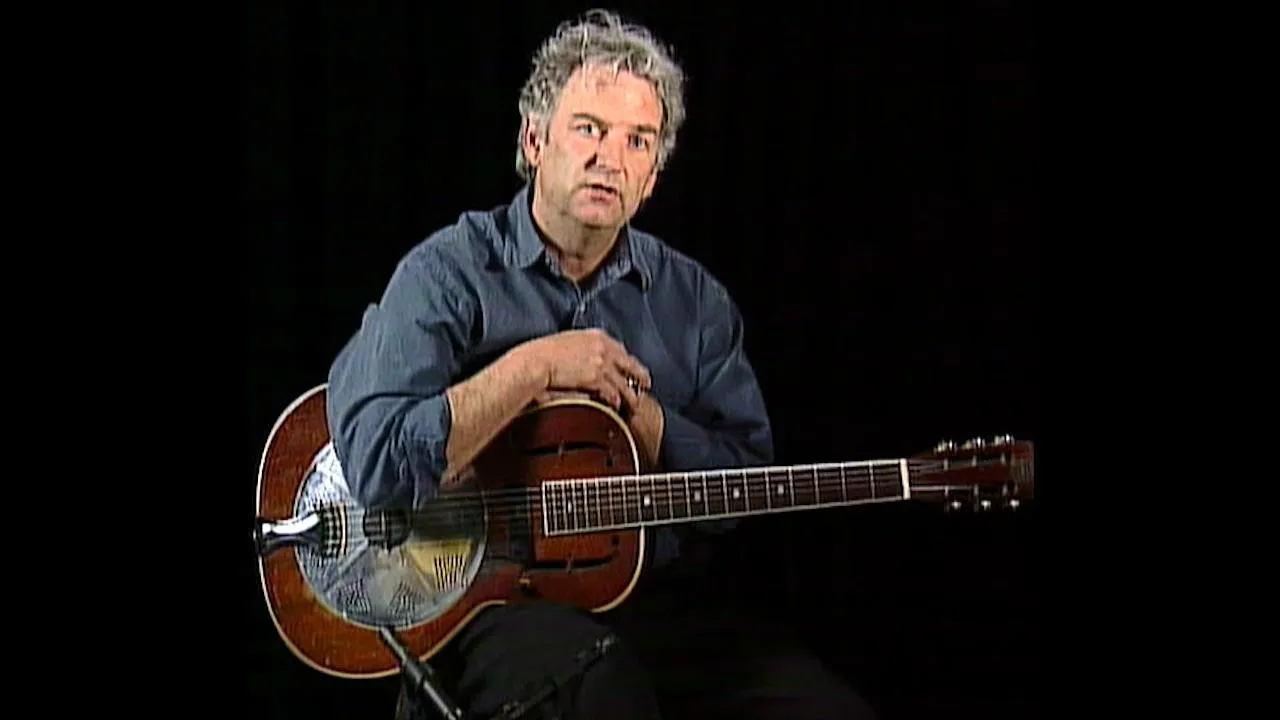
Das steckt im Kurs
14 Lektionen (1h 30m) · 1 gratis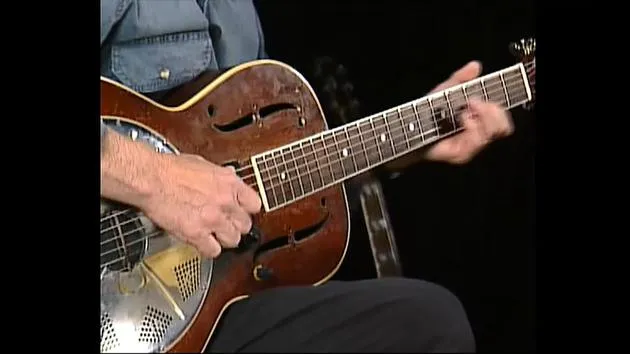
01. Rosalie (Performance)
Gratis-Lektion4:58
02. Rosalie (Lektion)
8:59
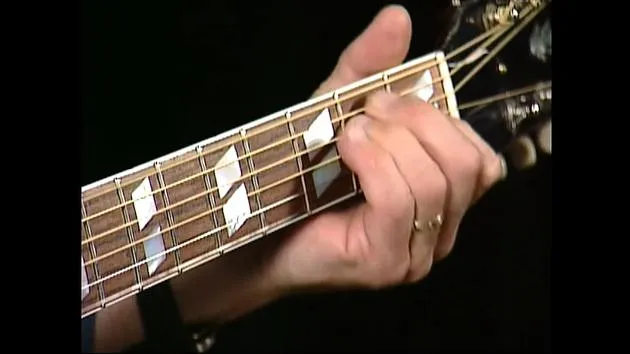
03. Nit Pickin' (Darbietung)
3:22
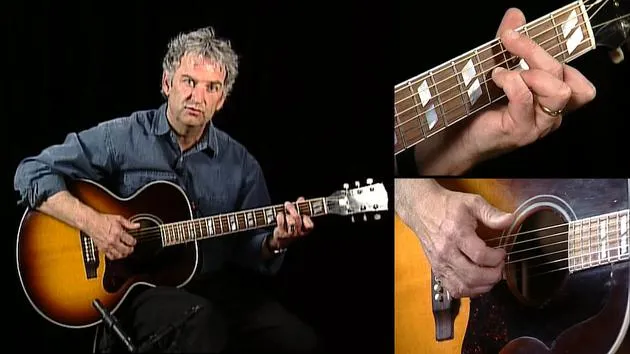
04. Nit Pickin' (Lektion)
11:02
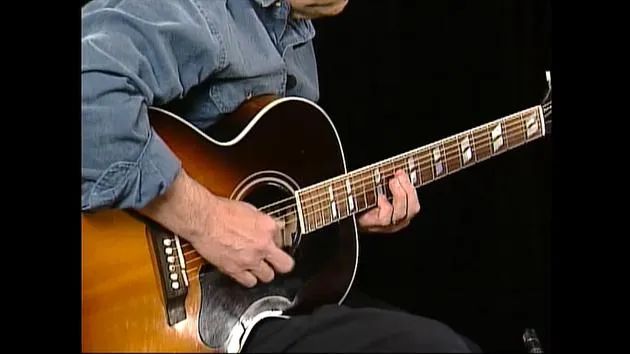
05. Minor Thing (Aufführung)
4:21
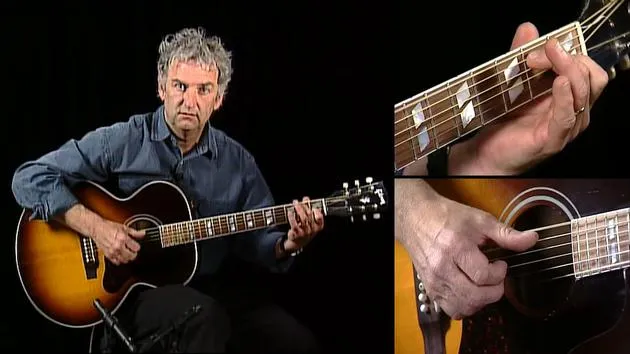
06. Minor Thing (Lektion)
Du bist hier10:48
07. Johnson City Rag (Performance)
3:33
08. Johnson City Rag (Lektion)
9:39
09. Fishin' In The Wind (Aufführung)
2:35
10. Fishin' In The Wind (Lektion)
10:15
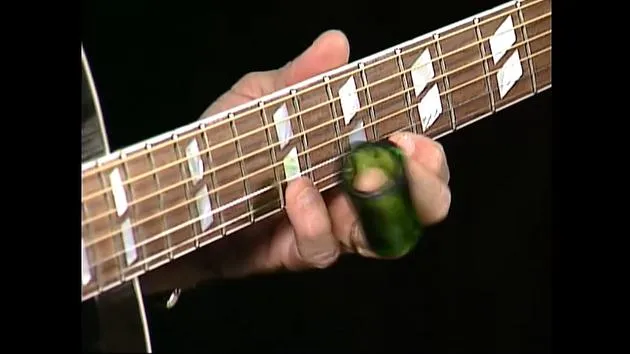
11. Bottleneck March (Performance)
3:00
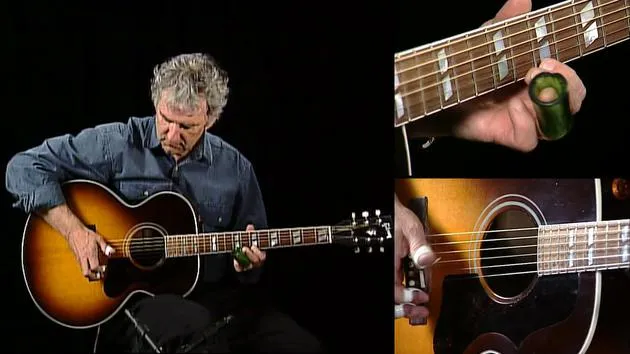
12. Bottleneck March (Lektion)
10:31
13. BONUS: Bottom Lands (Performance)
3:44
14. BONUS: String Crazy (Performance)
3:34
Transkript der Lektion
Music Lesson: Minor Thing Breakdown
Alright, now we're going to take a look at my tune, Minor Thing.
Overview
This piece has a basic feel, and I'm going to play it finger style. I'll actually use a couple of different techniques because there's a point after I play this tune through for one chorus.
Form
This song takes the form A, B, A. After I play through A, B, A, I get into a swing-style rhythm where I'm playing some 10th chords, which I'll break down for you in a minute.
Background
This is a tune that I played for a long time with a flat pick (plectrum) in the context of a combo, a group. When I decided to make a solo recording of this tune, I thought the best way to approach it would be to play it finger style.
Playing Techniques
My single line notes are, as I mentioned in the tune, "nit picking," where I've got an up-and-down kind of pattern.
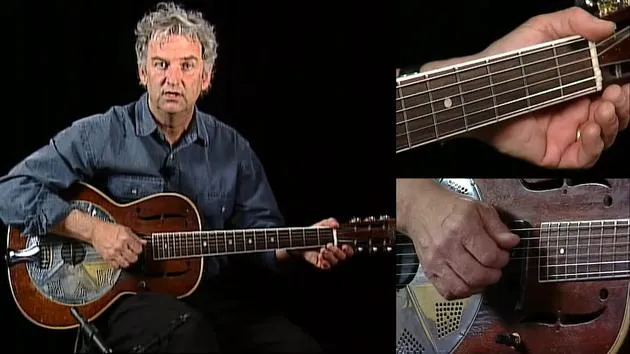
- You can zoom in on my right hand as I tap my foot: 1 and 2 and 3.
- It's hard for me to tap and talk at the same time!
This is my underlying cadence.
Chord Breakdown
Let me take the tune from the top.
- Intro Chords:
- A minor with neighboring tones
- G to G6
- F, F6
Now, do this however you want; it doesn't matter so much. I've got my A minor seventh. Instead of going straight, I'm going to break my chord.
Chord Sequence
- Thumb
- Then fingers:
- B diminished
- A minor sixth to another version of A minor sixth with a little tremolo
- G as before, maybe some harmonics at 12, 7, and 5 to take care of.
I'm finishing up my intro now:
- F, F sixth
- E7, Sus to E7
Now that I've set the rhythm for myself, I'm going to finger pick this.
Chord Forms and Patterns
10th Style Chord
I'm going to take a 10th style chord (A minor seventh) all at the fifth fret. Avoid the A string, so I've got: A, C, and G.
Here's my picking pattern:
- Thumb
- Index
- Thumb
There's nothing about playing this pattern that should slow you down at all.
Bass Line
I'm also going to have a bass line that goes like this:
(Insert bass line here)
You've heard that a million times! Instead of playing G for my second chord, I'm going to play C7 with G in the bass and shorten it up to a 10th chord here.
Now my descending bass line as I get into tempo sounds like this:
- F7
- E7
Now to reform those chords remembering what they were:
- A minor seven
- C7 (played up higher as a 10th chord now at the eighth fret)
- F7, E7 with a B in the bass
So now what was down here before is now up here; 10th chords.
Playing Tips
It's good as you're playing this tune, just as a general rule, to flex between going like this to that and breaking that chord:
- Straight rhythm
- Broken chord
- Finger picking
You can see what I'm doing; I'm actually striking all the strings on the guitar.
- The listener is only hearing the ones I'm fretting here:
- A string is muted
- B string is muted
- High E string is muted
As I strike them all, you'll hear them, but it's just the percussive nature of those notes that contribute.
Power of Tenth Chords
As you dig into it, this technique gives the guitar more bite and cutting power. When these chords are employed in a straight swing tune, that's where the true power of these 10th chord rhythm forms comes from.
Substituting Chords
Another thing I want to bring to your attention is I spend a lot of time on E7 in this tune. I can substitute by taking D7, moving it up two frets, and then covering that D string second fret, there's my E7.
Diminished Chord
I can scrunch up my first finger to get a diminished chord form very closely related to E7. As you might know, I can move that every three frets, and it's actually the same chord with rearranged notes.
So if you've got your guitar at home, just strum E7, and I'll strum the diminished chord, moving it around above you. Just keep playing, and I think you'll see that fit together nicely, with your discretion, of course.
Performance Outline
Let me play a little bit of this tune and outline some of the techniques I'm using:
- Diminished chord
- Basic finger picking
- Single line
Progression Example
D minor, D minor, short bar of 10, A minor.
Paraphrasing here:
- D minor
- E7 (I'll use diminished there)
- A minor
- A7
- D minor
- B7
- E7
Back to the return. Even there, you can see where I'm on the beat.
If you've got the accompanying book, you'll have the standard notation and the tablature for this tune.
Closing Thoughts
As I mentioned, I used to play this song with a pick. In today's performance, you'll hear that I switch from finger picking for single strings to a technique where I press my thumb and first finger together as if I had dropped the pick.
Example Play
Here's an example of that technique over A minor:
- Can you hear that bite?
- It has a little more percussive feel than a delicate sound.
These 10th chord forms will serve you very well, not just in this tune but in many swing-style applications.
Remember
- Use your diminished chord as a substitute for E7.
- Outline the A minor sixth forms:
- Bar at the 7th fret
- Middle finger on high C
See how I switch positions? If you consider my terminology, just switching.
I hope I've given you enough highlights and background for this tune so you can work your way through, and eventually, maybe you'll be playing a version of Minor Thing for yourself!
14 Lektionen
1 Std. 30 Min. strukturierte Videolektionen
Erweiterte Videofunktionen
Verlangsamen, Passagen loopen, mitlesen
Handy, Tablet & Desktop
Üben, wo du willst
100 % Zufriedenheitsgarantie
30 Tage Geld-zurück-Garantie
Lern deinen Guru kennen
Lern deinen Guru kennen
Als der große, inzwischen verstorbene Vassar Clements 1975 Mike Dowling Gitarre spielen hörte, tat er das Vernünftigste. Er engagierte ihn. Mike war der Gitarrist in Vassars erster Tourband und ist auf dessen Grammy-nominiertem “Nashville Jam” zu hören. Clements nannte ihn schlicht “einen der besten Gitarristen, die es gibt, irgendwo”. Diese Einschätzung teilt ein stetig wachsender Chor von Musikkritikern, Gitarrenschülern und Fans akustischer Musik aus aller Welt.
Mike greift tief in die musikalische Trickkiste der amerikanischen Roots-Gitarre und bevorzugt den melodischen Piedmont-Stil akustischer Blues-Meister wie Mississippi John Hurt und des großen Slide-Virtuosen Tampa Red. Doch Mike lässt sich nicht als Bluesspieler oder auch nur als Fingerstylist in eine Schublade stecken. Dafür ist er viel zu vielseitig. Von Bottleneck-Blues über klassischen Jazz bis zu vielem dazwischen übertragen sich Mikes Musikalität, Tiefe und Meisterschaft des Instruments mühelos auf Flattop-, Archtop- und Resonatorgitarren gleichermaßen.
Interpret, Komponist, Lehrer, Studiomusiker, Erfinder - alles, was der Gitarrist Mike Dowling tut, spiegelt seine Liebe zu dem Instrument und seine Beherrschung desselben wider, das seit über vierzig Jahren im Mittelpunkt seines Lebens steht.
In seinen Lektionen öffnet Mike für dich die Trickkiste des Uptown-Blues: entspanntes Piedmont-Fingerpicking, einen gleichmäßigen Wechselbass mit dem Daumen, swingende Einzeltonläufe und die Slide- und Bottleneck-Figuren, die der amerikanischen Roots-Gitarre ihre Seele verleihen - unterrichtet mit demselben Gefühl, das er in jede Note legt.
“Ein hervorragender Instrumentalist, der sich in einer breiten Palette von Musikstilen zu Hause fühlt. Er legt Gefühl in jedes Wort und jede Note.”
--Hit List, Acoustic Guitar
“Dowling ist ein flüssiger und präziser Gitarrist, und sein rauer Gesang hat eine spielerische, federnde Note, die sehr einnehmend wirkt.”
--Dirty Linen







