



Johnson City Rag (Lektion)
Mit
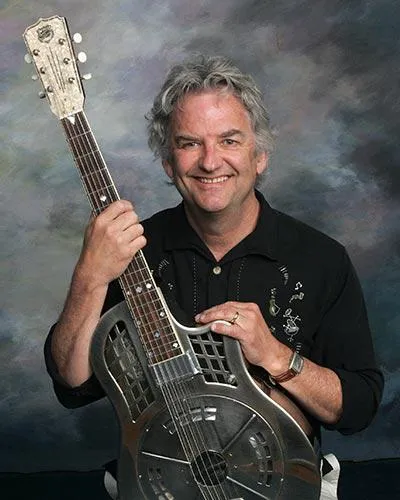
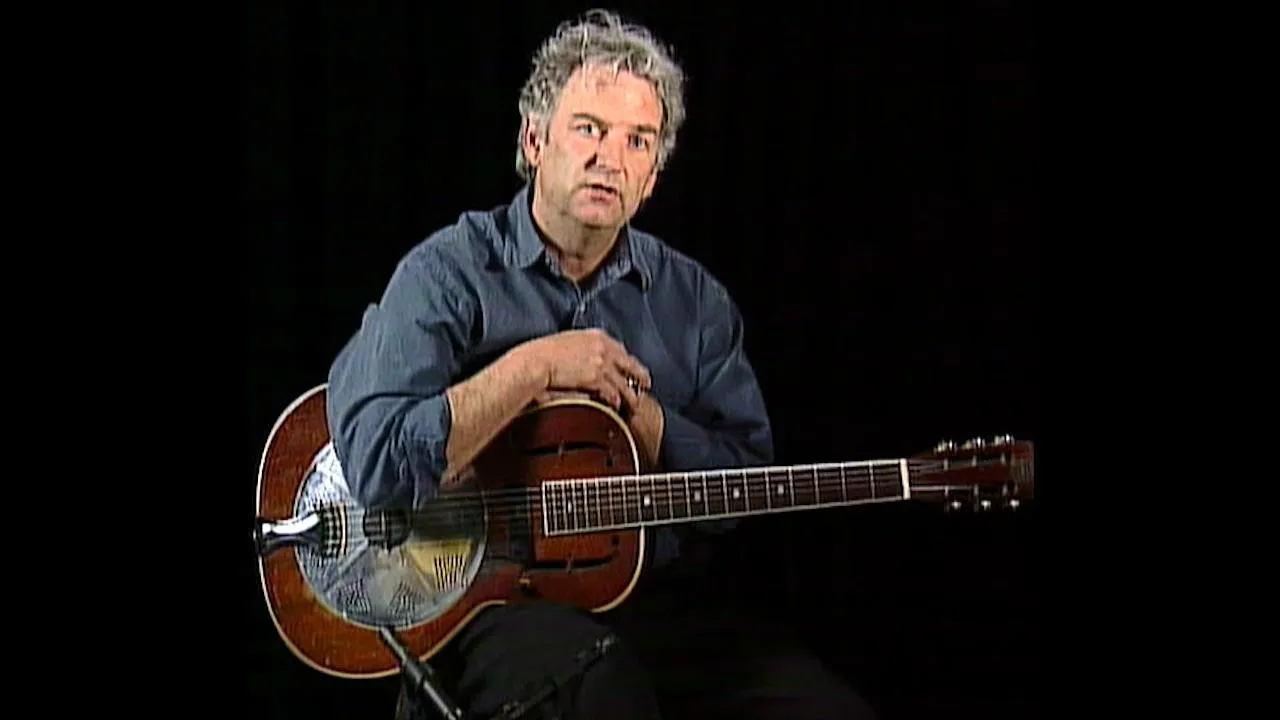
Mike DowlingMike Dowling unterrichtet sein in Fingerpicking gespieltes 'Johnson City Rag' in A-Dur und konzentriert sich auf die Slides, Pull-offs und Synkopierung, die dem Stück seinen Ragtime-Bounce geben.
Das steckt im Kurs
14 Lektionen (1h 30m) · 1 gratis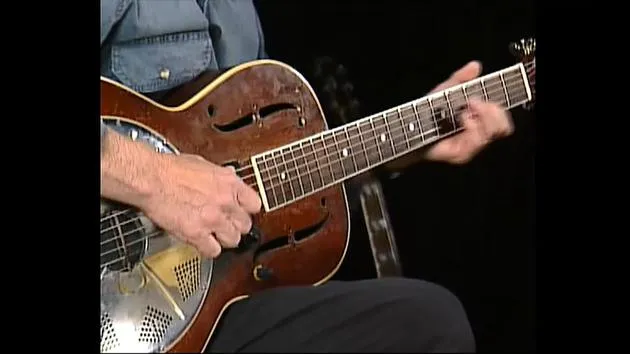
01. Rosalie (Performance)
Gratis-Lektion4:58
02. Rosalie (Lektion)
8:59
03. Nit Pickin' (Darbietung)
3:22
04. Nit Pickin' (Lektion)
11:02
05. Minor Thing (Aufführung)
4:21
06. Minor Thing (Lektion)
10:48
07. Johnson City Rag (Performance)
3:33
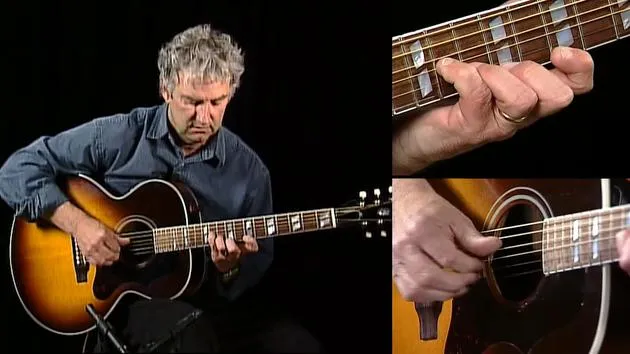
08. Johnson City Rag (Lektion)
Du bist hier9:39
09. Fishin' In The Wind (Aufführung)
2:35
10. Fishin' In The Wind (Lektion)
10:15
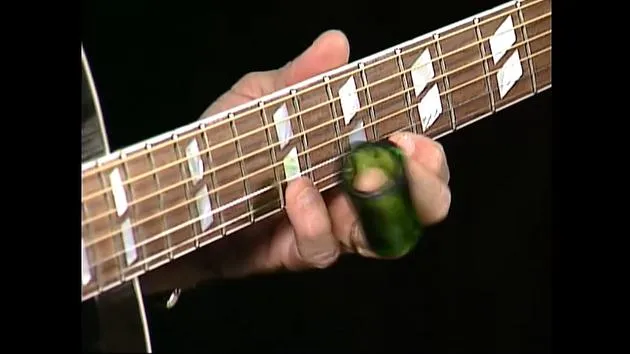
11. Bottleneck March (Performance)
3:00
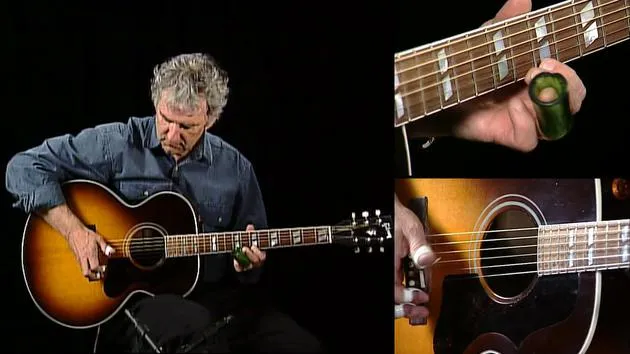
12. Bottleneck March (Lektion)
10:31
13. BONUS: Bottom Lands (Performance)
3:44
14. BONUS: String Crazy (Performance)
3:34
Transkript der Lektion
Johnson City Rag Composition
Key: A
Tuning: Standard
Well, here's my composition, the Johnson City Rag. It's pretty much a straightforward raggy kind of tune. Getting it smooth depends on you getting what sound like pinches here, but they're kind of a slide into what would sound like a pinch, two notes together.
Technique Overview
-
A Chord Technique:
- Take your A chord and just slide on the B string.
- When you get where you're going, hit your bass notes:
- 2 and 3 and 4 and 1 and 2 and 3.
- After hitting those notes, sometimes with my technique, after I get a clear bass note, I'll bring my palm down on it rather than muting it right away.
- That's part of the fingerpicking technique to play Johnson City Rag.
-
Pull Off Technique:
- Getting that pinchy sound can also come from a pull-off.
- If I take what some people call the long A form here and pull off when I hit my bass note, it'll be time to come up here.
- Here's the slide pull-off. See how I angle in on my right hand?
Syncopation
- This syncopation works as follows:
- 1 and 2 and 3, anticipating your note.
- 1 and 2 and 3 and 4.
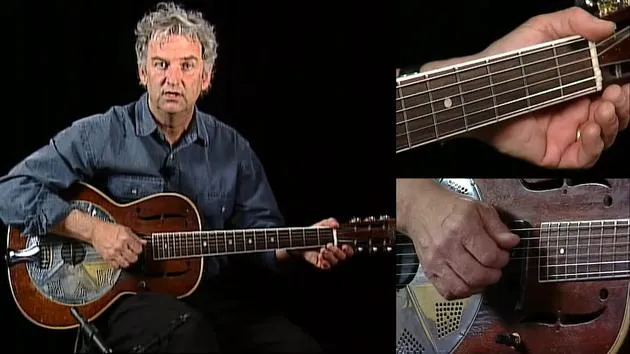
See what I'm doing there? I'm picking with my index finger.
Right Hand Breakdown
- Here's how to break that down:
- Take note of my index finger on the G string.
- I could alternate, but I won't for right now.
You'll hear those techniques; they may be a little disguised because sometimes, when I'm up and running, they almost take on a ghost note or grace note quality. But that's what that syncopation is.
Introduction to the Tune
Let me start the tune. Just got some neighboring or surrounding tones for my A chord:
- Go to sixth position diminished chord, then an E7.
- Now, I'm ready to do the tune.
Chord Progression
-
A passage, repeat it:
- Same thing on B:
- B, B diminished, F sharp, B7, E7.
- Then I throw in this altered chord:
- It's an E7, but it's got a flat 5 down below (first fret A string) and a sharp 5 or an augmented quality up above (C natural).
It's a very stark sounding chord to carry on here, little counterpoint. You can hear it moving.
- Same thing on B:
Playing the Passages
I'll play it again; these notes:
- Sorry I can't do it individually for you; I've got to make the bigger chord.
- On to my D passage, I'm just barring D.
Later on, you'll hear me play this passage and just peeling off my fingers off those notes, still thinking D.
Here's what keeps me straight:
- D, D minor a, F sharp, B9, E7.
I play that whole passage again just with some alterations:
- B7 to E.
Second Part of the Tune
Now I'm going to the second part of the tune where I'm covering E9. Here's what my thumb is doing:
- This can be rather muffled, and I've got this happening up above.
- You can hear some pull-offs in there:
- Pick two, pull off to that 11th fret B string, then 9th fret E string, 12th fret B string, and pull off again.
- So no thumb, and finish up on the E.
Come back to A6 and have those notes ring.
Syncopation Patterns
This is a quirky syncopation, but here's how it is. Notice the pull-off in there; a lot of these syncopations, even though they sound quirky, will still have an alternating bass up high:
- Same thing at A, A7, D minor.
We just play that main theme again before we go out, and here's your ending:
- Sixth position:
- A diminished, A to our sixth chord, F sharp 7, B9, E7, and A.
I end on an A69 up high.
And there you have the Johnson City Rag!
14 Lektionen
1 Std. 30 Min. strukturierte Videolektionen
Erweiterte Videofunktionen
Verlangsamen, Passagen loopen, mitlesen
Handy, Tablet & Desktop
Üben, wo du willst
100 % Zufriedenheitsgarantie
30 Tage Geld-zurück-Garantie
Lern deinen Guru kennen
Lern deinen Guru kennen
Als der große, inzwischen verstorbene Vassar Clements 1975 Mike Dowling Gitarre spielen hörte, tat er das Vernünftigste. Er engagierte ihn. Mike war der Gitarrist in Vassars erster Tourband und ist auf dessen Grammy-nominiertem “Nashville Jam” zu hören. Clements nannte ihn schlicht “einen der besten Gitarristen, die es gibt, irgendwo”. Diese Einschätzung teilt ein stetig wachsender Chor von Musikkritikern, Gitarrenschülern und Fans akustischer Musik aus aller Welt.
Mike greift tief in die musikalische Trickkiste der amerikanischen Roots-Gitarre und bevorzugt den melodischen Piedmont-Stil akustischer Blues-Meister wie Mississippi John Hurt und des großen Slide-Virtuosen Tampa Red. Doch Mike lässt sich nicht als Bluesspieler oder auch nur als Fingerstylist in eine Schublade stecken. Dafür ist er viel zu vielseitig. Von Bottleneck-Blues über klassischen Jazz bis zu vielem dazwischen übertragen sich Mikes Musikalität, Tiefe und Meisterschaft des Instruments mühelos auf Flattop-, Archtop- und Resonatorgitarren gleichermaßen.
Interpret, Komponist, Lehrer, Studiomusiker, Erfinder - alles, was der Gitarrist Mike Dowling tut, spiegelt seine Liebe zu dem Instrument und seine Beherrschung desselben wider, das seit über vierzig Jahren im Mittelpunkt seines Lebens steht.
In seinen Lektionen öffnet Mike für dich die Trickkiste des Uptown-Blues: entspanntes Piedmont-Fingerpicking, einen gleichmäßigen Wechselbass mit dem Daumen, swingende Einzeltonläufe und die Slide- und Bottleneck-Figuren, die der amerikanischen Roots-Gitarre ihre Seele verleihen - unterrichtet mit demselben Gefühl, das er in jede Note legt.
“Ein hervorragender Instrumentalist, der sich in einer breiten Palette von Musikstilen zu Hause fühlt. Er legt Gefühl in jedes Wort und jede Note.”
--Hit List, Acoustic Guitar
“Dowling ist ein flüssiger und präziser Gitarrist, und sein rauer Gesang hat eine spielerische, federnde Note, die sehr einnehmend wirkt.”
--Dirty Linen







