



Die Melodie verdichten
Mit
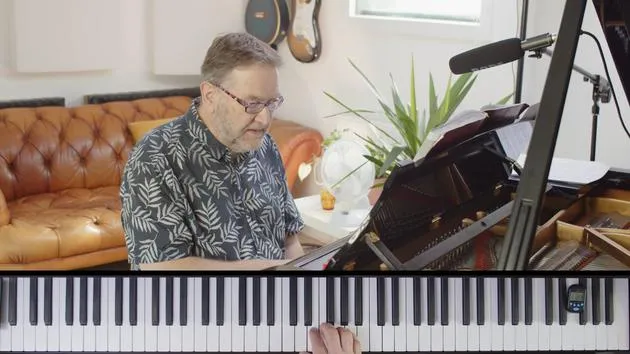
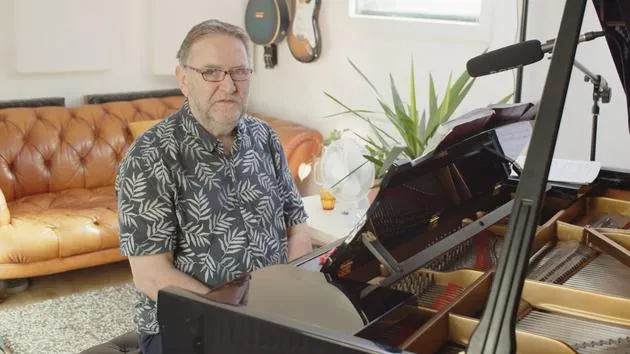
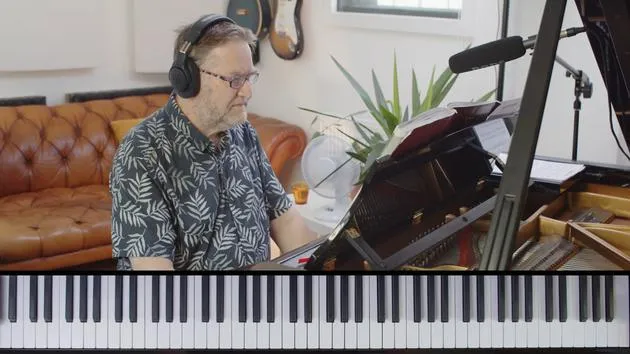
Tim RichardsTim Richards zeigt, wie man eine Melodie verdichtet, indem man Töne zusammenhält – etwas, das ein Pianist kann, ein Bläser aber nicht – anhand von 'Take the A Train'.
Das steckt im Kurs
23 Lektionen (1h 23m) · 1 gratis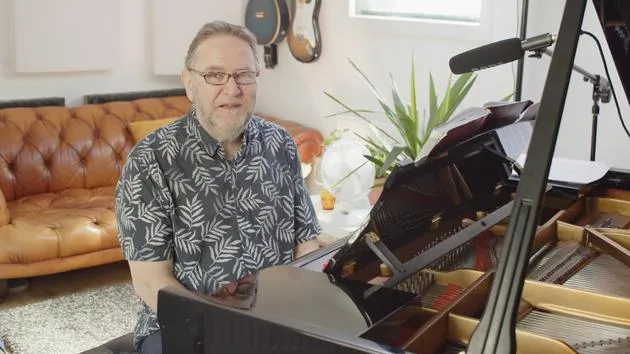
Transkript der Lektion
Exploring "Take the A Train" - Lesson
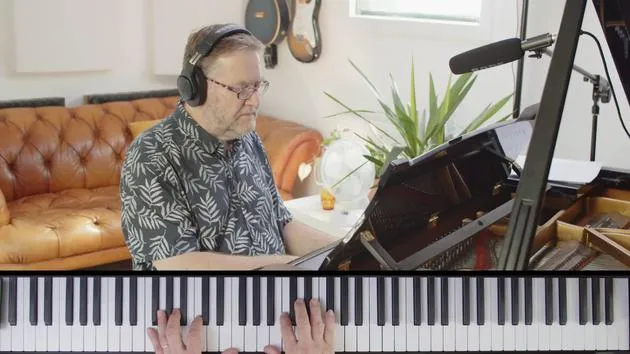
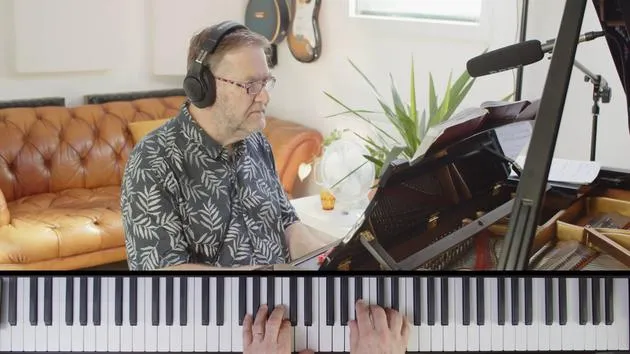
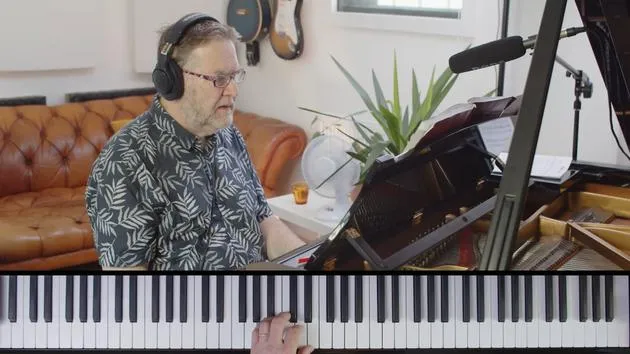
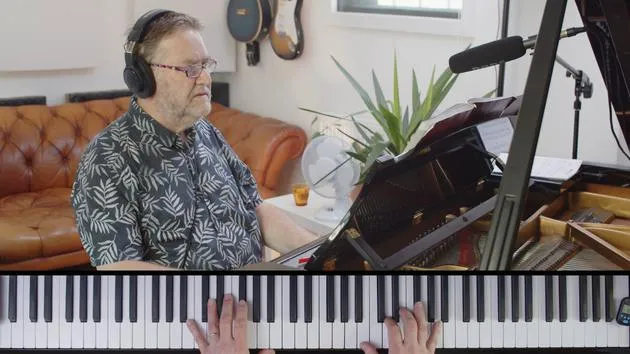
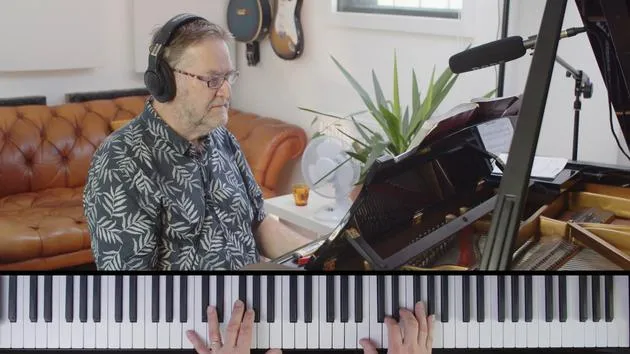
In "Take the A Train," not only did I vary the bass line in every A section, but you may have noticed I also didn't play the melody exactly the same way.
Melodic Variations
-
Lead Sheet Approach:
- The notes were the same, but I started out by just playing a single note, as you would get in a lead sheet.
- I'm already thickening the melody in bar three by holding those two notes down together.
-
Piano vs. Saxophone:
- As a piano player, I can produce two notes that ring together.
- If I was a sax player, I wouldn't be able to do that. I'd have to play the top E as a short note, release it, and then play the G sharp.
- But as a piano player, I can get a fuller sound, and that's embedded into this arrangement.
-
Understanding Lead Sheets:
- You wouldn't get it written like that on a lead sheet. A lead sheet would just be a single line, such as you could sing or play on the flute, trumpet, saxophone, or clarinet.
- So bear that in mind; it's a subtle point that crops up again later on.
Thickening the Melody
-
Starting the Second A Section:
- Having played single notes apart from these held notes, the second A section starts with an octave.
- So, I'm not just playing the G; I'm putting an octave above. This is the simplest way of thickening a melody , to play an octave to give it extra weight.
-
Specific Notes:
- I've also played the octave here, so both of those notes, the G and the E.
- Later on, in Bar 13, the A, which was previously just a single note, has been given a bit of extra weight by playing it as an octave.
- Now, don't attempt to do that with this; you need all your fingers to play that as it is. So, I don't think we need to worry about thickening that particular phrase.
Moving on to the Bridge
-
Bridge Techniques:
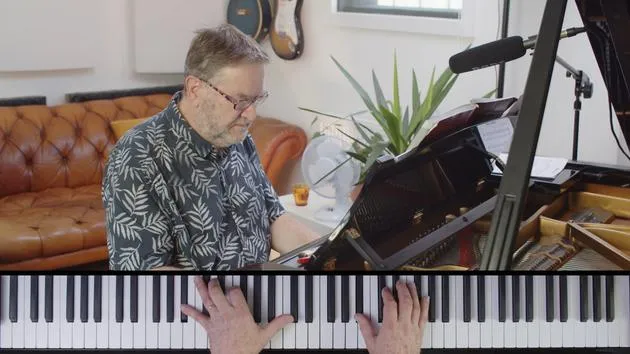
- Originally, the bridge consisted of single notes, but in this phrase, you can see how I've applied the technique of holding the top note down.
- Even though I'm not playing any chords, I'm just playing the melody, I'm actually getting a full sound because the melody outlines the chord.
-
Harmonization:
- The next part has been harmonized differently.
- The melody note is still on top, but I played a third underneath rather than an octave above.
- Remember, there's the octave again.
-
Bar 29:
- In Bar 29, there's a D minor double third again.
- That's three different ways of playing the melody: single notes, with octaves, and with thirds.
Personalizing Your Melody
-
Freedom of Choice:
- They all have their own sound.
- You don't have to play them in that order, nor do you have to do them at all if you prefer one to the other. Stick with the one that you like.
-
Experimentation:
- It's important to find a way of personalizing the melody.
- These are some ways you can do that, so experiment with some of those thickening techniques, maybe with the left hand and so on.
Fun Accompaniment Technique
-
China Traditional Accompaniment:
- One way that's quite fun is what I call "China traditional accompaniment."
- It gives you the impression of stride piano and is quite old-fashioned.
-
A Section Style:
- There's an A section in that style, so it is kind of useful because it combines bass and chords in one hand.
- The bass line is still hinting at a 2 feel, but we're putting little bits of the chord in as well.
-
Have Fun!
- Try it with the melody and so on. Have fun with that!
23 Lektionen
1 Std. 23 Min. strukturierte Videolektionen
Erweiterte Videofunktionen
Verlangsamen, Passagen loopen, mitlesen
Handy, Tablet & Desktop
Üben, wo du willst
100 % Zufriedenheitsgarantie
30 Tage Geld-zurück-Garantie
Lern deinen Guru kennen
Lern deinen Guru kennen
Der von der Kritik gefeierte Jazzpianist und Komponist Tim Richards ist einer der erfahrensten Jazzpädagogen Großbritanniens und unterrichtet seit über 30 Jahren privat Klavier sowie am Morley College, am Goldsmiths College, an der University of Surrey, in den Premises Studios und an weiteren Orten im Vereinigten Königreich und im Ausland. Er hat zahlreiche Titel für Schott Music produziert, darunter die zweibändigen Bestseller Exploring Jazz Piano, Blues, Boogie & Gospel Collection und das gefeierte Improvising Blues Piano. Gemeinsam mit John Crawford ist er zudem Koautor von Exploring Latin Piano und Brazilian Piano Collection.
In jüngerer Zeit hat Schott Jazz, Latin & Modern Collection (15 Stücke für Klavier solo) veröffentlicht, das Originale von Tim Richards neben Stücken von Duke Ellington und Thelonious Monk vereint, sowie das zweibändige Set Beginning Jazz Piano (jetzt ein zweiteiliger MusicGurus-Kurs).
„Die wahre Freude an Tims Musik… liegt darin, dass sie zugleich enorm lehrreich und ein großes Vergnügen zu spielen ist. Jeder, der auch nur das geringste Interesse daran hat, Jazzpiano zu lernen oder zu unterrichten, sollte sich unbedingt eine Sammlung von Tims Büchern zulegen.“ PianoDao
Als Interpret ist Tim seit den 1980er-Jahren eine feste Größe der britischen Jazzszene und spielte auch den Blues mit britischen und amerikanischen Legenden wie Otis Grand, Earl Green, Dana Gillespie, Larry Garner, Joe Louis Walker und Mojo Buford. Er hat über ein Dutzend Alben als Bandleader veröffentlicht (mit vielen der besten Londoner Jazzmusiker, darunter Pete King, Gilad Atzmon, Tony Kofi, Jason Yarde, Seb Rochford, Ed Jones, Dick Pearce und viele andere) und ist mit Besetzungen vom Duo bis zum Nonett durch ganz Europa getourt. Seine jüngste Aufnahme, das Album ‚Telegraph Hill‘ des sechsköpfigen Hextet, wurde im The Observer als "Eine wahre Freude von Anfang bis Ende" beschrieben.
Weitere Informationen finden sich auf seiner Website www.timrichards.ndo.co.uk







