



Mit deiner Mundharmonika vertraut werden

Mit
Mat Walklate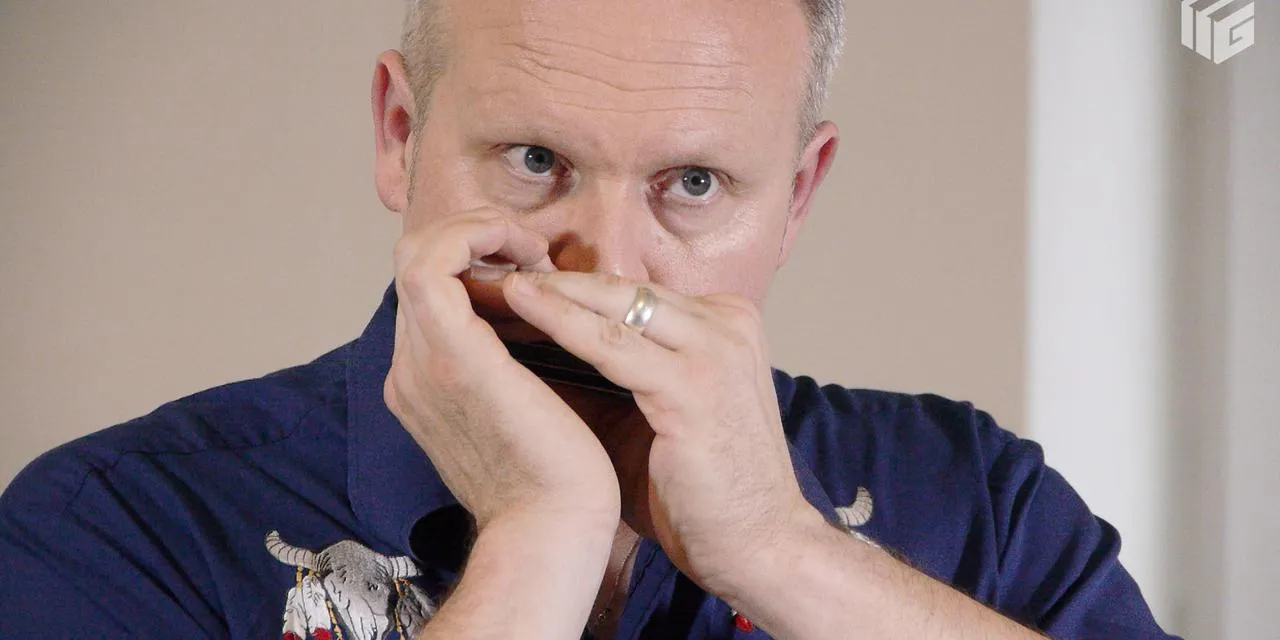
Das steckt im Kurs
9 Lektionen (0h 54m) · 2 gratis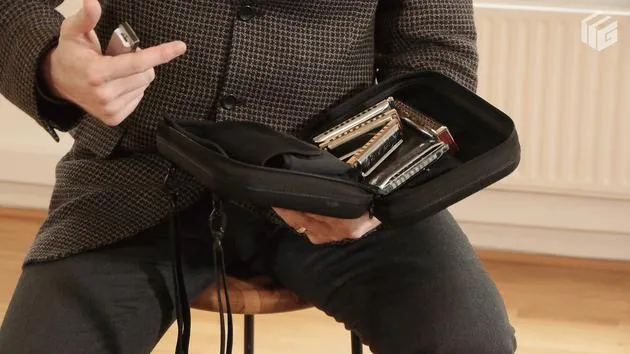
01. Mit deiner Mundharmonika vertraut werden
Du bist hier3:56
02. Einfacher Akkordrhythmus, erstes Blues-Solo
8:52
03. Lerne ein einfaches Blues-Solo
7:04
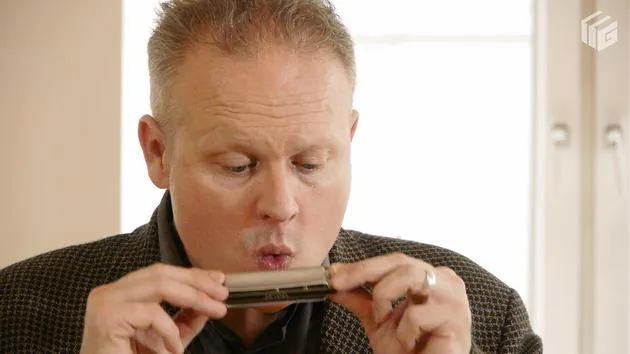
04. Ansatz (Lippenform)
4:51

05. When The Saints Go Marching In
12:37
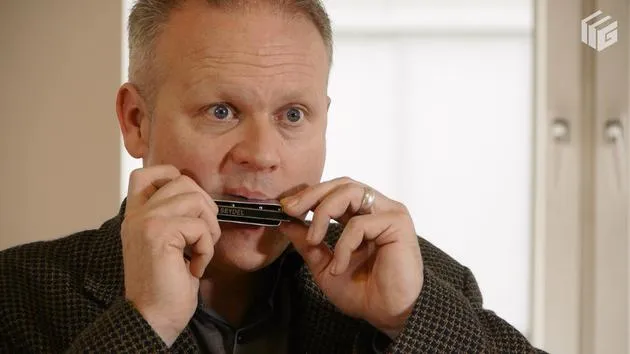
06. Tongue Blocking
8:03
07. Tonleitern spielen
1:58
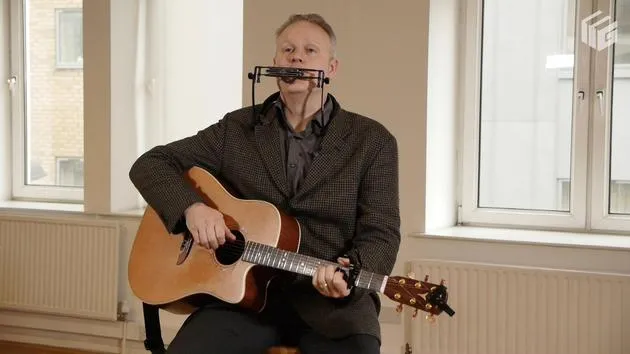
08. Einfacher Boogie-Rhythmus
5:25
09. BONUS: Lerne, The Beatles, Love Me Do zu spielen
Gratis-Lektion1:48
Transkript der Lektion
Introduction to the Diatonic Harmonica
Hi, I'm Matt, and I'm here to teach you some basic stuff on the diatonic harmonica. This is what I'm talking about:
- It has 10 holes.
- There are 2 reeds in each hole, allowing you to produce 2 notes per hole.
Getting Started with Blues Harmonica
What I'm going to try and do is show you some simple, easy-to-learn blues pieces to get you started on playing the blues harmonica.
I tend to use diatonic harmonicas mainly like this one. These are the ones with:
- 10 holes
- Available in various keys and tunings (all 12 keys, low tunings, minor tunings).
I usually prefer the normal tunings, though sometimes I use low-pitched harmonicas. My go-to brand is Seidel, a company from Germany, known for making fantastic instruments. They are the oldest harmonica maker in the world.
I also play a bit of chromatic harmonica, the one with the push button that you may have seen Stevie Wonder play, for instance.
Choosing Your Harmonica
For this course, you'll need a harmonica in the key of C:
- It should have 10 holes.
- It will say C on it somewhere.
You can find these in most music shops or online.
Holding Your Harmonica
Right-Handed Players
If you're right-handed like me, it's best to hold the harmonica in your left hand.
- Ensure that the numbers (1-10) are on top.
- The low notes should be on the left side and the high notes on the right side.
Left-Handed Players
If you're left-handed, it might be more comfortable to hold it in your right hand, it's entirely up to you, but the numbers need to be on top.
Positioning
- Check that number one is positioned correctly at the corner of the harmonica, resting between your thumb and forefinger on your left hand.
- When you play the harmonica, it must be horizontal and level.
Head Movement
When playing, move your head, not the harmonica.
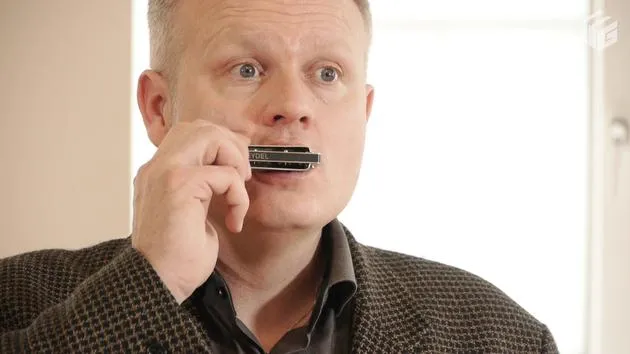
- To achieve the ideal holding position, you can pretend you have a moustache:
- Slot the harmonica in without your fingers blocking your lips.
- Drop your chin to get your lips over and under the harmonica.
Most harmonicas have a screw at either end; your lips should be level with those screws to ensure that all the air you breathe goes through the harmonica, not into the room.
Final Tips for Positioning
-
Pretend you have a moustache, slot the harmonica in, and get your lips over and under the instrument.
-
Dropping your chin improves sound quality and reduces effort.
-
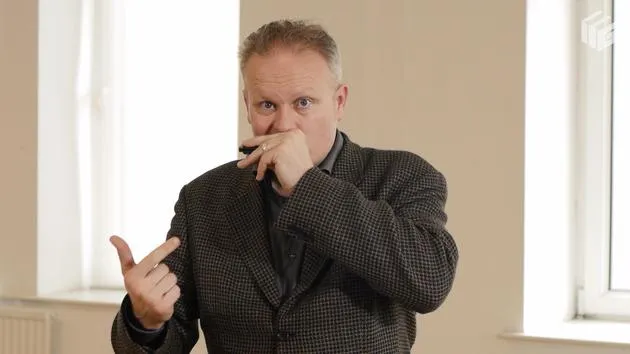
Position your index finger as far back as possible and your thumb underneath.
For a profile view, here's how far it should go in.
Support Hand Techniques
With your other hand (the one not holding the harmonica), you have options:
- Steady the instrument by holding the other end with your fingers and thumb.
- Make a cup with your hand behind the harmonica. This is useful later for techniques like vibrato.
Playing Technique
- Keep the harmonica horizontal and level.
- Try to drop your chin and move your head when you play.
Following these tips should get you started on your harmonica journey!
9 Lektionen
0 Std. 54 Min. strukturierte Videolektionen
Erweiterte Videofunktionen
Verlangsamen, Passagen loopen, mitlesen
Handy, Tablet & Desktop
Üben, wo du willst
100 % Zufriedenheitsgarantie
30 Tage Geld-zurück-Garantie
Lern deinen Guru kennen
Lern deinen Guru kennen
Mat Walklate ist ein in Manchester ansässiger Mundharmonikaspieler und Lehrer, der im Blues und Folk zu Hause ist und außerdem Flöte, Whistle und Uilleann Pipes spielt und singt. Er gewann 1992 die British Blues Harmonica Championship und 1993 das All-Britain Fleadh Cheoil an der Mundharmonika und ist ein von Seydel unterstützter Künstler.
In einer dreißigjährigen Laufbahn ist er mit Bands wie The Moochers und der Irish-Music-Gruppe The House Devils durch Europa getourt, hat zwischen 2001 und 2021 rund vierzehn Alben aufgenommen und gemischt – darunter Sea of Blues und Traditional Harmonica – und tritt heute im Duo mit dem Sänger und Gitarristen Alex Haynes sowie an der Seite des Blues-Gelehrten Dr Tom Attah auf. Er unterrichtet Mundharmonika am Leeds Conservatoire und privat.
Auf MusicGurus führen dich seine Kurse von deinen ersten Tönen auf einer C-Mundharmonika – Ansatz, die Cross-Harp-Position, Bending und deine erste Improvisation – bis hin zu flüssigem Blues-Spiel, mit Vibrato, alternativen Positionen und der Phrasierung, die ein Solo zum Singen bringt.







