



How to recognise a "Good idea"
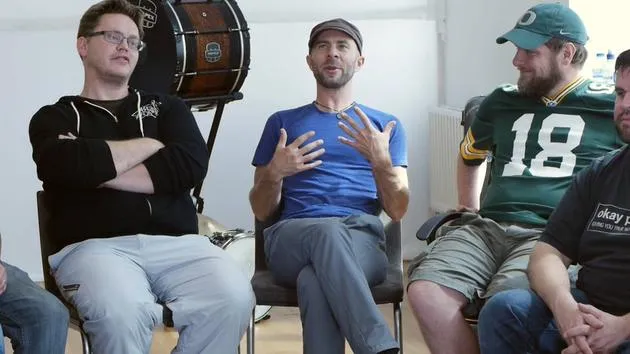
The Youngblood Brass Band explain how they tell a good musical idea from a weak one - and why a strong one quickly leads you to the next.
What's in the course
8 lessons (1h 4m) · 1 free
01. Composing and collaborating
11:54
02. How famous Youngblood tunes were written
8:33
03. Choosing tunes for albums or live shows
6:18
04. How to approach cover songs
8:12
05. How to recognise a "Good idea"
You are here4:44
06. Structure and developing ideas into a finished piece
8:15
07. What is an idea?!
4:17
08. Writing and arranging for horns
12:18
Lesson transcript
Music Composition and Collaboration
Understanding Good Ideas
I think you can tell. I think it's easy to tell because, for me, if an idea is good, it leads me to other ideas really quickly. It's not super hard to figure out what more the song needs or whatever.
Trusting Each Other Musically
- The reason we trust each other musically is that as soon as one of us has an idea that we think is good, we tend to share it.
- If eight people say, "hate it," we're probably gonna drop it.
- I trust my instinct on it before I even send it to anyone.
Honest Music Creation
If you're making music that's really honest, there's not really another way to do it. If you try to consider other people's opinions before your own, you're just gonna make music that sounds like a facsimile of something or music that tries to appease some perceived desires of imaginary fans.
That's the game that real musicians aren't supposed to play, right?
The Role of Marketing in Music
That's the game that advertising people are supposed to play. They're good at knowing what people will want to buy by finding the most common denominator and investing a lot of money into it.
What musicians should excel at is:
- Knowing exactly what they want to hear
- Creating the best music from that knowledge
Navigating Musical Preferences
We have spoken and unspoken rules in this band. We all have a pretty good idea of what works and what doesn't work, as well as what we like and dislike about pop music.
I heard an interview with U2 recently, where the guitarist, The Edge, explained that the band decided, as a theory, they didn't want any bent notes. This rule helped them craft a distinct sound.
Forbidden Rhythm
In our band, we have some licks we've given derogatory names. For instance:
- The Forbidden Rhythm: If you play it, you get ridiculed, unless it's done tastefully and ironically.
- Ironically, you can play it as a joke during sound checks or once during a show if there's intent behind it.
Learning from Live Performances
Reflecting on our last album, there were things that worked well in the studio but didn't translate live.
- A couple of tunes I wish we played live were attempted, but something just didn't pop.
- You can create something great in the studio, but it may not work live.
Context Matters
It's not just that it doesn't work live; it may not work live in the context of the show. For example, a song like "August Inside the God" may sound great on the record, but fitting it into the flow of a 75-minute show is challenging.
- It has a down tune with up verses and a weird tonality that makes it hard to place alongside 12 other songs.
Sometimes you have to recognize what sounds good in the context of a set, not just because you love the tune.
Conclusion
To create a cohesive performance, sometimes you have to part with certain songs to ensure that the show flows harmoniously, maintaining the integrity of the music next to each other.
8 lessons
1h 4m of structured video lessons
Advanced video features
Slow down, loop a passage, follow along
Mobile, tablet & desktop
Practise wherever you are
100% satisfaction guarantee
30-day money-back guarantee
Meet your guru
Meet your guru
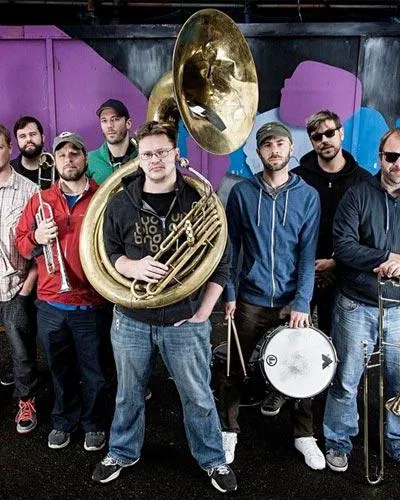
Youngblood Brass Band fuse uncompromising New Orleans brass with hip-hop energy and lyricism. Drawn from Madison, Brooklyn, Minneapolis and Chicago, the ten-piece has toured the world since 2000 and collaborated with the likes of Questlove and Talib Kweli. They are equally at home leading a marching band through their own compositions and headlining a punk festival. On MusicGurus they break down their New Orleans-meets-hip-hop sound - how they compose and arrange for horns, the rhythmic and harmonic vocabulary that ties it together, and how to play a horn line as part of a tight section, including the full parts to their tune 'Brooklyn'.







