



Proportions
What's in the course
11 lessons (0h 42m) · 1 free
01. Introduction
0:49
02. Four ways to approach the exercises
2:14
03. Five soundpoints
Free lesson4:39
04. The bow-hair and the string
5:18
05. Bow-pressure & pitch
0:48
06. Bow-pressure & string length
2:13
07. The tilt of the bow
4:14
08. About Resonance
3:15
09. Not following the line of least resistance
2:24
10. Quality of sound: upper partials
2:14
11. Proportions
You are here14:04
Lesson transcript
Understanding Proportions in Music
The great artist and scientist Leonardo da Vinci, painter of the Mona Lisa, was always thinking about proportions, from the divine proportions in geometry and architecture to the proportions in his scientific inventions in musical instruments and musical harmony.
A Story About Leonardo
Dorothy Delay used to tell a story about Leonardo that:
"He was once asked to give his opinion about an ancient statue that had been discovered."
When he arrived, the statue was surrounded by a group of people talking about it in abstract terms, such as the statue's expression or beauty. Apparently, Leonardo didn't say a word. He measured every angle, length, width, and so on, wrote it all down in his notebook, and went home.
Of course, he could see the same qualities of expression or beauty that anyone else could see. But as an artist, he understood that everything he saw was the result of certain proportions.
The Magic of Proportions
Proportions is the key to understanding every aspect of technique on a string instrument. In the past, it was often thought that:
- You couldn't really teach technique beyond a few basics, such as how to hold the violin and bow.
- For example, vibrato: How can you teach vibrato?
If someone is talented and gifted, they'll be able to do it. If they're not, how can you teach them to? The same attitude applied to most other aspects of playing as well.
However, this is simply not true.
The Teachability of Technique
Musical expression and talent may be abstract and subjective qualities that you can't easily pin down and define, but everything about the solid physical instrument is a simple matter of cause and effect.
Every single thing about playing the instrument is describable in very few words, and therefore teachable. The language of describing is the language of proportions.
Proportions in Instruments and Technique
In string instrument playing, the first examples of the beauty of proportions are in the instrument and bow themselves:
- The beautiful shape of the instrument
- The exact thickness of the plates
- The design of the bridge
- The exact position and thickness of the sound post
- The exact length of the tailguard
A good bow is another example of good proportions. Consider the following:
- The exact degree of thinness near the point, which gradually increases in thickness.
- The shape and weight of the point
- The balance of the bow
- Its steadiness on the string
All these are results of certain proportions.
Proportions in Music Performance
Proportions are also the key to every question about music, getting faster and slower, getting louder and softer:
- Intonation
- Degrees of accent, etc.
Crescendo and Accelerando
To make an even crescendo, every note must be proportionately louder than the previous note. For an accelerando, every note must be played proportionately sooner than the one before.
Each element of technique can be expressed in these terms.
Example: Spiccato
Take spiccato, for example:
- Height of bounce
- Length of bow
By mixing different amounts of these two factors, you get different characters of spiccato in practice or teaching.
Practicing Spiccato:
- Start with all height and no length, then gradually add length until the tone is pure.
- Alternatively, start on the string with all length and no height, then gradually add height.
Example: Vibrato
The two main factors in vibrato are speed and width. By mixing different proportions of the two, you achieve all the different qualities of vibrato, from:
- Fast and narrow
- Slow and narrow
- Slow and wide
- Wide and fast
Example: Intonation
Consider the major scale, which begins with two whole tones. A small tone followed by a large tone, or vice versa, sounds wrong because it isn't proportionate.
The Mechanics of the Bow
A good example of proportions is in the springiness of the hair and the stick at the heel.
- The hair gives, and the wood of the bow is rigid at the point.
- The wood gives in the middle, and the hair is rigid there.
Thinking in Numbers:
-
Number resistance:
- Hair: 10 (soft)
- Wood: 0 (hard at the heel)
However hard you press down, you can't change the shape of the wood of the bow.
- The balance at the tip of the bow: Hair (10), Wood (0).
- At the middle of the bow, both wood and hair give equally: Balance is (5, 5).
The Journey of the Bow Stroke
The proportions of give during one bow stroke sustained from heel to point are as follows:
- 10: All hair, no wood
- 0: All wood, no hair
Experiment by playing short strokes heavily into the string in all parts of the bow to feel these proportions of give and resistance.
Constant Change in Proportions
The feeling of the bow's contact with the string changes constantly, creating an infinite gradation of sensations. Every sound caused by the bow can be described in terms of:
- Speed of bow
- Pressure
- Distance from the bridge
Cooking Analogy: Making Pancakes
I like telling students about how to make pancakes. There are three main ingredients:
- Eggs
- Flour
- Milk
Just like the three main ingredients of bowing: Speed, Pressure, Sound Point. You need the right amounts of each ingredient.
- Too many eggs compared to flour and milk makes the pancake too eggy.
- Too much flour makes them dry and heavy.
- Too much milk means the pancake doesn't hold together.
Quality of Sound
Just as the taste and texture of a pancake tell you about the ingredients, the quality of the sound tells you everything you need to know about speed, pressure, and sound point balance.
If the tone is not pure, remember:
- High frequency scratches with harmonics result from too little weight or too fast a bow.
- Low frequency scratches where the bow tears at the string result from too much weight or too slow a bow.
Misinterpretation of Feedback
Many players misinterpret the feedback from any scratches. While they think that scratches are caused by too much pressure, in fact, they're usually caused by too little pressure and a too-fast bow speed.
For example:
- When asked what caused a scratch, 99 out of 100 students may say "too much pressure."
Correcting the Misunderstanding
It often is not enough pressure, but rather a too-fast bow. Explaining the cause can change a student's understanding:
"Too much pressure makes low frequency scratches and too little pressure creates high frequency".
Perfect Harmony in Tone
There is a particular quality of sound when the speed, pressure, and sound point balance is right.
It's focused, sweet, pure, and resonant, allowing the instrument to speak freely and openly. In some schools of string playing, this true sound is called the tonus.
The Magic of Sound in Performance
When the speed, pressure, and sound point are not in harmony, something peculiar happens:
Whether you sit 20 meters away or 2 meters away, it seems as though the sound originates from the player.
When the player tries to play more loudly, the sound may get louder, but it appears to emanate from the instrument, remaining localized around it.
The Experience in Concerts
In a small room, even at a distance of two meters:
- There's no sense of sound coming directly from the instrument.
- Instead, the whole room is filled with sound.
In larger venues, this phenomenon continues. The tone seems to come from the entire performance area, rather than a singular point on stage.
Overcoming Plateaus in Playing
Sometimes, players reach a point in their practice where they just don't know what to do next to improve their performance. Similarly, teachers may find themselves at a loss for suggestions to help students improve.
However, considering practice in terms of proportions opens the floodgates. Rather than feeling stuck, you may find:
- A nonstop stream of information always available.
- Opportunities for improvement in handling technique or tension.
Ultimately, the challenge is not about lacking knowledge of what to do next; it often comes down to time constraints leading up to a concert or the end of a course.
Conclusion
If given just one more day of practice, or another lesson with the student, next steps would become clearer.
11 lessons
0h 42m of structured video lessons
Advanced video features
Slow down, loop a passage, follow along
Mobile, tablet & desktop
Practise wherever you are
100% satisfaction guarantee
30-day money-back guarantee
Meet your guru
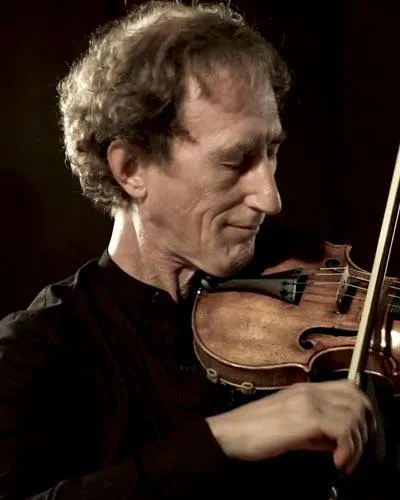
Meet your guru
Simon Fischer enjoys a distinguished and wide-ranging career as a performer, educator and recording artist.
He has performed worldwide as a recitalist, and committed three Brahms Sonatas to record, a recording that received high praise in Gramophone Magazine.
Simon is recognised as having a place amongst the world's elite teachers. He is a professor at the Guildhall School of Music, and has held positions at the Yehudi Menuhin School, Wells Cathedral School and the Purcell School, and for 15 years was a visiting professor at the Royal Scottish Academy of Music. Having studied in London with Yfrah Neaman, and in New York with Dorothy DeLay, Fischer's approach unites the best elements of the French, Russian and American violin traditions.
Fischer's published work greatly influences the teaching of the violin. Having written for The Strad magazine since 1991, his monthly articles have attracted a worldwide following. Published by Edition Peters, his technique books Basics and Practice (translated into Korean, Italian and German), Scales and The Violin Lesson, and the DVD The Secrets of Tone Production (now available to stream via MusicGurus), have become standards on many continents. His book and DVD Warming Up was described by The Strad magazine as "23 pages of pure technical gold".
In 2014 Simon Fischer was awarded the European String Teachers Association prize "In celebration of a lifetime contribution to String Teaching".
In his four-part Secrets of Tone Production course, Simon guides you through getting to know your instrument and then working through his fundamental tone exercises step by step, so you can produce a richer, more controlled and more beautiful sound on the violin.







