



Analysis, explanation, demonstration with Steven Isserlis
With
Steven Isserlis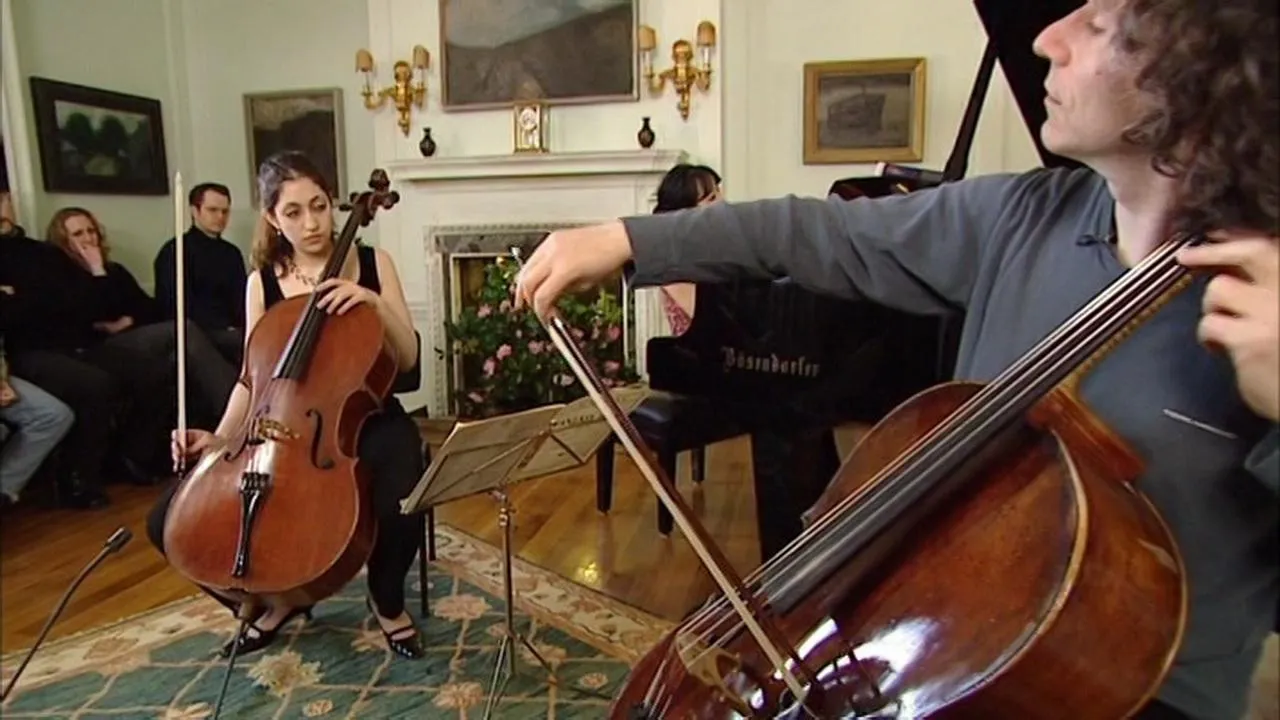
What's in the course
2 lessons (1h 13m) · 1 free
Lesson transcript
Music Lesson
Discussion on Interpretation:
Okay. You want to talk about that? Okay. Yeah, it's very nice. The thing is, what's the marking at the top?
Metronome Mark:
- 80 - Yes, that. Which is actually. That's the metronome mark. Yes, which is slow. It's slower than what you're doing.
Mood Indication:
- Tender and Expressive - Okay. I mean, what you're doing is very appassionata. I would say it was passionate. It doesn't strike me as tender.
Analysis of Phrasing:
- The fact that he writes a slow metronome mark and then he writes these gentle triplets and these conversations between the two of you, I'm not really hearing them. I'm hearing a kind of outburst of passion, but I'm not sure that's what he's asked for.
Revisiting Phrasing:
- Let's begin again and think.
- Do the phrases tend to be rising or falling?
- Rising.
- Is that rising? No, I think not. I think it's basically these falling phrases.
- You're kind of pushing through them, so we miss some of the beauty of that.
Beginning Again:
- Okay, let's begin again.
Piano Introduction:
- Now, how does the piano start? What's the tune before you come in?
- Yes, the triplets. Yes, accompanying.
- But what's the... what do you really respond to without looking?
- That's cheating.
- Cheers. Exactly. And you respond. She asks the question, and you answer.
Dialogue in Music:
- Okay, I didn't hear the dialogue. I mean, I think you could bring out the question, the forte piano, a little more. But then you have to respond to it in kind.
- Yeah, okay. But she goes, and I want to hear from you.
Phrasing and Importance:
- What you're doing is... I don't hear the same phrase, which then, of course, goes on. But I have to hear that conversation.
Identifying Central Notes:
- What is more? What are your central notes to this phrase?
- What's the most important? Which ones?
- The F and then A. Yeah.
Curve of the Phrase:
- Okay. So there's, in a very gentle way, what you're doing is you're making each note equal. And that somehow doesn't make this lovely curve to the phrase.
Expressiveness of Notes:
- Why is the G there? I mean, the first time you went. Now you go, why?
- It's more emphatic. It's expressive.
- Okay. But you ran through it.
Slowing Down for Expressiveness:
- I mean, that's why I think you're a bit hurried for this, because you got to have time to enjoy this kind of... this beauty here and all these conversations.
- Listen to that. The piano goes. And you answer, and more. So nothing's in a hurry. Nothing's breathless.
Imagery of a Love Duet:
- It's kind of a... sorry, I know it's very inappropriate, but it's kind of a love duet, isn't it? A love conversation.
- So you can imagine whoever playing the piano having this.
Natural Flow of Music:
- No, sorry, it's not. If you have equal notes like that, it's like we are talking like that. It doesn't sound natural, so you have to go. So it just falls again.
Visualizing the Music:
- You can see, when you look at the music, these curves. He's written lovely soft lines. So go with them outside.
Final Encouragement:
- Yeah, okay. That was very nice. It was very nice. But you phrase beautifully here.
- See you later, darling. It was kind of... I think you need that.
Going Back to Beginning:
- Go with the curve. That's much more poetic. Otherwise, it becomes solid. You can't really go from anywhere in there.
- So one last time from the beginning.
Maintaining the Flow:
- Yeah, not a... Sorry, one more time from the beginning. But you still sound in a hurry. I mean, somehow it's a poem, this.
Key Observations:
- If any, if you use kind of some boring prosaic word, it's no longer poetic.
- And that's what you're doing. If you go, you've had these strange words.
- In the midst of all this beauty, you just let it float.
- It's not never solid, this music.
- Listen, answer good. Loud curve.
Transitioning to the Next Phrase:
- Okay, good.
Exploring the Questioning Phase:
- Despite that. What's the difference here now?
- What's happened after that?
- Yeah, after that it's questioning.
- What's happened after that?
Listening and Responding:
- Okay, so in your color question, the piano goes. And you join in.
- So not a kind of... okay, not solid, but not definite.
Understanding the Phrase's Intent:
- The color. Just from there.
Continuing the Phrase:
- Yeah, okay. Do you want the phrase to stop or to go on?
- Go on.
Maintaining Rhythm:
- Okay, so what you're doing is keep landing on the beat. Always take it away from the beat. And then it'll want to go on the phrase.
Gestalt of the Music:
- It's not the bit I was doing.
Conclusion:
Your performance and interpretation can be transformed into a more poetic and flowing representation of the music. It's essential to remain responsive to the dialogue within the piece and connect emotionally to each section while maintaining the natural rhythm and color of the music. Remember, this is a journey of expression, let the music guide you!
2 lessons
1h 13m of structured video lessons
Advanced video features
Slow down, loop a passage, follow along
Mobile, tablet & desktop
Practise wherever you are
100% satisfaction guarantee
30-day money-back guarantee
Meet your guru
Meet your guru
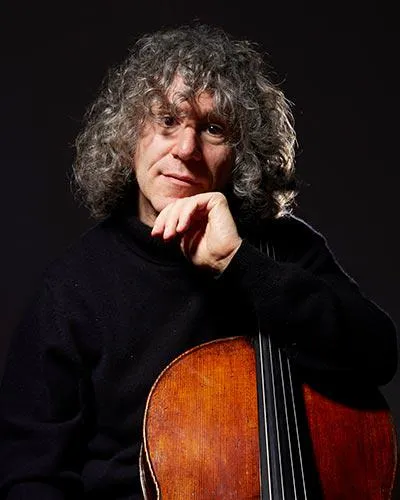
Steven Isserlis is a cellist whose passion for music transcends conventional divisions, acclaimed worldwide for his musicality and technique alike. He is also one of the most generous teachers in the cello world: he gives masterclasses regularly all over the globe, and has long been Artistic Director of the masterclass and chamber music seminar IMS Prussia Cove. Learning from him means getting inside that rare blend of scholarship, imagination and sheer joy in the music.
He is equally at home drawing the audience into his circle of friends for chamber music or in recital; delving into the historical archives to emerge with a forgotten gem; or on the concert platform with some of the world's most prestigious orchestras and conductors. British-born, Isserlis takes a strong interest in authentic performance, playing with many of the foremost period instrument orchestras. Recent seasons have seen him perform all Beethoven's works for cello with fortepianist Robert Levin both in Boston and at London's Wigmore Hall, and perform the Dvorak Cello Concerto with the Orchestra of the Age of Enlightenment under Sir Simon Rattle.
Schumann is a particular passion: he performed Schumann's Cello Concerto on a major tour of Germany, spearheaded a Schumann project in Japan, and performed in an evening of words and music dedicated to the story of Schumann and Brahms - with a script written by Isserlis himself - in London and New York.
Writing and playing for children is another major interest. His first book, a children's history of the lives of six great composers, Why Beethoven Threw the Stew, was published by Faber and Faber in October 2001, and a sequel, Why Handel Waggled his Wig, followed in 2006.
With an award-winning discography, Isserlis' recordings reflect his diverse interests in repertoire; his release of the complete Solo Cello Suites by Bach on the Hyperion label was met with the highest critical acclaim and won many awards. Awarded a CBE in 1998 in recognition of his services to music, he has received many other honours, including in 2000 the Schumann Prize of the City of Zwickau (Schumann's birthplace).







