



Concerto No. 2 analysis with Stephen Kovacevich
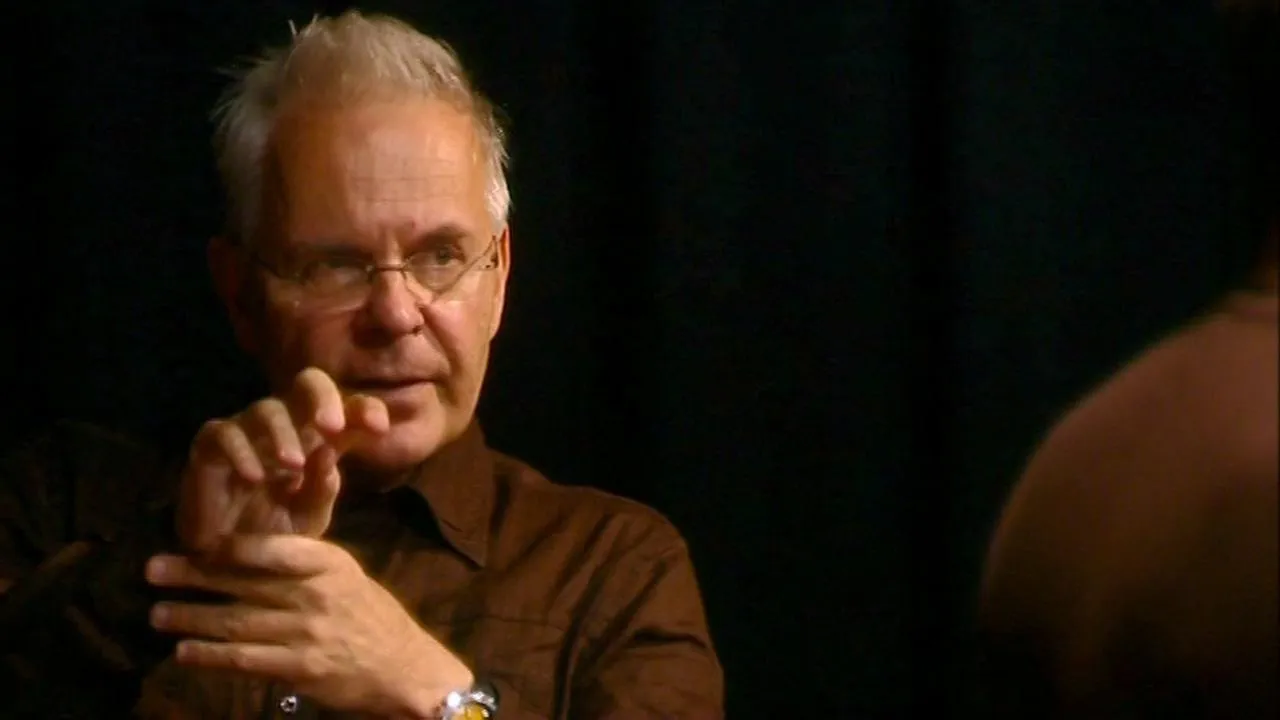
In this online piano lesson, Stephen Kovacevich works with his student to understand Beethoven's subtle and complex Piano Concerto No.2
What's in the course
2 lessons (0h 50m) · 1 free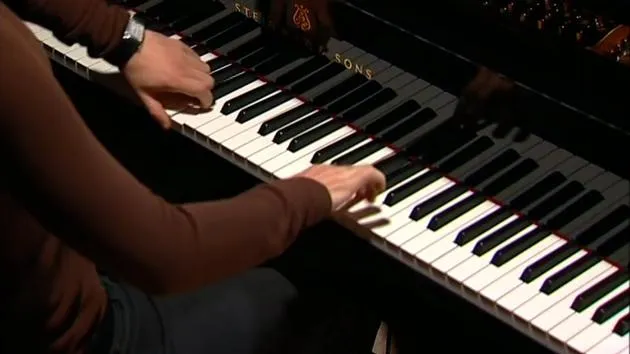
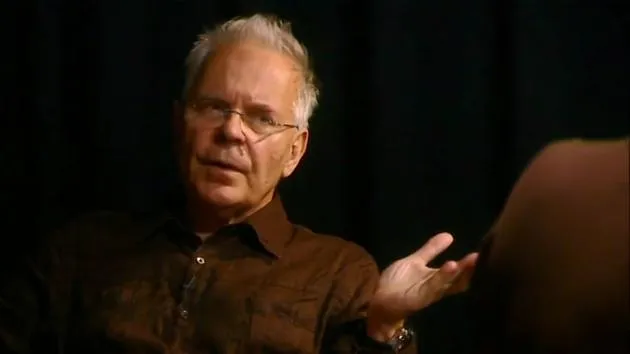
Lesson transcript
Music Lesson
Introduction to Taste in Music
My, the questions I would ask you are really a question of taste. I don't mean high or good or bad taste. Different taste. I find that sometimes in the very beautiful, lyrical things, there's a little (for my taste, but not for other people) a little bit too much rubato.
Bravura Passages
If you could... If somehow you could be free, but not in such. Sometimes very, very small units. The other thing is in the bravura passages, you have very, very good fingers. They're no problem for you. But again, to my ear, slightly too much, right? Slightly too much pedal sometimes.
I don't want to turn you into a harpsichord, but it... sometimes I think it lacks a little brilliance.
Tempo Practice
Yeah. Now, tempo is fine. Lilith, could you play just before his last solo? "Beam, beam, bom, bom." Just so we work on this free, but not. It's almost Puccini, what you're doing. Almost. Almost.
Yeah, yeah. But play him into it just before. Okay, stop. Now, to me, that was absolutely beautiful. It was a little simpler. It certainly was not strict. You're not a strict musician, so you don't have to worry about that.
But it was a little bit more in a... as if Mozart was still very, very, very, very good. Now let's begin again. A little more. A little sparkling. Okay? Yes. For example. I hear it. Good.
Play by Yourself
Try it again. I hear in the... play it by yourself now with... without the orchestra. Play the opening.
Yeah. There I was right there. Your la mango shape. I hear and I lose. Try it again. Yes, you see the high E flat. You do beautifully, but you haven't prepared it, and it comes.
I hear. You see. Try the whole thing from the beginning. Yeah. Sing now.
Exploring the High E Flat
Okay, I'm going to torture you more where we were. Now getting to the high E flat. Try this time. I don't want you to be in time. But it was a little capricious. A little capricious. Try it again.
Now try it again. Try it again. Look, he's good. That's why we're working hard. The left hand. Don't be rigid. But it... it changes. Somehow you change the way one listens to you by too much.
Dynamic Control
Yeah. Now go on. Now this part next. You slow down a bit. That's the danger. Yes. Okay. Try the whole thing. "Papa, Papa." Good. Go on.
Okay, here. I'm sure you're playing with your fingers, not like the... also, you have a tendency in cantabile to become a little slower. Try from D tempo.
Okay. David, I'm exaggerating, but I hear you do phrasing in such a way that it actually stops the phrase. It stops the phrase you show too clearly. Try now more natural.
Natural Phrasing
Okay. Try it without the orchestra. Is there a phrase marked like this in the score? I've forgotten. Yes, I think so. Yes, there is. There is. Well, it's raw. No, it's too... it's too literal.
Okay, I'm sorry. You know, I mean, it could be just like a bow change. Okay. Because right now it sounds exactly. Exactly.
Softness in the Right Hand
Okay, now this was... no, no, no, no. It's okay. You have a danger to play the right hand almost too dolce. Sometimes that one will... I mean, it goes against everything I normally say to someone, but here it is a little bit too dolce. It won't speak until then.
Okay? Yeah. Try it again. I promise last time. I asked you to do it last time. Okay. We won't get stuck then.
Discussion on Dynamics
When you get to the G, you do this. Can we stop for a second and talk about dynamics in playing to the public? Especially some Brahms and some Beethoven. If you always play Parlando, people stop listening. If you play in such a way that they go like this... but it's not exactly that that you're doing. You're playing too privately.
This is not the second aria from the opus 110. It's a little too private. When you come to the G this time, even if you don't like it, don't make diminuendo. Try to keep the line going. Last time we do it.
Brilliance in Performance
Okay, can I just take the screen just to be sure of where you're talking about? Here, this G. When you come, don't disappear and go. And go to the top. And that's the last time, good or bad, is the last time we do that.
Without now, I loved that, you see. I love that it sounded natural. I won't ask. I'm not a man of my word. I'm going to say something more about this stupid passage. Be careful that you don't... that your left hand is sensitive to the right.
Next Section Practice
Okay, now let's go to the second. The next section. Maybe I do it again. Oh, okay. I didn't dare to ask him, but that's fine. Bravo. That's fine. That's absolutely fine.
You have a tendency when you go to this beautiful harmonic surprise. No, before I went. No. Yes, you have a tendency, and I think that is a Chopinesque characteristic of showing the expression in the left hand. You do this. I don't think...
I think you can show it a little bit, but it's still the right hand that speaks. Otherwise, it's something a little bit... I don't think Beethoven would have done it like that so much.
Development Section
Okay, now let's go to the development. Just play him into. Yeah, no, maybe developmental. Yeah, that one.
Yeah. D. Yes, exactly. Now, you see your left hand. Speak, speak, speak. Go on. Next section free, but somehow classical.
Okay. You felt a little inhibited then. No. A little bit dry. Yes. Try it again. Play him just to this.
Right Hand Practice
Yeah, let's try it again. Can I try it? Just right hand without orchestra. Just your right hand. Yes. It's a little bit fingerit. It's a little bit fingeritis.
Imagine I had a great piano teacher, Myra Hess, and she had some incredible characteristics. And one was amazing cantabile. And to play not with your fingers, as if you're a string player. Yes.
Left Hand Sensitivity
And your hand is simpler. David, try it again with the left hand. Not so loud. Just by yourself. No, you see, if the left hand is so loud, you cannot get rid of the sound. The high E flat doesn't sing much better.
Go on. Okay. This was good. This was good from before. Did you see the film of Horowitz from Moscow? Yeah, when he played, he plays with flat fingers.
Yes, it's true. And I know that when I'm in very... not good shape, very, very, very good shape, I play with flat fingers. You play a little bit too. Like this. Yeah. Especially in cantabile.
Exploration of the Cadenza
Can I try the little? Yeah, of course. Please. Now, that was quite different. Could you hear it? Yeah, of course, of course.
So spread that disease everywhere. Everywhere. Okay, let's hear the cadenza. It's interesting. What I love about this cadenza. It shows. I said.
Yes. And we're also politically correct, and there are some critics and there are some here as well who are so politically correct. And Beethoven wrote this cadenza, what, 15, 20 years after this concerto. It has no relation at all to the style of the early thing. And he didn't care. That's what I love so much.
Cadenza Performance
It was written at the time, I think of the Hammer Clavier, and it sounds like it. It doesn't fit. Didn't bother him at all. That's great. Let's hear.
Okay. Very good. Before, I don't agree. Very, very good. Okay, that's fine. Here I heard fingeritis again. "Bum, be beautiful."
Yeah. Okay. That ending is always terrified. Yeah. It's very, very, very difficult. I liked very much what I would like you to think about is, if the style is so different, I would actually take my chances and open up the piano more.
The Difficulty of the Ending
It doesn't fit with what came before. But that's Ludwig. Everything isn't so correct. I think that... I'm pretty sure this beautiful, mysterious passage.
Papi was too loud. If it's too loud, you don't hear these beautiful chromaticisms.
Now the end of this cadenza, no conductor likes. Because they have to do this. And it's very difficult to know when to do it. You've organized it too clearly. Yes, it's true.
Improvisation Style Playing
Try. I mean, try, if possible, when you do it now, as if you're improvising. As if you're improvising. And if the conductor misses it, too bad.
Yeah, that's better. It started off beautifully. And then I heard, you know, making life easy. But it's... don't worry about it. It's good.
I mean, people, as you know, Marta, the other day, organized it. She organized it very much. And I heard Radu play it, and he organized it even more. But I don't think it's necessary.
Sound Quality in Music
And. But it's. Or if it's organized not to make it feel. Not to make it. So. So. Yeah, okay, but. Bravo. Bravo.
Let's. Let's. D. Okay, first of all, bravo. Sound is good. Cantabile was good. Foot was not. Try the solo again just by yourself. Beautiful. Good. Beautiful. Beautiful. Very beautiful.
Right and Left Hand Balance
Okay, here. Here is the first time I noticed it before. Your ear is more interested in the left sometimes than the right. You must be careful that you don't get the proportions wrong.
Yes. I started to listen to the accompaniment more than what you were saying. Try. From. Yeah, but from. From before, with a D. Y.
Okay. I thought actually in this part, that this would be the principal line. Yes, but not later. But not later. I agree with.
But you see, it's interesting what you say there, because you make a decision. I agree with you. The left hand is beautiful there. But I could hear the decision too clearly. You see, that's the problem. Yes, it's extreme.
Musical Singing
Try just by yourself. From the D. No, I'm pretty... I'm pretty sure the right hand is hungry. Is hungry. Sing. Good. Sing.
Yes, but here. Yes, there. I miss. I miss that I hear this. The whole thing. The whole thing. The whole thing. Sing.
Okay, now, here. Can we start now? Here. I'm pretty sure you're too free. Because the orchestra... it's not that the orchestra can't follow you. It makes their role very strange if they are. And I don't think it's necessary.
Leading the Orchestra
Yeah. Okay. Sa. I'll speak. Okay, good. Before this, you were so free with the right that... that the orchestra.
And when I say it makes, it's difficult for them. That doesn't matter. If something's difficult, it's not... it forces them to something unnatural.
Yes, I understand. I like what you did in this little cadenza. I'd also like you to explore the idea of a little more freedom. Freedom.
Transition to Next Recitative
Here you're by yourself. Yeah, okay, but let's not get... I mean, that's for you to think about. Play him into the next recitative.
It. Now I'm going to be a policeman. I'm not doing it right. You're not doing it right. So I actually heard Martha doing this in the scene.
I know, and I think it's wonderful. But it... it is that way. Okay. We'll both apologize to Marta.
Discussion on Score Interpretation
Okay, no, but try it the way it's written, Dottie. No, the first one is a 30. Isn't the first one. But they're all 16s. It could be, I think, because it's like commentary, but it's not secretive, critical commentary.
Well, we don't have the new complete edition, volume three, page two, page 36, so. Well, anyway.
Yeah, but they're certainly not... it's true. No, you're right. You're right.
Final Thoughts
Okay, that's good. That was beautiful. Yeah. There, you see the danger of the foot body. You keep it down. It doesn't sink.
No, you see, David, if the E... if the B flat. It's not singing. It's not singing because it's.
Okay. Try just there. Yeah. And then take away the... and then pedal again. No, you see what I want because I hear this.
Okay. You see? That's beautiful. That's fine.
Conclusion
Yeah. Okay, off we go. I can't do the same tempo, though. I'm doing the same. The recording of Mar.
Okay, fine. Tempo is fine. That's not. It's not a problem. Now, when you have... I think you have a very musically very romantic nature, which means that you don't... you don't think it's all.
It's... maybe you don't think it's beautiful. Sometimes. Yum. You know, you think it's... you always do.
Try. Yum. Bum bum. Lighter. Good. Good. Okay, now here. It's a technical thing.
Yes. I think that you need to practice. I mean, you have very, very good fingers. I'm not talking that. But to have this kind of early Beethoven thing. You need your foot a little bit too much.
Do you practice slowly often? I try, yes. When I have time. When you have time. In other words, the fingers should be a little lighter.
In other words, you stay on the key a little bit too long. If you can practice slowly, at least 15, 20 minutes a day. Something where you lift your fingers and then this kind of passage.
You do this very, very well, this difficult thing, but it doesn't give me a goose pimple. It's very, very good. But it's as if you're too long on the string.
Practicing Tips
You mean that? No, that's good. Afterwards. Yeah. Now. Now that. Can you do shorter? And now this. Good. You can. Good for. Excellent. Nothing to say it repeats itself.
We don't need it. The development. We don't need. Okay. I'd like to hear just the coda.
Yeah. Oh. Play before what you do or don't do in G major. Sa. Yes. Now, could you... more brio?
Okay. The ending is hard for everybody. How do you finger it? One foot and then 2, 3, 1, 5 and 2, 3.
Yeah. Try 4, 3, 1, 4, 1, 4, 1, four and two, three. Okay.
No, that... that isn't. I mean, what you do is what I sometimes have done, which seems crazy, is to play four and five together.
Sharing the Work
That's... you see, it shares the work. So actually, that passage, it's not always a good idea to practice it. You have to be in fantastic shape and then do it slowly five, ten times.
But if you practice at tempo, you get tired, and then you get complex. And to be honest, many, many pianists, me included, I only... I used to play that passage and think, gosh, this is great.
I'm really doing it very, very well until I noticed that my second finger was on the C sharp, but it wasn't making any noise at all.
So... and then I was a bit embarrassed, you see, but everybody... well, Marta doesn't find it difficult, but many, many people do. And... but this.
This was now fine. So, bravo. Good luck. O.
2 lessons
0h 50m of structured video lessons
Advanced video features
Slow down, loop a passage, follow along
Mobile, tablet & desktop
Practise wherever you are
100% satisfaction guarantee
30-day money-back guarantee
Meet your guru
Meet your guru
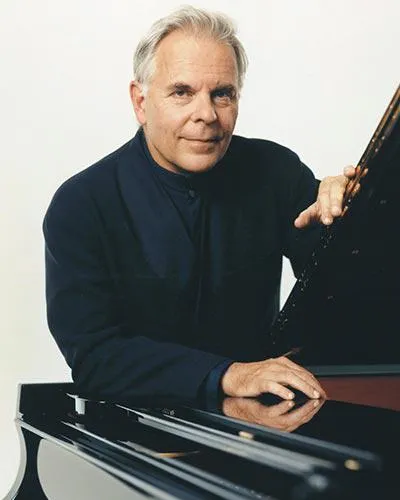
Stephen Kovacevich is one of the most searching interpreters at the keyboard, winning unsurpassed admiration for his playing of Beethoven, Brahms, Mozart and Schubert. Alongside his long and distinguished career as a soloist he has conducted for many years, earning warm praise for his work with orchestras throughout the world in repertoire from the 18th and 19th centuries.
Born in Los Angeles, he made his concert debut as a pianist at the age of 11. At 18 he moved to England to study with Dame Myra Hess. His international reputation has been built both on his concert appearances, renowned for their thoughtfulness and re-creative intensity, and on the highly acclaimed recordings he has made throughout his career.
Kovacevich has enjoyed two long-term relationships with recording companies, first Philips and then EMI. His concerto recordings for Philips, including Beethoven, Schumann and Bartok, have long been staples of the catalogue. As an exclusive EMI artist, he recorded both Brahms Piano Concertos with the London Philharmonic Orchestra and Sawallisch. The other great projects of his work with EMI were a compelling series of Schubert Sonatas and a set of the 32 Beethoven Sonatas completed in 2003, hailed as one of the most authoritative ever recorded. His recording of the Diabelli Variations for Onyx won the 2009 Classic FM Gramophone Editor's Choice award.
Studying with Kovacevich is a direct line into that interpretive mind: how he shapes a phrase, finds the architecture in Schubert, Beethoven and Chopin, and turns technique into music that genuinely means something. It is a rare chance to learn this repertoire from a pianist who has spent a lifetime living inside it.







