



Scales - Grade 5
Work through the Grade 5 scales, arpeggios and chord voicings across three octaves, played both straight and swung.

What's in the course
29 lessons (2h 19m) · 1 free

Lesson transcript
Grade Five Rock School Syllabus: Technical Exercises
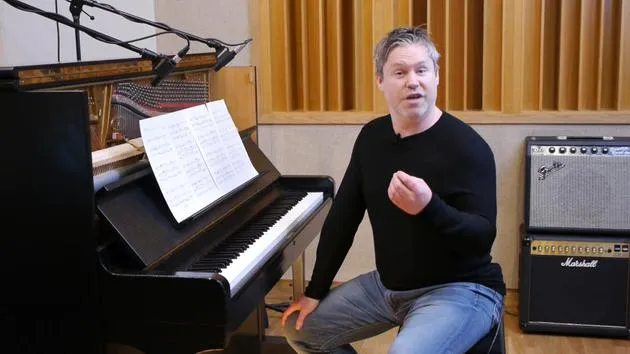
Hey, guys, how's it going? This is the Grade Five Rock School syllabus. Today, we're dealing with the technical exercises:
- Scales
- Arpeggios
- Chord Voicings
Introduction to Grade Five
Now, in Grade Five, we're kicking things up a notch. There are a few slightly different things we need to deal with:
- Previously, you only worked with a couple of octaves; now, we're moving to three octaves.
- Although the sheet music may indicate two octaves, ensure you play across three octaves, except where noted otherwise.
Playing Techniques
You will be playing these exercises in both straight and swung formats.
- Swung is a triplet feel, which I'll demonstrate shortly.
Example Scales
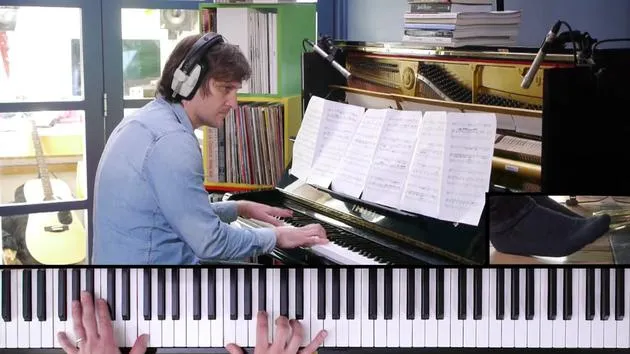
Let's first look at how a B major scale spans over three octaves.
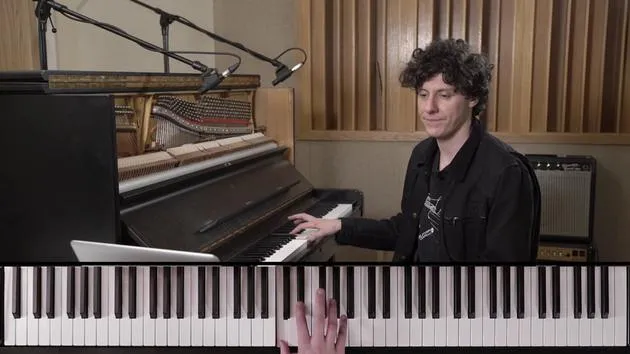
- Sounds like this: (demonstration)
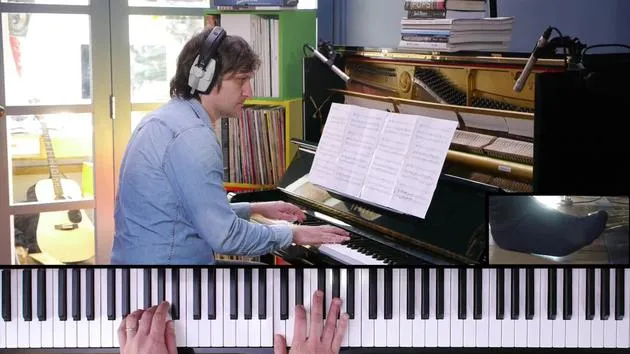
Next, a D flat major scale in contrary motion, swung.
It's also important to note that some of the harmonic minor scales will also utilize three octaves.
Three Octaves: Challenges
Playing in three octaves rather than two presents more opportunities for things to go wrong. This is particularly true for the harmonic minor scales, which feature slightly awkward fingering, especially towards the top of the section.
- Tip: Keep it nice and slow, practice hands separately, and when you're ready, work it together, gradually increasing speed.
Fingering Guidelines
There are quite a few different fingerings you can use for these scales:
- An acceptable method includes going over the top with your third finger.
- Although the book provides specific fingerings, there's no hard and fast rule, use what feels comfortable.
General Rule:
- If you find a better fingering that suits you, feel free to use it. If not, stick with the fingerings provided in the book.
Modes Overview
One particularly interesting scale is the C Locrian scale.
- C Locrian is the seventh mode of the major scale.
- To find C Locrian, play a D flat major scale starting on C.
This concept is crucial as higher scales, such as Locrian and Aeolian, can seem daunting since they aren't practiced as frequently.
Understanding the Modes
The great thing about all the modes (Dorian, Phrygian, Lydian, Mixolydian, Aeolian, Locrian, and the tonic Ionian) is:
- They can all be derived from a major scale.
- Once you realize this, you'll find mastering them is easier, simply starting on different notes.
Chromatic Scales
Now, moving on to chromatic scales.
- Chromatic scales are similar to regular scales but have notes much closer together.
- You'll be playing every single note on the piano as you ascend and descend chromatically, over three octaves.
Tempo and Fingering
- The tempo for these exercises can be quite quick, so it's important to use the correct fingering.
- Only use the first, second, and third fingers of both hands for these exercises.
Example:
- This is a chromatic scale starting on D flat, though you could also begin on B for the exams.
Happy practicing!
29 lessons
2h 19m of structured video lessons
Advanced video features
Slow down, loop a passage, follow along
Mobile, tablet & desktop
Practise wherever you are
100% satisfaction guarantee
30-day money-back guarantee







