



Getting started with improvisation
Discover the tools and methods that will help you get the melody that's in your head onto the guitar. Learn chord tones and chord construction.

What's in the course
41 lessons (2h 51m) · 1 free
01. Intro to Approaches to improvisation
1:00
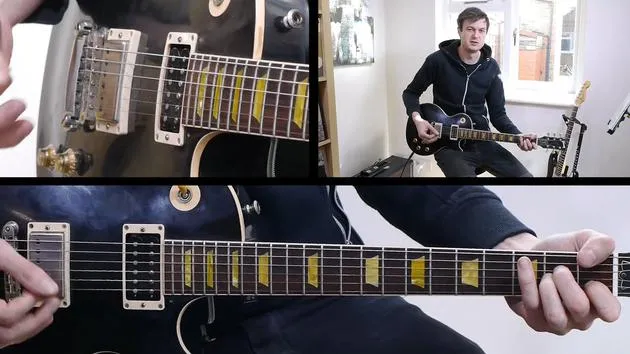
02. Getting started with improvisation
You are here9:22
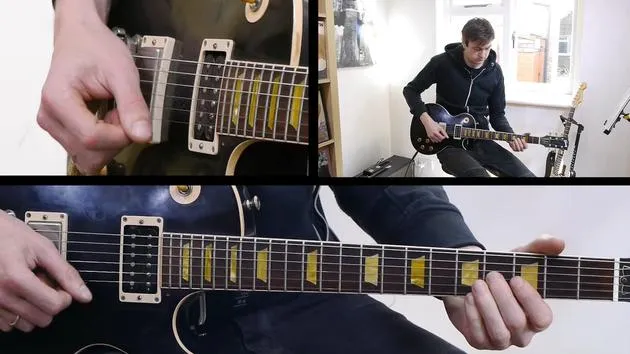
03. Assignment: Finding chord tones
4:05
04. Improvising using chord tones
10:18
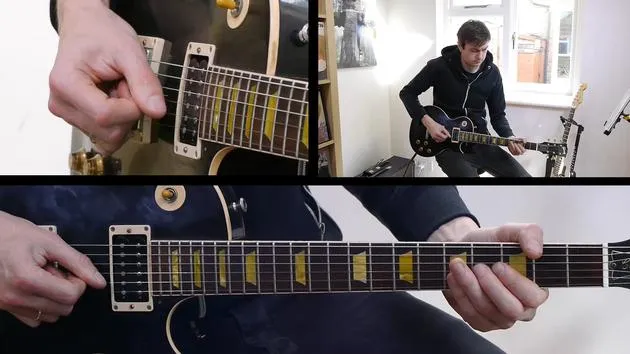
05. Adding rhythmic interest to your solos
4:11
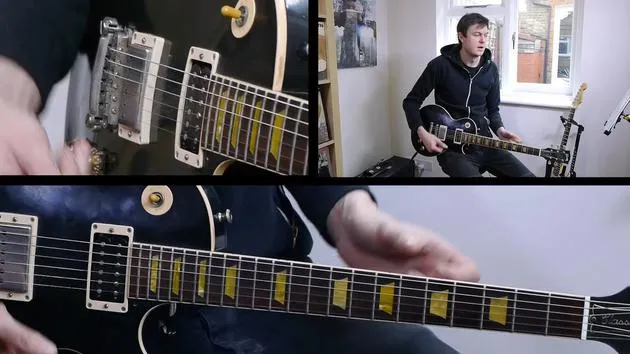
06. Assignment: Improvising over a chord change
2:52
07. Challenge: Submit your improv
0:24
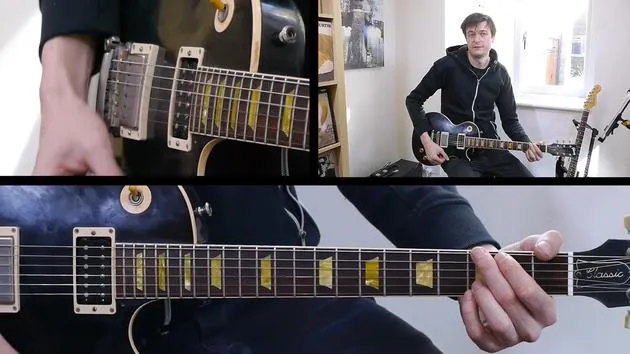
08. Rhythmic improv & comping
9:55





Lesson transcript
Introduction to Improvisation
Hello, guys!
What we're going to talk about now is improvisation and some methods of approaching it in different ways.
Improvisation is basically you having the creativity and freedom to play whatever you're thinking in your head onto your instrument. That's the ultimate goal with improvisation.
Tools for Improvisation
Now, it doesn't just start and magically happen that way. There are lots of tools that we have at our disposal, lots of useful things that we can draw upon to assist in getting what we're hearing from our head onto the fretboard.
Relevance to Rock School Syllabus
If you are taking the Rock School syllabus, this is particularly relevant for you. There is a part of the exam dedicated to improvisation. If you choose the melodic improvisation, then this will really help you out. So, let's get stuck in!
Chord Tones
The first approach we're going to take is looking at what we call chord tones.
If "chord tones" is a term that you're unfamiliar with, it simply refers to the notes featured in a chord that we're playing over.
Example: C Major Chord
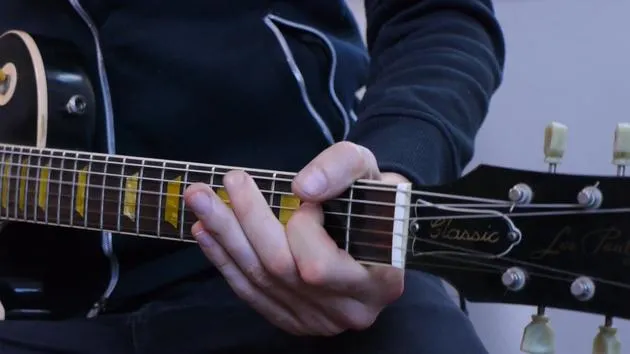
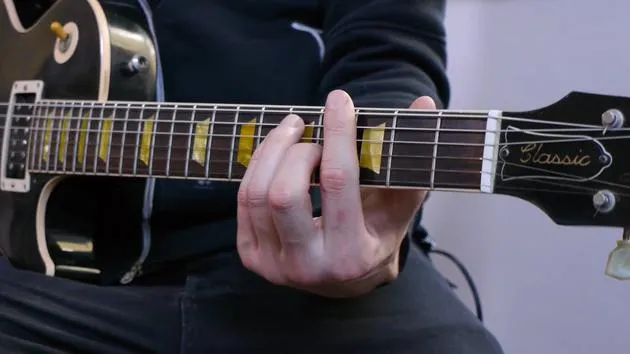
For example, if I play a C major chord, there are three chord tones in that chord because there are three different notes.
C major chord notes: C, E, G
You may be surprised to learn that even though I'm playing five strings here on that C major chord, in fact, I'm only playing three different notes:
- C
- E
- G
So, the three chord tones in a C major chord are C, E, and G.
Understanding Chord Construction
We can apply the formula for constructing any major chord. For this major chord, we have:
- Root
- Third
- Fifth
These are intervals that come from a scale, which hopefully you know. If you don't, check out your technical exercises in the Rock School books as they come from the major scale.
C Major Scale
Let me play you through the C major scale now:
1, 2, 3, 4, 5, 6, 7, back to 1.
There are seven notes in that scale. The notes from our C major chord come directly from that scale.
We take:
- Note number 1: C
- Note number 3: E
- Note number 5: G
Demonstration
Let's try a demonstration over a C major chord.
I'll set up a little loop just on a C, no other chords involved just yet, and we'll play through the C major scale:
1, 2, 3, 4.
So, there's my C major chord loop that's going to keep going. Now, let's play through the C major scale:
1, 2, 3, 4.
The notes that really sound like they belong are those chord tones. Let's play those individually:
- Root
- Third
- Fifth
- Root
- Another Third
- Another Fifth
This exercise is a great start: identifying the chord tones from a major chord.
Tip: Don't just do it on C, try it in different keys like D or G. Work through the major scale in that key to find notes 1, 3, and 5. These are your strong notes that work over those chords.
Minor Chords
Before we move on to try that in the context of a chord progression, we should talk about minor chords and how they differ from major chords.
Major vs. Minor Chords
This is really simple. There's only one note difference between a major chord and a minor chord on the same root.
For example, if we take an A minor chord:
- An A major chord has a root, a third, and a fifth.
- An A minor chord has a root, a flattened third, and a fifth.
The root and fifth remain the same in A major and minor. The third in the middle dictates whether it sounds major or minor.
Understanding A Minor
Let's target the three notes in an A minor chord:
- Root: A
- Flattened Third: C
- Fifth: E
Now, let's just try that on an A minor chord:
Play along: 2, 3, 4.
You can make little melodies just out of those three notes, and they will sound like they really belong over that chord.
A Natural Minor Scale
Let me play for you now the A natural minor scale.
You will hear that the chord tones sound strong, with passing notes causing tension along the way.
Listen for the notes: 3, 4.
Incorporating Passing Notes
You can create a simple phrase using one non-chord tone and two chord tones that work really well. For instance, I could play the B note, then resolve it up to a C, which is a chord tone of our minor chord.
Let's hear how that sounds: 3, 4.
Final Thoughts
It's important to acknowledge that when you first start approaching improvisation, the options can feel overwhelming.
One effective approach is to restrict yourself:
- Apply a note restriction
- Use a technical restriction
- Focus on a physical area of the neck
Give yourself these restrictions to be creative within limitations. This can lead to a more fulfilling and enjoyable improvisation experience!
41 lessons
2h 51m of structured video lessons
Advanced video features
Slow down, loop a passage, follow along
Mobile, tablet & desktop
Practise wherever you are
100% satisfaction guarantee
30-day money-back guarantee







