



101
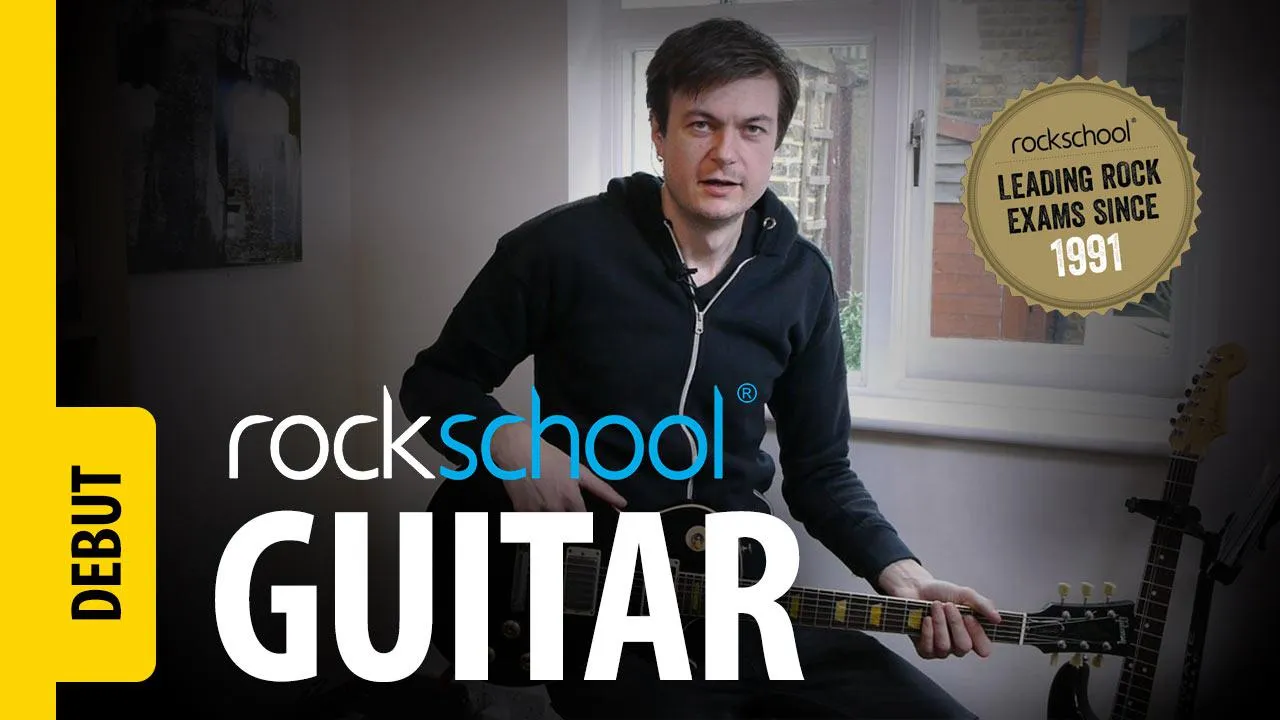
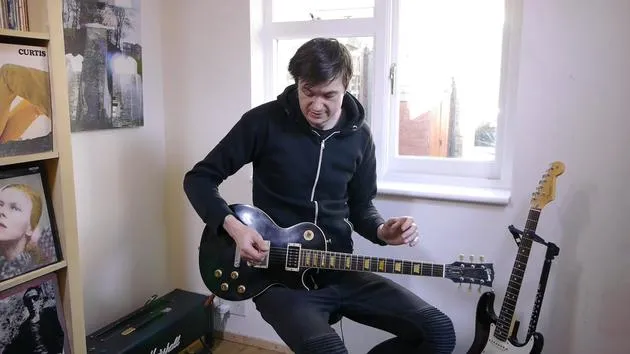
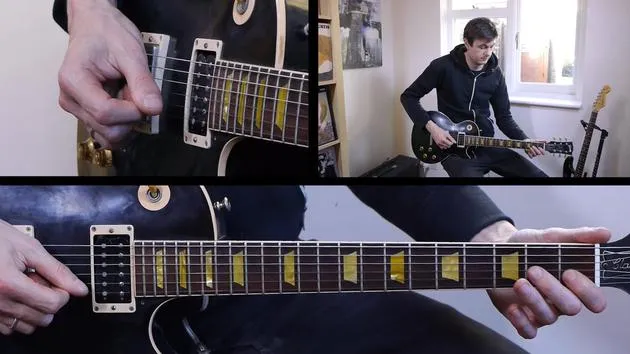
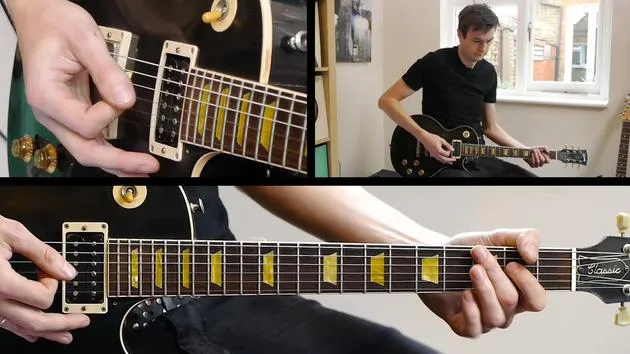
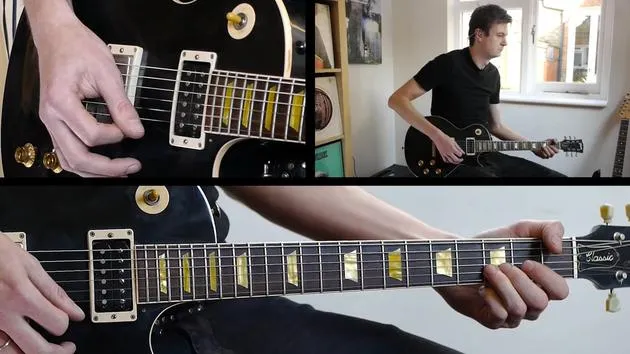
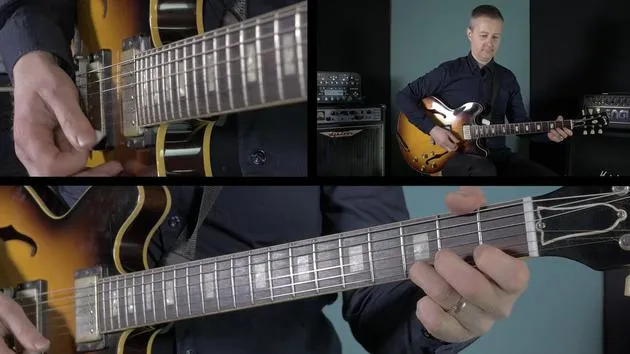
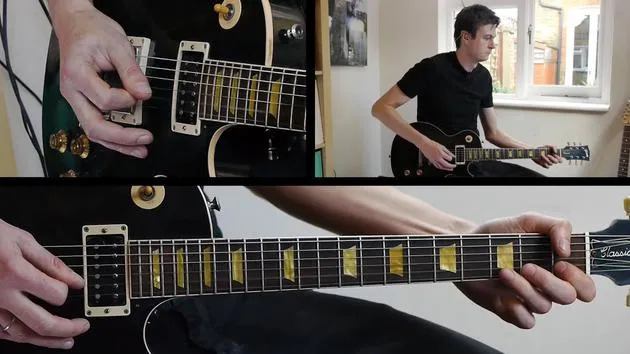
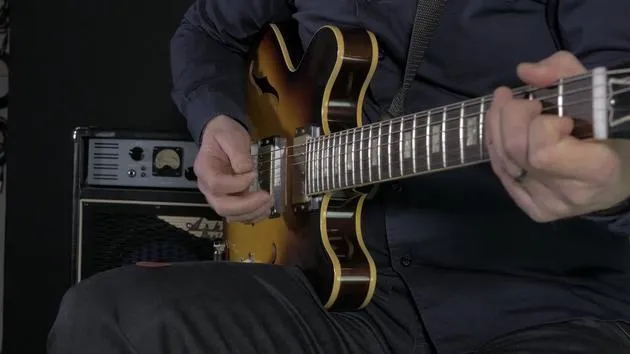
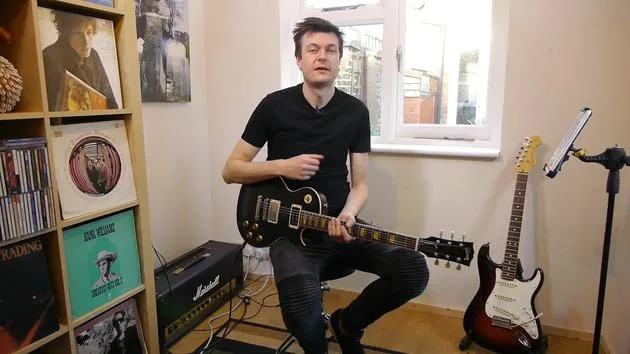
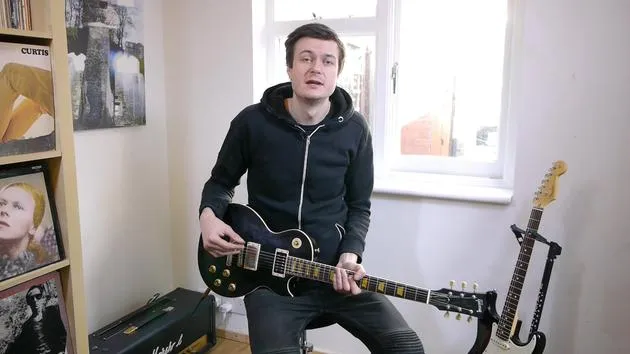
James Barratt walks through '101' from the Rockschool Guitar Debut book - an electronic-style piece where the guitar sits back with strummed chords and arpeggios.
What's in the course
29 lessons (1h 29m) · 1 free
Lesson transcript
Guitar Lesson: Electronic Style
Okay, guys, let's check out 101 from the debut guitar book here.
Genre Overview
- Genre: Electronic
- You can hear that, obviously, in the arrangement as well.
Guitar's Role
- The guitar usually has a more "chilled" role in this genre.
- We sit back and support the synthy elements.
Comparison with "Another Dime":
- In "Another Dime," we were upfront, blasting out riffs.
- In this song, we want to be more relaxed in our delivery.
Structure of the Piece
- Opening:
- We start with some strum chords, followed by playing arpeggios.
- An arpeggio is simply when you play the notes of a chord individually.
Chord Progression
-
A Minor Chord:
- Bar one, we have an A minor chord.
- Followed by an A minor arpeggio (playing the notes separately).
-
Progression:
- Then we do the same with a G chord and so on.
B Section
-
In the B section, our role shifts:
- We come to the forefront and play a melody.
- Over the A section, the synth plays the melody, while we support with chords and arpeggios.
-
Roles Reversed:
- In the B section, we play the melody strongly, while the synth sits back.
- We go back to chords and arpeggios, but reverse the order of the arpeggios.
For Example:
- In the second bar of C, the same chord/arpeggio is played backwards.
Tone Setup
- Our job is to provide a nice "bed" of sound.
- Starting Point:
- A very clean sound is ideal.
Experimenting with Effects
-
If you have an amp with built-in effects or any pedals:
- Try Reverb:
- Turns on reverb to create a room-like sound around the guitar.
- Makes the guitar sound like it's set in a space.
- Try Reverb:
-
Tip:
- You don't need gadgets; it's all about experimentation.
- Consult your teacher for fine-tuning your sound.
Technical Tips
-
Chord Clarity:
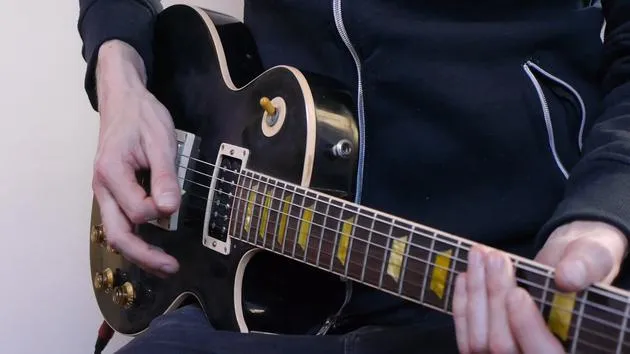
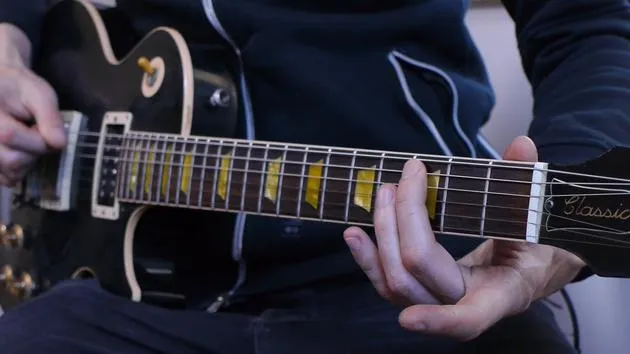
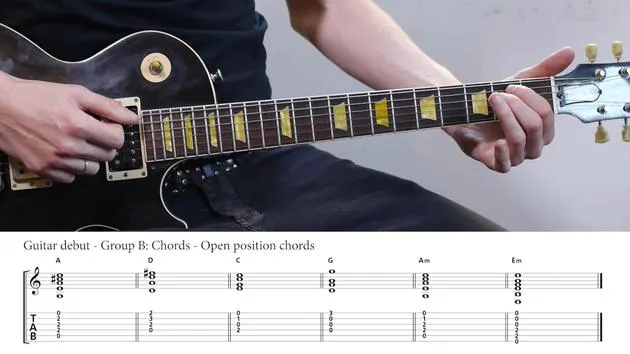
- When fretting chords, ensure you're using your fingertips and that all notes are ringing clearly.
-
Let Ring:
- This means to allow all notes to resonate together.
For Example:
- In bar two, rather than playing staccato, you want to hear:
(Playing Example)
Dynamics in Melody
-
During the B section:
- Be expressive; vary how hard or soft you hit the strings.
-
Effectiveness:
- Combining dynamics with reverbs and delays revives the piece.
Practice Recommendations
- Practice in small chunks.
- If you struggle with the A section, slow it down with a metronome, and build up speed gradually.
Transition Points
- Pay extra attention to transitions between:
- A and B sections
- B and C sections
Best of luck with the song! Let's move on to the next one.
29 lessons
1h 29m of structured video lessons
Advanced video features
Slow down, loop a passage, follow along
Mobile, tablet & desktop
Practise wherever you are
100% satisfaction guarantee
30-day money-back guarantee







