Browsing Loops and using Loop metadata
With
Aamir YaqubMake the most out of Apple Loops - using instruments, genres and descriptors to find the sound you're looking for.
What's in the course
12 lessons (1h 20m) · 1 free
01. Intro to Making Beats
Free lesson0:33
02. What is MIDI
1:07
03. Connecting USB controller
1:46
04. Recording with USB-MIDI controller
9:08
05. Hidden feature - Capture recording
3:09
06. Quantizing
6:38
07. Editing tools in the Piano Roll
13:24
08. Making beats using Drummer
6:42
09. Getting the best out of drummer
13:55
10. Advanced parameters in Drummer
4:32
11. Making beats using Apple Loops
10:16
12. Browsing Loops and using Loop metadata
You are here9:17
Lesson transcript
Apple Loops: Filtering and Auditioning Techniques
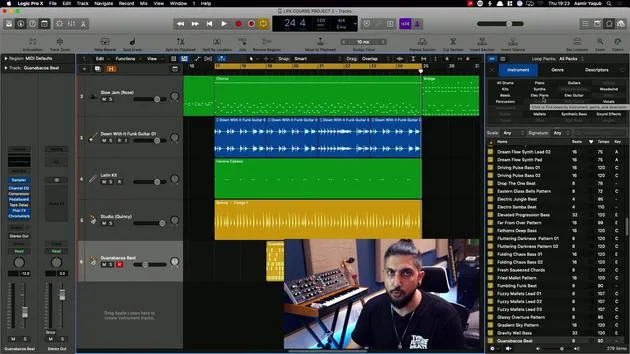
Okay, so you've seen me working with this section up the top here. This is where I start to filter down my Apple Loops based on essentially what I'm looking for at any given time.
Creating a New Vibe
Let's say that I was to create a whole new vibe here:
- I'm going to mute all of the existing elements.
- We're going for something a little bit more electronic.
I can obviously go in and select packs if I wanted something specific, like a Deep House pack. Or I can start by looking for a beat.
Available Beats: As you can see, some beats are named after genres such as:
- Trance
- Techno
This indicates the styles they represent. For example, let's bring in a step sequencer beat:
- Adding a Bassline:
- Let's say I want to add a baseline underneath it.
- I don't want an electric bass, so I'll select synthetic bass.
- How about something that sounds like VIP bass? That's not what I'm looking for.
However, that works, so we can just grab that and drag it in. This shows how quickly you can find what you're looking for using the tag-based browser.
Further Filtering Options
- Instrument: I have bass and synthetic bass.
- Genre: I want a bassline that fits into hip hop.
Let's see what we can find with those filters applied:
- If I want to further filter this down, I can use descriptors:
- Melodic
- Dark
These descriptors enhance the search and can lead to some interesting results.
Working with Loops
When working with Apple Loops, let's clear everything out for a moment.
- One of the things I might want to do is go to a pack, for instance, Vintage Breaks.
- If there's a specific break that I enjoy, I can chop it up and make it sound amazing. Sampling will be discussed a bit later.
If I find a basic vintage break to revisit often, I can favorite it:
- Click the checkbox to add it to my favorites.
- It will appear in my favorites section, indicated by a little heart.
To remove it from favorites, simply uncheck the box.
Importance of Favoriting Loops
If there are certain loops that are beneficial for multiple songs, favoriting them is a great idea. You can easily return to them whenever needed.
Auditioning Apple Loops
When browsing Apple Loops, changing the way you audition the loops can enhance your workflow.
- Auditioning a Loop: Click on the loop to hear it back.
- If I'm looking for something outside of drums, I might go to electric piano.
As it stands, when I'm auditioning, I hear it immediately. To quickly audition, I can use my up and down arrow keys for swift navigation through loops.
Adjusting Playback Settings
I can change the playback level:
- If it's too loud, I can adjust the slider as needed.
- Clicking the settings (gear) icon allows you to play the loop in the song key.
For example, if my project is in C major and I change the key to E major:
- The loop plays higher than before.
Key and Tempo Settings
When auditioning, you can always see:
- The original tempo
- The original key
- The loop's duration (in beats)
You can set it to always play back in the original key. If you want to work with the song key, it's usually beneficial, and by default, it is set to that.
Note: Apple Loops will always conform to the tempo of your song.
Conclusion
As seen, Apple Loops are a great way to:
- Add interest
- Spark ideas
- Incorporate additional elements.
If you're working on an electronic track and want something more organic, perhaps a percussion shaker loop that was played by a human being can add that extra element of humanity.
A vast array of loops is available in various styles and formats. They can be a fantastic resource, either to lead your productions or elevate them with well-recorded and thoughtfully created loops that are available for free.
12 lessons
1h 20m of structured video lessons
Advanced video features
Slow down, loop a passage, follow along
Mobile, tablet & desktop
Practise wherever you are
100% satisfaction guarantee
30-day money-back guarantee
Meet your guru
Meet your guru
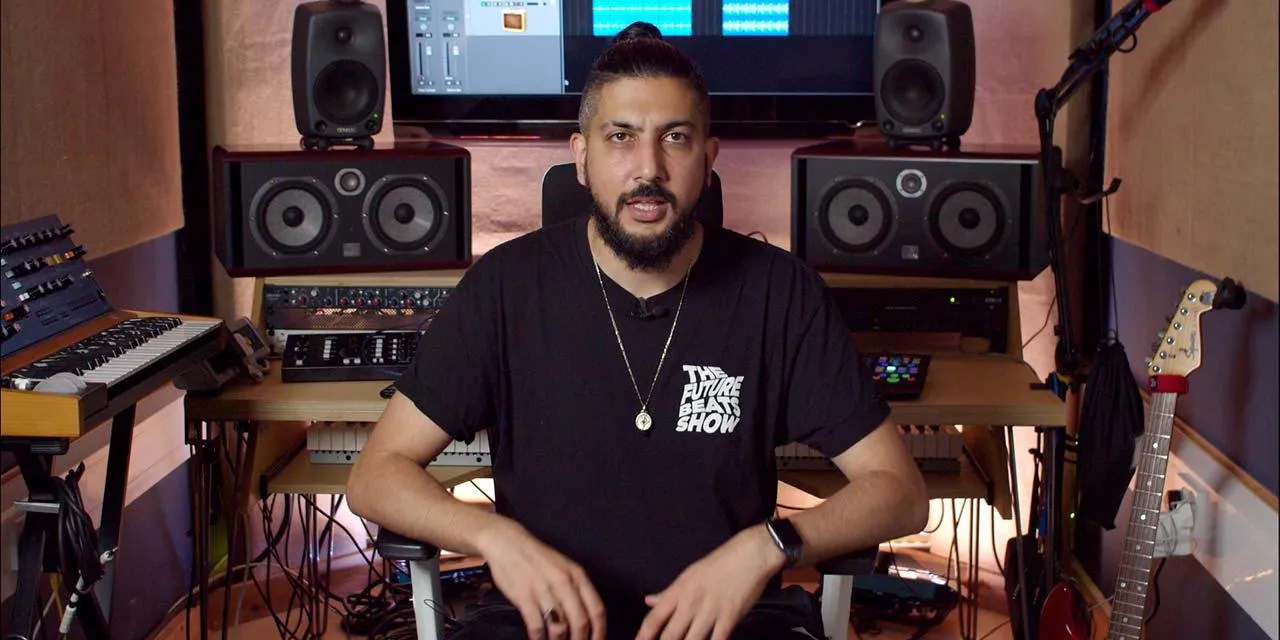
Aamir Yaqub is a music producer and engineer based in London. He has worked with some of the biggest names in music, including Alicia Keys, David Guetta, Rihanna, Sia and will.i.am, as well as developing independent artists.
Across his courses he teaches his complete Logic Pro workflow - from the interface and recording through beat-making, synthesis and MIDI effects to mixing and finishing a track.