



Indigo Blue (lesson)
With
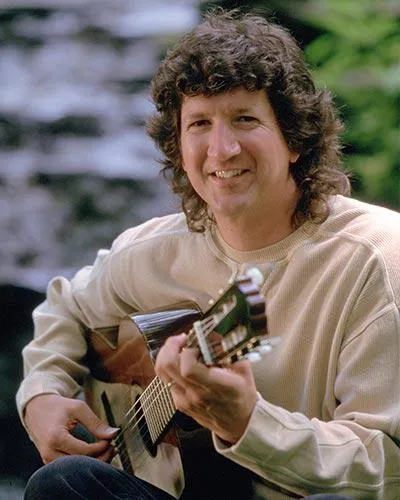
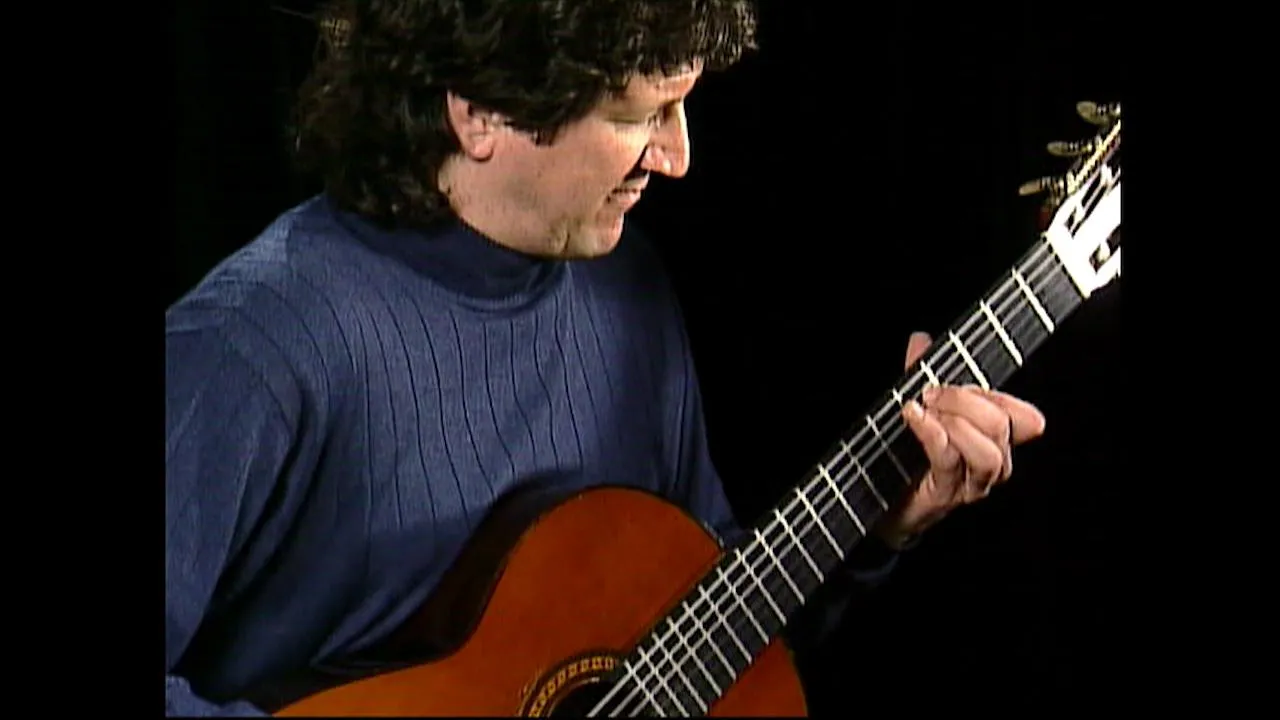
David CullenDavid Cullen teaches his tune Indigo Blue on acoustic guitar - a 12/8 'old-time shuffle' that starts with the triplet feel on the D strings before building to performance tempo.
What's in the course
14 lessons (1h 37m) · 1 free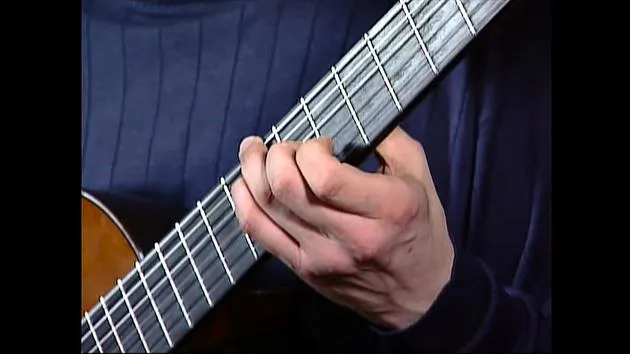
01. Blue Counterpoint (performance)
Free lesson4:09
02. Blue Counterpoint (lesson)
9:44
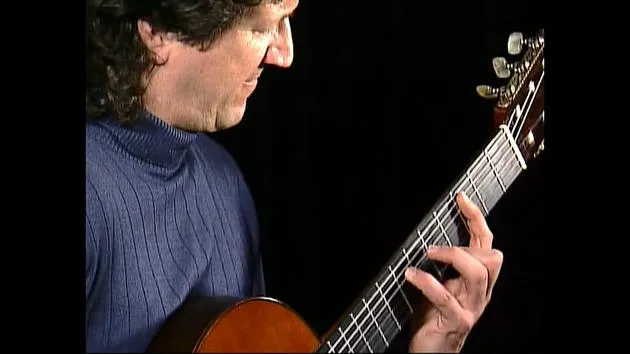
03. Indigo Blue (performance)
4:32
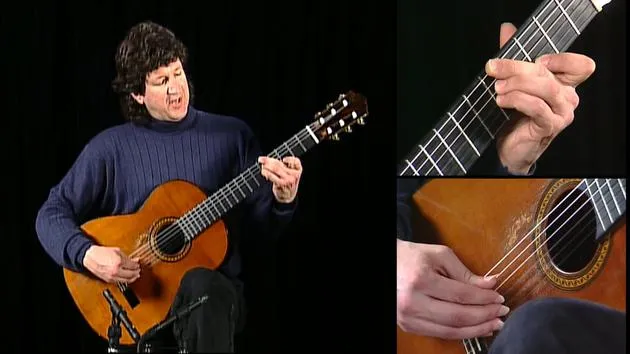
04. Indigo Blue (lesson)
You are here10:56
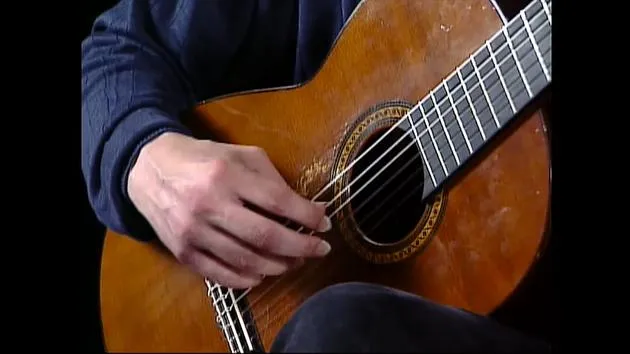
05. Groove Etude (performance)
4:09
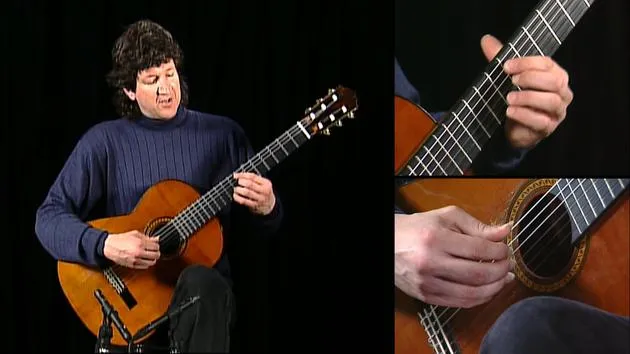
06. Groove Etude (lesson)
9:20
07. Midari (performance)
4:50
08. Midari (lesson)
10:09
09. Bahama Beach (performance)
5:14
10. Bahama Beach (lesson)
9:47
11. Go Ahead And Play (performance)
4:22
12. Go Ahead And Play (lesson)
10:10
13. BONUS: Coming Home (performance)
4:14
14. BONUS: Ebb And Flow (performance)
5:44
Lesson transcript
Music Lesson: Indigo Blue
Introduction to the Tune
Alright, so the next tune up is kind of a 128 shuffle. This tune is called Indigo Blue. When I say 128 shuffle, what I mean by that is you could call it 4/4 or you could call it 12/8, but it has a feel like kind of like this:
1, 2, 3, 2, 2, 3, 3, 3, 4, 2, 3.
That's what I call an old-time shuffle.
Establishing the Feel
When you're doing that, you'd like to establish that feel on the D strings during the introduction. We have a fingered D on the fifth fret on the A string and we have the open D.
You want to bring out that triplet feel while you're playing it. Let's first just take a look at those two notes.
Now let's hear with the click so we can really get in that groove:
1, 2, 3, 2, 2, 3.
That establishes your tempo.
Now let's move it up to about 120 because that's about the performance tempo. I play it at more like that; that is what you're shooting for.
Setting the Tempo
Now that we've heard that click and we practiced it, let's get that beat inside of ourselves and think:
You can hear I'm accenting my index finger.
So that sets the tempo for the whole tune, that introduction, just that simple D introduction.
Verse Section
Next up is the verse. We have a couple shapes we should talk about before we get going.
A Minor 11 Chord
The first one is a minor 11 chord:
- Second finger on A
- Third finger on G
- Pinky on C
- First finger on D
What's going to be very convenient here is your pinky is going to act as your pivot finger as you're switching from the A minor 11 chord to the D7 chord. Did you notice how that pinky stayed in the same place? We pulled off with the index finger, and it makes the switch really easy.
So you want to pull off and then slide up that sixth.
D 13th Chord
Next, we have a big stretch coming up: it's a D 13th chord. I'll let the cameraman take a nice picture of that for you.
Then we're going to slide that down to a C 13th chord and then down to a B minor seventh chord. After that, we go down to a G11 chord and also pull off to an E minor 9 chord, and then back to our A minor 11 chord.
Groove Practice
So now let's try that with a slow click so you can hear the groove. This gives you an idea of how all those shapes are going to move.
Now let's hear it a little bit faster, a little more up to speed.
Solo Section Chords
Okay, let's talk about the chords that we're going to play during that solo section. We're going to play an F 13th chord and then we're going to go to a B flat 13th chord with that big stretch with the pinky on G there.
Then we'll go back to our F 13th, to a G7 chord, get a little break from the big stretch there, then back to the F 13th chord and then take it down to an E7 chord and kind of a descending A minor figure. Finally, we go back to a D chord.
Let me put that into context with the click and some of the lines that we have. You'll notice too, again, that pinky stays from that F chord to the G chord, making the change a little easier.
Let's hear that a little more up to speed here. I'm really digging in on those D's now.
Advanced Section for Big Hands
This next section is probably for only the players with really big hands, but I'm going to explain it anyway.
What we have here in this one section is something I like to do: I like to put one chord over a bass note. I'm playing a D with my pinky on the fifth string, then I have the open D string ringing, and I'm reaching down for a C chord because that's kind of a cool sound.
Then all I do is move my first finger over to a G sharp. Now I've created an E chord over D in the bass. I move back and forth between those two chords while creating a really nice rhythm.
Polyrhythm Practice
As I'm double thumbing the fingered D to the open D, let's hear that slowly because we get to create a few polyrhythms during that. Now maybe just a little bit faster.
So that's for the people with really big hands who can really stretch out there. If not, don't worry about it. You can always just play and make up your own little section for that. I'm fine with that. I'm open to a little interpretation on my tunes; it's just fine for you to do that. I encourage it, actually.
Outro
So, let's talk about the outro. You want to keep grooving again during the outro. Keep those chord figures and maintain that 12/8 shuffle feel.
(Left with those again, then hit these chords.)
14 lessons
1h 37m of structured video lessons
Advanced video features
Slow down, loop a passage, follow along
Mobile, tablet & desktop
Practise wherever you are
100% satisfaction guarantee
30-day money-back guarantee
Meet your guru
Meet your guru
David Cullen is a Grammy Award winner for Best Pop Instrumental Recording. He has performed with Will Ackerman, Samite, Michael Manring, Victor Wooten, and the Philly Pops Orchestra, and earned his Bachelor of Music in Classical Guitar Performance from the Hartt School of Music.
A master of solo fingerstyle acoustic guitar, David moves fluidly between classical technique, jazz harmony and improvisation, and his own original compositions. He has performed throughout North America for Classical Guitar Societies, Jazz Festivals, and Performing Arts Series, released 10 CDs for the acoustic guitar label Solid Air Records, and had his recordings featured on NPR stations across America.
Studio work includes the Windham Hill Guitar Sampler and other Windham Hill compilation CDs. David has also released two books through Warner Brothers Publications: "Jazz, Classical, and Beyond" and "Grateful Guitar".







