



Analysis, explanation, demonstration with Håkan Hardenberger
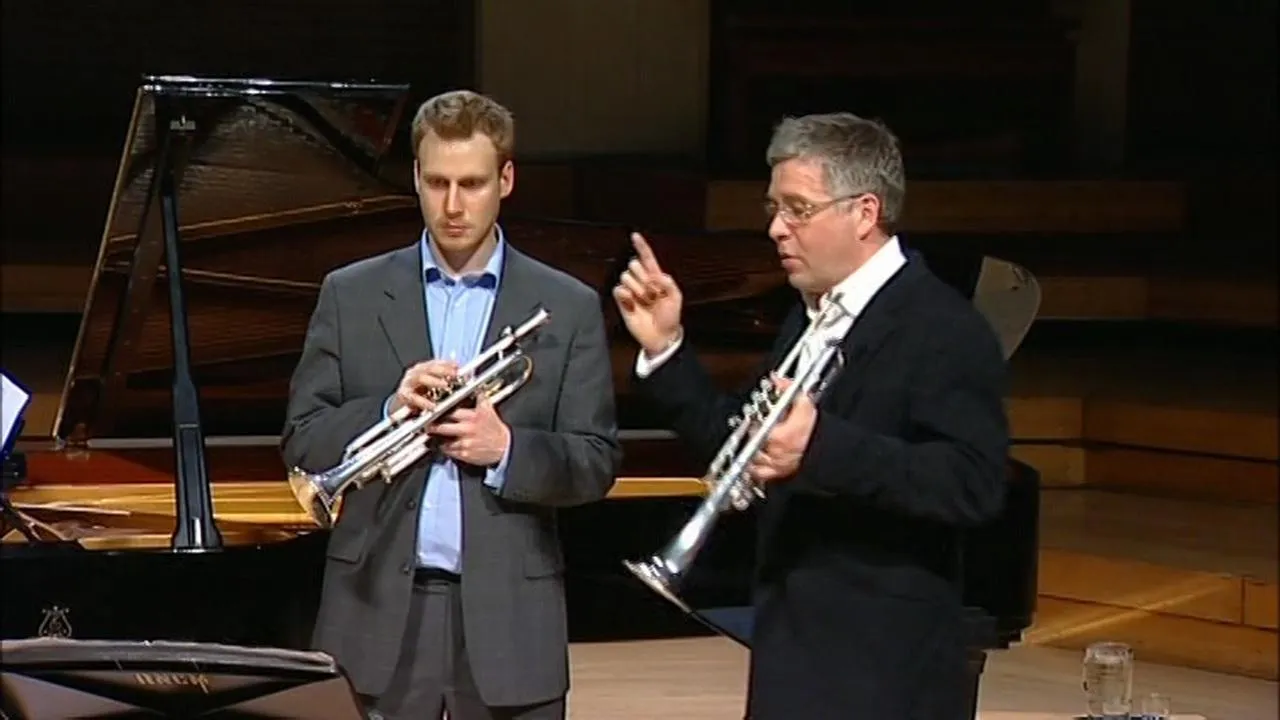
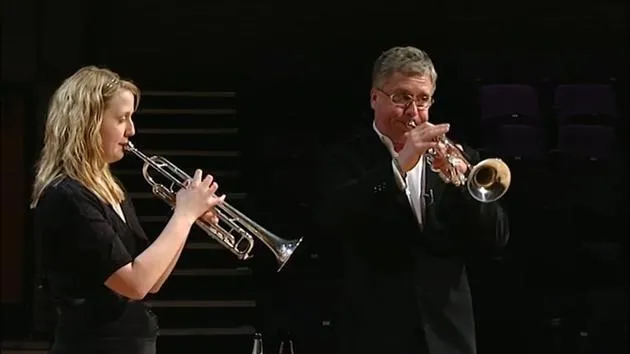
Håkan Hardenberger coaches a student through Martinu's Sonatine for Trumpet and Piano, focusing on centring the sound so every note speaks freely.
What's in the course
6 lessons (2h 13m) · 1 free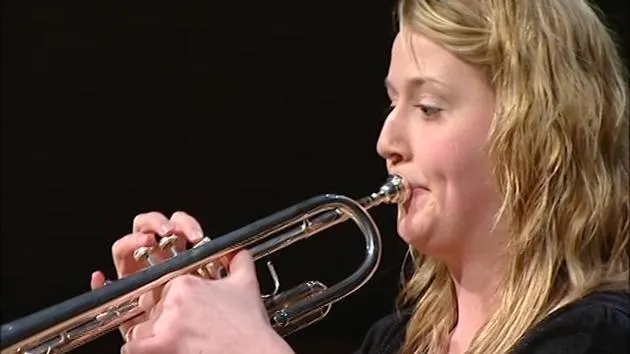
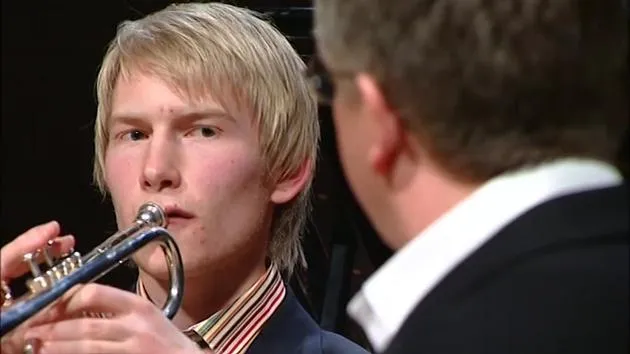
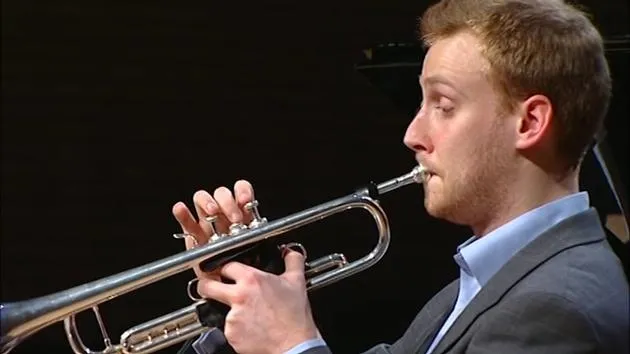
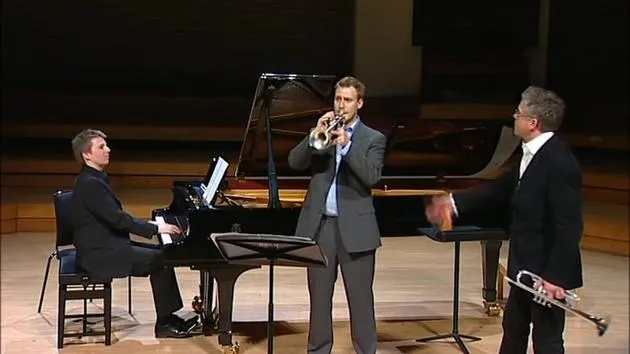
Lesson transcript
Music Lesson
Instructor: I don't bite, I promise.
Question for Reflection
- What would be your biggest wish in your playing?
- What are you making your priority in your work?
Student: Not to push on as hard.
Instructor: You mean pressure?
Student: Especially when I'm nervous.
Instructor: Yes. That's what can happen. The breathing goes, and articulation as well. I think there's one word that would really do it for you if you worked more on the centering of the sound.
- Because I feel way too often you're playing just a little bit off the center, and that means you have to pay extra for every note instead of getting a lot for free.
- We'll see how far we can get with this now in a short while.
The Importance of Centering
The sensation of playing a note in the center is like a clean stroke, a clean hit. When you achieve this:
- Intonation is not a problem anymore.
- We use far too often... I mean, I don't know if you can hear it, but when you get to your sounding D, you're very often very, very flat. And then sometimes you hit this octave.
Instructor: The pimp.
Instructor: Yeah, and you didn't even pull the trigger. I was watching you. So it's obviously not a priority with you.
- There's so much that the sensation of centering can improve.
- We're going to start off a little bit, only five minutes with just the sensation of centering.
Building Centering
Instructor: Is it the word you?
Student: What would you work normally to develop centering?
Instructor: I bend notes and wait until the sound becomes more resonant.
Instructor: Yeah, yeah. That's the sound way. But then there's also the feeling of immediately creating a boom.
Relating to Sports
Instructor: Do you play any sports?
Student: No.
Instructor: To anybody who's played tennis or golf or anything like that, you know exactly when you've hit it, and it becomes effortless.
Instructor: Let's do your G.
- So you just try to release it.
- If you imagine throwing a ball to the wall, boom! And it comes back.
Now it's stuck and it's going. It doesn't really know. You have to risk.
The beginning was so much better because you were trusting what you wanted to hear. But then you became control again and went like that.
Instructor: Once it started to travel that way, just let it listen again.
Trusting Yourself
Listen to the end of my sound. I'm never pushing it in front; I'm letting it go backwards and it will play itself.
- You know, I'm not doing anything. Absolutely nothing.
- Don't feel that you have to blow, because as soon as you start to do that, it's going to go out of center.
It's like a bell. Boom! Once it's done that, it sounds until it starts to go that way. That's all that's needed.
Correct Tongue Positioning
Instructor: Same note as me. Can you think of your cavity here as being... you know, the tongue being flatter?
- Sing, you know, so this stays.
- If your tongue goes there, there's no space for the note. It starts off very, very sharp.
Instructor: Pa. Hear it? That's better. Don't try to push it in any direction.
The whole thing is to boom!
Learning to Listen
Instructor: Can you hear the difference?
- You're doing good.
- Don't go boom. Think of the bell.
Really think of it. Really.
Instructor: Yeah, really! It's a quarter tone sharp. Boom! Sing it.
That's it. You have ears, but you're not trusting them at the moment.
Deepening the Practice
Instructor: Play. Boom! This is what you really have to develop: that feeling for the center of the note.
-
There's something that happens in your tongue action that makes the notes very sharp at the beginning, and then you have to look for it.
-
Yeah, no open. Once I'm founding, I'm just bouncing like a tung, tung, tung, tung, tung, tung, tung.
Don't let your tongue make you stop, you know.
Avoiding Excessive Articulation
Instructor: Is that a thumb? Bum, bum, bum, bum.
Now also that the whole system is the same. It's all open.
- And don't, you know, don't cut sausages with the articulation like that.
- One more time, beginning.
Metaphor for Sensitivity
Instructor: Just because it's a metaphor does not mean you have to play every little note.
- I would really like you to feel just those two notes.
- Good. And then don't... when you... it's this.
When you sustain, it's like you suddenly go bam, ba bam, bam.
Instructor: Let it go. Don't control it.
Listening to Tune
Instructor: Yeah, good. One more time.
Can you hear which ones go in front? Which one?
Student: Yeah, yeah. Where you have the dot.
Instructor: I think mentally when you see the dot, you've got...
- Much better.
- Doesn't matter that it's too much out of tune; you must hear that and not accept it.
That is a quarter tone flat.
Instructor: Boom, boom, boom, boom.
Importance of Active Listening
Not really. It makes me uncomfortable.
- Most people don't listen.
- You start to tell them to listen to themselves, and then they listen after they played and think, "How was that?"
But real listening is listening before.
Singing and Playing
Instructor: What is this note?
- Everything you play, you should be able to sing.
- I'm not going to make you do it now, but every interval.
Because if you're trusting the trumpet to do that for you, it's the wrong instrument.
Instructor: It's a piece of plumbing. It's not going to... I mean, for him, it's easy. He sees it, it's a boink, and he gets the right note.
But we can't do that. We need to hear it.
Air Management
Instructor: Don't do the little chickens.
- Short but long. Always air going out.
- Never take away mentally.
The dots truly disturb it.
Recognizing Disturbance
Instructor: Yes. The thought is going that way and the air is going that way.
Student: Yes. You discovered something?
Instructor: Yes, same.
- The chickens are coming.
- Don't allow them in.
I can almost see in your eyes when you are singing in here or not beforehand. Your eye and your thought have to be half a bar in front of what you're actually playing.
Then you will really be singing it.
Moving Forward
Instructor: Let's go, let's go.
What's a good place there?
Okay, try to be ahead.
Student: It works. It really works.
Consistent Practice
Instructor: One more time.
- So, yeah, that works.
- You have to write it on the wall and do it all the time.
What's the character?
Student: Cheeky.
Instructor: A little bit mysterious.
Student: A little bit cheeky.
Instructor: Good.
- Be ahead. That's what I mean.
- Sorry, I confused you.
One more time. Sing, sing, sing.
That really works. And sing everything. Everything.
Using the Piano
Instructor: And really do that in your practice, also sing it.
- And if you can, with the piano so you get the right pitches.
- You were playing some wrong notes.
Student: Is that a misprint maybe?
Instructor: Yeah, it should be F. It's a misprint; it should be F sharp.
Okay. Can you go from there?
Final Notes
Instructor: No chickens. No chickens.
- I don't remember the notes, so that...
- That's a misprint too.
Student: Yeah, but you do it.
Instructor: You're doing that; it's all F sharps.
Student: No, it's right.
Instructor: Yeah, that one's enough.
Oh, yeah. Somebody who was making the transposition at Alphonse le Duc had a little too much wine at lunchtime, yes, I think so.
And there it's there; it's natural.
Technical Adjustments
Instructor: You need to get a pipe.
No, there is right; there's not.
Sure. Yeah.
Straight from the octave place. That's the only little technical thing you have to change.
Stop that motion. You need to keep the muscles going that way.
Because I see as you go higher up, the singing really works, you know?
Instructor: So please continue doing that. But as you go up, I can see that it goes more and more like that instead of just keeping it, you know, as much as possible.
Final Tips
Instructor: I want you to look here.
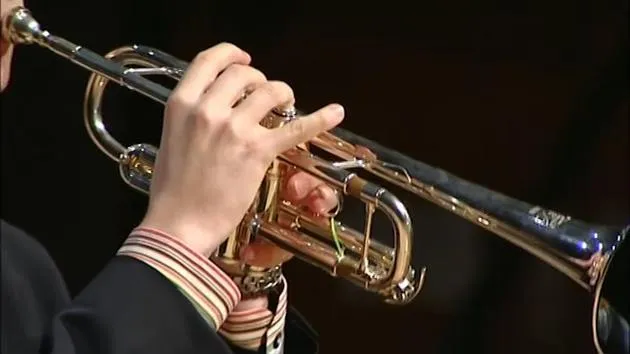
You see this? This here? That stays always.
Student: I've been told quite a lot to keep my corners in. Is that something different?
Instructor: No.
Well, yeah, that is something different.
I mean, the corners should remain fixed; that's the good intention.
But if keeping the corner leads to a sort of smiling position where you pull all these muscles, they need to work towards the middle.
And if you pull them like that, they can't do that, and then this gets all thin here.
Instructor: And what happens then? You play and you were saying you push a little, you press a little bit too much, and then you thin the muscles out, and you get this.
Conclusion
- No blood.
- No blood, no vibration, no sound.
So it needs to stay the same.
- A little sharp.
- Absolutely the same.
Can you do just that? Scale up and I'll...
Student: Is it all right if I...
Instructor: Yeah, sing. Sing, sing.
Student: You can hear it now?
Instructor: Yeah. You have to play it with an idea. You come from the climax and then you go away and so on.
- You know, it's like this Bohemian folk song coming at the end, all relaxed.
- You need to have that idea one more time. And then we finish.
Sorry, but you hear? You must hear this.
And it relaxes there, just at the C.
Instructor: Trouble. Sound. Troubles, Troubles, Troubles, Trouble, Trouble, Trouble.
Yeah, very good fighter. I like it.
Instructor: Yeah, good. So those things really work on them.
Thanks. Good luck.
Student: Thank you.
Instructor: Yeah, thank you. And thank you.
6 lessons
2h 13m of structured video lessons
Advanced video features
Slow down, loop a passage, follow along
Mobile, tablet & desktop
Practise wherever you are
100% satisfaction guarantee
30-day money-back guarantee
Meet your guru
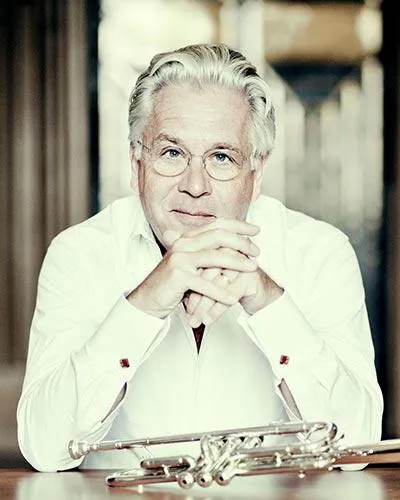
Meet your guru
Håkan Hardenberger was born in Malmö, Sweden. He began studying the trumpet at the age of eight with Bo Nilsson in Malmö and continued his studies both at the Paris Conservatoire, with Pierre Thibaud, and in Los Angeles with Thomas Stevens.
He is regarded as the greatest trumpet soloist today. Alongside performances of the classical repertoire, he is the most noted pioneer of new works for the trumpet. Many of these, written for and championed by Hardenberger, now stand as key highlights in the repertoire, including works by Sir Harrison Birtwistle, HK Gruber, Hans Werner Henze, Rolf Martinsson, Olga Neuwirth, Arvo Pärt and Mark-Anthony Turnage.
Newly commissioned works in the 2007/08 season included a concerto by Luca Francesconi with the Accademia Nazionale di Santa Cecilia directed by Antonio Pappano (co-commissioned with VARA/Netherlands Radio Philharmonic and Gothenburg Symphony), a concerto by Kurt Schwertsik premiered and commissioned by the Tonkünstler Orchestra and Kristjan Järvi in Vienna's Musikverein, and a new work by HK Gruber for trumpet, banjo and chamber orchestra (co-commissioned by the Amsterdam Sinfonietta and Swedish Chamber Orchestra).
Håkan Hardenberger performs with the world's leading orchestras, including the Los Angeles Philharmonic, Chicago Symphony, Vienna Philharmonic, London Philharmonic, London Symphony Orchestra, Orchester des Bayerischen Rundfunks, Orchestre National de France and NHK Symphony Orchestra. Conductors he collaborates with include Pierre Boulez, Thomas Dausgaard, Alan Gilbert, Daniel Harding, Neeme Järvi, Ingo Metzmacher, Esa-Pekka Salonen, John Storgårds and David Zinman.
In recital, Hardenberger has several key partnerships: with pianists Aleksandar Madžar and Roland Pöntinen; a unique partnership with Swedish poet Jacques Werup and jazz pianist Jan Lundgren; and with percussionist Colin Currie. Hardenberger and Currie can be heard on a CD released in 2007, and he has performed together with Currie for the first time in the USA (San Francisco), where he also returns to perform with the Cincinnati Symphony and Paavo Järvi.
Of Hardenberger's extensive discography on the Philips, EMI and BIS Records labels, two further discs were released in 2006: solo works for BIS, and a disc of Turnage, Gruber and Eötvös works with the Gothenburg Symphony Orchestra and Peter Eötvös for Deutsche Grammophon, which has justly received high praise.
In his trumpet masterclass, Hardenberger shares the artistry behind that reputation - working through Bohuslav Martinů, Hans Werner Henze and Georges Enescu to show you how he shapes tone, phrasing, breathing and interpretation, so you can bring the same musical thinking to your own playing.







