Dominant seventh arpeggios

With
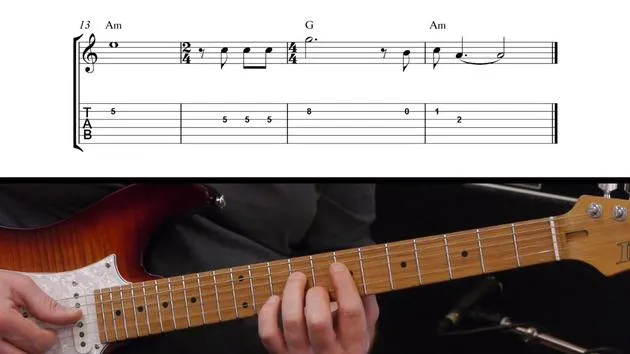
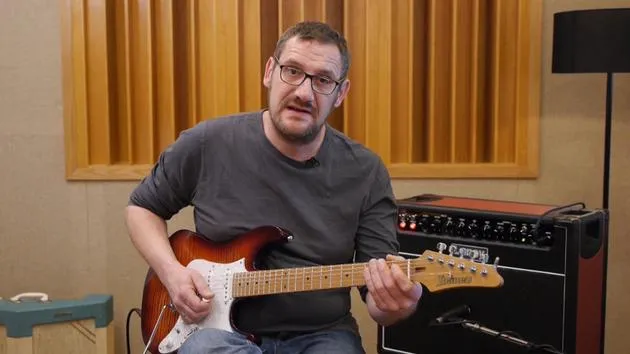
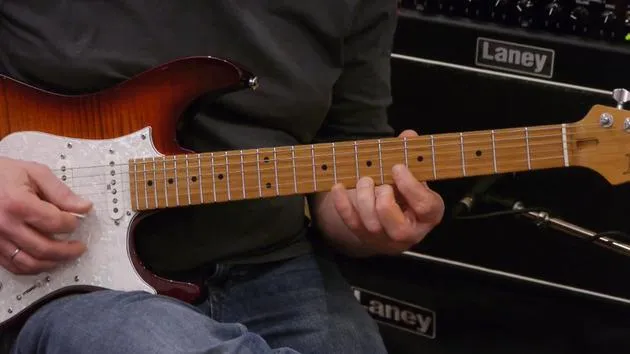
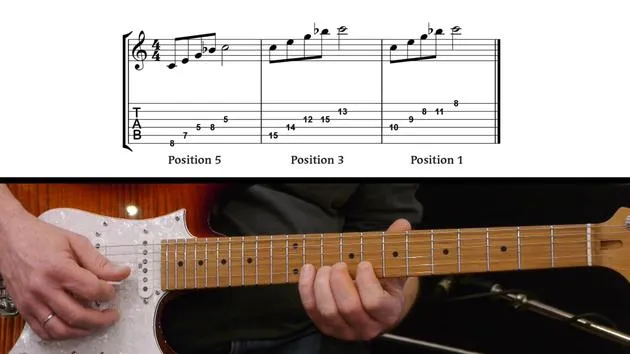
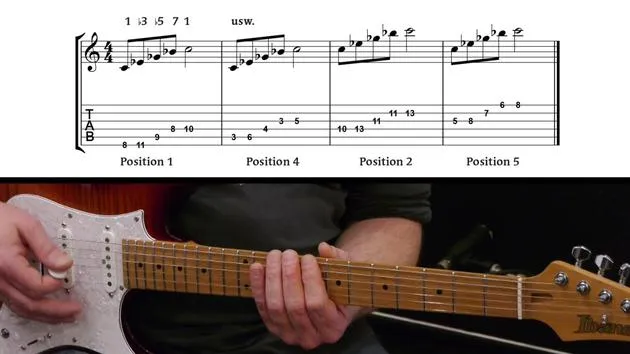
Frank DollFrank Doll shows the G dominant seventh arpeggio on the fretboard — built from the third, fifth and minor seventh — and how to use it.
What's in the course
13 lessons (1h 39m) · 1 free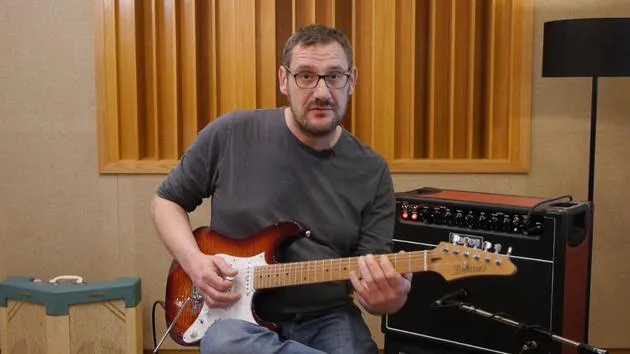
01. Seconds and fourths
Free lesson16:40
02. Harmonising with triads
4:28
03. Sixths
7:36
04. Major seventh arpeggios
7:14
05. Dominant seventh arpeggios
You are here9:24
06. Minor seventh arpeggios
4:43
07. Minor7b5 arpeggios
3:02
08. Exercises on four-note chords
4:16
09. Drop3 Voicings
7:22
10. Exercises on Drop 3 voicings
11:45
11. Drop 2 Voicings
8:33
12. Exercises on Drop 2 voicings
8:58
13. Diminished seventh chords
5:36
Lesson transcript
Quinte Glyniseptim Grunton Arpeggio
Introduction
In this lesson, we will explore the dominant seventh arpeggio of G, including its components and applications in various musical contexts.
Dominant Seventh Arpeggio Breakdown
- The dominant seventh of G is:
- F (the seventh)
- A (the major third)
- D (the fifth)
Components
- The quint (fifth) is diminished.
- This leads us to the seventh (F), which is a lowered tone that progresses downwards.
Finger Positioning
- Use the following method to position your fingers:
- Klein finger (pinky) on the appropriate fret.
- Follow with Grunton positioning for analog placement.
Important Positions
- 15th Position:
- Incorporate:
- Terz (third)
- Quinte (fifth)
- Kleine Septime (minor seventh)
- Incorporate:
Practical Applications
- The dominant seventh chords are crucial in:
- Jazz
- Blues
- Pop music
Blues Improvisation
- Utilize the dominant septa scheme or a combination with energetic rhythmic patterns:
- Example Pattern: Blues big Leitungs pattern.
Conclusion
Focus on mastering the dominant 7 arpeggio through various exercises, from Gilliant VVS to practical applications in blues, improving your overall proficiency on the guitar.
Suggested Practice
- Incorporate Yeti modes and explore the styles influenced by Thai Ashbetter and Liktun.
Stay consistent, and happy playing!
13 lessons
1h 39m of structured video lessons
Advanced video features
Slow down, loop a passage, follow along
Mobile, tablet & desktop
Practise wherever you are
100% satisfaction guarantee
30-day money-back guarantee
Meet your guru
Meet your guru
Frank Doll, born in 1972, studied at the Music College Regensburg before reading musicology, German and linguistics at the University of Regensburg. Drawn back to the guitar, he went on to train at the Munich Guitar Institute (MGI). He has worked as an instrumental teacher since 1998, alongside countless performances at home and abroad across rock, pop, musical theatre and light music. He currently teaches in the music stream at the Edith-Stein-Realschule in Parsberg and has run the Musikwerkstatt Frauenberg since 2006. On MusicGurus his German-language Griffbrett Theorie courses map the guitar fretboard systematically - intervals, chord shapes, modal positions and applied theory - for players who want to understand the neck, not just memorise shapes.