



Exploring the Blues and the Turnaround

With
Marcus BonfantiA more in depth look at the chords that can be used in blues comping. Looking at Passing chords, extensions and variations on the turnaround, as well as some well known chord substitutions.
What's in the course
9 lessons (1h 45m) · 1 free
01. How to embellish your 12 bar blues
10:42
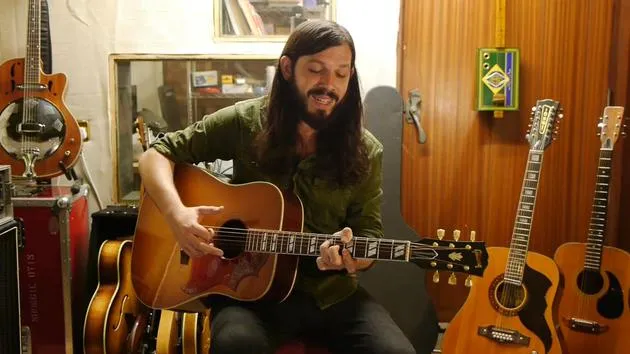
02. Exploring the Blues and the Turnaround
You are here16:12
03. Putting some rhythm in the blues
15:28
04. Use of the Bassline in the blues
12:54
05. Intro to blues soloing - Part 1
11:09
06. Intro to blues soloing, Part 2
11:59
07. Hybrid picking
Free lesson13:16
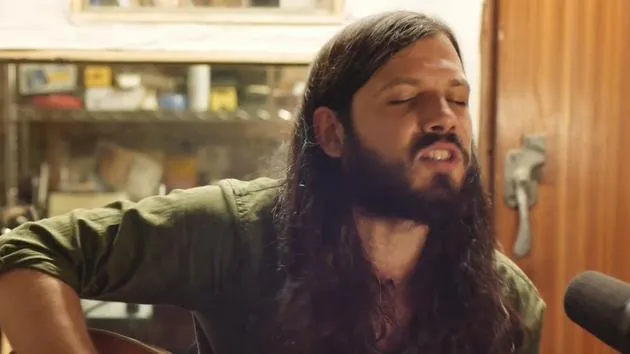
08. Performance of Mississippi John Hurt - Sliding Delta (Marcus' arrangement)
2:04
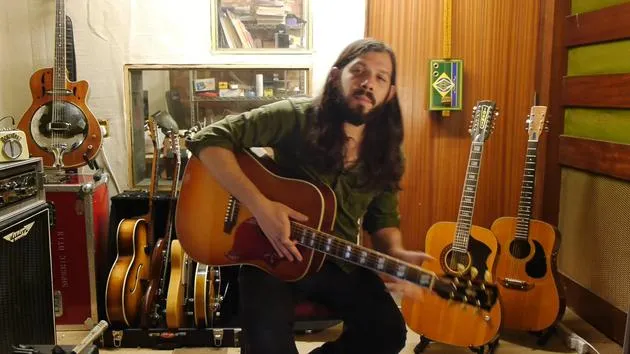
09. Starting to find your voice
11:31
Lesson transcript
Exploring the Blues: Turnarounds and Substitutions
Hi, it's Marcus Bonfanti here again. Thanks for checking out the whole course! If you checked out the previous lesson, I hope you enjoyed it.
Don't Worry if You Skipped
If you skipped over the previous lesson because you felt that an introduction to the blues was something you already knew, that's fine. You'll get quite a lot out of this next one anyway, and you can always go back to it.
The Topic: Exploring the Blues
This lesson is called Exploring the Blues, and more specifically, this lovely part of the sequence called the turnaround, which is at the end of the 12-bar sequence. There's a lot of interpretation in how you can take it. When you're playing blues gigs and blues jams, especially with pickup bands, the turnaround can be a joyful experience.
-
Understanding the Turnaround:
No one really knows what each individual player might favor, but there are certain little hallmarks that signal what one might expect. -
Working Together:
When people use different turnarounds, they still tend to work together.
Let's back up a little bit and explore the 12-bar blues sequence. We'll move away from just a simple 1, 4, 5 structure and look at substitutions.
What are Substitutions?
Substitutions may sound complicated, but they're simply chords that share similar notes with other chords. These are interchangeable chords:
- You can take one chord with a certain set of notes and realize that it shares a lot of notes in common with another chord.
- These chords can swap in and out of the sequence together.
In the key of A, the diatonic chords run in a certain way, using notes from the scale of A:
- A
- B minor
- C sharp minor
With these substitutions, the possibilities are endless. I often play with musicians who possess great jazz language and wild knowledge of substitutions, and it's all done musically, flowing nicely.
Relevant Substitutions for 12-Bar Blues
We won't go too technical; instead, we'll focus on sounds because this is more important than learning the theory behind it.
Demonstrating Substitutions
We'll stick to the key of A for this lesson, following on from the last one as we discuss chords.
I'll play a little sequence of a 12-bar blues with a few different substitutions, and then I'll go over them afterwards.
-
Playing a Slow Blues:
We did a shuffle in the last lesson, so let's play a slow blues this time.1, 2, 3, 4...
That's quite a basic sound substitution in the blues.
Techniques and Chords
-
Sliding Nines:
We use the A9 chord, which many recognize as a James Brown funk chord. This voicing allows you to slide the chord. -
Motion in Sequence:
You can apply this technique to the four chord and the five chord, adding motion to your sequence.
Exploring the Chord Changes
Now, where it gets interesting is when we come back up to the root.
- Chord Progression:
- B minor
- C sharp minor
- C diminished
- B minor
I then use a classic turnaround technique, playing the V chord a semitone higher, resolving it down to the five and back to your root.
Examining Classic Turnarounds
-
I'll play a few classic turnarounds for you.
- Turnaround Example:
- (Chords played)
- Again, moving the chord shape down using the A7 shape.
- Turnaround Example:
-
Jimi Hendrix Chord:
Another turnaround I can show is the E7 sharp nine, often called the Jimi Hendrix chord.
Using Climb Ups in Turnarounds
The climb-ups we discussed can also be used in the turnaround. Playing through the climb up, we'll focus on how these chords help lead back to A.
- I'll demonstrate that again slowly, illustrating how the different semitone slides and extensions fit together.
Final Thoughts on Turnarounds
Now, let's discuss another classic turnaround:
- This turnaround involves using an A7 and transitioning to D and then D minor before returning to your seventh and going up to the five.
Melancholy Vibe
This particular turnaround can create a nice melancholy feel, which works well in a slow blues context.
Recap and Practice
To recap, I'll play a little slow blues in A, focusing on the turnarounds and showing more about those chord substitutions.
- Takeaway:
Try it for yourself! Take a blues song that you know and see which substitutions fit with how you play. Listen to those sounds and find the ones that resonate with you; that's what it's all about.
As always, if you have any questions about turnarounds, feel free to get in touch via the website! We can discuss your turnarounds and how to make them more interesting.
Happy playing!
9 lessons
1h 45m of structured video lessons
Advanced video features
Slow down, loop a passage, follow along
Mobile, tablet & desktop
Practise wherever you are
100% satisfaction guarantee
30-day money-back guarantee
Meet your guru
Meet your guru
Marcus Bonfanti has worked with Ten Years After, Ginger Baker, Van Morrison, Ronnie Wood, David Gilmour and Nick Mason of Pink Floyd, Phil Manzanera of Roxy Music, Shuggie Otis and PP Arnold. A professional musician for over fifteen years, he has toured the world and recorded across many genres, but the blues is where his heart is and what he does best. He has released three solo albums - all named in Classic Rock magazine's albums of the year - and toured with Robert Cray, Chuck Berry, John Fogerty and Beth Hart, playing festivals including SXSW and the Legendary Rhythm & Blues Cruise. None of it would have happened without putting the hours in to learn the trade - which is what his courses are for. Whether you want a career in music or simply love the blues and want to play it better, Marcus is here to help.







