


Note lengths
With
Mike Lovatt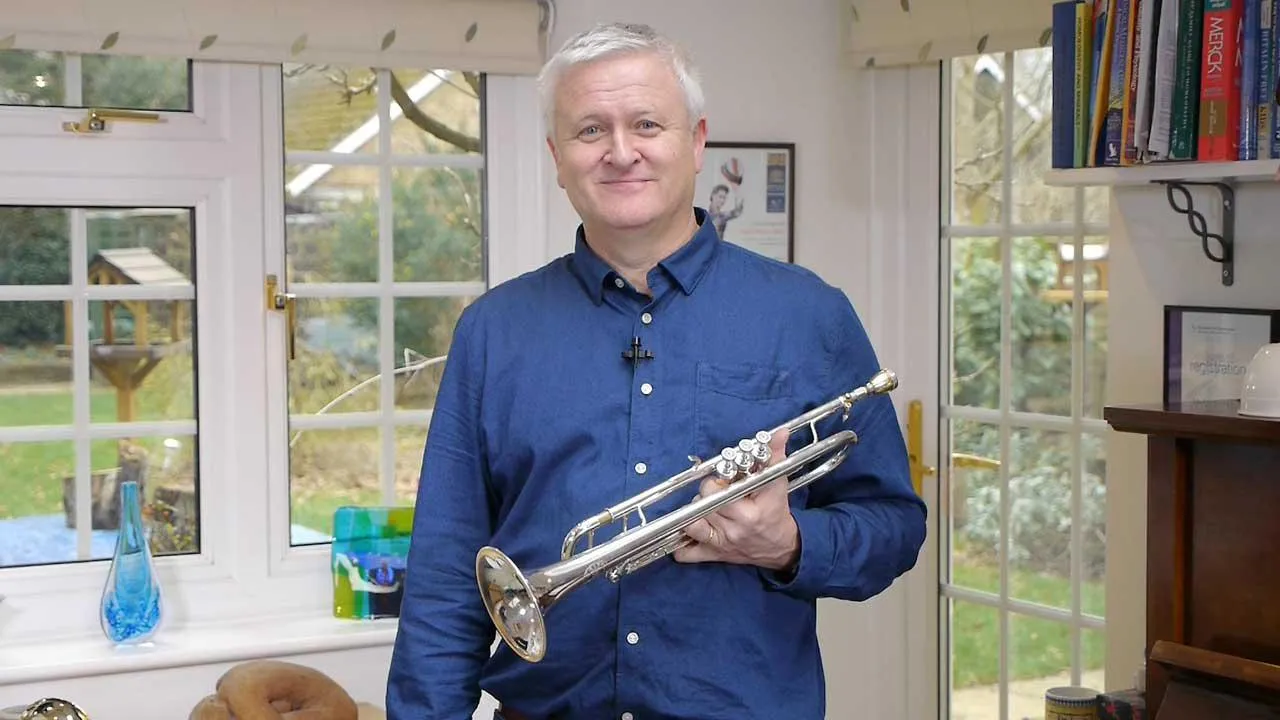
What's in the course
20 lessons (0h 44m) · 1 free
Lesson transcript
Understanding Quavers and Crotchets
The first thing we're going to talk about is quavers. I said there was a lot of work to do on them.
Comparing Crotchets and Quavers
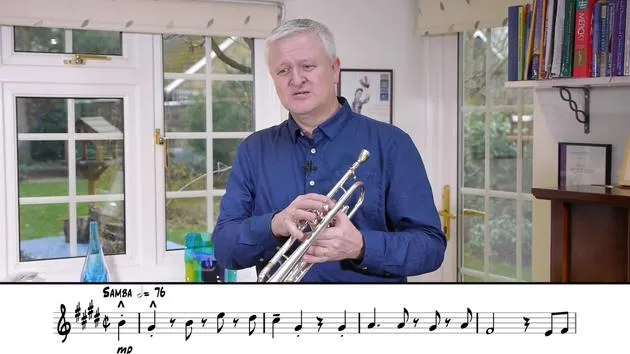
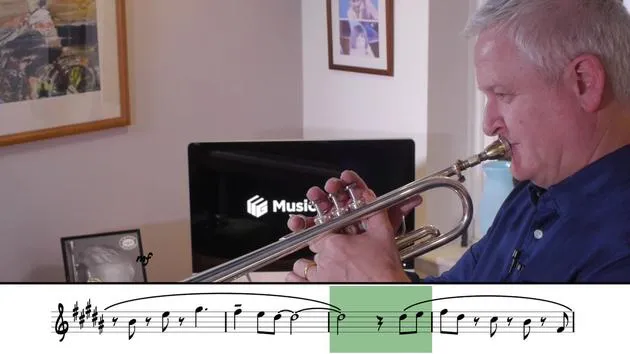
Let's look at the first phrase and examine the difference between the crotchets and the quavers:
- Actually, there isn't any difference here because the crotchets are marked short.
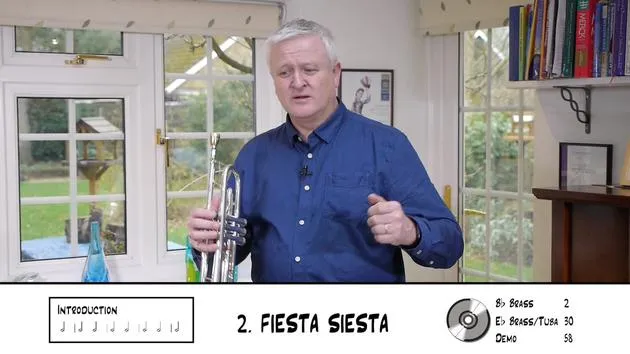
In Fiesta Siesta, we discussed marking those short notes using the upside-down V or the hat. So, get your pencil out now and mark those on the part.
When I play that first phrase, you'll hear that:
- In the first bar, the crotchet and the quavers that follow are all the same length.
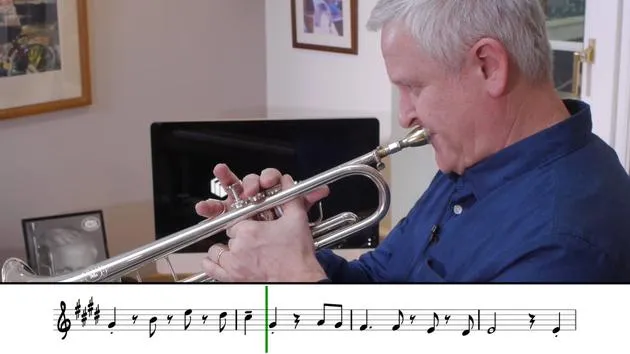
I went on to the second bar, and you heard that:
- The first note in the second bar is a full crotchet, which is why it's got the tenuto mark (the line across it).
The tenuto mark is marked on the top space. To make it easier for you to read, you could:
- Mark it above again in pencil, just like you have done with the upside-down V's for the short notes.
Continuing the Lesson
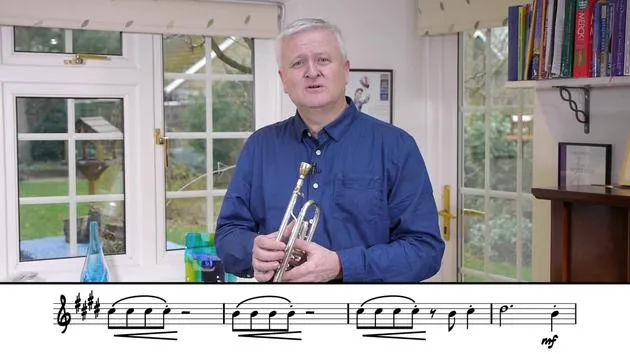
Let's carry on with this, and I'll play the next section. See if you can hear the short notes there as well:
- The crotchets are short.
We only really had two or three long notes:
- The crotchet in the second bar of the second line.
- Mark that up above.
- Then, in the next bar, we have a dotted crotchet, which is long as well.
Work out which the long notes are:
- The first beat of the second bar on the second line is the same as the second bar on the first line, the long crotchet.
You could mark that again with your pencil with a tenuto mark.
When we get to the next bar, the first note there is a dotted crotchet, and that needs to be long as well.
20 lessons
0h 44m of structured video lessons
Advanced video features
Slow down, loop a passage, follow along
Mobile, tablet & desktop
Practise wherever you are
100% satisfaction guarantee
30-day money-back guarantee
Meet your guru
Meet your guru
Mike Lovatt studied at Trinity College of Music, where he was awarded the Jon Kelly Jazz Scholarship. He has performed and recorded across a huge range of styles with artists including Quincy Jones, Robbie Williams, Eric Clapton, the Orchestra of the Royal Opera House Covent Garden, the Royal Philharmonic Orchestra, Michael Buble, Oasis, Michel Legrand, Tony Bennett, Shirley Bassey and Danny Elfman, among many others.
As Principal Trumpet in London's West End, Mike has performed in Jesus Christ Superstar, Evita, The Producers, Billy Elliot, Guys and Dolls, Saturday Night Fever, My Fair Lady and Spamalot, amongst others. He has played on movie soundtracks including the James Bond films, Harry Potter with the London Symphony Orchestra, the award-winning Chicago, Kevin Spacey's Beyond the Sea, Charlie and the Chocolate Factory, Madagascar and The Corpse Bride. He is featured on trumpet and cornet in George Fenton's Mrs Henderson Presents, and on trumpet in Looking for Eric.
Mike is principal trumpet with the Grammy-nominated John Wilson Orchestra and has been featured in their celebrated BBC Promenade concerts and recordings.
Mike is sought after as a teacher and clinician, and is a professor of trumpet at the Royal Academy of Music and the Royal College of Music. In April 2013 he was proud to be awarded the prestigious Derek Watkins' Chair of Trumpet at the Royal Academy of Music, London.
In his MusicGurus courses, Mike shares the secrets behind his versatility, showing you how to nail authentic swing, rock and Latin trumpet styles so you can play any of them with confidence and the right feel.