



Analysis, explanation, demonstration with Ana Chumachenco
With
Ana Chumachenco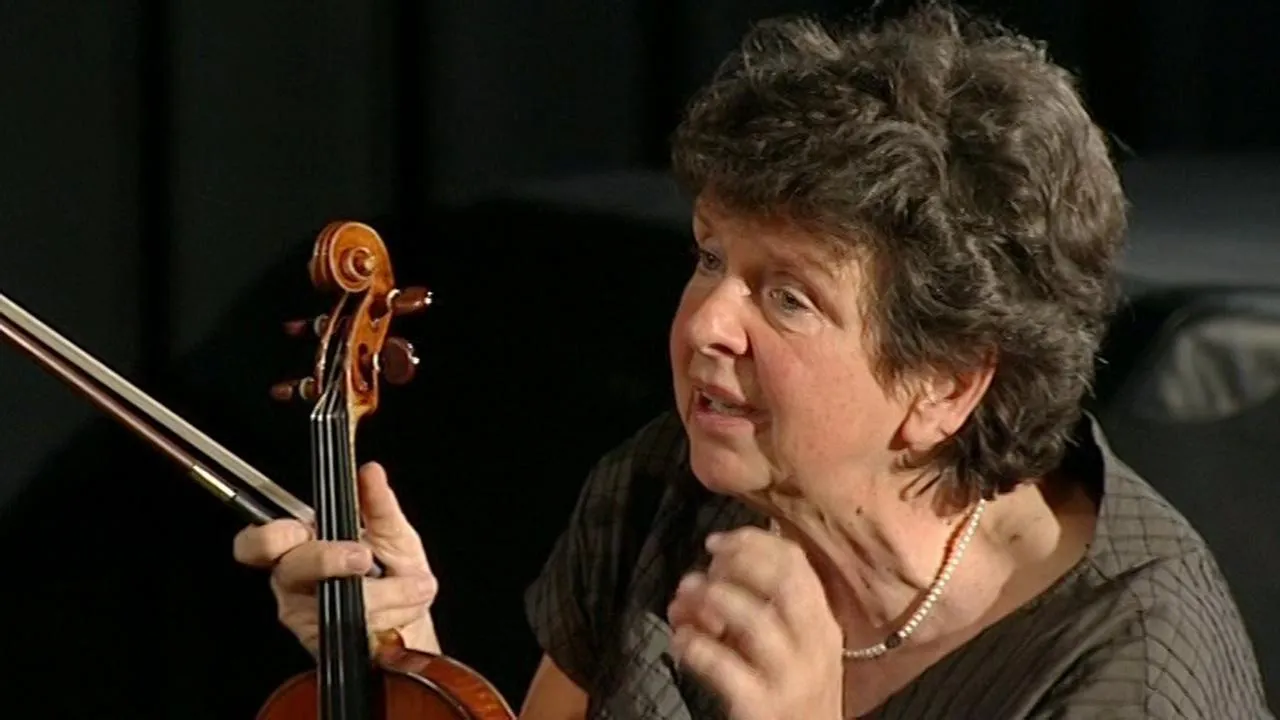
What's in the course
6 lessons (1h 59m) · 1 free
Lesson transcript
Music Lesson
Introduction to Details in Performance
"Only sometimes the details you do are very little. Nice details, but one doesn't hear them."
Key Concepts: Balance and Differentiation
-
Finding the Balance:
- "It's nice. It's beautiful. But it's too little."
- It's always about finding the right measure.
- The balance must be maintained so that the student feels this balance.
-
Revisiting the Beginning:
- "The beginning was very beautiful. But maybe we can start again."
- "Don't do those too long. Not too much of that. Those accents. Let's start again."
Working with Timing and Dynamics
-
Interaction with the Orchestra:
- "You wait for Tobias or for the orchestra when you play also. No, not too soon."
-
Listening Skills:
- "I'm sorry, maybe I have some trouble here. I don't hear the first two."
Articulation and Control
- Final Notes and Phrasing:
- "You have to learn to play the last note. To end. To finish a phrase."
- "It's a question of bow control. Too much bow is never enough bow."
Technical Execution
-
Clarifying Techniques:
- "Think about it. Somewhere around there. Yes. Yes, it's much better."
- "The endings are disappearing. This cuts everything into little pieces."
-
Building Connections:
- "That's a way also of making a connection between all these different parts."
Practicing with Intent
- Differentiating Sounds:
- "The less you play, the more piano, the more you have to articulate very clearly."
- "We can play very, very piano. But I think we don't know how to play pianos."
Encouragement for Improvement
- Technical Challenges:
- "There is a little bit of a technical problem. You play either a lot with the fingers, and the other things you play with the arm."
- "Make sure you give the movement from here, but the changes you do from here."
Refinement and Practice
- Refining Phrasing and Dynamics:
- "More bow, more sound, more everything."
- "Always the trills up bow. With a little accent for the articulation."
Conclusion
- Final Thoughts on Performance:
- "When you have control of everything, then you can let go."
- "It's either ways, but when you know everything functions, let it come by itself."
Closing Remarks:
"Thank you very much."
6 lessons
1h 59m of structured video lessons
Advanced video features
Slow down, loop a passage, follow along
Mobile, tablet & desktop
Practise wherever you are
100% satisfaction guarantee
30-day money-back guarantee
Meet your guru
Meet your guru
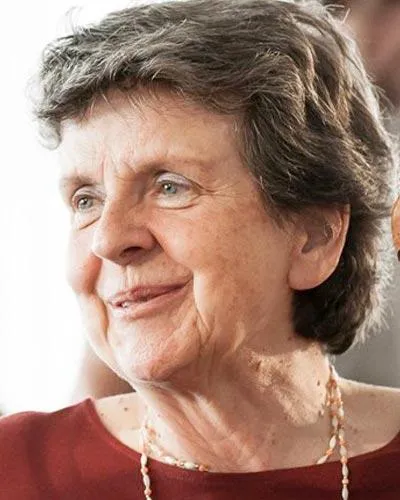
Of Russian origin but born in Italy and of Argentinean and German nationality, Ana Chumachenco started to play the violin at the age of four under the supervision of her father, a disciple of Leopold Auer, and later with Ljerko Spiller in Buenos Aires. After achieving a remarkable career in her early years, she returned to Europe at the age of 17 to continue her studies. A year later she was awarded the gold medal at the Carl Flesch competition in London, and a few years later the silver medal at the Queen Elizabeth Competition in Brussels. Her musical mentors in those years were Joseph Szigeti, Sandor Vegh and Yehudi Menuhin.
Besides her appearances in recitals and as a soloist with major orchestras, Ana Chumachenco has dedicated much of her time to chamber music, especially in a string trio with her husband and violist, Oscar Lysy, and cellist Walter Notas, with whom, under the name of the Munich String Trio, she has performed for over 20 years.
Ana Chumachenco holds a professorship at the Musikhochschule in Munich, and is one of the most sought-after violin teachers in the world - her students are outstanding young violinists who have themselves become international soloists. She is also periodically invited to take part as a juror in major violin competitions, such as the Queen Elisabeth International Music Competition of Belgium, the International Jean Sibelius Violin Competition in Helsinki, and others.
In her MusicGurus masterclass on Mozart's Violin Concertos Nos 3, 4 and 5, you get to study with her directly. Ana shares the insights that have shaped a generation of soloists - how to shape a phrase, colour your tone, manage bowing and articulation, and bring out the character, wit and singing line that make Mozart so revealing to play.







