



Idées pour la main gauche
Paddy t'enseigne des techniques et des riffs pour la main gauche sur un blues lent
Le contenu du cours
14 leçons (1h 47min) · 1 gratuites
01. Démonstration - jouons un slow blues
Leçon gratuite4:30
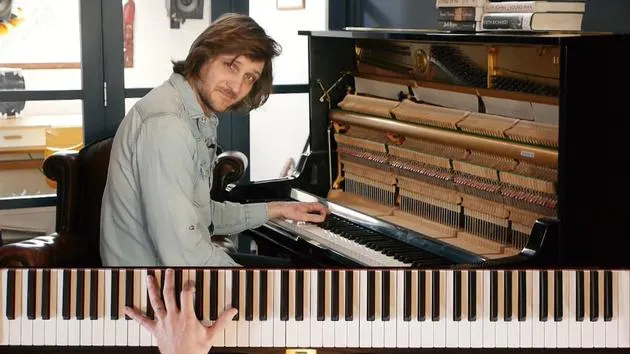
02. Idées pour la main gauche
Tu es ici11:26
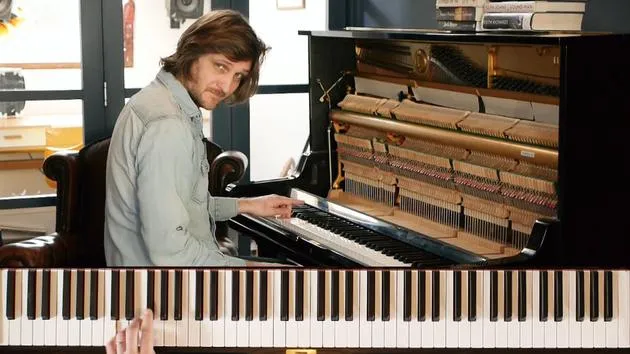
03. Idées d'introduction
9:40
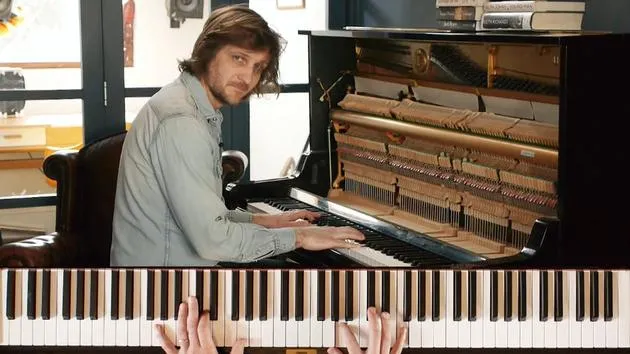
04. Idées avec des sixtes
9:34
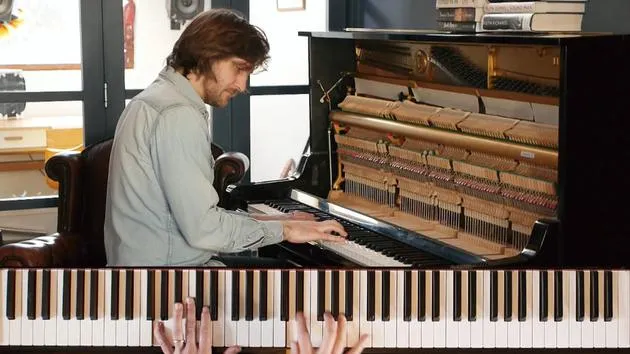
05. Riff dans le style de Memphis Slim
3:28
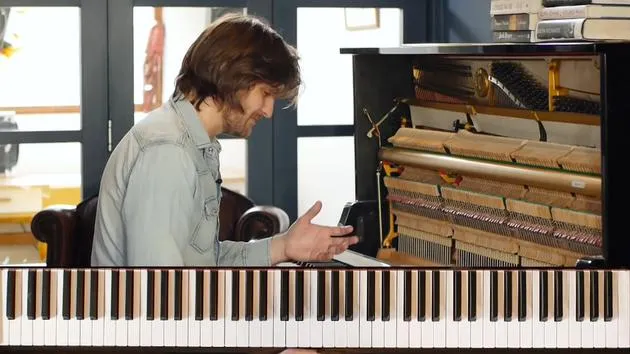
06. Accords diminués
7:11
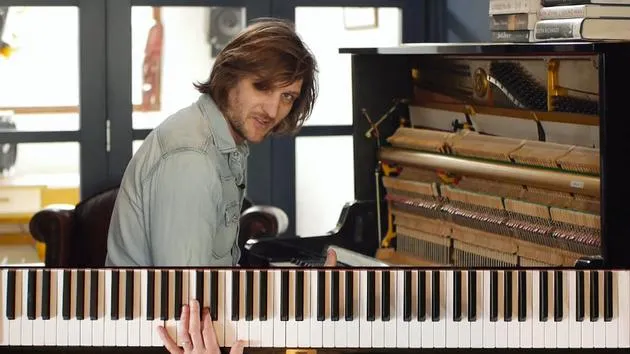
07. Notes et phrases répétées
8:34
08. Turnarounds
9:55
09. Idées pour une section de breakdown
11:10
10. Main gauche dans le style de James Booker
6:58
11. Plus d'idées pour la main droite
8:08
12. Trémolos
6:03
13. Idées de fins
9:29
14. Slow Burn - Le défi du blues lent
1:41
Transcription de la leçon
Course on Playing Slow Blues
Introduction
Cool. How you doing? Paddy Milner here. And welcome to this course on playing a slow blues.
Quick Recap on 12 Bar Blues in the Key of G
Let's kick off with a quick recap of what a 12 bar blues is in the key of G. We'll be staying around this key, which is the key that I played the tune in that I hope you've checked out on the free video.
Chord Structure
In a 12 bar blues in the key of G, we have:
- 1 bar of G
- 1 bar of C
- 2 bars of G
- 2 bars of C
- 2 bars of G
- 1 bar of D
- 1 bar of C
- 1 bar of G
- 1 bar of D
Those last two bars will serve as a turnaround, and we'll explore different things we can play over that turnaround.
Feel of the Tune
Before we dive into the more complicated right hand riffs, let's discuss the feel of the tune:
- Feel: Four to the bar, very slow - almost like a funeral dirge.
- Left Hand: Just pumping away underneath it all, sometimes moving to the five and up to the C.
Anticipations
You'll notice I'm doing those little anticipations:
- Timing: 1, 2, 3, 4 (just to give it movement).
- They always come before the beat to the five and the four.
Initially, it's a very basic left hand, purely meant to add weight and keep the time flowing beneath the right hand.
Importance of Solid Left Hand Technique
As with boogie woogie and other styles, it's crucial to have that left hand totally solid.
Practice Tips:
- Practice while doing other tasks - have a conversation, read a book, etc.
- Use a metronome to maintain a solid tempo.
Variations
There are a couple of variations I use with that left hand:
- Little passing notes that might sound odd on their own but work well in context.
- For example, after moving to the five and back to G, you can incorporate a little bass line.
Exploring More Complex Left Hand Techniques
On the chord four, coming down from the five, I might do something like this:
- Moving to the tenth, which creates a cool sound.
Often, I'll add those little runs, giving it that basic yet flavorful sound.
Additional Left Hand Ideas
Besides the basic bass, let's consider a more complex left hand approach:
- Starting on chord one, moving to the five.
- Getting more interesting on the four while approaching the G7 by a semitone.
You can also incorporate the Stormy Monday chord sequence or use a five chord in second inversion.
Creative Expression
This is where I really encourage you to start getting creative and do your own thing with it.
- Here's an idea for the left hand, try something like this:
- Introduction of jazz harmony, feel free to experiment!
Alternative Bass Lines
There are many bass lines you can play over a slow blues. For example:
- A simple rhythmic change could lead your entire song.
Triplet Ideas
You might explore triplet fills, inspired by artists like Fats Domino. For instance, something that sounds like this in octaves.
Breakdown Sections
Remember that breakdown section in the tune? The bass line dropped out, marking the bars.
- You could just use a few notes to outline the harmony.
Conclusion
That covers the bass lines generally from that tune. Maybe I'll explore some specific James Booker left hand techniques in a later video.
So, let's move on and look at something else!
14 leçons
1h 47m de leçons vidéo structurées
Fonctions vidéo avancées
Ralentissez, bouclez un passage, suivez la partition
Mobile, tablette et ordinateur
Pratiquez où vous voulez
Satisfaction garantie à 100 %
Garantie remboursement 30 jours
Rencontrez votre guru

Rencontrez votre guru
Paddy Milner est reconnu comme l'un des meilleurs pianistes de blues au monde : il est actuellement le claviériste attitré de Sir Tom Jones, après plusieurs années aux côtés du grand et regretté Jack Bruce, mais c'est aussi un superbe auteur-compositeur original et un chanteur au timbre singulier. Il suffit de lire les éloges de personnalités comme Dave Brubeck ci-dessous ! Son jeu figure sur la bande originale du film à succès 'Rocketman' (2019).
Il a remporté à deux reprises le prix du Meilleur claviériste aux British Blues Awards et occupe de longue date une résidence en tant que membre fondateur du Ronnie Scott's Blues Explosion au club mondialement réputé Ronnie Scott's.
Son groupe actuel LONDONOLA joue une musique britannique maison teintée d'une bonne dose d'esprit de La Nouvelle-Orléans, et son projet collectif JAWBONE va de succès en succès depuis la sortie de son premier album éponyme.
- « J'adore... voilà un gars qui sait vraiment jouer du piano » - Dave Brubeck
- « Je le recommande vivement. D'une certaine manière, tout se met à aller beaucoup mieux ! » - Jack Bruce
- « Le meilleur pianiste de blues d'Europe... » - Blues Access, USA
- « Impressionnant et original » - The Times
- « Éblouissant » - The Independent
Au fil de ses cours, Paddy décortique l'authentique shuffle de blues, le slow blues, le boogie-woogie, le rock 'n' roll et le piano de La Nouvelle-Orléans - jusqu'à trois grands classiques du boogie-woogie - pour que vous appreniez ces styles auprès de l'un des tout meilleurs du métier.







