



Analyse, explication et démonstration par Steven Isserlis
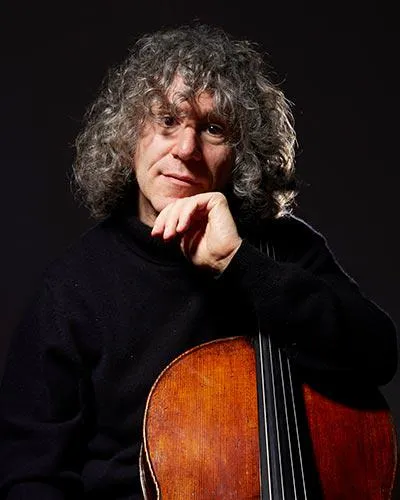
Avec
Steven Isserlis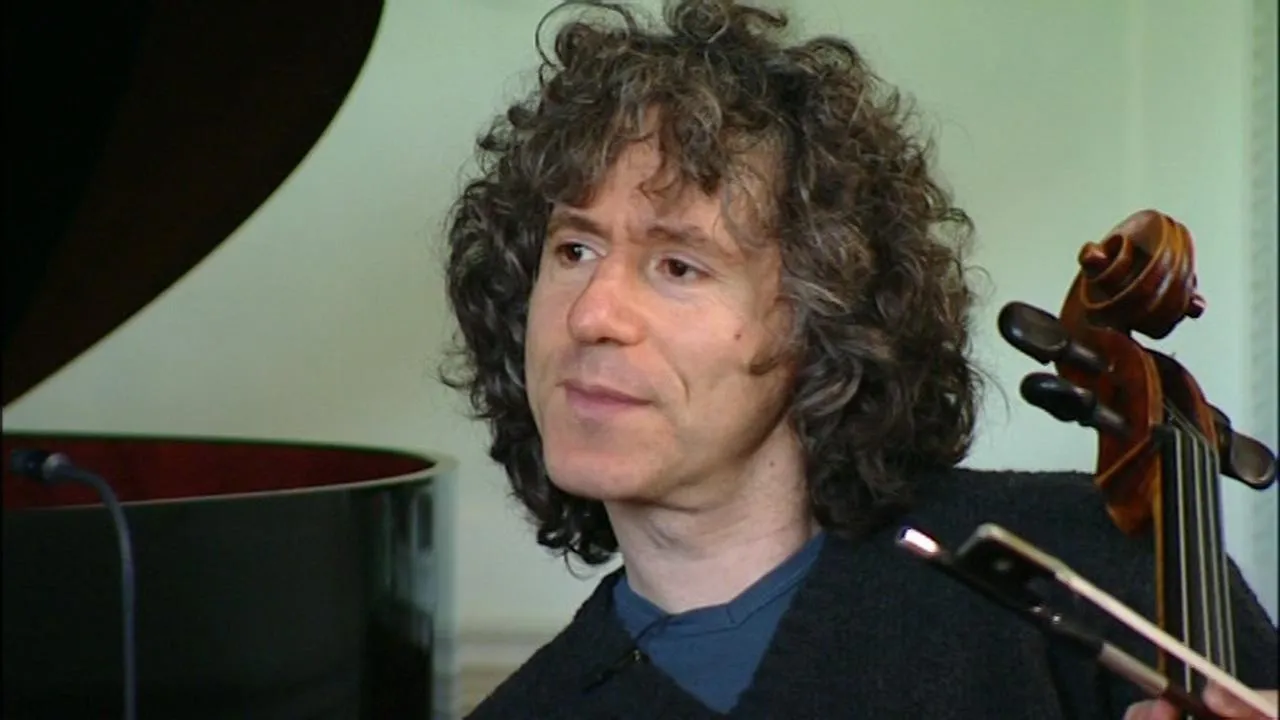
Le contenu du cours
2 leçons (1h 15min) · 1 gratuites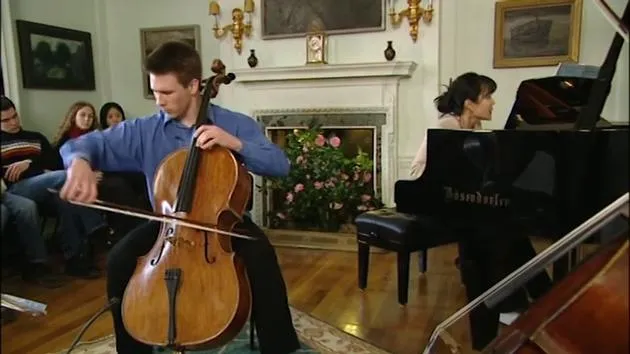
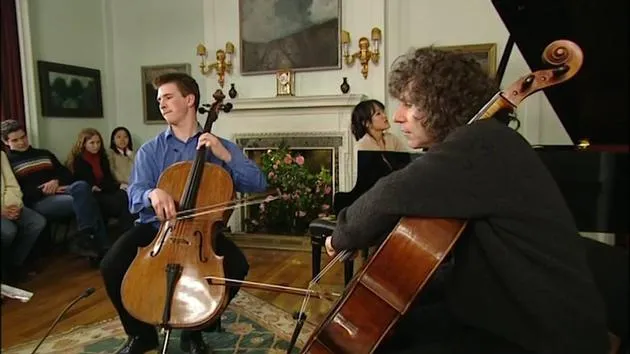
Transcription de la leçon
Music Lesson
Discussion on Color and Dynamics
"Goody. I think you could pull your colors much further apart when you're being very active. I think in terms of color, in terms of dynamic, and in terms of tempo."
- Active Passages:
There are passages that really want to move forward, transitioning into new realms. - Beautiful Melodies:
Some sections are designed to relax; however, you're never really relaxing.
Challenges in Balance
"I know it's a difficult piece for balance. There's one bar in the slow movement where the piano has 62 notes and the cello has four."
- One must be very careful that all these notes in the piano let the cello through.
Pianissmo and Courage
"Having said that, I do think your pianissimos have gone missing a bit. You just got to have the courage to do nothing at some points."
- Impact of Contrast:
When it's really impassioned, it's much more exciting if there are contrasting moments of stillness.
Atmosphere of the Introduction
"What do you think about the introduction? What's the atmosphere?"
- Searching and meditative, looking for something.
- "I thought you started that way, but by bar three, you were already in quite a panic about whether you were going to find it."
Crescendo Significance
"What's the significance of this? Why does he crescendo to this?"
- It may suggest a bit of hope.
- "But I mean, it's just a suggestion, not a statement."
Relaxation and Emotions
"Relax, relax. Switch off your vibrator, boy. It's not expressing anything."
- Vibrato should be used to express emotion; it should not be an automatic part of your sound.
Tempo Considerations
"Why are you going faster? I suppose because I feel it's going somewhere."
- Feel for Change:
Has it changed harmonically?
Finding the Right Key
"Do you find it there? What key is that? Is that what you've been looking for?"
- "You've been lost, and suddenly you get this announcement. And then the piano goes."
Discussion on Phrasing
"I mean, this piece is full of bells, I think."
- "Remember how the piece started. This question about an E flat. And now this E flat announces that you're gonna go home."
Final Thoughts
"Take time, if anything, on that. Relax there."
- Rising Tension:
"This isn't tense. I want to hear all that story happening."
Conclusion
"Good. Very good. Well, I'm funny. It's."
2 leçons
1h 15m de leçons vidéo structurées
Fonctions vidéo avancées
Ralentissez, bouclez un passage, suivez la partition
Mobile, tablette et ordinateur
Pratiquez où vous voulez
Satisfaction garantie à 100 %
Garantie remboursement 30 jours
Rencontrez votre guru
Rencontrez votre guru
Steven Isserlis est un violoncelliste dont la passion pour la musique transcende les clivages conventionnels, salué dans le monde entier tant pour sa musicalité que pour sa technique. Il est aussi l'un des professeurs les plus généreux de l'univers du violoncelle : il donne régulièrement des masterclasses partout dans le monde et est depuis longtemps directeur artistique du séminaire de masterclasses et de musique de chambre IMS Prussia Cove. Apprendre auprès de lui, c'est pénétrer ce rare mélange d'érudition, d'imagination et de pure joie de la musique.
Il est aussi à l'aise pour entraîner le public dans son cercle d'amis pour la musique de chambre ou en récital ; pour plonger dans les archives historiques et en ressortir une pépite oubliée ; ou sur la scène de concert avec quelques-uns des orchestres et chefs les plus prestigieux du monde. Né en Grande-Bretagne, Isserlis porte un vif intérêt à l'interprétation historiquement informée et joue avec nombre des plus grands orchestres sur instruments d'époque. Ces dernières saisons l'ont vu interpréter l'intégrale des œuvres de Beethoven pour violoncelle avec le pianofortiste Robert Levin, à Boston comme au Wigmore Hall de Londres, et jouer le Concerto pour violoncelle de Dvořák avec l'Orchestra of the Age of Enlightenment sous la direction de Sir Simon Rattle.
Schumann est une passion particulière : il a interprété le Concerto pour violoncelle de Schumann lors d'une grande tournée en Allemagne, mené un projet Schumann au Japon et participé à une soirée de mots et de musique consacrée à l'histoire de Schumann et Brahms — sur un texte écrit par Isserlis lui-même — à Londres et à New York.
Écrire et jouer pour les enfants est un autre de ses grands centres d'intérêt. Son premier livre, une histoire pour enfants racontant la vie de six grands compositeurs, Why Beethoven Threw the Stew, a été publié par Faber and Faber en octobre 2001, et une suite, Why Handel Waggled his Wig, a paru en 2006.
Fort d'une discographie primée, les enregistrements d'Isserlis reflètent la diversité de ses intérêts en matière de répertoire ; sa parution des Suites intégrales pour violoncelle seul de Bach chez le label Hyperion a été accueillie avec les plus grands éloges de la critique et a remporté de nombreux prix. Nommé CBE en 1998 en reconnaissance de ses services rendus à la musique, il a reçu bien d'autres distinctions, dont, en 2000, le Prix Schumann de la ville de Zwickau (ville natale de Schumann).







