



Geek
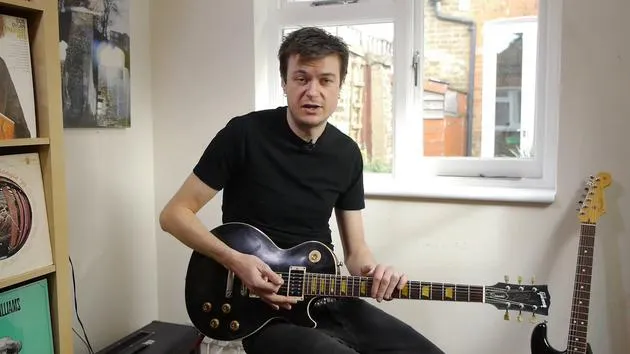
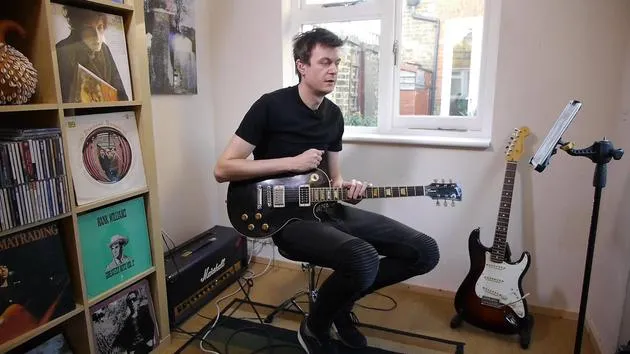
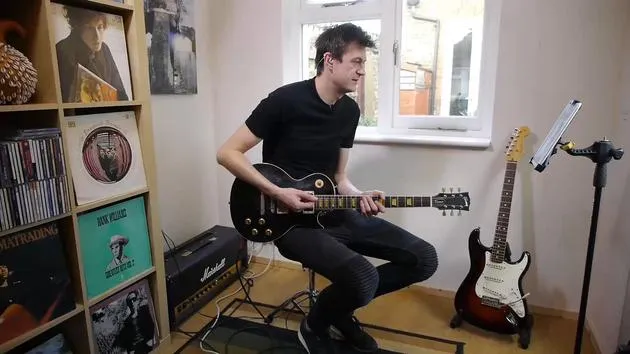
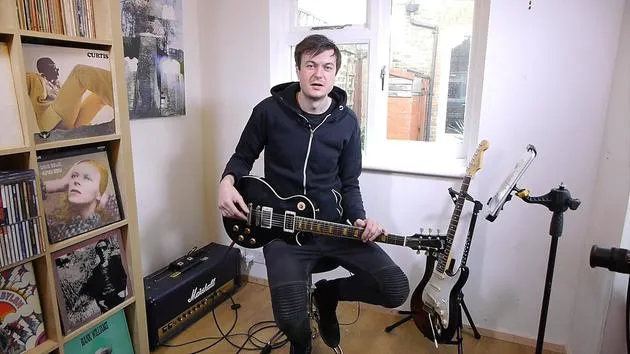
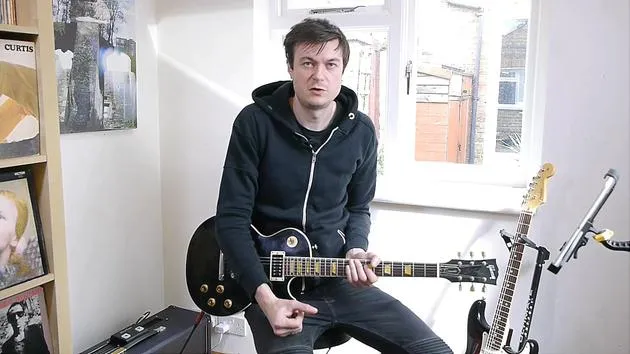
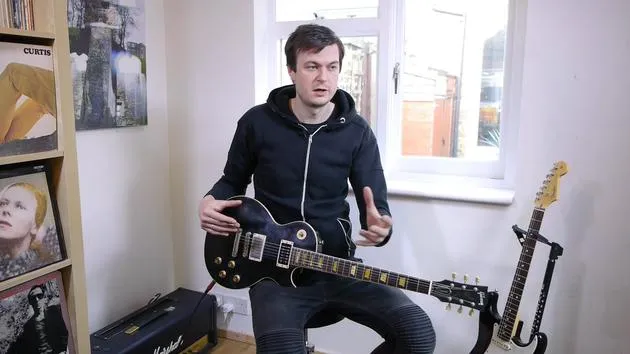
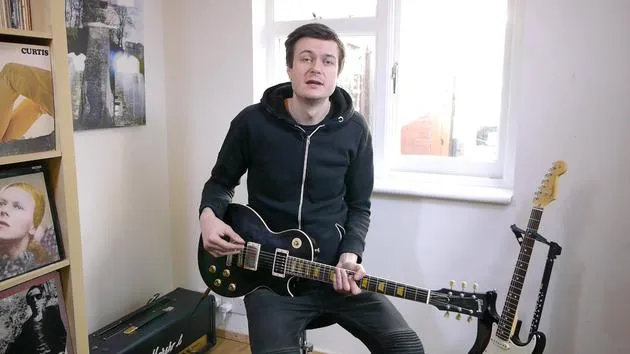
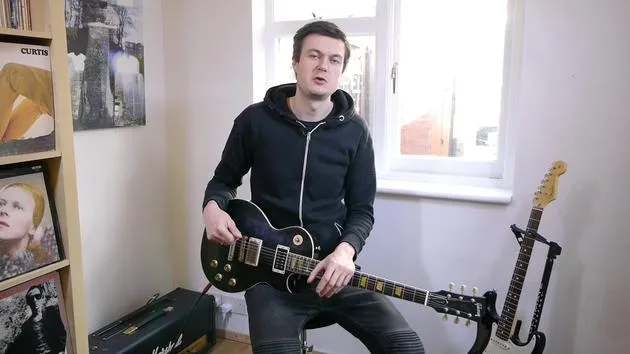
James Barratt donne son point de vue de pro sur le morceau de guitare Rockschool Geek. N'oublie pas de consulter aussi la présentation et l'analyse dans ton livre !
Le contenu du cours
43 leçons (3h 34min) · 1 gratuites
Transcription de la leçon
Music Lesson: "Geek" - Grade Five
Introduction
Alright then, guys. So let's check out Geek from Grade Five. What a tune! This is clearly heavily Green Day inspired, and they openly admit that in the walkthrough for the piece.
If you're fans of bands like Green Day and the Offspring, then this is a good choice for you. I think it's pretty high tempo and we've got this kind of swung feel, this triplet feel, to eighth notes.
Tempo and Feel
- Tempo: 137 BPM (Pop Punk)
At the beginning, if this is new to you, it says the tempo is 137. Pop punk. If you ever see that marking in a piece, it tells you that any eighth notes that you play will be different from normal eighth notes (normally counted as 1 and 2 and 3 and 4).
With that marking:
- Eighth notes are counted as 1, 2, 3, 4.
This gives them a shuffle feel, which is a huge part of the driving beat behind this piece. So we need to be really happy doing that.
Section Breakdown
Buildup and Power Chords
We begin with a buildup, in fact, on the B power chord.
Practice Tip:
- Go from as soft as you can with muting and gradually bring it up to the F marking (forte) at bar four.
- Hit those chords staccato and try to build as much as you can over those four bars.
Typical Power Chord Riff
After the buildup, we're into a pretty typical power chord riff at B.
- Watch out for rests to get a punchy feel during that section.
- Pay attention to the little pockets of palm muting on the triplets, as these often get accented by the drums.
Octave Melody and Power Chords
At C, we've got an octave style melody embellished with lots of little slides. It's really nice and not too complex to play.
Key Tips:
- Watch out for the pockets of muting.
- At B, we have broken power chords where we play the individual strings.
The only thing to be wary of is that shuffle feel and the reasonably high tempo.
Preparing for the Solo
At E, we repeat the power chord riff we've already played. Then at F, we're accompanying the drum solo, marking those stabs for eight bars, which gives us an easy time as we prepare for our solo.
Solo Discussion
Key and Approach
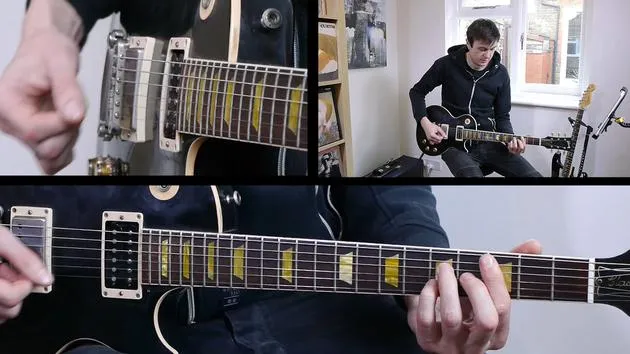
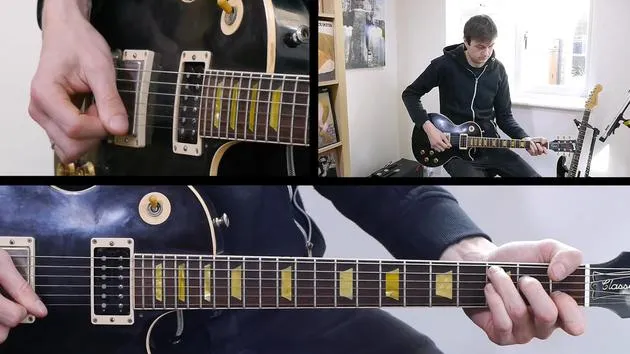
We're in E minor. I've transcribed the solo that I performed at the beginning for you, and I'll walk you through some of the licks and ideas:
- The approach: Take inspiration from earlier parts of the song and rework them.
- Hinting at familiar ideas helps if you feel blank regarding your solo.
Building Your Solo
Start by listening through the piece:
- Think of nice little melodies you could incorporate into your solo.
- Apply new melodies to existing rhythms.
Lick Inspirations
Here's a look at some of the techniques and ideas to use in your solo:
- Rhythmic Phrases: Use rhythms that have been frequently used throughout the piece.
- Drone String: Keep a consistent E string while playing fretted notes on the B string.
- Octave Ideas: Use octave ideas that have been featured in earlier riffs.
- Chord Changes: Outline chord changes, such as:
- E minor
- E minor pentatonic
Exploring Scale and Expression
The two scales to be familiar with are:
- E Natural Minor
- E Minor Pentatonic
It's important to understand notes in the scale to allow for more freedom beyond just scale shapes.
Cool Techniques
- Triplet Rhythms: Feature heavily in the solo; use them for better expression.
- Unison Bends: Fretting a note on one string while bending another to match the pitch.
Example Lick
A cool phrase may include:
- Outlining C and D chords within the E minor pentatonic shape.
- Using pull-offs with open strings and different notes in the E minor scale.
Development Section
Out of our solo, we enter another development section, where we are told to develop on the repeat of the H section.
Playing Softly
- When there's a bass solo, as a guitar player, step back a bit.
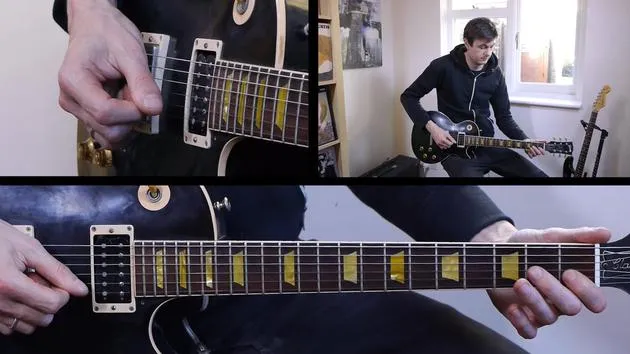
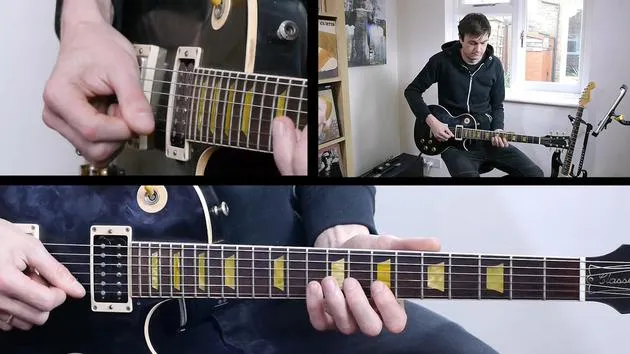
- Play chords gently, practicing hybrid picking or simple muting techniques.
Building Up
- Experiment with different voicings and rhythms as you develop your sections.
- Build into powerful sections with octave chords.
Final Riffs
Towards the end, focus on the percussive sounds:
- The X's in the notation indicate hitting strings without fretting any notes.
Practice Tips:
- Be aggressive with your right hand.
- End strongly with an octave phrase, sliding off the last note for a polished close.
Tone and Sound
- Use a high gain sound, but avoid too much bass to keep it clean.
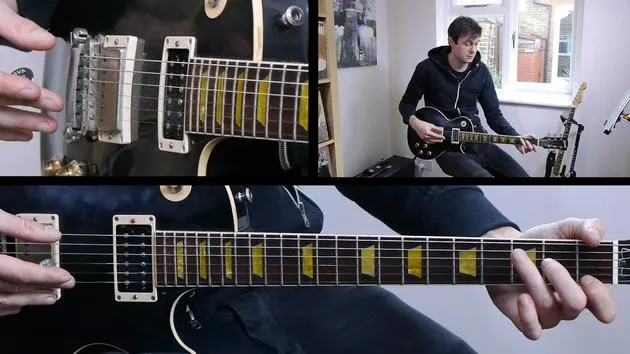
- Utilize your bridge pickup for the aggressive tones typical of this piece.
Conclusion
As always, practice these in small chunks and work your way through the piece. It's long, so it might take time, but practice the transitions, and you will be smashing through it.
Best of luck with it, and we'll see you for the next one!
43 leçons
3h 34m de leçons vidéo structurées
Fonctions vidéo avancées
Ralentissez, bouclez un passage, suivez la partition
Mobile, tablette et ordinateur
Pratiquez où vous voulez
Satisfaction garantie à 100 %
Garantie remboursement 30 jours







