



Comment améliorer ton déchiffrage - Un rappel
Avec
Paul ElliottPourquoi le déchiffrage compte et comment aller plus vite - apprendre à lire les notes comme des phrases plutôt qu'une à la fois, tout comme tu lis les mots dans une phrase.
Le contenu du cours
10 leçons (0h 46min) · 1 gratuites
01. Comment améliorer ton déchiffrage - Un rappel
Tu es ici7:19
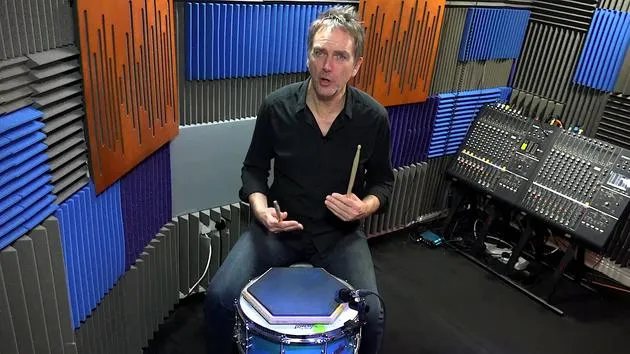
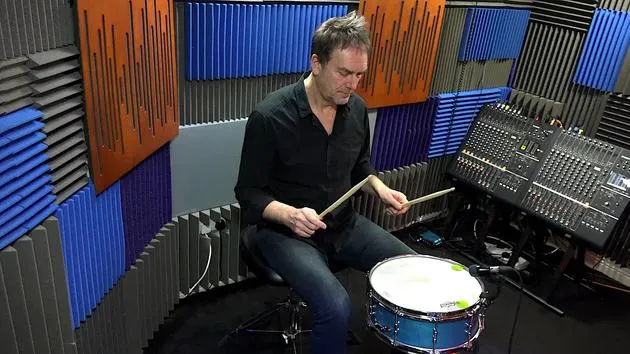
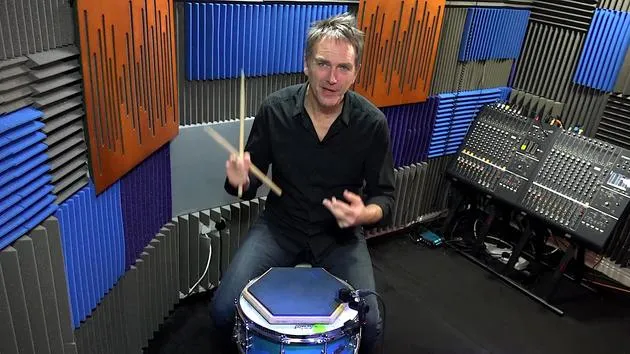
Transcription de la leçon
Music Lesson: Sight Reading, Interpretation, and Improvisation
In grades one to five, you'll be required to choose between sight reading and interpretation and improvisation. Now, you might ask the question, "Why do I need to read?"
Importance of Sight Reading
Sight reading is a crucial professional skill with numerous benefits. Here's why it's essential:
- In a professional context, you may receive a chart that you need to read and interpret.
- Being able to read music is very important.
At Rock School, we ensure that sight reading is a vital criterion in the examination package.
Tips for Effective Sight Reading
The first thing I'm going to do is give you some tips on how to:
- Get through single-line reading.
- Tackle composite groove reading.
Understanding Phrasing
The process of sight reading typically involves:
- Looking at notes.
- Putting those notes together into phrases.
- Recognizing those phrases in a sight reading situation.
Initially, as you work on those phrases, you break them down slowly and piece them together. For example, listen to this 16th note phrase:
1, 2, 3, 4
When you first start analyzing that phrase, work out:
- What it looks like.
- Why it's written that way.
Developing Automatic Recognition
Eventually, you'll recognize the sound:
"One and a two and a three and a four and a one."
This should create an automatic response to that rhythm when you see it written on the page, eliminating the need to work it out mentally.
In a manner similar to learning to string words together, when you see a sentence in a book or newspaper, you naturally read across the page. This is how you should approach reading notation, stringing the notes and phrases together as you would with words.
Exploring Note Values and Phrasing Systems
Every subdivisional note and pulse will have a phrasing system attached. For instance, let's consider eighth notes:
- 1, 2, 3, 4
- Quarter Note Downbeat: 1, 2, 3, 4
- Half Beat: 1 and 2 and 3 and 4
- Two Eighth Notes: 1 and 2 and 3 and 4
The combinations of these eighth notes come together to form phrases.
Working with Triplet Phrases
If you're required to play triplet phrases, break them down into groups:
1, 2, 3, 4
- Triplet: 1 triplet 2 triplet 3 triplet 4 triplet
- Alternate combinations: e.g., 1, 2, 3, or 1 triplet 2 triplet triplet triplet.
This structuring helps create and recognize triplet phrases effectively.
Expanding to 16th Note Phrases
As you progress to 16th note phrases, keep in mind that the more notes per beat, the more phrases you'll encounter. Let's play four 16th notes at a tempo:
1, 2, 3, 4
- 1 E and A 2 E and A 3 E and A 4 E and A
You can break these into various phrases. Here are some examples:
- Play the first, third, and fourth notes.
- Play the last three 16ths.
Here's a breakdown:
- 1 e and
- 2 e and 3 e and 4 e and
- 1 e and 2 e and 3 e and 4 e.
Practice Requirements
The practice requirement is to recognize:
- How those notes look.
- How those rhythms sound.
By dedicating time to practice, you will improve your sight reading in both musical and professional contexts.
Advanced Concepts
We can also work through:
- 16th note triplets.
- 32nd notes, which you'll encounter in higher grades.
The key concept throughout is recognition of note values and subdivisions, paving the way for effective sight reading.
Keep these principles in mind as you practice, and you'll find yourself becoming a more proficient sight reader.
10 leçons
0h 46m de leçons vidéo structurées
Fonctions vidéo avancées
Ralentissez, bouclez un passage, suivez la partition
Mobile, tablette et ordinateur
Pratiquez où vous voulez
Satisfaction garantie à 100 %
Garantie remboursement 30 jours
Rencontrez votre guru
Rencontrez votre guru
Paul Elliott est un pédagogue et clinicien de batterie respecté dont les élèves occupent des postes de premier plan dans toute l'industrie, dont les batteurs de Kylie Minogue (Tom Meadows), Ricky Martin (Laura Fares) et The Cure (Jason Cooper). Il a partagé la scène de clinics avec Steve Smith, Manu Katché, Simon Phillips et Gary Husband, et sa propre carrière d'interprète a comporté des collaborations avec Frank Gambale, Guthrie Govan et Shaun Baxter. Des batteurs comme Phil Selway (Radiohead) et Ash Soan (Adele) viennent le consulter pour des conseils techniques. Dans ses cours, il passe en revue les exigences techniques grade par grade, démontrant chaque rudiment et expliquant non seulement comment le jouer, mais ce que sa maîtrise te permet de faire derrière la batterie.







