



Analyse, explication et démonstration avec Maxim Vengerov
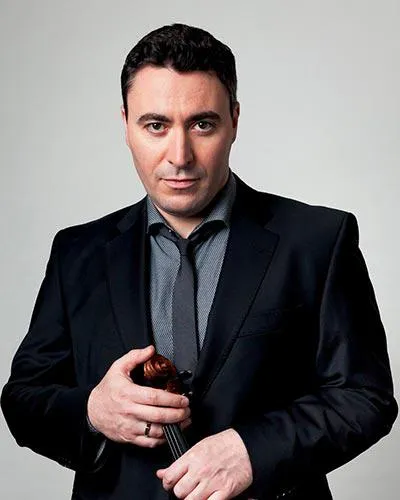
Avec
Maxim VengerovMaxim Vengerov accompagne Eloisa-Fleur Thom dans le concerto de Sibelius, en travaillant l'harmonie, le tempo, l'interprétation et le caractère finlandais dramatique qui sous-tend la musique.
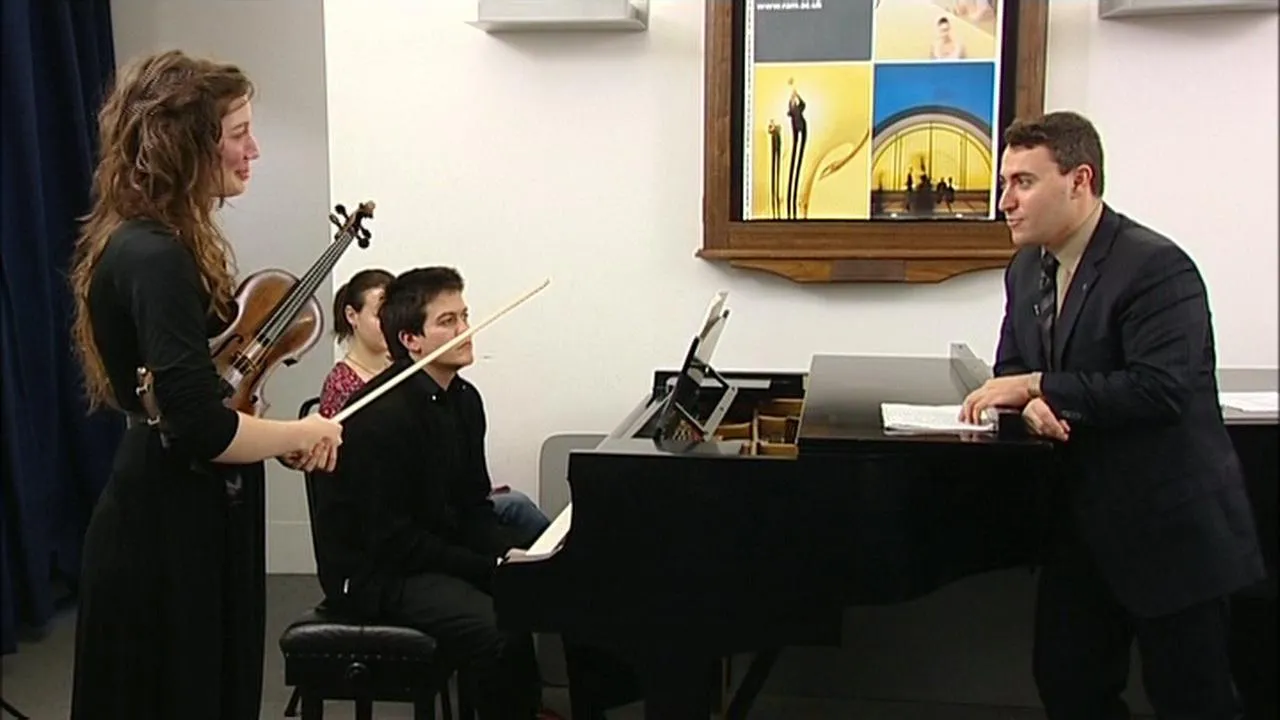
Le contenu du cours
2 leçons (0h 52min) · 1 gratuites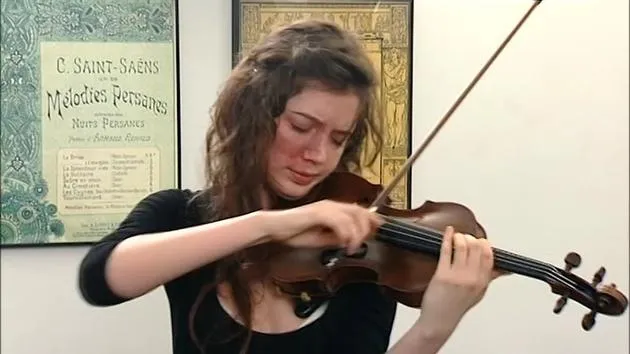
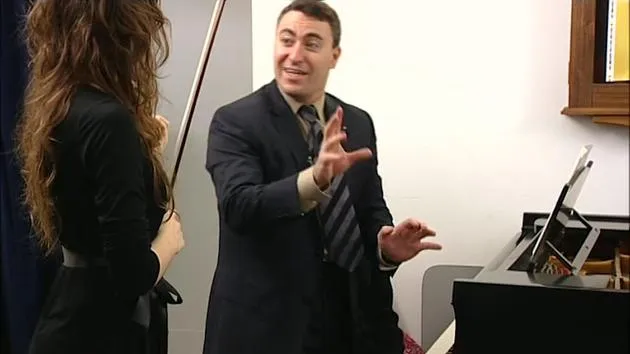
Transcription de la leçon
Music Lesson
Instructor: Well, Lisa, molto brava. Very good. I really loved also, you know, this. Your feeling for the music is right, and you know what's right. You have a really great feel for this music.
Points for Refinement
Instructor: However, let's talk about a few points that will make your performance even more beautiful and more refined. When we talk about the Sibelius concerto, I think we should not forget this is not a romantic concerto.
Key Insight:
- We have to get to know Sibelius and try to understand his intentions. My feeling is that every time I play a composition, whether it's Beethoven, Tchaikovsky, or Mozart, I try to forget myself and my current state of being.
Artistic Approach
Instructor:
- I was in Brussels yesterday, had a flight, and might be tired. I didn't sleep much, but then the music could be joyful. So I have to be joyful.
- We have to be artists in this way. If we feel happy and jolly, then we play something tragic, like a Shostakovich concerto, we have to become sad, very tragic, even melodramatic at times.
Each composer has a unique character that sometimes does not correspond with our own. We must try to forget ourselves, our feelings, and interpretations as much as possible. The music itself provides the answers through its harmonies and articulations.
Sibelius's Music
Instructor: This is dramatic music.
- If we consider Finland, we see a bold countryside filled with forests, an eternity of natural beauty. If we imagine ourselves as eagles flying and observing everything around us, that spirit embodies the beginning of this music.
Concept:
- When you're an eagle, there's no question of tempo; the world is yours. You play as you feel what you see and embrace the world. That's what this music represents, very generous music.
Execution and Emotion
Instructor:
- You must be generous in your gestures. If you're making a crescendo, take the time to grow into it.
- When you perform a sforzando, do it with the right amount of passion. It's passionate music filled with sorrow, bitterness, and tenderness, not in the Latin sense, but in the bold Finnish way.
Tenderness in this context signifies melancholy, meditation, and a sense of being unlike anyone else in the rest of the world. Sibelius wished to be recognized as a European composer, a German composer, yet he never fully succeeded.
Understanding the Score
Instructor:
- Let's discover what "Dolce" and "espressivo" mean in Sibelius's work.
- It's wonderful how you play; the color is good. Sometimes, you take your time, and this is great. Your instincts are guiding you.
If you feel like taking a slower tempo, why not? You have the world under your wings.
The Role of Performance
Instructor:
- Your performance should be unique compared to your colleagues. If you want to take the slower tempo, please do.
- Let's analyze specific notes, starting with one note.
Notation and Techniques
Instructor:
- This note should be evident. Imagine seeing something unexpected emerge from a cloud, like a folk song.
- It should not be predictable. This is hypnotizing eternity and embodies the essence of "Dolce."
Remember, Sibelius was not Italian, so "Dolce" should reflect that uniqueness.
Dynamic Contrast
Instructor:
- Play with contrasting dynamics; it should not be in tune with the orchestra but rather provide contrast.
- It's like the sun breaking through the clouds, unexpected yet radiant.
Consider playing on the E string for a different color. You can achieve the same color on the A string but ensure it is not overpowering.
Embracing Different Elements
Instructor:
- When you hear an echo, it's time for a color change. This should feel shocking, as if transforming into a different instrument.
- Rather than focusing solely on beauty, it's essential to strategically hold back certain elements, showing your artistry without just showcasing technical skill.
Playing with Intention
Instructor:
- Regarding crescendos in the next few bars, we must follow what the composer intended. It's logical.
- Sing without vibrato to capture the essence more deeply, as how it is written is crucial in interpretation.
Final Touches
Instructor:
- Stay grounded and allow your hand to breathe.
- Play with ease and connection. This should reflect freedom.
You do not have to push; the weight will naturally create the sound.
Conclusion
Instructor:
- Trust your instincts and allow for an organic flow.
- It's essential to maintain focus on the theme and prioritize clarity in your playing.
Remember, the soul of the music lies in these nuances. Play gently, yet passionately, and allow yourself the freedom to explore the emotions within the piece.
2 leçons
0h 52m de leçons vidéo structurées
Fonctions vidéo avancées
Ralentissez, bouclez un passage, suivez la partition
Mobile, tablette et ordinateur
Pratiquez où vous voulez
Satisfaction garantie à 100 %
Garantie remboursement 30 jours
Rencontrez votre guru
Rencontrez votre guru
Maxim Vengerov est reconnu comme l'un des violonistes les plus passionnants au monde. Il donne son premier récital à l'âge de cinq ans et, après avoir étudié avec Galina Tourchaninova et le professeur Zakhar Bron, remporte le Premier Prix du Junior Wieniawski Competition à l'âge de dix ans. En 1990, à quinze ans, il remporte le Carl Flesch International Violin Competition, confirmant sa réputation de musicien du plus haut niveau.
En mai 2000, après un contrat d'enregistrement de dix ans avec Teldec Classics, Maxim Vengerov signe un contrat exclusif avec EMI Classics. Parmi ses distinctions et prix figurent le Gramophone Young Artist of the Year et le Ritmo (Espagne) Artist of the Year en 1994 ; le Gramophone Record of the Year et des nominations aux Grammy Award dans les catégories Classical Album of the Year et Best Instrumental Soloist with Orchestra en 1996 ; l'Edison Award du Best Concerto Recording en 1997 ; le Gramophone Artist of the Year en 2002 ; ainsi qu'un Edison Award et un Grammy Award en 2004 dans la catégorie Best Instrumental Soloist Performance (with Orchestra) pour son enregistrement du Concerto pour violon de Britten et du Concerto pour alto de Walton.
En 1997, Vengerov est le premier musicien classique nommé Envoy for Music par l'UNICEF. À ce titre, il a rencontré et joué pour des enfants défavorisés en Ouganda, à Harlem, en Thaïlande et de part et d'autre de la fracture ethnique kosovare — un travail qui lui a permis à la fois d'inspirer des enfants du monde entier et d'inciter d'autres personnes à collecter des fonds pour des programmes soutenus par l'UNICEF. Une autre passion de la vie de Vengerov est son engagement auprès des jeunes à travers ses masterclasses. L'un de ces événements a été filmé par Channel Four Television dans le cadre d'un documentaire sur Vengerov intitulé 'Playing by Heart', présenté au Cannes Television Festival en 1999. Depuis juin 2005, il est Professor of Violin à la Royal Academy of Music de Londres.
Cette même passion pour l'enseignement traverse ses masterclasses sur MusicGurus, où Vengerov te fait entrer au cœur du grand répertoire pour violon — de la Tzigane de Ravel et de la Carmen Fantasy de Sarasate aux concertos de Sibelius, Mendelssohn, Britten et Chostakovitch — en partageant la technique et la musicalité qui se cachent derrière chaque phrase.







