



La boîte à outils du pro : déchiffrage
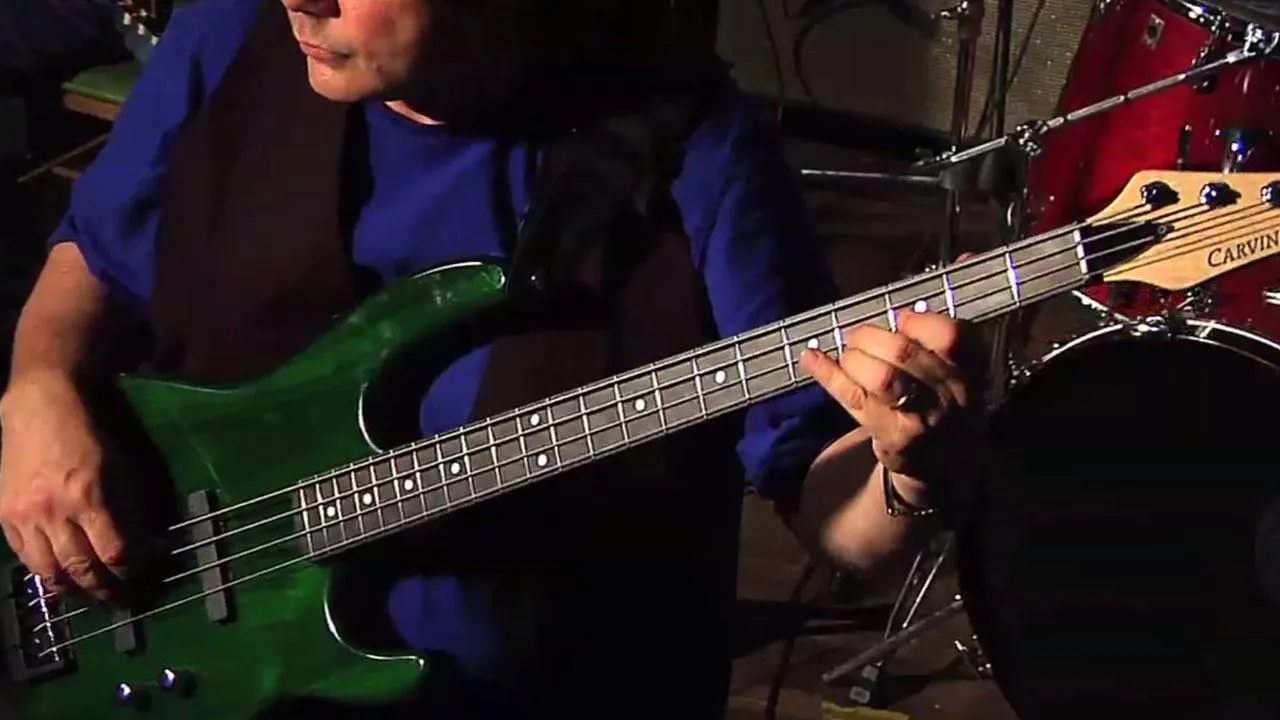
Lesson time: (21min 9sec)
Roy Vogt partage les astuces de déchiffrage dont tout bassiste professionnel a besoin pour les séances de studio et les concerts de dernière minute, ainsi que des exercices pour gagner en assurance à la lecture.
Course preview
This lesson is part of the course Teach Me Bass Guitar vol.4 : Musicalité sérieuse
Watch a preview of the full course below.
Lesson transcript:
Lesson 16: Sight Reading Secrets for Bassists
Congratulations! If you've worked this hard and gotten this far (and I know you have), you're ready to look at some of the secrets that professional players possess and the differences we deal with that we haven't really talked about yet.
Sight Reading
The first thing I want to discuss is sight reading.
- Sight reading is a skill that can be acquired but requires a significant investment of time on your part.
- The dividend is this: As a working musician, very few electric bassists or bass guitarists can sight read.
- Those of us who can are really sought after for live gigs, musicals, and recording sessions.
This truism holds: The more skills you have that your fellow players lack, the more in demand you become.
Understanding Sight Reading
Here's the trick with sight reading:
- One of the common issues bassists encounter after completing an instructional course like this one is dealing with commercial music, which typically does not include tablature.
- Tablature is simply a tool we use to explain where to play things on the neck.
- However, in this lesson, we won't focus on tablature.
Now, let's dive into my system for sight reading. We will look at the first four bars of A Bachelor Suite.
- Play through the excerpt: Now, if you look at the music, you'll see that we are in the key of G.
- Determine highest and lowest notes:
- The highest note I have to play is C.
- The lowest note I have to play is G.
What I do is:
- Identify that my highest note is here (C) and my lowest note is here (G).
- Since I'm in the key of G, I will walk through and play all the notes within that key in that position.
I chose Bach for this excerpt because there are no rhythms to deal with; we are just organizing the notes.
Playing the Notes
Let's play that through at 60 beats per minute:
Count in: 1, 2, 3, 4.
Notice that I didn't move my left hand at all; it stayed in position.
I think of it like typing on a computer keyboard with two fingers:
- The more I have to move, the more mistakes I'll make.
- Here, I'm sight reading, and since we're within this range and key, I can play it in that one position.
Moving to B Flat
Now, let's move up to B flat.
I want to show you a common pitfall for bass players:
- Oftentimes, bass players find a comfortable place to play a note (like a low B flat) and stick with it.
- However, when you try to play in a new key, you might notice how much jumping around is required, similar to typing with two fingers.
If we look at my strategy for B flat:
- The highest note I play is E flat.
- The lowest note is B flat.
Let's get into fifth position (for reference):
- The notes I have here are:
- A, B flat, C, D, E flat, F, G, A, B flat, C, D, E flat.
Reading Through B Flat
Let's read through this at 60 beats per minute, playing eighth notes.
Count in: 1, 2, 3, 4.
You might find this music intimidating because of the big jumps.
To navigate:
- Take the first three notes of the excerpt and build a chord.
- Repeat this for each measure to help identify where your fingers need to go.
Transposing to C
Now, let's transpose it to the key of C and use the same fingerings:
- The lowest note is C, and the highest is F.
- Here's our scale ? get comfortable with that.
We'll do this in eighth notes, with quarter note equals 60.
Count in: 1, 2, 3, 4.
As I mentioned, I often recommend practicing with Bach, and a good source is the Bach cello suites.
Key Considerations
Remember:
- The trombone edition won't go below the low E of a bass guitar, making it suitable for those playing four-string electric bass.
- The key to sight reading is staying in the middle of the neck. Avoid thinking about big leaps unless necessary.
- When sight reading, try to keep everything within one or two positions for easier navigation.
Sight Reading Rhythms
Up next, we will look at sight reading rhythms, which can be a bit daunting at first, especially with syncopations.
Getting Started
Key advice:
- Look at the smallest note value you need to count.
- In Rhythm Gauntlet, this value is 16th notes.
- During practice, discreetly tap your foot and figure out where everything is while the horns warm up.
Let's practice slowly at 60 beats per minute in 8/8 time:
Count in: 1 and 2 and 3 and 4 and.
I will also call the downbeats and upbeats:
- Foot tap routine:
- Down, down, up...
- Repeat for the entire measure, maintaining the tempo.
Practicing with the Band
Now that we've worked on foot tapping and counting, let's take it over to the club and jam with the band on the Rhythm Gauntlet.
Nice job! Now it's your turn to sit in with the band. Aim to capture as much as you can on the first take.
Conclusion
How did it go over there with the Rhythm Gauntlet?
- Often, the challenge lies in those tiny details at the end of a piece.
- Keep practicing with both styles, focusing on music like Bach for organized notes and explore rock or funk bass lines for rhythmic challenges. Use the foot tap system for these as well.
It may take time to respond immediately to the vocabulary, but that's a good goal as you aim to be a working sight reading bassist.
Stretch and Relax
Before we finish, let's stretch our hands:
- Loosen them up, raise arms over your head, and stretch those shoulders.
- If you don't pay attention to your posture, you may end up leaning over your bass, which is counterproductive.
Shake out your hands!
We've covered one essential component of being a professional bassist: sight reading.
Next, we will discuss an important strategy called faking a tune.
See you in the next lesson of the Pro Bass Kit!
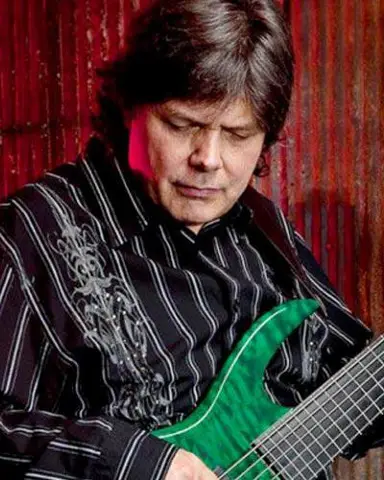
About the instructor
La carrière de Roy Vogt couvre un éventail extraordinaire de scènes, du Headbanger's Ball de MTV, du Montreux Jazz Festival et du Montreal Jazz Festival jusqu'au London Palladium, au Grand Ole Opry et au Kremlin. Du punk au funk, de la simplicité du country et du blues à la complexité du HyperJazz et du World Beat, il a tout joué. Roy a été la première personne à obtenir un master en interprétation de basse électrique, à la prestigieuse école de musique de l'University of Miami, et il poursuit l'art de la basse depuis plus de quarante ans. Il a été le mentor de dizaines de professionnels reconnus, dont le légendaire Willie Weeks. Électrique, fretless, contrebasse - tu l'imagines : si ça joue des notes graves et que ça a des cordes, Roy en est un maître, et il excelle à l'enseigner aux autres. Au cours de sa carrière de quatre décennies, Roy a enregistré ou joué avec une liste stupéfiante de grandes stars, dont Larry Coryell, Victor Wooten, Dave Weckl, Tom Scott et le LA Express, Chester Thompson, Miroslav Vitous, Glen Campbell, BJ Thomas, Chet Atkins, Engelbert Humperdinck, Dickey Betts, Tony Joe White, Charlie Daniels, Jerry Reed, et des dizaines d'autres. Roy enseigne au niveau universitaire depuis trente ans. Depuis 1983, il occupe la chaire de professeur de basse à la prestigieuse Belmont University (Nashville, TN), l'une des très rares écoles à proposer un cursus diplômant en musique commerciale conçu pour transformer les étudiants en musiciens professionnels travaillant au sommet de l'industrie. Les élèves de Roy ont tourné et enregistré avec des stars de renom telles que Trisha Yearwood, Faith Hill, Little Texas, Michael W. Smith, Lady Antebellum, Chick Corea, Sir Tom Jones, Blood Sweat and Tears, Yanni et d'innombrables autres icônes de la musique. Sa série Teach Me Bass Guitar t'apporte cette même approche de niveau universitaire, te menant d'un démarrage rapide pour débutant complet (vol. 1), en passant par les fondamentaux du rythme (vol. 2), la recherche de ton propre style (vol. 3) et une musicalité sérieuse (vol. 4), jusqu'à une boîte à outils de joueur pro (vol. 5), afin que tu développes de vraies compétences étape par étape. read more