



Tatiana's Letter Scene - interprétation d'un élève et analyse par Joan Rodgers
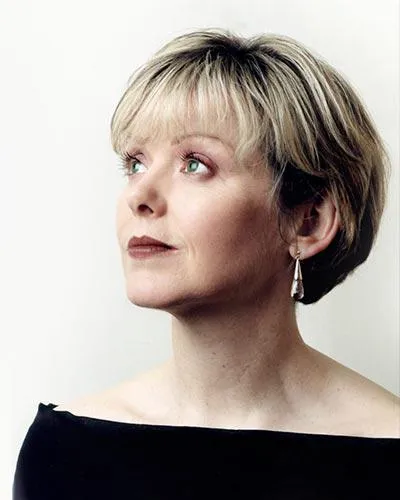
Avec
Joan Rodgers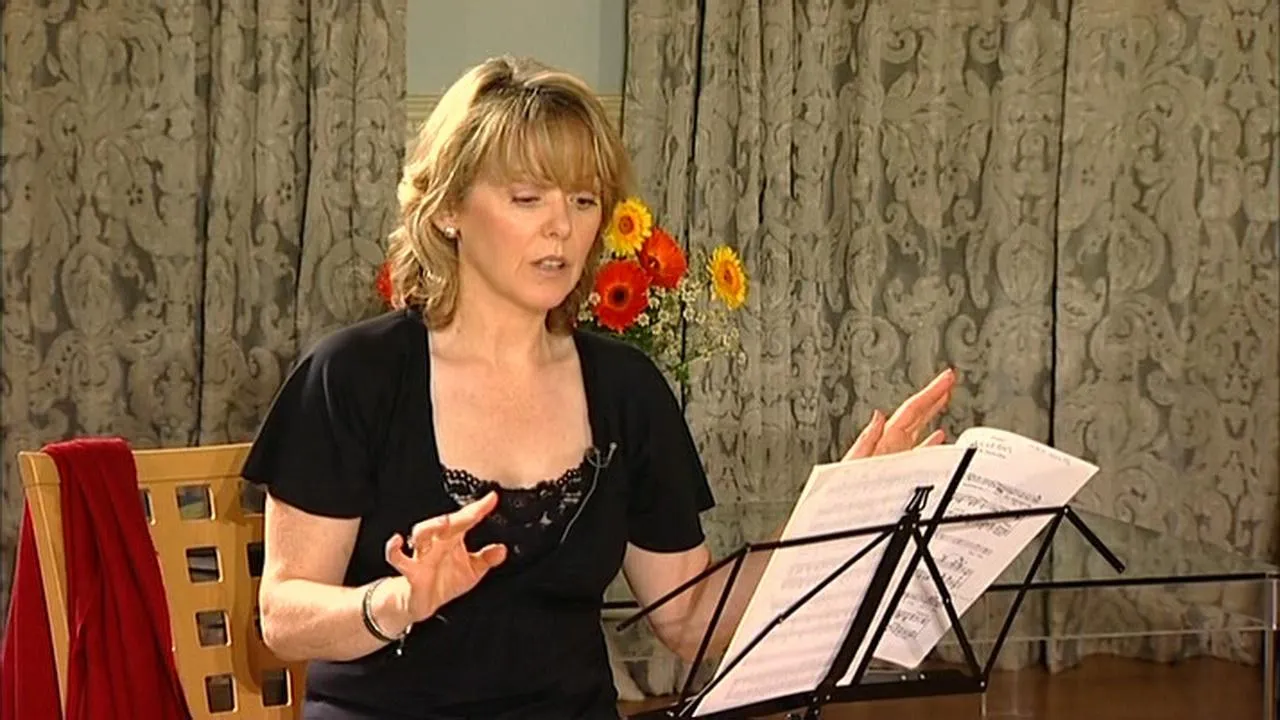
Le contenu du cours
7 leçons (2h 7min) · 1 gratuites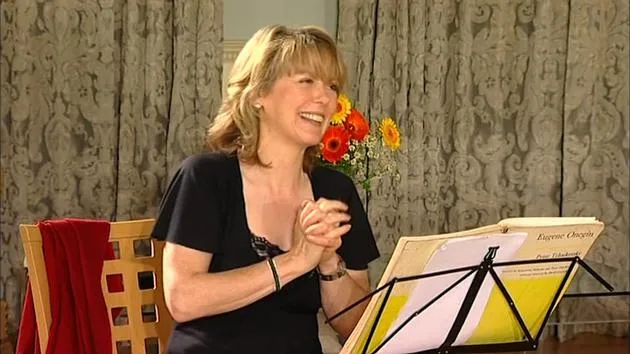
01. Tatiana's Letter Scene - interprétation d'un élève et analyse par Joan Rodgers
Tu es ici43:32
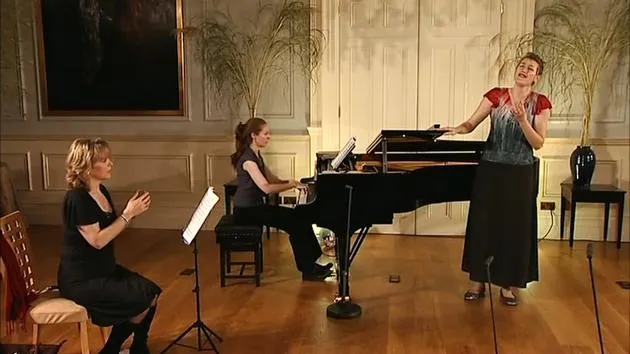
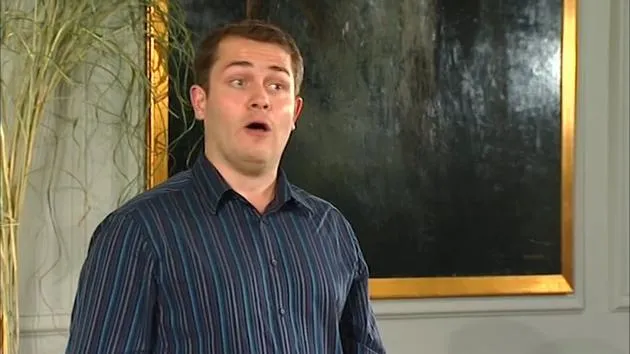
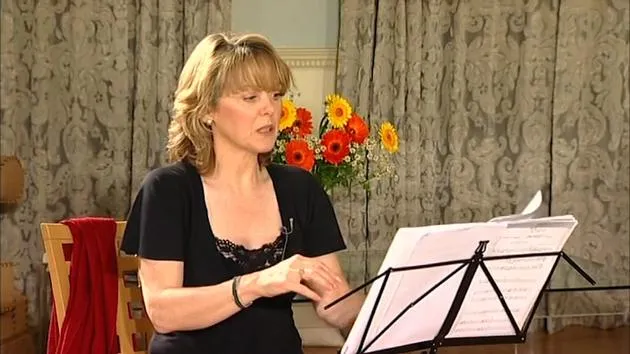
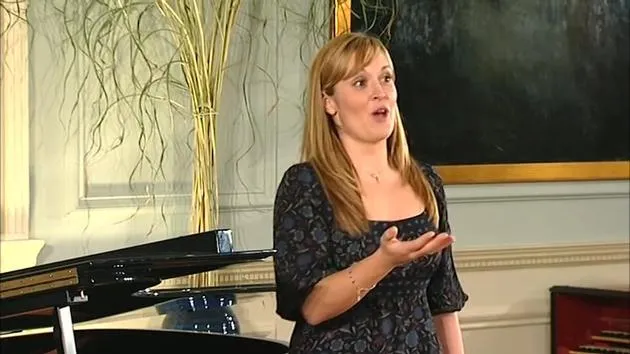
Transcription de la leçon
Music Lesson
Introduction
I thought that was great the way you did that. At that point, Tatiana is taking on the joie de vivre of Olga because she really hopes that something might come of this. I thought that was very good.
Performance Feedback
- Vigor: You got the vigor it needs, and the Russian is pretty good.
- Legato: I would make "cocknatch, cocknacho" a bit more legato because it's very serious. She's thinking all the way through this. Keep it legato.
No, no, at this point, I love it! As I said at the beginning, I loved your vigor and energy. It's almost as if she's just floating on top of the orchestra with little interjections.
Quote: "She's just sort of making her interjections into it."
Absolutely, legato! You know, it's not a wordy language. Occasionally it is, but I think you're breathing too late. You need to start singing it earlier.
Word Massaging
I can't explain it, but it just isn't legato. You have to massage the words more; they sound a bit stiff. I want you to feel like you don't need to be so rigid. It's a bit... I'm being a bit cruel, but just relax.
I don't know why you're going your "vam yavam" and then, alas, a bit more E. I want you to really not think of this as a language with loads of awkward consonants, because it's not.
Vocal Techniques
- Experiment with Vowels: Just try singing on an R for a while, or just on the vowels without the consonants. There are more vowels there than you think.
- Adagio Again: "Oui and oui." I'm not in control of my feelings, it could have gone another fifth higher. Let it go.
That was better, but don't hold! I think you're trying to control it. We all try to control these things, but sometimes it's good not to, especially with Tchaikovsky. He writes so beautifully.
Building Confidence
Think: "Let fate decide." This is a bit more solid.
- That was great! The apex was fantastic, and this is the moment where she's bolder, declaring herself.
- You can make your notes less stiff; it's recit, really, and it allows you to express yourself in a more relaxed manner.
Quote: "Just go from there."
Now you need a new mood, this is great. It's almost as if she's musing and thinking, "With time, who knows, he might start to like me more."
Light and Lyrical
I want to feel that it's a conversation with herself, not just about delivering it. Just keep it very light and lyrical.
Then you need to focus on picking up the aria again. But during that, she's just thinking, "I might be a really good wife and a marvelous mother." So there are moments where you take the aria and then take these utterances.
Breath Control
- Danger Moment: There's a real danger moment in this piece because you have to keep your breath low.
- You were doing well, but then you started compressing it. You need space!
Tip: "If you give yourself space, you will be in charge here."
Maintaining Flow
- Breath Management: Sometimes you can get away without a breath; keep it calm and economical to avoid overstuffing.
- Just think of the whole phrase, not each note.
Stay heart, stay heart. Use that rhythm; tease her with it:
- "Sigdamic taishti." More teasing!
Final Thoughts
- Energy & Color: Olga is the polar opposite of Tatiana, she's the breath of fresh air saying, "Come on, Tanya, snap out of it!"
- Make sure the text enlivens and energizes the performance; it's about putting her character into it.
Conclusion
This is lovely; it suits you vocally really well. Remember, Tchaikovsky writes wonderfully for voices. Honor him with the legato he gives you, and make sure that the Russian language flows naturally.
7 leçons
2h 7m de leçons vidéo structurées
Fonctions vidéo avancées
Ralentissez, bouclez un passage, suivez la partition
Mobile, tablette et ordinateur
Pratiquez où vous voulez
Satisfaction garantie à 100 %
Garantie remboursement 30 jours
Rencontrez votre guru
Rencontrez votre guru
Joan Rodgers s'est produite en récital dans toute l'Europe et aux États-Unis, notamment à Londres, Paris, Vienne, Amsterdam, Moscou et New York, et en concert avec des chefs tels que Solti, Barenboim, Mehta, Rattle, Harnoncourt, Mackerras, Ashkenazy et Salonen. Elle est une invitée régulière des BBC Proms. Ses engagements lyriques ont inclus des apparitions régulières au Royal Opera House, à l'English National Opera, à Glyndebourne et dans d'autres grandes compagnies de Grande-Bretagne, d'Europe et des États-Unis.
Parmi les nombreux enregistrements de Joan Rodgers figurent la trilogie Mozart-Da Ponte avec Daniel Barenboim et l'Orchestre philharmonique de Berlin, The Turn of the Screw (Virgin), des disques en solo de Tchaïkovski, Mozart et Wolf (Hyperion), The Creation (Philips), des mélodies de Rachmaninov avec Howard Shelley (Chandos) et un disque Hyperion de mélodies de Prokofiev, Moussorgski, Chostakovitch et Britten. Elle a reçu le Royal Philharmonic Society Award de Singer of the Year 1997, ainsi que l'Evening Standard Award 1997 pour une interprétation remarquable à l'opéra. Joan Rodgers a été faite CBE dans la New Year's Honours List de 2001.
Dans sa Singing Masterclass, Joan met toute cette expérience de la scène et du studio directement au service des étudiants, en travaillant de près la technique, la langue, l'interprétation et le jeu scénique. Tu entendras comment se construit une grande chanson ou un grand air, phrase par phrase, et tu apprendras à apporter ce même art et ce même souci du détail à ton propre chant.







