



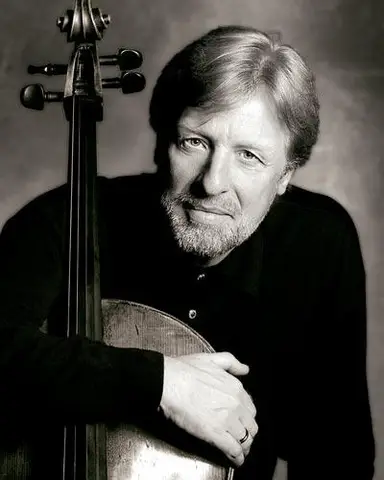
Analyse, explication et démonstration par Frans Helmerson
Lesson time: (42min 4sec)
Course preview
This lesson is part of the course Dvořák - Concerto pour violoncelle en si mineur
Watch a preview of the full course below.
Lesson transcript:
Music Lesson
Introduction
You're a strong guy. And, you know, I think it's very important that when you are strong already in your physique, you don't use it. You don't need to use it. It's a little like with an athlete; in the performance of an athlete, you don't have such a strong impression of the muscular activity behind it. It's more about the movement and the motion in it.
Physical Strength and Technique
For us, when we have to play, we need to have muscles, whatever size the musician, whether it's a short person or a tall person, how broad or how thin; it has no importance.
Actually, we need to have muscles in the right places:
- Fingers: We have to have muscles in our fingers.
- Bow Movement: We need enough muscles to sustain the movement of the bow on the string.
- Endurance: We must be able to move for 35 or 37 minutes, like in the Dvorak Concerto.
However, during the performance, nobody should think about the strength that is behind our playing.
Finding Balance in Playing
I like very much the power in your playing in the Dvorak Concerto, but you might be using too much power in each movement of the bow and each vibrato and each longer note. Try to find a power based on the line you're making:
- Singing the Line: Focus on how you sing the line.
- Changing Vibrato: Adjust how you change the vibrato in a longer singing line.
- Pronouncing Rhythm: For example, in the first part, consider how you make me feel the rhythm in the two 16th notes and the dotted quarter note.
When the cello plays the theme, it feels like the movement hasn't started yet. It hasn't gained a real tempo.
Strategic Thinking in Performance
It says forte, but it doesn't say fortissivo. Many cellists try to give everything because they feel the need to prove themselves after the orchestra's development, but actually, the more you know how to use strategic thinking, with temperament behind it, of course, the better.
Remember, it says forte, quasi improvisando. "Quasi improvisando" doesn't mean to play like you're actually improvising. Can you play with some kind of direction in the beginning?
Experimentation with Sound
Let's test the bar before. Very good, it's more singing now, more with the line. Try to make an experiment: play with feeling like a sack of potatoes on the chair, and see what comes out, don't make an effort.
Now, that wasn't softer in the forte; it was an impressive forte. Maybe you can play even less fortissimo but with more expression. The player with the biggest sound is not always the one that plays the loudest, it's the one who feels the strongest.
Rhythmic Treatment
Can you treat rhythm differently? Every statement belongs to a line. Many times, in this first movement, the more you can feel the lines, the directions, and the shapes, the better it is for the music. Focus on the symphonic quality; the cello's voice is always integrated into the music.
Either the cello voice leads the development or accompanies another solo instrument. Be aware not to take too much freedom with time; it needs a strong sense of direction.
Further Rhythmic Exploration
Can you give me the feeling of these two bars? "Thumb, pada, dee, dee, dee, taka, tika, tika tkado." Don't let the beat feel interrupted; the quarter note should be longer.
Glissando Considerations
I am not so crazy about the glissando you played, it sounded like a decision rather than a natural expression. When wanting to sing expressively, imagine how a great singer would handle it.
Now, also approach the other voice differently, don't be in a hurry to get to the G. Avoid stress, as each bow should initiate a different type of contact.
Sound Projection Techniques
Sebastian, with long arms, use them! You move as if you're going half around the corner. The bowing should go 90 degrees on the string; that makes the best sound.
Again, think about how the arm serves the line. You need direction and control over the bow changes, not to change speed or contact beforehand.
Building Tension in Music
The music of the Dvorak Concerto has to show development. You must manage the balance without playing at the top of your strength all the time; otherwise, the orchestra will play louder, leading to tired ears and poor musical development.
There's always tension between the first and the last note in the piece; it grows and relaxes.
Conclusion and Final Thoughts
Do you think you can make different expressions in each note? Be a little eccentric with it. Try to get sensitive to the varying musical expressions, and not just play the theme.
Let your bow feel limitless as it flows, it shouldn't just go from here to there. Use more bow than you think you can; try different expressions and vibratos.
Remember, play from a calm place like standing by a still lake, and let the music develop naturally.
Let's finish with finding that heavy power, maintaining flexibility and rhythm without tension in the upper body.
Final Practice
Make sure you use every millimeter of the bow. Thank you for your hard work today!
About the instructor
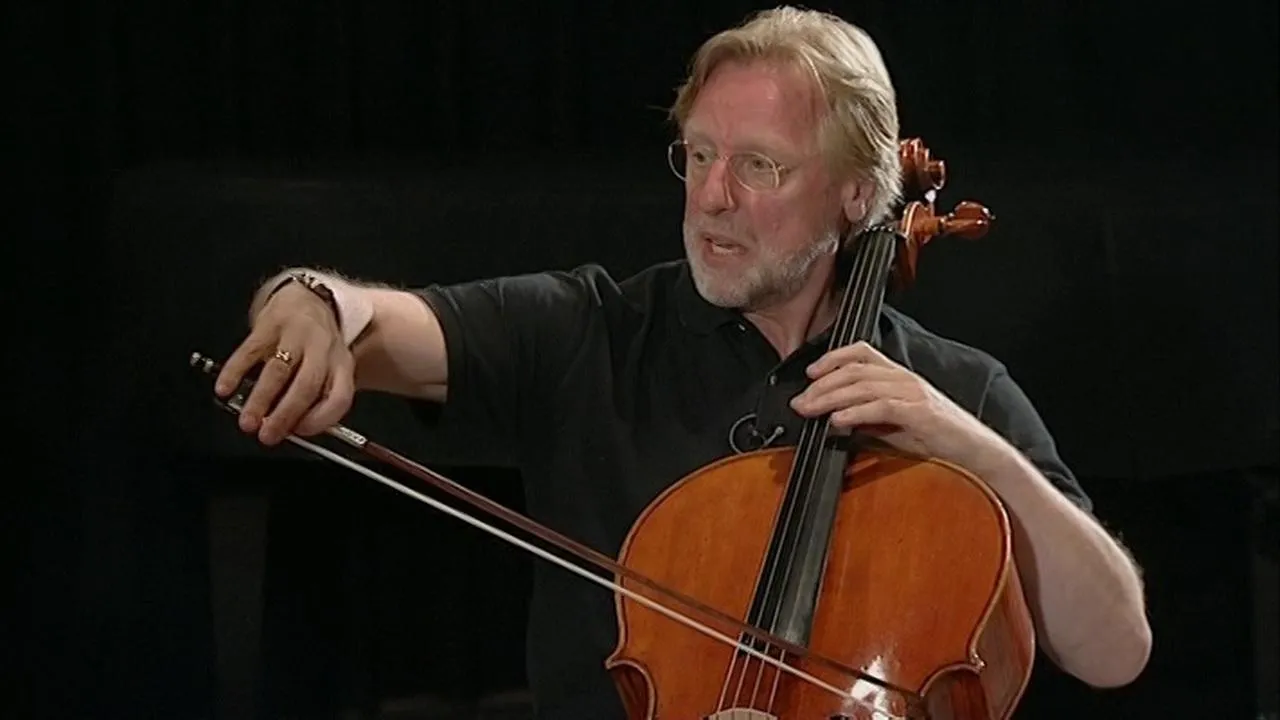
Le violoncelliste suédois Frans Helmerson est né en 1945 et a commencé le violoncelle à l'âge de 8 ans. Après des études à Göteborg, Rome et Londres, suivies d'un début à Stockholm, sa carrière de soliste l'a mené à d'innombrables tournées à travers toute l'Europe, ainsi qu'aux États-Unis, en Asie et en Russie. Il s'est produit avec beaucoup des plus grands orchestres sous la baguette de certains des plus grands chefs d'aujourd'hui. Un aspect important de la musicalité de Frans Helmerson est la musique de chambre, et il est un invité régulier de certains des plus importants festivals européens. Il est le directeur artistique des Umeea-Korsholrn International Chamber Music Festivals dans le nord de la Suède et de la Finlande. Frans Helmerson travaille régulièrement avec des orchestres scandinaves en tant que chef. Il occupe également des postes de professeur à la Musikhochschule de Cologne, où il réside, et à l'Escuela Superior de Música Reina Sofía de Madrid. Ses enregistrements sont disponibles sur le label BIS, dont une interprétation du Concerto de Dvořák saluée par la critique comme l'un des meilleurs enregistrements de l'œuvre. Son enregistrement pour Chandos des deux Concertos pour violoncelle de Chostakovitch avec la Russian State Symphony Capella, sous la direction de Valery Polyansky, a été acclamé par la critique musicale du monde entier. En tant que professeur, Helmerson apporte cette même profondeur à l'élève. Parcourant le répertoire pour violoncelle phrase par phrase, il partage l'archet, la production du son, le phrasé et les choix interprétatifs qui sous-tendent une ligne véritablement chantante — les enseignements durement acquis d'une vie passée sur la scène de concert. read more